Most Energy-Efficient Electric Heaters (Smart-Heat Picks)
On this page 8 sections
- Energy-Efficient Heater Comparison
- Best Energy-Efficient Electric Heaters for Targeted Warmth
- How Electric Heaters Save Energy With Smart Controls
- Matching Heater Size and Type to Your Room and Usage
- Comparing Heater Types: Ceramic, Oil-Filled, Infrared, and Fan-Forced
- Safety Features and Certification Matter for Overnight and Family Use
- How Home Insulation and Usage Patterns Affect Heater Efficiency
- Frequently Asked Questions
Energy-Efficient Heater Comparison
| Rank | Model | Best for | Heat Output (W) | Room Coverage (sq ft) | Smart ECO Mode | Price |
|---|---|---|---|---|---|---|
| 1 | DREO 1500W Oscillating Ceramic HeaterTop Energy Saver | Large rooms up to 270 sq ft with precise climate control | 1500 | 270 | Yes | Check price |
| 2 | R.W.FLAME 1500W Portable Ceramic HeaterBest for Small Spaces | Heating bedrooms, offices, and garages up to 200 sq ft quietly | 1500 | 200 | Yes | Check price |
| 3 | DREO 1500W Portable Ceramic Heater with RemoteQuiet & Safe | Bedrooms and offices needing quiet, safe, and adjustable heat | 1500 | — | Yes | Check price |
| 4 | PELONIS 23″ Oscillating Ceramic Tower HeaterBest Tower Heater | Medium rooms 106-167 sq ft needing steady heat and timer | 1500 | 106-167 | Yes | Check price |
| 5 | R.W.FLAME 50″ Smart Electric Fireplace HeaterBest for Ambiance | Up to 400 sq ft spaces needing heat plus decorative flames | 750/1500 | 400 | — | Check price |
High heating bills and cold spots call for a heater that targets warmth without wasting energy. Electric heaters convert power to heat at nearly 100% efficiency, but smart controls and heat delivery matter most to save money.
This guide ranks the best energy-efficient electric heaters by real-world features: smart thermostats, ECO modes, room size coverage, noise levels, and safety. You’ll see what fits your space, budget, and heating needs quickly.
Best Energy-Efficient Electric Heaters for Targeted Warmth

DREO 1500W Oscillating Ceramic Heater

R.W.FLAME 1500W Portable Ceramic Heater
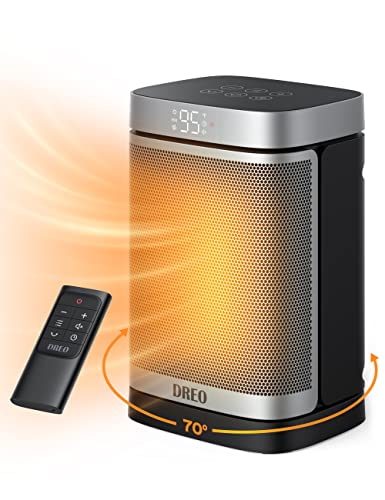
DREO 1500W Portable Ceramic Heater with Remote

PELONIS 23″ Oscillating Ceramic Tower Heater
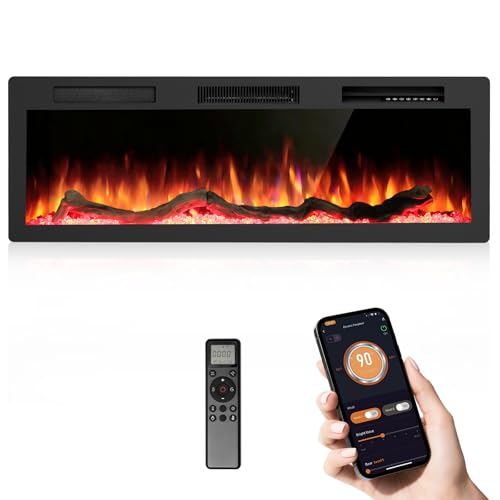
R.W.FLAME 50″ Smart Electric Fireplace Heater
How Electric Heaters Save Energy With Smart Controls

Electric heaters save energy by heating only the room you use and switching off when it reaches the thermostat setting. A 1,500-watt heater still draws 1,500 watts while its element is on; an ECO mode doesn’t make that heat cheaper. It can reduce the time the heater runs.
Electric resistance heaters convert electricity into heat, so their energy use depends mainly on wattage and run time. For example, a 1,500-watt heater running continuously for one hour uses 1.5 kilowatt-hours. Multiply that by your electricity rate to estimate the cost; the thermostat can lower the total by cycling the heater off as the room warms.
A thermostat measures the air near the heater and cycles the element to maintain its set temperature. ECO mode usually adjusts the target or limits output; a timer can stop heating after you leave. These features can reduce consumption in practice when they prevent unnecessary run time, but advertised savings aren’t a guarantee. Compare actual wattage and your hours of use.
A small 1,000-watt portable heater is not an energy-efficient way to heat 720 square feet if it has to run constantly and still can’t keep the space warm. Heater size and room conditions matter; the next section covers how to match capacity to the space.
The Dreo Solaris H3’s 70-degree oscillation can spread warm air across more of a room, while its thermostat and ECO mode manage temperature. Those controls may help avoid heating past the set point, but oscillation itself doesn’t lower the heater’s wattage or prove a specific bill reduction.
For model options, see our guide to energy efficient space heaters.
 Winter Heating Bill CutterSee what every heater in your home really costs, heat the rooms you use, and cut the waste in 30 days.Cost-per-hour tables for every heaterThermostat schedule and draft-proofing planRunning-cost and bill calculator (Excel)
Matching Heater Size and Type to Your Room and Usage
For energy saving, match the heater’s wattage to the room you’re actually heating; a 1,000-watt portable heater is not a practical way to warm 720 square feet. A 1,500-watt model may suit roughly 150 to 270 square feet, but insulation, ceiling height, drafts, and the room layout all affect comfort.
Most plug-in electric heaters draw up to 1,500 watts, about 12.5 amps on a 120-volt circuit. A smaller heater uses less electricity only if it runs for the same amount of time; if it runs constantly and still leaves you cold, lower wattage hasn’t made the job more efficient.
Zone heating can reduce your bill when you heat one occupied room and turn down the central thermostat, especially if the rest of the home doesn’t need to stay as warm. It won’t automatically cost less: compare the heater’s use with your central system, and don’t assume electric space heaters are cheaper for heating an entire home. A Department of Energy estimate cited in the research puts central heating 43% below electric space heaters for an average-sized home.
Choose the heat delivery for how you use the room: a ceramic heater warms the air quickly, an oil-filled radiator gives quiet, steady convection heat, and an infrared heater warms people and objects in its line of sight. Infrared can make sense when you occupy a spot and leave the rest of the room cooler; in an empty room, there’s no one to benefit from that targeted warmth.
For steady bedroom heat, an oil-filled radiator is a sensible fit; for a quick warm-up at a desk, ceramic or infrared may suit better. None of these resistance heaters turns the same electricity into more heat than another type—the thermostat, run time, and how much of the room you choose to heat determine the electricity used.
Comparing Heater Types: Ceramic, Oil-Filled, Infrared, and Fan-Forced
All electric resistance heaters convert electricity to heat with nearly 100% efficiency, so the real differences come down to how that heat is delivered and how it feels in the room.
Ceramic heaters use resistive heating elements combined with a ceramic component that heats up quickly and transfers warmth to the air. They often include oscillating fans to distribute heat evenly, making them energy-efficient for short bursts or when you want rapid warmth. The quick heat-up and targeted airflow mean less wasted energy warming unused space. So yes, ceramic heaters are energy efficient in practical use because they warm spaces fast and avoid overheating.
Oil-filled electric heaters work differently. Inside, a special oil is heated by an electric element, which then radiates heat slowly over time. Even after the heater turns off, the oil retains warmth, releasing it gradually into the room. This reduces the heater cycling on and off frequently. While the electricity used during operation is similar to other heaters, the sustained heat means less frequent power draw overall. Oil-filled heaters suit longer heating sessions where a steady, gentle warmth is preferred over rapid temperature swings.
Infrared heaters don’t warm the air directly. Instead, they emit infrared radiation that heats objects and people in their path, similar to how sunlight feels warm on your skin. This radiant heat is effective for spot heating and can feel warmer at lower air temperatures because it targets surfaces and skin rather than the surrounding air. Infrared heaters are especially useful in poorly insulated rooms or drafty spaces where conventional convection heaters struggle to maintain temperature efficiently.
Fan-forced heaters rely on a heating element and a fan to blow warm air into the room quickly. They heat air fast and spread it evenly but can be noisy and sometimes less comfortable for long-term use because the moving air can feel dry or cause temperature fluctuations. They’re best when you want immediate heat on demand, like in a small bathroom or workspace, rather than for all-night use.
Efficiency differences between these types mainly depend on your use case: if you need fast, directed heat to a small area, ceramic or fan-forced heaters with oscillation work well. For consistent background warmth, oil-filled radiators hold heat longer and reduce cycling. Infrared heaters save energy when you want to warm people or objects directly without heating all the air in a drafty room.
Safety Features and Certification Matter for Overnight and Family Use
The best energy-efficient electric heater for overnight use is one equipped with essential safety features like a tip-over switch, overheat protection, and recognized safety certifications such as ETL or UL. These features ensure the heater can operate safely through the night without constant supervision, protecting your family and home from fire hazards.
Electric heaters with smart controls also manage energy use efficiently by cycling power on and off to maintain the set temperature, minimizing waste while keeping rooms comfortable. That means you get safety and energy efficiency combined.
Look for a tip-over switch that cuts power immediately if the heater falls. Overheat protection triggers a shutdown if internal components get too hot, preventing fires. Certified models from ETL or UL have passed rigorous tests that validate their safety claims.
Families with kids or pets should also consider heaters with child locks and cool-touch exteriors. Child locks disable controls to prevent accidental changes, and cool-touch surfaces reduce burn risk when curious little hands or paws get too close.
Quiet operation is another safety and comfort factor, especially for bedrooms or offices. Heaters like the Dreo Solaris H3 run at noise levels as low as 37.5 decibels—about the sound of a soft whisper—so they won’t disturb sleep or concentration.
Never use extension cords with electric heaters. Plug them directly into wall outlets to avoid overheating and fire risk. Some heaters go further by including flame-retardant materials and enhanced safety plugs, providing extra peace of mind for overnight and family use.
Choosing a heater with these safety features and certifications protects your household and lets you use electric heating efficiently and confidently. If you want to explore models that combine smart energy-saving features with top safety, check out our detailed picks for energy efficient space heaters that wow.
How Home Insulation and Usage Patterns Affect Heater Efficiency
Energy-efficient home heating depends heavily on your home’s insulation quality and how you use your heaters. Good insulation slows heat loss, letting your electric heaters maintain the set temperature with less power cycling. For example, a well-insulated room might only need the heater to run half the time compared to a poorly insulated one, cutting electricity use substantially.
In contrast, heaters in rooms with poor insulation run nearly continuously, driving up your electricity bills even if you use an energy-efficient model. The heater’s efficiency can’t overcome the physics of warm air escaping through gaps and thin walls. That means investing in insulation upgrades can deliver bigger savings than swapping heater brands.
Electric resistance heaters generally convert electricity to heat at nearly 100% efficiency, but their performance as whole-home heating systems is limited. Heat pumps are more energy efficient for central heating because they move heat rather than generate it. However, electric heaters excel at zone heating, where you heat only the occupied rooms. Using heaters strategically this way reduces overall heating costs by avoiding wasted energy warming empty spaces.
Smart thermostats and timers improve heater efficiency by matching heat output to occupancy patterns. They shut off or lower power when rooms are empty or when the desired temperature is reached. Scheduling heaters to warm a room just before you arrive and turning them off afterward prevents unnecessary electricity use. For example, a programmable thermostat can cut heating hours by several each day, trimming monthly costs noticeably.
Central heating radiators linked to HVAC systems benefit from insulation and smart controls too, but their energy efficiency depends on the entire system’s design. Electric resistance heaters cost less initially but can be more expensive to run if used for whole-house heating. Heat pumps and high-efficiency HVAC systems often have higher upfront costs but pay off over time with lower energy bills, especially in colder climates.
To put costs in perspective, a 1,500-watt space heater running 8 hours daily uses 12 kWh. At 17 cents per kWh, that’s about $2.04 a day or $61 a month. If poor insulation doubles the running time, the cost doubles. Improving insulation to reduce heater runtime by half could save you $30 monthly, roughly the same as a smart thermostat’s contribution to cutting wasted heat.
Zone heating with portable electric heaters, especially those with built-in thermostats and ECO modes like the Dreo 1500W Oscillating Space Heater, lets you focus warmth where you need it. You avoid heating unused rooms, making your heating energy go further. Combining this with better insulation and smart scheduling is the best way to keep your bills down without sacrificing comfort.

