Garage Heaters Natural Gas: Safe, Efficient Heat for Your Space
On this page 8 sections
- Small Garage Heater Comparison
- 5 Best Small Garage Heaters Ranked for 2026
- Garage Heaters Natural Gas vs Electric for Small Garages
- Measure the Room First and Size the Heater Right
- Add Up What It Costs to Run All Winter
- Check Power, Venting and Clearances Before You Buy
- Place It Right and Keep the Noise Down
- Questions People Ask
Small Garage Heater Comparison
| Rank | Model | Best for | Heat Output | Coverage Area | Power & Install | Price |
|---|---|---|---|---|---|---|
| 1 | R.W.FLAME Small Portable Ceramic HeaterBest for Most Garages | Garages up to 200 sq ft, quiet and precise heating | 1500W | 200 sq ft | Standard outlet plug-in | Check price |
| 2 | NewAir NGH160GA00 Portable Garage HeaterBest for Portable Use | Portable heating in garages up to 160 sq ft | 1500W | 160 sq ft | 120V plug-in | Check price |
| 3 | Comfort Zone Hard-Wired Ceiling Garage HeaterBest for Permanent Install | Workshops and garages with 240V wiring, floor space saving | 5000W | — | 240V hardwired | Check price |
| 4 | R.W.FLAME 50 Inch Smart Electric Fireplace HeaterBest for Style and Ambiance | Garages up to 400 sq ft needing decor and heat | 750W/1500W | 400 sq ft | Standard outlet wall mount | Check price |
| 5 | DR. INFRARED HEATER Portable Infrared HeaterBest for Indoor/Outdoor Use | Garages and patios with indoor/outdoor needs | 900W/1200W/1500W | — | 120V plug-in | Check price |
A 1,500W plug-in makes about 5,120 BTU per hour. That caps what a single 120V circuit can do and explains why that size is perfect for a tight insulated one-car garage but falls short in an uninsulated two-car box.
You will get five picks matched to real garages, plus the math to size correctly, what each type costs to run through winter, and the power and venting checks that avoid a return or a failed inspection.
5 Best Small Garage Heaters Ranked for 2026

R.W.FLAME Small Portable Ceramic Heater

NewAir NGH160GA00 Portable Garage Heater

Comfort Zone Hard-Wired Ceiling Garage Heater
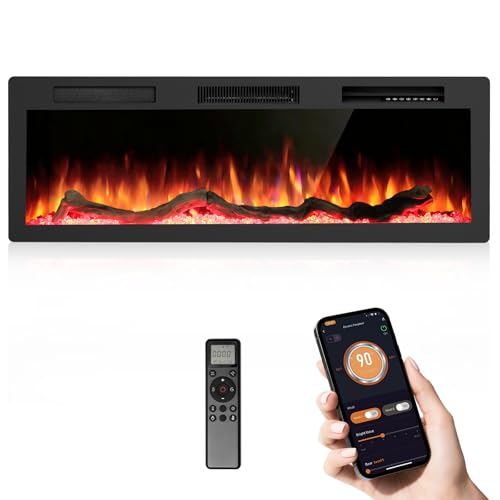
R.W.FLAME 50 Inch Smart Electric Fireplace Heater
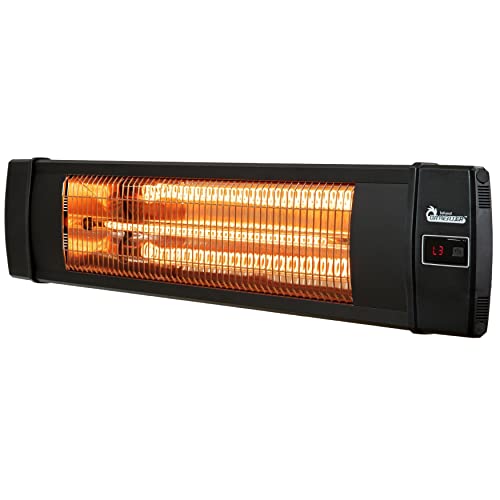
DR. INFRARED HEATER Portable Infrared Heater
Garage Heaters Natural Gas vs Electric for Small Garages
For small garages, electric heaters running on 120V or 240V power often cover the heating need without the complexity of gas lines or venting.

Natural gas garage heaters deliver much higher heat output—typically tens of thousands of BTUs—but they require a gas connection, proper venting, and at least 10-foot ceilings to run safely and efficiently.
The most powerful residential electric garage heater, like the King KB2410-1-B2-ECO, runs on 240V with 10,000W output but demands a 50-amp dedicated circuit. Smaller 120V electric heaters cap at about 1,500W or roughly 5,120 BTU, limiting coverage to around 200 square feet.
If your garage is under 200 square feet and insulated, a 120V electric heater will likely suffice. For larger or poorly insulated spaces, natural gas or a 240V electric heater is usually necessary.
Forced-air fan heaters warm the whole garage by circulating heated air, ideal for general use and larger garages. Infrared radiant heaters excel at spot heating, targeting workbenches or specific zones without heating the entire volume of air—useful for woodworking shops or hobby areas.
Natural gas overhead or wall-mounted units like the Mr. Heater F260550 produce around 50,000 BTU and must be installed with venting to exhaust combustion gases outside, plus they need enough ceiling height to avoid heat buildup and safety issues.
| Heater Type | Fuel or Power | Heat Output | Coverage | Installation Notes |
|---|---|---|---|---|
| 120V Electric | Electricity (120V) | Up to 1,500W (5,120 BTU) | Up to 200 sq ft | Plug in, no venting, limited heat |
| 240V Electric | Electricity (240V) | 5,000W to 10,000W | Up to 500 sq ft or more | Hardwired, dedicated circuit, no venting |
| Natural Gas | Natural gas or propane | 20,000 to 50,000 BTU | 500 sq ft+ depending on insulation | Needs gas line, venting, 10 ft+ ceiling |
If you want a simple setup without running new gas lines or electrical circuits, a 120V electric heater with ceramic or PTC elements offers safe, quiet, and efficient heat for garages up to 200 square feet.
For more heat or bigger spaces, natural gas or 240V electric forced-air units are your choices, but they come with higher installation costs and venting or wiring requirements.
Portable propane garage heaters work without electricity but always require ventilation to prevent carbon monoxide buildup, so they aren’t a plug-and-play indoor solution.
Choosing between natural gas and electric depends on your garage size, insulation, power availability, and whether you can install venting safely. For most small garages, 120V electric heaters hit the sweet spot of cost, simplicity, and adequate warmth.
To explore specific heater models suited for small garages, see our detailed picks for electric and gas options in the linked buying guides.
Measure the Room First and Size the Heater Right
The first step to choosing the right garage heater is measuring your space and sizing the heater properly. Multiply your garage’s length by its width to find the square footage. A general rule of thumb is to allocate 50 BTU per square foot for heating. For example, a 200 square foot garage requires about 10,000 BTU to maintain comfort.
Insulation plays a major role in how much heat you actually need. A well-insulated garage loses less heat, so your heater can be smaller and still keep the space warm. Conversely, an uninsulated or drafty garage needs more heat to compensate for loss through walls, doors, and windows.
| Garage Type | Approximate Coverage | Notes |
|---|---|---|
| Small insulated garage | Up to 200 sq ft | A 1,500 W (5,000 BTU) heater usually suffices |
| Medium garage (1-car or small 2-car) | Around 500 sq ft | Often requires a 240V hardwired heater with 3,000–5,000 W |
| Large or uninsulated garage | Above 1,200 sq ft | Needs high-capacity heaters, generally 240V, 7,500 W or more |
If your garage is a detached small workspace or a single-car garage, a 1,500 W ceramic or infrared heater running on standard 120V can handle the job if it’s insulated. For these spaces, the heat output covers roughly 150 to 200 square feet comfortably. For example, the R.W.FLAME 1500W ceramic heater fits this niche well.
Two-car garages usually range from 400 to 600 square feet. Heating these requires more power than a 120V outlet can provide. You’ll generally need a 240V hardwired electric heater on a dedicated circuit. Such units deliver more watts, typically between 3,000 and 5,000, and heat up to 500 square feet efficiently.
For garages larger than 500 square feet or those with poor insulation, electric heaters on 120V circuits fall short. The higher wattage and dedicated circuit of 240V heaters meet the demand for consistent temperature maintenance without overloading your home’s electrical system.
If you’re considering propane for your garage heater, note that the most efficient propane units produce 40,000 to 50,000 BTU and require proper ventilation. They’re effective for larger or uninsulated garages but come with the need for fresh air exchange to prevent carbon monoxide buildup.
Radiant natural gas garage heaters offer direct heat and are great for spot heating. They usually require professional installation, venting, and adequate ceiling height. These heaters shine in workshops or garages with specific heating zones rather than whole-space heating.
Thermal insulation cuts heat loss by sealing leaks and adding barriers in walls and ceilings. This means your heater can run at a lower wattage to hold the temperature. Without insulation, expect to upsize your heater or accept colder spots.
Measure your garage floor area, multiply by 50 BTU per square foot, then adjust for insulation and air leaks. Garages over 500 sq ft usually need a 240V hardwired heater. Smaller, insulated garages can work with standard outlet plug-in models. Propane and natural gas heaters require ventilation and professional installation.
If you want to explore heater models sized and equipped for your specific garage size and needs, check out our guide to affordable garage heaters tough enough for winter or stay cozy this winter.
Add Up What It Costs to Run All Winter
The cheapest garage heater to run is usually an electric model with a thermostat and ECO mode that limits runtime, not just one with the lowest upfront price.
Electric heaters convert nearly all their wattage into heat, so a 1,500-watt ceramic heater running 4 hours a day uses 1.5 kW × 4 hours = 6 kWh daily. At 17 cents per kWh, that’s about $1.02 a day, or roughly $30.60 a month.
By comparison, a propane heater delivering 40,000 BTU per hour consumes about 0.44 gallons of propane hourly, since a gallon holds 91,500 BTU. Four hours daily means 1.76 gallons used. At $3.50 per gallon, that comes to $6.16 per day, or about $185 monthly—significantly more than electric.
That’s why the most efficient propane garage heater still tends to cost more to run than electric for small spaces. Propane shines when you lack electricity or need portable heat.
Using ECO mode and a thermostat cuts runtime by cycling the heater on and off to maintain the temperature, often halving daily energy use compared to running at full blast nonstop. A timer lets you heat only when needed—before you arrive or while working.
Upgrading insulation and sealing garage doors typically saves more on heating bills than buying a bigger or higher BTU heater. Insulated drywall and weatherstripping keep warm air inside, reducing heater runtime.
| Heater Type | Fuel/Power | Daily Use | Monthly Cost |
|---|---|---|---|
| Electric 1,500 W | 1.5 kW × 4 h | 6 kWh | 30.6 |
| Propane 40,000 BTU/hr | 0.44 gallons/hr × 4 h | 1.76 gallons | 185 |
| Heated Insulated Garage | N/A | N/A | Saves 30%+ on energy |
Check Power, Venting and Clearances Before You Buy
Natural gas garage heaters always need venting to the outside. This is non-negotiable because burning gas releases carbon monoxide, which can be deadly in enclosed spaces. Overhead natural gas garage heaters typically connect to a vent or chimney, and local codes require proper venting along with an oxygen depletion sensor (ODS) to shut off the unit if oxygen levels drop.
If you want a gas heater without venting, look for a propane model specifically rated for indoor use with an oxygen depletion sensor and always maintain good ventilation along with a carbon monoxide detector. No vent gas garage heaters are illegal or banned in many areas, so check your local code before buying. Infrared gas heaters without vents exist, but their use indoors typically requires strict safety features and ventilation.
Electric garage heaters usually need either a standard 120V outlet for small models or a dedicated 240V circuit for larger units. Plug-in 120V heaters typically max out around 1,500 watts, enough for a small garage or spot heating. Larger heaters require hardwiring to a 240V circuit with an appropriate breaker—often 20 to 50 amps depending on wattage.
Breaker trips are common when a heater draws more current than the circuit can handle. For example, a 5,000W heater on a 120V circuit would pull about 42 amps (5,000 ÷ 120), which is over a typical 15 or 20 amp breaker’s limit. That’s why these large heaters need a dedicated 240V circuit: 5,000W ÷ 240V equals about 21 amps, which is manageable on a 30 amp breaker.
Clearances around the heater are critical. Gas heaters require at least 3 feet of clearance from combustibles, and ceiling-mounted units usually need a minimum 10-foot clearance from the floor to avoid heat buildup and safety hazards. Electric heaters also have clearance requirements, often 3 feet from walls and ceilings.
Look for heaters certified by ETL, UL or CSA. These certifications ensure the unit has been tested for safety features like tip-over switches and overheat shutoff. A tip-over switch cuts power if the heater falls, preventing fires; overheat protection shuts the heater off before it gets dangerously hot.
Place It Right and Keep the Noise Down
The best electric 120V garage heater for small spaces combines quiet operation with flexible placement options to spread heat evenly without overwhelming noise.
Ceiling-mount heaters with adjustable louvers push warm air across the garage bay rather than into the overhead door, preventing heat loss every time the door opens. Portable models often have tilting heads and oscillation to cover a wider area, which can be handy in workshops or garages with varying layouts.
Noise is more than a nuisance in a garage where you might be working or running power tools. Ceramic heaters typically run around 34 to 35 decibels, comparable to a quiet library, while fan-forced steel units can be significantly louder, sometimes over 50 dB. That difference can make a workspace more tolerable for long tasks or if you want to chat or listen to music without shouting.
Durability matters in garages, where dust, cold, and occasional bumps are the norm. Look for steel housings with thermal cut-outs and ETL certification; these features indicate the heater is built to handle tough conditions and will shut off safely if it overheats. In reviews, DuraHeat garage heaters often score well for ruggedness and consistent performance, making them a solid choice if your garage conditions are harsh.
When mounting a wall or ceiling bracket, position the heater to blow heat across the longest dimension of the garage, not directly at the door or toward people standing still. This approach maximizes heat circulation and reduces cold spots. For example, in a 20-by-15-foot garage, mounting the heater on the 20-foot wall with louvers angled slightly downward and across the width helps maintain an even temperature.