Warm Up Fast: Best Infrared Garage Heater Ever!
On this page 8 sections
- Infrared Garage Heaters Comparison
- Best Infrared Garage Heaters Ranked
- What Makes An Infrared Heater Warm Up Fast
- How To Size An Infrared Garage Heater For Fast Warm-Up
- Running Costs And Efficiency Of Infrared Garage Heaters
- Safe Installation And Operation For Infrared Garage Heaters
- Why Weatherproof Infrared Heaters Are Best For Garages And Patios
- More Questions, Answered
Infrared Garage Heaters Comparison
| Rank | Model | Best for | Heat Output (Watts/BTU) | Indoor/Outdoor Use | Mounting Options | Price |
|---|---|---|---|---|---|---|
| 1 | DR. Infrared Heater DR-239 3000W WeatherproofMost Versatile | Garages, patios, workshops needing instant 3000W heat | 3000W / 10,260 BTU | Indoor & Outdoor (IP55) | Wall or ceiling mount | Check price |
| 2 | Large garages, workshops, warehouses needing heavy-duty 5600W heat | 5600W | Indoor | Portable, wall or ceiling | Check price | |
| 3 | Briza Infrared Electric Patio Heater 1500W PortableMost Flexible | Small garages or patios needing 1500W heat with multiple mounting choices | 1500W | Indoor & Outdoor (IP55) | Wall, ceiling, tripod stand | Check price |
| 4 | Small garages or patios needing 1500W infrared heat on 120V | 1500W | Indoor & Outdoor (IP55) | Wall or ceiling mount | Check price | |
| 5 | Indoor spaces needing 1500W heat with Wi-Fi thermostat control | 1500W | Indoor only | Wall mount | Check price |
Say your garage is 20 by 20 feet and uninsulated, a common chilly spot that can feel like a freezer in winter. You want a heater that warms up the space quickly and efficiently without running up your electric bill or requiring complicated installation.

Infrared garage heaters are a smart choice here. They heat objects and people directly, not just the air, so you feel warmth as soon as you turn them on. This guide ranks the best infrared garage heaters for fast warm-up and breaks down what specs really matter.
Best Infrared Garage Heaters Ranked

DR. Infrared Heater DR-239 3000W Weatherproof

DR. Infrared Heater DR-988 5600W Industrial Garage Heater
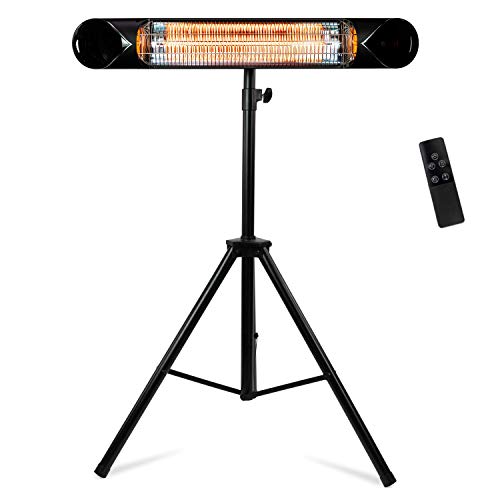
Briza Infrared Electric Patio Heater 1500W Portable
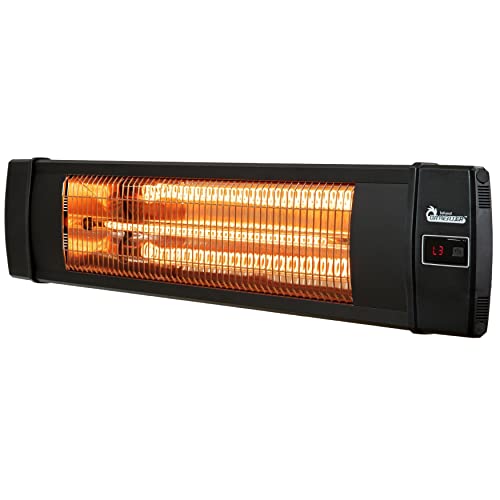
DR. Infrared Heater Portable 1500W Indoor/Outdoor

Heat Storm HS-1500-PHX-WIFI Infrared Heater Wi-Fi Wall Mount
What Makes An Infrared Heater Warm Up Fast
Infrared heaters warm up fast because they heat objects and people directly, rather than heating the air first. This means you feel the warmth almost immediately after turning one on, unlike conventional heaters that rely on air circulation.
Infrared heaters emit electromagnetic radiation, similar to sunlight but without ultraviolet rays. When this radiation hits a solid surface or skin, it transfers energy that you feel as warmth. This direct transfer cuts out the delay of heating air, which can take minutes to circulate and raise room temperature.
Wattage plays a major role in heating speed. A 3,000-watt infrared heater like the Dr. Infrared Heater DR-239 can provide intense, immediate heat because it converts electricity straight into infrared radiation at a high rate. The higher the wattage, the faster the heat output and the quicker you feel warm.
BTUs measure heat energy output per hour. For example, 3,000 watts roughly equals 10,236 BTUs per hour. This is a practical number to compare against your garage size and insulation to gauge heating speed and capacity.
Reflectors inside infrared heaters direct radiation toward the target area, increasing efficiency and speed of warming. The type of lamp—quartz or ceramic—also affects heat intensity and distribution. Quartz lamps shine bright and hot immediately, while ceramic elements may offer steadier, longer-lasting heat but slightly slower startup.
How To Size An Infrared Garage Heater For Fast Warm-Up
To size an infrared heater for your garage, calculate the cubic footage: length × width × height. Infrared heaters are rated by wattage; a good rule is about 10 watts per square foot for a typical garage ceiling height. For example, a 20 by 20-foot garage with an 8-foot ceiling is 3,200 cubic feet, so a 2,000-watt heater should provide quick, effective warmth.
Adjust wattage upward if your garage has high ceilings or poor insulation. Heat rises and escapes faster in these conditions, so oversizing helps reduce warm-up time. However, bigger heaters use more electricity, increasing your running costs.
A well-insulated garage with standard 8-foot ceilings may require closer to 7 watts per square foot. If you raise the ceiling to 12 feet, add 20 to 30 percent more wattage to compensate for the larger volume of air and surfaces to warm.
Electric supply matters. Most residential garages have 120-volt circuits limited to 15 amps, capping heater size around 1,500 watts safely. For heaters above that, like 3,000-watt models, you’ll need a 240-volt dedicated circuit installed by a licensed electrician.
Choosing the right garage infrared heater electric size balances fast warm-up with your home’s electrical capacity and budget. Oversizing speeds up comfort but requires proper wiring and circuit protection to avoid tripped breakers or hazards.
For a detailed look at electric heater sizing and fast warm-up options, see our guide on electric heaters best rated.
Running Costs And Efficiency Of Infrared Garage Heaters
Infrared heaters use electricity efficiently by converting nearly all power into radiant heat. Running a 1,500-watt infrared heater for 8 hours consumes 12 kWh. At 17 cents per kWh, that costs about $2.04 a day. Unlike forced-air heaters, infrared models don’t waste energy warming unused air volume, which helps lower operating costs.
Calculate running costs by multiplying the heater’s wattage by how many hours you run it, then by your electricity rate per kilowatt-hour (kWh). For example, a 3,000-watt heater running 4 hours at 17 cents per kWh uses 12 kWh (3,000 ÷ 1,000 × 4), costing about $2.04 a day.
Infrared heaters target objects and people directly, unlike convection heaters that warm air first and lose heat quickly when doors or windows open. This focused heating reduces wasted energy, especially in garages where air leaks are common.
Thermostats and adjustable power settings help manage costs by cycling the heater off once the target temperature is reached. Running at full power continuously wastes energy and can drive your electric bill higher than necessary.
Outdoor or unsealed garage use lowers efficiency because heat disperses faster. Weatherproof infrared heaters maintain performance under these conditions but still require more energy to maintain comfort than in a sealed garage.
A quick note if you’re thinking about heating a pool: the pool warms faster with a cover on. The infrared heater’s fast heat output helps, but a cover traps heat and prevents evaporation, which cools the water.
Safe Installation And Operation For Infrared Garage Heaters
Infrared garage heaters are safe when installed and operated according to the manufacturer’s instructions.
They need proper clearances from walls, ceilings and flammable materials—usually around 3 feet—but check the specific model’s manual for exact distances.
Most industrial or high-power infrared heaters must be mounted on a ceiling or high on a wall with secure brackets to keep them stable and away from contact.
Look for UL or ETL listings on the heater. These certifications mean the product meets strict safety and electrical standards you want for any heater powering your garage.
High-wattage heaters often require a dedicated 240-volt outlet wired by a licensed electrician. Running these on a standard 120-volt outlet risks tripped breakers or fire hazards.
Built-in safety features like overheat protection automatically shut off the heater if it gets too hot, and tip-over switches cut power if the unit falls over. These help prevent accidents but don’t replace careful placement and supervision.
Wiring up an infrared heater is not a DIY job if it involves new circuits or 240 volts. Hire a professional electrician to ensure code compliance and safe operation.
Why Weatherproof Infrared Heaters Are Best For Garages And Patios
A garage infrared heater electric model with an IP55 rating offers the best balance of versatility and durability for year-round use in garages, patios, and workshops.
The IP55 rating means the heater is protected against dust ingress that could damage internal parts and against water jets from any direction. This protection lets you safely use the heater outdoors or in semi-exposed garage spaces without worry about weather-related failure.
Materials and components designed for IP55-rated heaters resist rust, corrosion, and UV damage. That keeps the heater working well through rain, snow, and dust storms, so you won’t be replacing it after one winter. Durable casing and sealed electrical connections prevent shorts and breakdowns caused by moisture.
Remote control operation is common with these heaters, allowing you to adjust the temperature and power level without leaving your workbench or patio chair. Mounting options usually include ceiling, wall, or pole brackets, offering flexible placement to cover the areas you need warmed quickly and efficiently.
If you want to buy infrared heater models that work indoors and outdoors, look for IP55 or higher. They give you the freedom to move the heater or use it outside when the garage door is open, making them the safest and most cost-effective choice for heating large, variable spaces.
Choosing a weatherproof model means fewer worries about damage, less downtime for repairs, and better overall value. The Dr. Infrared Heater DR-239, for example, delivers 3,000 watts with IP55 protection, making it ready for any garage or patio setup.