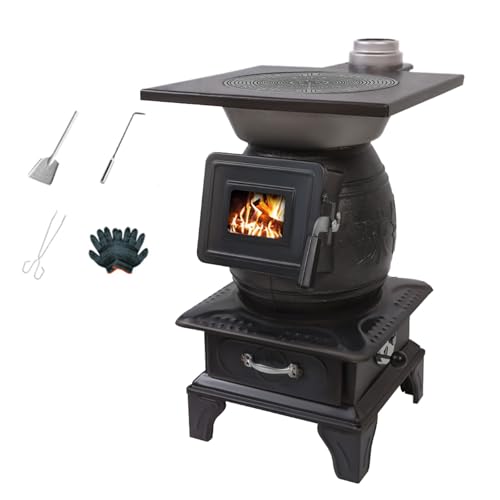
For most homes, the Comfort Glow CGWS1500 wood stove is the practical pick: its listed heating area reaches 1,200 square feet, it accepts logs up to 18 inches, and its secondary combustion system burns smoke again. Choose the Ashley for its higher stated output or the Comfort Glow insert to use an existing fireplace.
The essentials
The CGWS1500 is listed for up to 1,200 square feet and accepts logs up to 18 inches.
The Ashley AW1120E-P lists 68,000 BTU and a 1.3-cubic-foot firebox; its coverage is also listed as up to 1,200 square feet.
A fireplace insert is meant for a compatible existing fireplace, not a freestanding stove location.
Match stove output to your home’s heat loss, not square footage alone.
Follow the appliance listing and local code for clearances, chimney and installation.
The common mistake is buying by the biggest square-foot claim alone. A stove that’s oversized for your room can be difficult to run cleanly; an undersized one may leave you feeding it constantly.
These picks are for indoor home heating, not sauna use, patio warmth or tent camping. Check the model’s listing, installation instructions and local code before ordering.
Best Wood Burning Heaters by Use
#1Best Overall
Comfort Glow Wood Stove CGWS1500
Best for Home heating where a listed 1,200-square-foot area fits
The listed heating area reaches 1,200 square feet, and the firebox accepts logs up to 18 inches. Its secondary combustion system burns smoke again, while the steel body, cast-iron door and firebrick lining make it a substantial choice for regular home heating.
Listed heating area Up to 1,200 sq ftLog length Up to 18 inchesConstruction Plate steel, cast iron and firebrick liningKey feature Secondary combustion
Why it made the cut
Secondary combustion system
Accepts logs up to 18 inches
Large glass viewing window
Good to know
Firebox capacity is not stated
Requires a suitable stove installation and venting
Skip it if Skip it if you need an insert for an existing fireplace or want a stated BTU output.
Best for Homes that want a stated output of up to 68,000 BTUs
Ashley lists up to 68,000 BTUs and a heating area of 1,200 square feet, with a 1.3-cubic-foot firebox for logs up to 18 inches. It needs no electricity to operate, which suits a home where keeping heat during a power outage matters. The removable ash pan helps with cleanup.
Listed heating area Up to 1,200 square feetHeat output Up to 68,000 BTUsFirebox 1.3 cubic feetLog length Up to 18 inchesKey feature Secondary combustion system
Why it made the cut
Up to 68,000 BTUs of heat
Operates without electricity
Includes adjustable legs and a pedestal base
Good to know
Freight delivery is curbside or driveway only
Ash bucket model 1508 is sold separately
Skip it if Skip it if curbside freight delivery won’t work for your home or you need an insert.
Best for Using an existing fireplace for wood heat
This insert is designed to fit a fireplace opening, with a face plate and a 100 CFM blower to move warmth into the room. It heats up to 1,200 square feet and accepts logs up to 18 inches. The heavy-duty steel body and firebrick lining suit a permanent fireplace installation.
Listed heating area Up to 1,200 sq ftLog length Up to 18 inchesBlower 100 CFMConstruction 3/16-inch plate steel and firebrick liningKey feature Face plate included
Why it made the cut
Included 100 CFM blower
Accepts logs up to 18 inches
Large ceramic viewing window
Good to know
Requires an existing fireplace and a suitable installation
Firebox capacity is not stated
Skip it if Skip it if you need a freestanding stove rather than an insert.
Best for A small cabin where the listed dimensions suit the installation
The compact stove measures 22.4 × 14.5 × 14.5 inches and includes a window and ash collection system. It is described for heating and cooking, but the product data doesn’t give a heating area, log length or firebox capacity, so you can’t size it confidently from those figures. Confirm its listing, clearances and venting before considering indoor use.
Dimensions 22.4 × 14.5 × 14.5 inchesMaterial Cast ironFuel Firewood and dry branchesKey feature Ash collection system
Why it made the cut
Compact listed dimensions
Window to monitor the fire
Ash collection system
Good to know
No heating area or heat output stated
No log length or firebox capacity stated
Indoor suitability and installation details aren’t specified
Skip it if Skip it if you need a clearly sized heater or verified installation details for your home.
Best for Small rooms where you want plug-in electric heat instead of a wood stove
This is an electric ceramic heater, not a wood-burning heater. Its listed 1,500 W output and coverage of up to 200 square feet suit a small room, while the thermostat, timer and tip-over shutoff add practical controls. Choose it only if you want electric heat without wood, a chimney or stove installation.
Power 1,500 WListed coverage Up to 200 sq.ftTimer 24HKey feature 45° tip-over shutoff
Why it made the cut
Listed coverage up to 200 sq ft
Thermostat and 24-hour timer
ETL-certified with tip-over and overheat protection
Good to know
Does not burn wood
Requires electricity to operate
Skip it if Skip it if you specifically need a wood-burning heater or backup heat during a power outage.
The best rated wood burning heater for a home depends on whether you need a freestanding stove or an insert for an existing fireplace; these picks are stoves or an insert, not wood-burning furnaces. A furnace distributes heat through ducts, and none of these product listings claims ducted heating or identifies a wood-burning kitchen stove or boiler stove.
For a freestanding stove, the Comfort Glow CGWS1500 is the practical choice for logs up to 18 inches and a listed heating area of 1,200 square feet; its secondary combustion burns smoke again. The Ashley AW1120E-P also lists coverage of 1,200 square feet, with a stated output of 68,000 BTU and a 1.3-cubic-foot firebox. Those figures describe different product claims, not results from a shared performance test.
The Comfort Glow insert is for a compatible existing fireplace and includes a 100 CFM blower; skip it if the room has no fireplace. The highest rated wood burning furnace and best rated wood burning heaters for a home areas can’t be identified from these listings: they provide no furnace models or customer-rating data. The products include Ashley Hearth and Comfort Glow, but this short list doesn’t establish the top manufacturers of indoor wood burning heaters.
High energy wood burning means getting useful heat from the appliance and fuel, not simply building a larger fire. Output depends on the stove, wood moisture, draft and how much heat the house loses. A large fire isn’t automatically efficient.
Pick
Listed details
Best fit
Comfort Glow CGWS1500
Up to 1,200 sq ft; logs up to 18 in; secondary combustion
Freestanding stove with longer logs
Ashley Hearth AW1120E-P
Up to 1,200 sq ft; 68,000 BTU; 1.3 cu ft firebox
Freestanding stove where its stated output suits the home
Comfort Glow insert
100 CFM blower
Compatible existing fireplace
Listed specifications are not directly comparable performance tests.
Large wood burning heaters aren’t automatically the right size: square-foot coverage is a rough manufacturer claim, not a guarantee for your home. Insulation, ceiling height, climate, room layout and air leakage all change the heat required.
A big wood burning fireplace isn’t necessarily an efficient heater, and these products don’t provide a fireplace-size ranking. An open fireplace and a listed stove or insert deliver heat differently. Searching for the biggest wood burning fireplace won’t tell you which appliance can heat your rooms.
For the most efficient wood burning furnace or the longest burning wood furnace, first note that the products here are stoves and an insert, not furnaces; their listings also don’t give a burn-time comparison. Longer logs don’t guarantee longer burns. Wood type and moisture, draft, load and operating settings affect how long a fire lasts.
A coverage claim is a starting point
Say a home has several rooms, tall ceilings and noticeable drafts. A stove listed for 1,200 square feet may not meet its heating needs, even if the home’s floor area is below that figure; a heat-loss calculation is needed to choose output.
Listed coverage1,200 sq ft
What to checkInsulation, ceiling height, layout and a
Next stepHeat-loss calculation or qualified insta
Before choosing stove output
Use a heat-loss calculation or ask a qualified installer to assess the home.
Consider the rooms the stove must heat and how heat moves between them.
Don’t choose by the largest coverage figure alone; an oversized stove can be difficult to operate comfortably.
Soapstone can store heat and release it after the fire dies down, but none of these product listings identifies a soapstone model. For fuel choices, compare woods for hot, clean-burning heat.
How a Wood Burning Fireplace Heats a Room
A wood-burning fireplace heats a room by releasing heat as wood burns, while hot gases rise through the flue and the firebox and appliance transfer some heat indoors. An efficient wood burning fireplace controls that flow with a closed firebox; an open hearth sends more heat up the chimney.
An insert fits inside a compatible masonry fireplace and closes the fire behind a door. The Comfort Glow insert includes a blower that circulates warmed air into the room. That’s a different setup from an open fireplace, where much of the room’s warm air can be drawn toward the fire and out through the chimney.
Myth
An open fireplace is the most efficient wood burning fireplace.
Fact
A closed appliance can control combustion and heat loss better than an open hearth, but there’s no universal most-efficient wood burning fireplace. Check the appliance’s certification and installation instructions rather than relying on a general ranking of top rated wood burning fireplaces.
In a stove with secondary combustion, added heat helps burn some smoke and gases again before they leave the flue. That recovers heat and reduces emissions compared with sending those gases straight up the chimney. The Comfort Glow stove listing describes this feature; don’t assume every stove or insert has it.
The phrase “wood burning modle t” doesn’t identify a clear appliance or standard model name, so don’t use it to choose a fireplace. Check the exact manufacturer and model number on the listing or nameplate.
Check the Chimney, Clearances and Stove Listing
The best rated wood burning kit is one whose listed parts match your exact appliance and installation; none of these product listings specifies a kit. Best wood burning boiler stoves also require a compatible hydronic system and professional design, and these listings don’t establish boiler compatibility.
Before You Buy
Confirm the stove or insert’s exact model and installation instructions.
Match the required chimney or vent components to the appliance listing and your installation; don’t substitute parts based on appearance.
Follow the listed clearances to combustible materials and local code. There’s no safe generic clearance number for every stove and wall.
Check local rules, permits and installer requirements before purchase, especially for a new chimney or a mobile-home installation.
A listed wood-burning kit is not a universal bundle: its components must be approved for the appliance and the way the chimney is installed. If the manual or listing doesn’t clearly cover your setup, ask the manufacturer or a qualified installer before ordering.
Keep the Flue and Fire Clean
Have the chimney inspected and swept annually. Never burn trash or treated wood; they can release harmful pollutants and create deposits or damage in the chimney.
For a boiler stove, have a professional verify the stove, piping, controls and heat-distribution system as a complete design before you buy. A stove’s heating-area claim alone doesn’t show that it can safely connect to your hydronic system.
Check the Listing Before Installation
Use the stove’s listed clearances and installation instructions, then confirm local code requirements. A chimney professional can check that the flue and chimney suit the appliance.
Wood Burning, Pellets and Heat Gun Projects
A heat gun for wood-burning crafts is a detail tool, not a home heater; it won’t warm a room like a wood stove. If you want a craft tool, see our guide to the perfect heat gun for wood burning projects. For home heating, choose an appliance designed and listed for the fuel and installation you plan to use.
Pellets and cordwood need different appliances, and none of the ranked picks is a pellet stove. Pellet burning isn’t automatically good or bad for the environment: fuel sourcing, appliance emissions and correct operation all matter. These wood-stove listings don’t establish pellet performance, so they can’t answer how clean a pellet stove will burn.
Advantages of burning wood pellets can include consistent fuel size and automatic feeding in a compatible pellet stove; those features don’t apply to a cordwood stove. For the best woodstove burning woods, use dry, seasoned firewood suited to your stove, and check our guide to best woods for hot clean-burning heat.
Don’t Guess on the Small Stove
The unverified small-stove listing doesn’t establish a safety listing or a code-compliant installation. Don’t use it indoors, in a tent or in a cabin based on the listing alone; an indoor wood stove needs an appropriate listing, clearances and venting that comply with its manual and local code.
More Questions, Answered
What Is the Most Efficient Wood-Burning Fireplace?
A listed, EPA-certified wood stove or fireplace insert generally delivers more usable room heat than an open fireplace because its firebox controls combustion and sends less heat up the chimney. Check the appliance’s current certification and installation requirements; efficiency varies by model and test method.
Are Wood-Burning Boiler Stoves Suitable for Central Heating?
They can heat water for a hydronic system, but they need compatible plumbing, controls and often thermal storage to manage heat safely. Have a qualified installer assess the boiler output, existing system and local code before choosing one; a room-heating stove is not a boiler substitute.
What Is a Wood-Burning Kit?
The term can mean a matched set of stove parts or a chimney-and-venting package, so the contents vary. Confirm that every component is listed for your exact appliance and installation; a generic kit may not meet the stove’s clearance or venting requirements.
Can You Burn Pellets in a Wood Stove?
Only if the stove manufacturer says pellets are approved for that model and specifies how to burn them. Pellets can fall through a wood stove’s grate or restrict airflow, changing combustion; don’t improvise with a basket unless the manual permits it.
Is Burning Wood Pellets Good for the Environment?
Pellets made from responsibly sourced material can use wood-processing leftovers, but burning them still releases smoke and fine particles. The source of the pellets, the appliance’s emissions performance and proper operation all affect the impact; renewable fuel does not mean zero emissions.
Can a Heat Gun Be Used for Wood-Burning Crafts?
A heat gun can create marks or effects on wood, but it’s harder to control than a purpose-built wood-burning pen and can scorch the surface quickly. Work in a ventilated area, keep the hot nozzle away from combustibles and follow the tool’s instructions; see our guide to a perfect heat gun for wood burning projects.
What Is the Difference Between a Wood Stove and a Wood-Burning Furnace?
A wood stove heats the room around it mainly by radiant and convective heat, while a wood furnace is designed to distribute heat through ductwork or another central system. Furnace installation and operation depend on the home’s distribution system, so check the appliance listing and have the setup assessed before connecting it.