Best Heating Pads for Lower Back Pain: 9 Settings and Secure Fit
On this page 8 sections
- Heating Pad Specification Comparison
- Best Heating Pads for Lower Back Pain
- Choose a Heating Pad That Fits Your Lower Back Area
- Understand Heat Settings and Timer Controls for Safe Use
- Compare Electric, Cordless, and Microwavable Heating Pads
- Use Heat Therapy Safely and Effectively for Lower Back Pain
- Clinical Evidence and Long-Term Effectiveness of Heat Therapy
- Questions People Ask
Heating Pad Specification Comparison
| Rank | Model | Best for | Size (inches) | Heat Settings | Auto Shut-Off Timer | Price |
|---|---|---|---|---|---|---|
| 1 | Comfytemp XL Heating Pad for Back & AbdomenBest for Coverage | Users needing large, secure coverage for lower back pain | 15 × 24 | 9 | 0.5 to 9 hours, 11 options | See it on Amazon |
| 2 | ThermaCare Advanced Lower Back & Hip Heat WrapsBest for Portable Relief | People who want drug-free, cordless heat therapy on the go | — | Single fixed | Up to 8 hours | See it on Amazon |
| 3 | GENIANI Electric Heating Pad for Back PainBest for Soft Fabric | Users wanting a soft, machine-washable pad with simple controls | 12 × 24 | 3 | Built-in auto shut-off | See it on Amazon |
| 4 | Deepsoon Electric Heating Pad for BackBest for Multiple Sizes | Those wanting various sizes and colors to fit different body areas | Multiple including 12 × 24 and 20 × 24 | 6 | 30/60/90/120 minutes | See it on Amazon |
| 5 | VIBOOS Electric Heating Pad 24″x12″Best for Simple Use | Users who want straightforward controls and soft fabric | 24 × 12 | 6 | 30/60/90/120 minutes | See it on Amazon |
Say your lower back stiffness flares up after a long day at a desk or cold weather sets in. You want a heating pad that fits your body, heats evenly, and stays put without fuss. A pad that doesn’t risk burns but delivers steady, soothing warmth for at least an hour or two.
This guide breaks down the best heating pads for lower back pain, comparing size, heat settings, safety features, and usability. You’ll see which models suit chronic pain, travel, or discreet use, plus how to choose, use, and stay safe with heat therapy.
Best Heating Pads for Lower Back Pain

Comfytemp XL Heating Pad for Back & Abdomen

ThermaCare Advanced Lower Back & Hip Heat Wraps
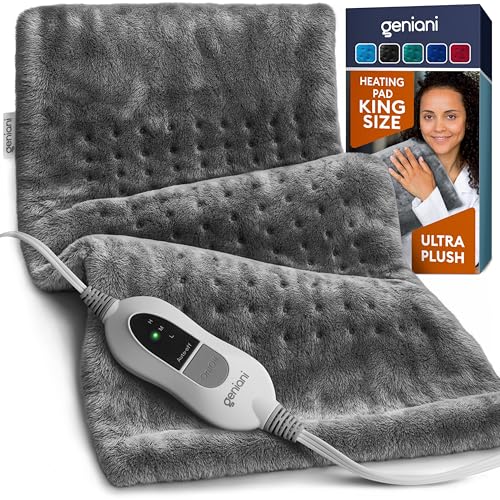
GENIANI Electric Heating Pad for Back Pain

Deepsoon Electric Heating Pad for Back

VIBOOS Electric Heating Pad 24″x12″
Choose a Heating Pad That Fits Your Lower Back Area

The best heating pad for lower back and hip pain covers your lumbar region fully and fits securely to deliver steady heat where you need it most. Position the pad directly over the small of your back, centered on the lumbar spine and extending slightly onto the hips for maximum effect. Pads that are too small miss key muscle groups, while oversized pads can be bulky and less comfortable.
Adjustable straps or contoured shapes keep the heating pad snug against your back during use. Straps with elastic stretch allow movement without losing contact, which is crucial for consistent heat therapy. Wearable wraps with elastic fit combine heat with hands-free convenience, letting you move around or lie down without readjusting constantly.
| Model | Coverage Area (in) | Fit Features | Best For |
|---|---|---|---|
| Comfytemp XL Heating Pad | 18 × 14 | Adjustable strap, large surface | Back and hip pain, up to 58-in waist |
| GENIANI Electric Heating Pad | 12 × 24 | Contoured, adjustable strap | Targeted lumbar relief |
| ThermaCare Heat Wraps | 8 × 22 | Elastic wearable wrap | Long-lasting, portable pain relief |
| Electric Heating Pad with 6 Settings | 12 × 15 | Basic strap, flat shape | General use, smaller areas |
Understand Heat Settings and Timer Controls for Safe Use
The optimal heating level for lower back pain typically lies between medium and high settings, roughly 104°F to 113°F. This range relaxes muscles and improves blood flow without risking burns.
Heating pads often offer multiple temperature levels to let you customize comfort and effectiveness. Lower settings help with gentle warming, while higher ones provide deep penetrating heat for stiff or sore muscles.
Most manufacturers recommend using a heating pad in sessions of 15 to 30 minutes, followed by at least a 30-minute break. This reduces the risk of skin irritation or burns and allows the tissue to respond to therapy.
Auto shut-off timers are key safety features found on many electric heating pads. They typically turn the device off after 1 to 2 hours to prevent overheating and accidental prolonged use.
Compare Electric, Cordless, and Microwavable Heating Pads
Electric heating pads deliver consistent, controllable temperatures and can run for longer sessions thanks to their continuous power supply. They usually include multiple heat settings and timers for safe use.
Cordless heating pads offer portability and freedom from outlets but rely on battery capacity. Their heat duration typically ranges from 1.5 to 3 hours, which might limit session length especially for chronic pain management.
Microwavable heating pads use natural materials like flax or clay to retain heat after warming in a microwave. They provide moist heat but lack precise temperature control and cool down over time, requiring reheating for extended use.
| Type | Pros | Cons |
|---|---|---|
| Electric | Stable temperature, longer use, adjustable heat and timers | Requires outlet, less portable |
| Cordless | Portable, no cords, convenient for travel | Limited battery life, may not reach high temps |
| Microwavable | Natural heat retention, moist heat, no cords or batteries | No precise control, short heat duration, needs reheating |
Maintenance varies: electric and cordless pads usually have removable, washable covers; microwavable pads are spot-cleaned and dried to protect the filling. Choosing the right type depends on your pain duration, portability needs, and preference for heat control.
If you want steady, long-lasting heat for chronic lower back pain, electric pads like the Comfytemp XL excel. For short-term or on-the-go relief, cordless or microwavable options may suit better.
Learn more about electric pads designed specifically for back relief in our electric heating pads guide.
Use Heat Therapy Safely and Effectively for Lower Back Pain
Placing the heating pad directly on the lower back over the lumbar region targets the muscles that need relief most. Position the pad so it covers from just above your waistline down to the top of your hips, avoiding the spine itself for comfort and safety.
Limit use to 20 to 30 minutes per session to prevent burns and skin irritation. Check your skin every 10 minutes for redness or discomfort. Never fall asleep with an electric heating pad running unless it has an auto shut-off designed for overnight use.
Combining heat therapy with massage or TENS (transcutaneous electrical nerve stimulation) can enhance pain relief. Massage increases blood flow and muscle relaxation, while TENS targets nerve pathways for added benefit. Use these therapies separately or in sequence, never simultaneously on the same skin area.
Clinical Evidence and Long-Term Effectiveness of Heat Therapy
If a heating pad works for your lower back pain, you’re dealing with muscle tightness or strain, not acute inflammation. Heat relaxes contracted muscle fibers and pulls more blood into the area, bringing oxygen and clearing metabolic waste that contributes to soreness.
Superficial heat therapy is a first-line treatment recommended by the American College of Physicians for non-specific lower back pain, particularly chronic stiffness. Sessions of 15 to 20 minutes at moderate heat—around 104°F to 113°F—reduce muscle spasms and prepare tight tissues for gentle stretching or movement.
Long-term effectiveness depends on consistency and pairing heat with activity. Regular use before physical therapy exercises or light stretching keeps muscles pliable and can shorten recovery time in chronic conditions. Heat alone won’t fix structural problems like disc issues or nerve compression, but it manages the muscle guarding that amplifies pain.
Combining heat with massage or gentle pressure can deepen relief. Some users layer a heating pad over a foam roller or use wraps with built-in vibration. The evidence for red light therapy combined with heat is early but suggests faster tissue repair in some musculoskeletal conditions.