Discover the Best Heating Solutions for Your Home!
On this page 8 sections
- Heating Solutions Comparison
- Best Heating Solutions for Your Home
- High Efficiency Heating and Cooling Systems for Homes
- Infrared Heating and Radiant Heat Explained
- How to Size Your Heating System and Estimate Running Costs
- Safety and Certification for Home Heating Equipment
- Underfloor Heating and Other Hidden Heating Benefits
- More Questions, Answered
Heating Solutions Comparison
| Rank | Model | Best for | Type | Heat Output | Installation Ease | Price |
|---|---|---|---|---|---|---|
| 1 | Floorheat Hydronic Radiant Heat Control Panel 3 ZoneBest for Efficiency | Efficient underfloor and space heating with easy installation | Hydronic Radiant Heat Panel | High | Preassembled, moderate | Check price |
| 2 | Generic Modern Radiator Cover Cabinet WhiteBest for Style | Covering radiators stylishly while improving heat dispersion | Radiator Cover Cabinet | — | Easy, DIY | Check price |
| 3 | Generic 2-Door Wrought Iron Fireplace with Tools SetBest for Ambiance | Creating a cozy indoor atmosphere with decorative heating | Wrought Iron Fireplace | Moderate | Manual, requires setup | Check price |
| 4 | Generic Antique Chinese Scroll Flat FireplaceBest for Vintage Decor | Adding decorative warmth and a vintage accent to indoor spaces | Antique Scroll Fireplace | Low | Manual, decorative | Check price |
| 5 | Hemlock Home Brewing Kombucha Heating Wrap Temperature ControlBest for Brewing | Maintaining precise fermentation temperatures for kombucha brewing | Heating Wrap | Low | Plug-in, specific use | Check price |
Heating your home efficiently is about matching the right system to your space and budget. The best option for a large, well-insulated house differs from what suits a small, drafty room.
This guide breaks down top heating solutions by type and use, with clear specs and running cost insights to help you pick quickly and confidently.
Best Heating Solutions for Your Home

Floorheat Hydronic Radiant Heat Control Panel 3 Zone
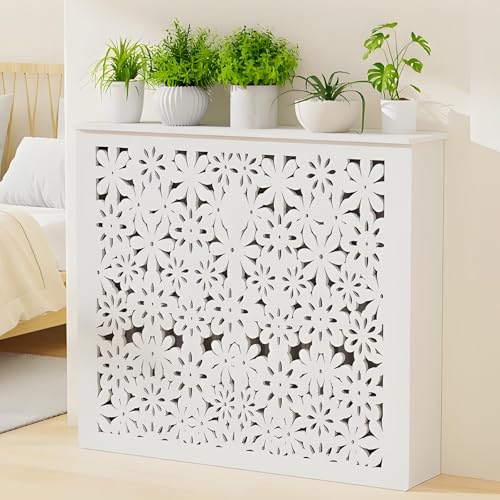
Generic Modern Radiator Cover Cabinet White

Generic 2-Door Wrought Iron Fireplace with Tools Set

Generic Antique Chinese Scroll Flat Fireplace

Hemlock Home Brewing Kombucha Heating Wrap Temperature Control
High Efficiency Heating and Cooling Systems for Homes

High efficiency heating and cooling systems reduce energy use by adjusting output to match home needs. Heat pumps, for example, transfer heat instead of generating it, which can cut electricity use by up to 50% compared to electric resistance heating. A heat pump rated at 10,000 BTU consumes about 1 kW to run, making it cheaper to operate than a 1,500 W electric heater running at full power.
Hydronic radiant heat panels use hot water to warm surfaces in a room, transferring heat evenly with very little loss. They often run at lower water temperatures than baseboard heaters, saving energy and improving comfort. Installation requires water lines and a boiler or water heater, which adds upfront cost but pays off over time.
Heat pumps stand out as the most efficient home heating systems because they move heat instead of generating it. In winter, they extract heat from outside air or the ground and pump it indoors, delivering 2 to 4 times more heat energy than the electricity they consume. Heat pumps also cool in summer by reversing the process, combining heating and cooling in one system efficiently.
Infrared heaters convert electricity directly into radiant heat, warming objects and people rather than the air. They’re efficient in small zones or spot heating but less practical for whole-house use.
Central heating systems using forced air or radiant floors make sense when you need to heat many rooms or the entire house consistently. Radiant floors are energy efficient when paired with a heat pump or boiler because their large surface area requires lower water temperatures.
For most homeowners seeking energy efficient home heating, heat pumps paired with hydronic radiant panels or well-insulated radiant floors offer the best mix of efficiency, comfort and flexibility. Infrared works well for supplemental or zone heating in colder rooms or basements.
Infrared Heating and Radiant Heat Explained
Infrared heating works by emitting infrared radiation, which heats objects and people directly instead of warming the air. This creates immediate, focused warmth that feels natural, like sunshine on your skin.
Infrared heating works by emitting infrared rays that warm objects and people directly, rather than heating the air. This creates a comfortable feeling of warmth even at lower air temperatures. Radiant heat panels use this principle to provide steady, efficient heat with minimal air movement, which helps reduce heat loss through drafts.
Infrared or IR heating is especially energy efficient when used for zone heating—targeting specific rooms where people spend time—because it avoids heating unused spaces. This can cut energy use compared to whole-house convection systems that warm all the air.
Safety is vital with infrared heaters indoors. Choose models with tip-over and overheat protection, keep at least 3 feet of clearance from combustibles, and never leave them unattended or running while you sleep unless the manufacturer explicitly allows it.
Radiant heating is among the most efficient home heating methods because it reduces heat loss through air movement and keeps temperatures steady. Both infrared and hydronic radiant systems excel at providing comfortable warmth with lower energy consumption than traditional forced-air heaters.
For steady, efficient heat that doesn’t dry out air or stir up dust, hydronic radiant panels like the Hydronic Radiant Heat Control Panel are a solid choice. Infrared heaters handle quick, targeted warmth well, making them good companions in a layered heating strategy.
How to Size Your Heating System and Estimate Running Costs
The most cost efficient home heating depends on matching your heater’s output to your space’s heat loss, avoiding oversize and wasted fuel or electricity.
To size your heating system, calculate your room’s heat loss by multiplying its volume by a factor based on insulation quality, typically 4 to 6 BTU per cubic foot for average insulation. For instance, a 12 × 14 × 8 ft room (1,344 cubic feet) with average insulation needs about 6,720 to 8,064 BTU. Then choose a heater with at least that output. For electric heaters, 1,000 W equals roughly 3,412 BTU, so this room would need a 2,000 to 2,500 W heater.
To convert BTUs to watts for electric heaters, divide by 3.41. So 20,000 BTU equals about 5,870 W. If you choose a space heater rated 1,500 W, you’d need roughly four units or a larger central system to meet that load.
Running costs vary by fuel type. At $0.17 per kWh, running a 1,500 W electric heater for 8 hours costs 1.5 kW × 8 h × $0.17 = $2.04 per day. Propane at $3 per gallon delivers about 91,500 BTU, so burning 20,000 BTU costs about $0.66, less than a quarter of the electric cost for the same heat output. Oil heating falls between, depending on market prices.
Avoid oversizing your heater. A unit that’s too powerful will short cycle—turning on and off frequently—wearing out components and using more energy than a properly sized system. It also causes uneven temperatures and discomfort.
For many homes, hydronic radiant panels or heat pumps offer the best balance of comfort, efficiency, and running costs. Electric resistance heaters can be cost effective only in small spaces or mild climates, while propane and oil remain economical in colder areas with proper ventilation and maintenance.
Learn more about efficient systems and sizing principles in our guide to Best Heat Pump Solutions for Efficient Home Heating!.
Safety and Certification for Home Heating Equipment
Safety certification from organizations like UL or ETL ensures a heater meets electrical and fire safety standards. Look for tip-over switches and overheat protection, especially in portable electric heaters. Fuel-burning units require proper ventilation and carbon monoxide detectors. Never use outdoor-only heaters indoors, and follow manufacturer instructions strictly.
Indoor propane heaters must have oxygen depletion sensors (ODS) to shut down the unit if oxygen levels drop dangerously low. This sensor is critical to prevent carbon monoxide buildup, a risk with unvented propane appliances.
If you’re using wood or pellet stoves, annual chimney and vent inspection and cleaning are essential to prevent creosote buildup and chimney fires. Check clearances to combustibles too.
Oil heating systems must be installed and maintained according to local codes and manufacturer instructions to avoid leaks and combustion hazards.
For propane heating options, vented stoves that exhaust combustion gases outside the home offer safer, cleaner heat than unvented models. Always verify that your chosen model is approved for indoor use and installed with proper venting.
If you want to explore propane heating further and find models suited for home use, see our dedicated guide on cost effective heating solutions for drafty homes.
Underfloor Heating and Other Hidden Heating Benefits
Underfloor heating stands out as one of the most comfortable and energy efficient home heating systems available in 2025. By warming floors directly, it creates an even, gentle heat that rises naturally, reducing the need to run high output heaters.
Installation requires planning, making underfloor systems ideal for new builds or major remodels where floors are accessible. Retrofits are possible but often expensive and disruptive, so they’re less common in established homes.
Pairing underfloor radiant heat with hydronic radiant heat panels boosts efficiency. The hydronic panels can handle quick temperature adjustments while the floor maintains steady background warmth, cutting fuel use and providing consistent comfort.
Besides energy savings, underfloor heating operates silently without fans or blowers, eliminating noise that some heaters produce. It also doesn’t circulate dust or allergens, benefiting allergy sufferers and improving indoor air quality compared to forced-air systems.