Discover the Best Heat Pump System for Efficient Home Comfort
On this page 8 sections
- Heat Pump System Comparison
- Best Heat Pump Systems for Home Heating and Cooling
- How Heat Pump Systems Fit Into Your Home
- Choosing the Right Heat Pump for Your Space
- Running Costs and Energy Efficiency Explained
- Safety, Certification, and Installation Tips
- Choosing Smart Controls and Thermostats for Heat Pumps
- Questions People Ask
Heat Pump System Comparison
| Rank | Model | Best for | Cooling & Heating Capacity | Energy Efficiency (SEER2) | Smart Controls | Price |
|---|---|---|---|---|---|---|
| 1 | YITAHOME 12000 BTU Mini Split Heat Pump SystemBest for Most Homes | Heating and cooling spaces up to 750 sq ft with smart, quiet operation | 12000 BTU | 20 SEER2 | WiFi, Alexa compatible | Check price |
| 2 | Goodman 3 TON 15 SEER2 R-32 Heat Pump System with Air HandlerBest for Whole-House | Heating and cooling large homes or multiple rooms with central air handler | 3 TON | 15 SEER2 | — | Check price |
| 3 | R.W.FLAME Small Space Ceramic Heater with Remote and TimerBest for Small Rooms | Heating bedrooms, offices, or garages up to 200 sq ft quickly and quietly | 1500 W (electric) | — | Remote, thermostat | Check price |
| 4 | DREO Portable Electric Heater with Thermostat and RemoteBest for Quiet Operation | Heating bedrooms or offices with ultra-quiet performance and precise thermostat control | 1500 W (electric) | — | Remote, thermostat | Check price |
| 5 | Aowel Non-Programmable Thermostat for Heat Pump SystemsBest for Thermostat Upgrade | Controlling heat pump and conventional single-stage heating/cooling systems | — | — | None | Check price |
Heat pump systems are a popular choice for efficient home heating and cooling, offering a versatile alternative to traditional HVAC setups. The best models balance energy savings, performance in cold weather, and ease of use.
Many believe all heat pumps are alike, but the truth is only some deliver high efficiency and smart controls that reduce your energy bills. This guide helps you pick the right system for your home’s size, climate, and budget.
Best Heat Pump Systems for Home Heating and Cooling
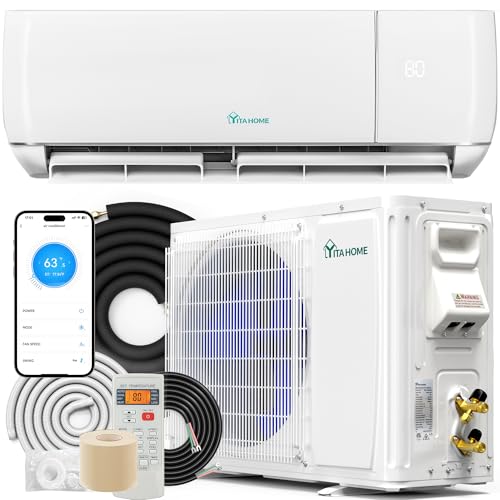
YITAHOME 12000 BTU Mini Split Heat Pump System

Goodman 3 TON 15 SEER2 R-32 Heat Pump System with Air Handler

R.W.FLAME Small Space Ceramic Heater with Remote and Timer

DREO Portable Electric Heater with Thermostat and Remote

Aowel Non-Programmable Thermostat for Heat Pump Systems
How Heat Pump Systems Fit Into Your Home
A heat pump is a specific type of HVAC system designed to move heat rather than generate it by burning fuel or using electric resistance.

HVAC stands for heating, ventilation, and air conditioning, and it covers all the ways a home gets heated or cooled. A heat pump falls under this umbrella, but it works differently from traditional furnaces or air conditioners.
Heat pumps use a refrigerant cycle to transfer heat from outdoors to indoors in winter and reverse the process in summer for cooling. This means one system handles both heating and cooling efficiently by moving heat instead of creating it.
Because heat pumps rely on extracting heat from the outside air or ground, they use electricity to power compressors and fans, but they typically consume less energy than electric resistance heaters of similar output.
Typical heat pump systems have two main parts: an outdoor unit where heat exchange happens with the environment, and an indoor unit that distributes the conditioned air or heats the home through air handlers or ductwork.
In contrast, some HVAC systems combine different equipment: a gas furnace for heating, a separate air conditioner for cooling, and ventilation components. Heat pumps consolidate these functions into one, focusing on energy efficiency and versatility.
Not every HVAC system is a heat pump, but every heat pump is part of the HVAC family. Knowing this helps you understand your options when upgrading or installing climate control in your home.
If your home needs both heating and cooling, a heat pump system like the YITAHOME 12000 BTU Mini Split offers a compact, energy-saving solution for spaces up to 750 square feet. For larger or more complex setups, other HVAC configurations might fit better.
To explore heat pump types and how to choose the right one, see Discover the Best 2 Ton Heat Pump System for Your Home!.
 Heating System Upgrade PlannerChoose between a heat pump, a furnace, a boiler or a hybrid with your own numbers, and hire the right installer.Every system compared side by side25 questions for contractors, red flagsRunning-cost, payback and quote calculator (Excel)
Choosing the Right Heat Pump for Your Space
A 12,000 BTU mini split heat pump typically heats or cools rooms up to about 750 sq ft, depending on insulation and climate. Its energy efficiency ratings help you estimate running costs and comfort levels.
Mini split heat pumps with 12,000 BTU capacity suit most medium rooms up to roughly 750 square feet. They’re efficient, quiet, and avoid duct losses common in central systems.
Efficiency ratings like SEER2 (Seasonal Energy Efficiency Ratio) and HSPF (Heating Seasonal Performance Factor) directly affect your running costs. Higher SEER2 means better cooling efficiency; higher HSPF means better heating. Modern systems often reach SEER2 ratings above 16 and HSPF over 9, cutting energy bills compared to older units.
Inverter technology is a big step up. Instead of cycling fully on or off, an inverter modulates compressor speed to maintain temperature steadily. This reduces energy spikes and wear. Multi-mode operations—heating, cooling, dehumidifying, and fan-only modes—add versatility and comfort control throughout the year.
Smart controls and thermostat compatibility are worth considering now. Systems that connect to Wi-Fi let you program schedules, adjust settings remotely, and integrate with home assistants. Compatibility with programmable or smart thermostats also ensures precise temperature control and energy savings.
Installation choices boil down to mini split versus ducted systems. Mini splits, like the YITAHOME model, are ductless and easier to install in existing homes, avoiding ductwork losses. Ducted systems serve multiple rooms through vents but require sealed and insulated ducts to keep efficiency high. Your home’s layout, insulation, and existing HVAC infrastructure guide this choice.
For commercial buildings or larger homes, multi-zone ducted or larger capacity systems with R-32 refrigerant offer high efficiency and zoning flexibility. The Goodman 3 TON 15 SEER2 Multi-Position R-32 Heat Pump System suits these applications, providing efficient heating and cooling with versatile installation options.
In sum, pick a heat pump system sized to your square footage with strong SEER2 and HSPF ratings, inverter-driven compressor, and smart control compatibility. Mini splits excel in retrofit scenarios, while ducted systems serve whole-house or commercial needs efficiently.
Running Costs and Energy Efficiency Explained
Running a 1,500 W heat pump for 8 hours a day uses 12 kWh; at 17 cents per kWh, that’s about $2.04 daily. Comparing models means checking both their wattage and seasonal energy efficiency ratio (SEER).
Calculate power use by converting BTUs to watts: 1,000 BTU/hr roughly equals 293 watts. A 12,000 BTU heat pump uses around 3,500 watts at full power. Running that for 8 hours at 17 cents per kWh costs about $4.75 (3.5 kW × 8 hr × $0.17). Inverter technology lowers this by adjusting output to match demand instead of cycling on and off, often saving 20-30% energy.
High efficiency heating systems like inverter mini splits modulate compressor speed, running longer but using less electricity overall. This avoids energy waste and keeps indoor temperatures steady.
Environmental impact matters too. Most modern heat pumps use refrigerants like R-32 or R454B. R-32 has a global warming potential (GWP) around 675, while R454B is lower at about 466, making it a greener choice. Both outperform older refrigerants with much higher GWP numbers.
Cost-saving modes on many heat pumps reduce runtime by limiting maximum output or using programmable timers. An ECO mode can cut energy use by around 15%. Using timers to heat your home only when you need it avoids running the system all day and night, trimming your electric bill accordingly.
Energy efficient heating systems cost more upfront but save money over time through lower electric bills and reduced wear. Look for an ENERGY STAR label and an inverter-driven compressor for the best value.
Safety, Certification, and Installation Tips
Install heat pumps following manufacturer instructions and local codes, especially for electrical connections and refrigerant handling. Certified technicians ensure safe setup and maintain warranty coverage.
Licensed professional installation is crucial for mini splits and ducted systems. Incorrect setup can lead to refrigerant leaks, poor performance, or electrical hazards. Professionals ensure proper line sizing, refrigerant charge, and secure mounting.
Thermostat compatibility affects system efficiency. Not all thermostats work with heat pumps; choose models designed for heat pump control, like the Aowel 2 Heat/ 1 Cool Non-Programmable Thermostat. Programmable and smart thermostats can further improve efficiency by optimizing schedules and temperature setbacks.
Proper refrigerant handling protects your home and the environment. Refrigerants require careful charging and leak testing. Handling by certified technicians prevents exposure risks and ensures the system runs efficiently.
Indoor noise levels affect comfort. Heat pumps with inverter compressors run quieter by avoiding constant on/off cycling. Check decibel ratings—30 to 40 dB is typical for indoor units, roughly the sound of a quiet office.
Matching components like outdoor units, indoor air handlers, and thermostats ensures smooth communication and peak efficiency. Mixing brands or incompatible parts can reduce performance and cause system errors.
Choosing Smart Controls and Thermostats for Heat Pumps
A heat pump in an HVAC system moves heat to warm or cool your space efficiently, rather than generating heat directly. The best temperature setting for comfort usually falls between 68°F and 72°F, balancing energy use and coziness.
Thermostats compatible with heat pumps come mainly in three types: standard non-programmable models, programmable thermostats, and smart thermostats with WiFi and remote control capabilities. Non-programmable units keep things simple but don’t adjust automatically.
Programmable thermostats let you set schedules for different times of day, saving energy when you’re away or asleep. Smart thermostats add features like app control, voice commands, and learning your habits to optimize comfort and efficiency without constant manual input.
Precise temperature and humidity monitoring is crucial for heat pumps, which can struggle with humidity control in some climates. A smart thermostat that reads both helps maintain consistent comfort and prevents issues like musty air or over-drying.
Using smart controls reduces energy use by avoiding unnecessary heating or cooling cycles. For example, remotely lowering the heat when leaving home for a few hours can cut costs without sacrificing comfort. These controls also provide useful reports and alerts, making it easier to spot performance problems early.
If your heat pump is a mini split like the YITAHOME 12000 BTU Mini Split Heat Pump System, smart thermostats often integrate tightly with the unit’s built-in features. This ensures smooth operation and makes it easier to fine-tune settings for the size and insulation of your space.
The Aowel 2 Heat/ 1 Cool Non-Programmable Thermostat for Home Heating works well if you want straightforward temperature control without the bells and whistles. But for most, the energy savings and convenience of WiFi-enabled models justify the investment.