


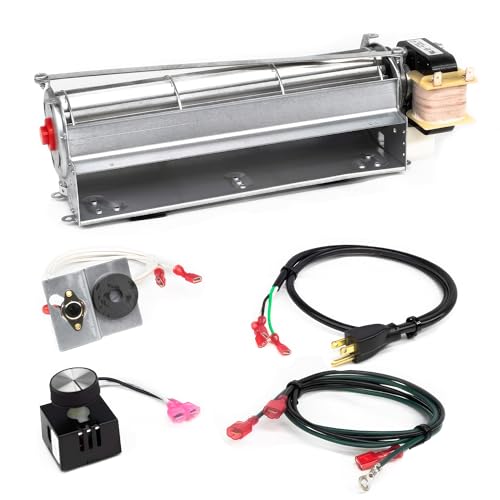


The common mistake is buying a blower that fits the firebox but not the fireplace model, then discovering the motor, mount, or thermostat wiring doesn’t match. That mistake can turn a simple upgrade into a return label and a cold weekend.
A blower helps most when your fireplace makes heat but leaves it parked around the firebox. The fan pushes that warmth into the room faster, and the right kit depends on the insert style, the available compartment, and how much noise you can live with.
Fireplace Blower Comparison
| Model | Best for | Airflow | Noise | Controls | Fit | Price |
|---|---|---|---|---|---|---|
| AC Infinity AIRBLAZE S10 Universal Blower Fan | Quietest Operation | 120 CFM | 26 dBA | 10-speed wireless remote | Universal standard size | See it on Amazon |
| FireplaceBlowersOnline GFK4A Heatilator Blower Kit | Highest Airflow | 130 CFM | — | Rheostat speed, thermostat | Heatilator and similar | See it on Amazon |
| Adviace GFK-160A Fireplace Blower Kit | Balanced Quiet Power | 160 CFM | — | Rheostat variable speed | Heat-N-Glo, Heat & Glow, Hearth & Home | See it on Amazon |
| MyFireplaceBlower GFK-160A Fireplace Blower Kit | USA Made Quiet Blower | 165 CFM | — | Variable speed switch | Heat & GLO, Majestic, Hearth & Home, Quadra-Fire | See it on Amazon |
| Pellethead Kingsman Gas Fireplace Blower Kit | Kingsman Model Fit | — | — | Wiring, hardware included | Kingsman gas fireplaces | See it on Amazon |
Best Fireplace Blowers By Use
AC Infinity AIRBLAZE S10 Universal Blower Fan
FireplaceBlowersOnline GFK4A Heatilator Blower Kit
Adviace GFK-160A Fireplace Blower Kit
MyFireplaceBlower GFK-160A Fireplace Blower Kit
Pellethead Kingsman Gas Fireplace Blower Kit
How To Choose The Right Fireplace Blower
Start by identifying your fireplace type because compatibility is the first hurdle. Traditional built-in fireplaces usually don’t have a blower compartment and need an add-on blower kit, often called a universal retrofit kit. Inserts and newer models often come with a blower compartment, so you might only need a model-specific replacement fan.
Your fireplace type also answers what a propane or gas fireplace is. A propane fireplace burns propane fuel stored in tanks, while a gas fireplace usually runs on natural gas piped from your utility. Both types can benefit from blower fans to distribute heat better, but their blower kits differ in fit and wiring.
Airflow capacity, measured in cubic feet per minute (CFM), tells you how much warm air the blower pushes into your room. Most blower kits for fireplaces range from about 120 to 160 CFM. Closer to 160 means more heat spread but also usually more fan noise. Around 120 CFM strikes a good balance for typical rooms.
Look at the motor type and control options. Ball-bearing motors last longer under heavy use, while DC motors tend to run quieter and use less electricity. Controls vary from a simple rheostat that adjusts speed manually to wireless speed controls or even app-based systems that let you adjust fan speed remotely.
Mounting style can make or break your installation experience. Kits with magnetic mounts and prewired plugs are easier for a beginner to install, requiring only basic tools and no custom wiring. Kits needing custom brackets or hardwiring call for some electrical skill or professional help.
Which Pick Fits Which Fireplace
If you want the best all-around blower fan, go for the AC Infinity AIRBLAZE S10. It’s universal, quiet at 26 dBA, and has wireless speed control, perfect for most fireplaces needing better heat circulation without a racket.
For large rooms or if you’re replacing a factory blower, the Adviace GFK-160A’s 160 CFM airflow makes it the top choice. It fits many model-specific fireplaces and moves enough air to heat bigger spaces efficiently.
The quietest option is the AC Infinity AIRBLAZE S10 with its DC motor and 10-speed control. It’s ideal for bedrooms or offices where minimal fan noise matters most.
If you want a straightforward budget replacement without extra control features, the FireplaceBlowersOnline GFK4 offers reliable heat circulation without bells and whistles.
For smart home fans, the AC Infinity AIRBLAZE T14 includes WiFi app integration and scheduling, letting you adjust blower speed remotely without leaving your chair.
| Pick | Use Case | Airflow (CFM) | Noise Level (dBA) | Control Features |
|---|---|---|---|---|
| AC Infinity AIRBLAZE S10 | Best overall, quiet, universal | 120 | 26 | Wireless speed control |
| Adviace GFK-160A | Best for large rooms, model-specific | 160 | ~35 | Magnetic thermostat |
| AC Infinity AIRBLAZE S10 | Quietest, for bedrooms/offices | 120 | 26 | 10-speed DC motor |
| FireplaceBlowersOnline GFK4 | Best budget, simple replacement | ~150 | ~35 | Basic rheostat |
| AC Infinity AIRBLAZE T14 | Best smart controls, WiFi | 140 | 28 | WiFi app integration |
Can a propane fireplace heat your house? It depends on size and insulation, but with a blower spreading heat efficiently, a propane fireplace can warm a room or small open area well. Free-standing propane fireplaces also help, but they’re best as supplementary heat, not whole-house sources.
Propane fireplaces are generally efficient, converting much of the fuel’s 91,500 BTU per gallon into usable heat. Adding a blower boosts efficiency by pushing warm air into living spaces instead of letting it pool around the firebox.
Regarding Heat-N-Glo gas fireplaces, most models don’t run their blower fans without power, so a battery backup is handy. Some models can start during a power outage if they have a standing pilot and battery-assisted ignition.
Fan heat blowers on natural gas heaters work similarly, circulating warm air to improve heat distribution. Compatibility depends on blower motor specs and mounting, but many blower kits fit natural gas fireplaces with minor adjustments.
How Much Heat A Blower Can Move
A blower moving 150 CFM can raise the temperature of a 400 square foot room by 8 to 12°F in about 20 minutes if the fireplace is already producing heat. That’s the key: the fan doesn’t create heat but spreads what the firebox or heat exchanger delivers.
Say you have a 160 CFM blower in a modest living room measuring about 12 by 14 feet (168 square feet). The blower circulates warm air that would otherwise rise to the ceiling and stay there. By mixing that warm air back down to occupant level, the room feels warmer even if the thermostat only rises a few degrees.
Fireplaces running on propane or natural gas produce similar heat output at the same flame setting, but higher flame settings deliver more heat. The blower simply moves more warm air as the fire produces it; it doesn’t increase the flame’s heat output.
Because better circulation reduces the need to run the fireplace as long to maintain comfort, you save fuel and money. That’s where blower fans pay off on operating costs, not by creating extra heat.
Safety, Noise, And Long-Term Life
Look for blower fans with UL, ETL, or CSA certification to ensure they meet safety standards. Automatic thermal switches like snap discs or magnetic thermostats start and stop the fan at preset temperatures to avoid overheating. The power cord should be grounded and insulated, especially near hot surfaces inside the fireplace.
Typical blower fans last about 5 to 10 years depending on build quality and maintenance. Ball-bearing motors outlast sleeve-bearing ones and run quieter. Loose mounts, sleeve bearings, and high RPM cause most noise issues. Fans with rubber feet and lower-speed settings usually stay quieter, often under 35 dB, quieter than a refrigerator.
Dust the blower intake and housing once per heating season, check the cord and switch for wear, and replace motors that start squealing. Neglecting maintenance shortens life and raises noise.
Blower fans don’t directly affect indoor air quality since they circulate room air, not combustion gases. Proper venting and carbon monoxide alarms remain essential for safety.
Choosing a quality blower fan and maintaining it extends lifespan and keeps operation quiet, safe, and efficient for years.
Before You Buy Or Call For Help
Installing a fireplace blower fan isn’t usually a beginner’s weekend project. Plug-in kits can be straightforward, but if your blower needs hardwired power, gas line adjustments, venting changes, or access behind a sealed insert, call a professional. These tasks risk voiding your appliance’s listing or creating hazards if done wrong.
Maintenance matters for blower longevity. Keep the fan clean from dust and ash, check the thermal snap disc for proper operation, and ensure the motor bearings stay lubricated if specified. A ball-bearing motor like in the Adviace GFK-160A lasts longer but still benefits from seasonal inspection.
A large indoor woodburning stove or fireplace will often have a dedicated blower compartment or require a universal retrofit kit. Measure available space carefully and confirm whether an OEM fan or a universal kit fits your model; wrong kits waste time and money.
Switching a gas fireplace to electric changes heat output and circulation dynamics. Electric inserts often have built-in fans optimized for their heat load. Adding a blower designed for gas may disrupt the airflow and reduce efficiency.
Frequently Asked Questions
Which blower fan type best fits my specific fireplace model?
How much can a blower fan actually raise room temperature?
What is the expected lifespan of a typical fireplace blower fan?
How noisy is a blower fan during operation?
Are smart or Bluetooth-enabled blower fans worth it?

HeaterGuides covers home heating, water heating and HVAC: how the equipment works, what it costs to run, and how to use it safely.
