Space Heaters for Large Spaces: Coverage Without Cold Spots
On this page 8 sections
- Space Heater Comparison for Large Rooms
- Best Space Heaters for Large Rooms and Open Areas
- How to Choose Space Heaters for Large Rooms
- Sizing Your Heater for Specific Large Room Layouts
- Running Costs and Energy Efficiency of Large Space Heaters
- Safety and Certification Standards for Large Indoor Heaters
- How Oscillation and Thermostat Technology Improve Large Room Heating
- More Questions, Answered
Space Heater Comparison for Large Rooms
| Rank | Model | Best for | Heat Output (W) | Oscillation Angle | Noise Level (dB) | Price |
|---|---|---|---|---|---|---|
| 1 | DREO 30″ Ceramic Space Heater with RemoteBest for Wide Coverage | Large rooms up to 300 sq ft needing wide, quiet heating | 1500 | 120° | 25 | Check price |
| 2 | DREO 1500W Ceramic Space Heater with ThermostatQuiet & Efficient | Medium to large rooms needing fast, quiet heat with smart controls | 1500 | 70° | 34 | Check price |
| 3 | DREO 25″ Electric Space Heater with ThermostatFast Heat & Quiet | Large rooms 100-270 sq ft needing quick, quiet warmth | — | 70° | 25 | Check price |
| 4 | FLANUR 1500W Portable Electric Space HeaterQuiet & Portable | Rooms up to 220 sq ft needing quiet heat and portability | 1500 | — | 23 | Check price |
| 5 | Dr Infrared Heater DR-968 Portable Space HeaterInfrared Dual Heat | Large rooms needing infrared and ceramic combined heating | 1500 | — | 39 | Check price |
Heating large rooms well requires more than just brute power; it demands even heat distribution, energy-smart features, and safety you can trust.
Many believe infrared alone is enough to warm big spaces, but infrared is only part of the story. Combining it with convection or ceramic elements spreads warmth more evenly and efficiently.
Best Space Heaters for Large Rooms and Open Areas

DREO 30″ Ceramic Space Heater with Remote

DREO 1500W Ceramic Space Heater with Thermostat

DREO 25″ Electric Space Heater with Thermostat

FLANUR 1500W Portable Electric Space Heater
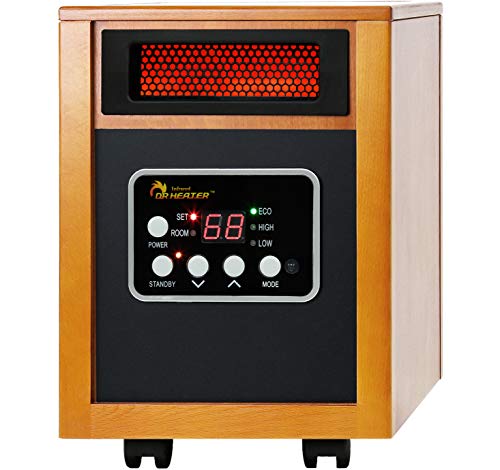
Dr Infrared Heater DR-968 Portable Space Heater
How to Choose Space Heaters for Large Rooms
Space heaters for large rooms typically need 1,000 to 1,500 watts to be effective, depending on the room’s insulation and layout.

For rooms over 250 square feet, a space heater rated between 1,000 and 1,500 watts is usually necessary. That range provides enough heat output to raise the air temperature noticeably without overloading your home’s circuits. A 1,500-watt heater running for 8 hours uses 12 kWh; at 17 cents per kWh, that costs about $2.04 a night, which is reasonable for large-room comfort.
Oscillation helps spread heat more evenly across a large room, reducing cold spots by moving warm air where it’s needed.
Heat Types and Their Performance in Large Rooms
Ceramic heaters use a PTC ceramic element to heat quickly and deliver convection warmth with a fan. They’re good for rapid heat-up and energy efficiency, making them excellent for medium to large rooms where fast warmth is welcome.
Infrared heaters warm objects and people directly, not the air. This feels instant but can leave parts of a large room cold if the beam doesn’t reach every corner. That’s why a dual heating system that combines infrared with a convection element, like the Dr Infrared Heater DR-968, provides more even warmth in large spaces.
Oil-filled radiators heat a fluid inside the unit, which then radiates heat steadily even after the power cycles off. They operate silently and are excellent where quiet matters, but they warm slowly and perform best in enclosed areas rather than open large spaces.
Thermostats and ECO Modes Save Energy
A precise thermostat keeps the room at your set temperature by cycling the heater on and off. This avoids overheating and waste. ECO modes adjust power use to balance comfort and electricity cost, often by lowering heat output when the room approaches the target temperature.
The DREO Space Heater Large Room model maintains a consistent temperature using a sensitive thermostat and oscillation, which helps heat large rooms without running full power constantly.
Noise Levels Affect Where You Can Use a Heater
Quiet operation is important in bedrooms, offices, or anywhere you need peace. Oil-filled heaters often run silently since they have no fan. Ceramic heaters with fans typically operate around 25 to 40 decibels — about the noise of a soft whisper to a quiet library. The DREO 30″ Space Heater runs at an ultra-quiet 25 dB, letting you focus or sleep undisturbed.
Louder models may suit garages or workshops where noise is less of a concern, but for living spaces, check the decibel rating before you buy.
Choosing a large space heater means balancing wattage, heat type, oscillation, thermostat precision, and noise. The right combination ensures your big room heats efficiently and comfortably, without cold spots or wasted energy.
If you want to explore strong output heaters designed for big rooms, consider checking electric heaters made for big rooms next for more tailored picks.
 Winter Heating Bill CutterSee what every heater in your home really costs, heat the rooms you use, and cut the waste in 30 days.Cost-per-hour tables for every heaterThermostat schedule and draft-proofing planRunning-cost and bill calculator (Excel)
Sizing Your Heater for Specific Large Room Layouts
Heating a large room effectively means choosing a heater with enough wattage to match the square footage, typically around 10 watts per square foot. For example, a 300-square-foot space needs a 3,000-watt heater to maintain comfortable warmth. Smaller heaters won’t keep the chill at bay, and oversized units waste energy without making the room feel twice as warm.
Room layout changes how heat spreads. Open floor plans let warm air circulate more easily, so one well-placed heater can cover a large area. Enclosed rooms or spaces with lots of walls and doors trap heat, requiring either a more powerful heater or multiple units to reach every corner.
Oil-filled radiators warm up slowly, often taking 15 to 20 minutes to reach full heat output, making them better suited for enclosed rooms rather than open floor plans.
Where you put the heaters matters just as much as their wattage. Position them near where people spend time, but not too close to walls or furniture that block airflow. Elevated spots or corners near doorways work well to encourage heat circulation across the room. Avoid placing heaters under windows, where heat loss is highest.
A 1,500-watt heater typically covers up to 150 square feet comfortably. Multiply that by the size of your room to find how many heaters or how much wattage you need. For example, a 450-square-foot living room will need three 1,500-watt heaters or a single 4,500-watt system, though multiple units usually give more balanced warmth.
Keep in mind how the heater’s features help with coverage. Models with oscillation spread heat wider, reducing cold spots, while heaters with thermostats maintain a steady temperature without constant running. Using multiple heaters also lets you zone your space, heating only occupied areas and saving energy.
Combining wattage recommendations with thoughtful placement lets you tailor your heating setup to any room shape or size. That way, you avoid both freezing corners and wasted electricity.
If you want to explore how to pick the right heater for your large space, check out these electric heaters made for big rooms.
Running Costs and Energy Efficiency of Large Space Heaters
The most cost-effective heating for large rooms depends on your heater’s wattage, runtime, and how well it maintains temperature. A typical 1,500-watt electric heater running for 8 hours at 17¢ per kWh uses 12 kWh, costing about $2.04 per day. Multiply that by 30 days, and you get roughly $61.20 monthly if you run it daily at full power.
Infrared heaters warm objects and people directly rather than heating all the air, making them efficient in large spaces with high ceilings or drafts. However, infrared alone doesn’t spread heat evenly across a large room; combining it with a convection element, like a ceramic fan heater, improves coverage and overall efficiency.
Solar-powered space heaters for indoor use aren’t practical as main heat sources. They rely on sunlight availability and generally lack enough output to cover large spaces consistently. Battery-operated heaters face similar limits, with runtime and power constraints that make them better suited for small, temporary spots rather than sustained large-room heating.
Comparing heater types, ceramic heaters heat up quickly and use electricity efficiently, offering precise thermostat control to cycle power on and off and avoid waste. Infrared heaters excel in targeted warmth but don’t replace convection entirely in big rooms. Oil-filled radiators run quietly without a fan, retain heat after switching off, and are energy efficient over longer periods, but they take 15-20 minutes to warm a room fully and suit enclosed spaces better than open layouts.
Heaters with ECO modes and digital thermostats lower bills by cycling power based on the room temperature. For example, instead of running continuously, a thermostat cycles the heater on and off to keep the room near the set temperature. This reduces electricity use without sacrificing comfort, especially in well-insulated rooms. An ECO mode often lowers the maximum output or adjusts fan speed to save energy, which is noticeable when you don’t need full heating power all the time.
Running costs also depend on your heater’s efficiency at maintaining heat and how well heat distributes in the space. Oscillating heaters or those with fans spread warmth evenly, reducing cold spots and preventing the heater from running harder to compensate. Less cycling means lower energy consumption.
Safety and Certification Standards for Large Indoor Heaters
Electric space heaters designed for large rooms must include essential safety features like tip-over protection, overheat sensors, and cool-touch housing to prevent burns and fires. These features shut the unit off automatically if it tips over or overheats, reducing accident risk even if you forget to unplug it.
Look for heaters bearing ETL or UL certification marks. These certifications mean the heater has been independently tested to meet strict electrical safety standards, assuring you it won’t pose a shock or fire hazard under normal use. Models without these marks can be a gamble, especially in a large space where a malfunction could affect multiple people or damage costly property.
Safe operation also depends on following rules for placement and power supply. Never plug a large space heater into an extension cord or power strip; they must go directly into a dedicated 120 V wall outlet rated for at least 15 amps. Maintain at least 3 feet of clearance on all sides from combustibles like curtains, furniture, or papers to avoid fire risk.
Space heaters are not meant to run unattended overnight unless the manufacturer explicitly certifies that model for safe overnight use. Even then, it’s smart to have a working smoke alarm nearby and to double-check the heater’s automatic shut-off features before bed.
Non-electric options for indoor heating are very limited because propane, kerosene, and diesel heaters produce fumes that must be vented outdoors or require oxygen depletion sensors. Most indoor-rated models use these sensors, but even then, they need proper ventilation and CO alarms to be safe. Unvented gas or kerosene heaters indoors are not recommended due to carbon monoxide risks.
If you want the safest indoor non-electric heater, look for an indoor-rated propane heater with an oxygen depletion sensor and a sealed combustion system that vents exhaust outside. These units are rare and usually more expensive but provide heat without electric power and with much lower indoor air risk than unvented models.
At Walmart and similar stores, you’ll find a range of indoor space heaters mostly electric and certified for home use. The best picks for large rooms include models with robust safety features, ETL or UL marks, and clear operating instructions. Avoid cheap, unmarked models or those that use extension cords, as they increase fire risk and often lack reliable safety cutoffs.
How Oscillation and Thermostat Technology Improve Large Room Heating
Oscillation is key to spreading heat evenly across large rooms, reducing cold spots that make a space feel patchy and uncomfortable. Most effective large room heaters oscillate between 70° and 120°, sweeping warm air side to side so it reaches corners and areas behind furniture.
Whether a heater oscillates or not can make a noticeable difference. Without it, warm air tends to pile up near the heater, leaving distant spots chilly. For rooms over 200 square feet, oscillation isn’t just convenient; it’s nearly essential for consistent comfort.
Thermostats in space heaters use sensors to monitor room temperature, cycling the heater on and off to keep the air steady. The precision these thermostats offer can vary widely. Basic models may have a tolerance of several degrees, causing wider temperature swings and more frequent on-off cycling.
Advanced thermostats, like those found on models such as the DREO 30″ Space Heater, can maintain temperature within about 1°F by using digital sensors and microprocessors. This tight control reduces wasted energy, as the heater runs only as long as needed to maintain the set point.
Many modern heaters also include an ECO mode. This feature fine-tunes the thermostat’s cycling pattern to save energy by anticipating temperature changes, rather than reacting after the room cools down. For large spaces, ECO mode can lower operating costs without sacrificing comfort.
Oscillation combined with precise thermostat control delivers two main benefits. First, oscillation distributes heat evenly, preventing cold spots that lead to thermostat overshoot—where the heater runs too long chasing a distant chilled area. Second, a precise thermostat stops the heater from running unnecessarily, saving electricity.
For example, a 120° oscillation angle spreads heat over a wider arc, covering more floor area with each sweep. Put this together with a thermostat that cycles within 1°F, and the heater won’t overheat one side of the room or leave another side too cool.
Without oscillation, even the best thermostat can’t fix uneven heat distribution. And without a precise thermostat, oscillation wastes energy by running the heater longer than necessary. Both technologies are needed for truly efficient large room heating.
Oscillating heaters tend to use fans or motors, which add a slight noise level but usually stay below 40 dB—quiet enough for living rooms and offices. Some models, like the DREO series, keep noise as low as 25 dB, blending comfort and peace.
In short, oscillation is necessary to cover large room footprints effectively, while thermostat technology controls that coverage efficiently. Look for heaters that combine wide oscillation angles with digital or microprocessor thermostats and ECO modes. That combo improves comfort and cuts your heating bill.
