Five Electric Heaters for Mobile Homes That Use About 12 Cents an Hour
On this page 8 sections
- Electric Heater Comparison for Mobile Homes
- Top 5 Electric Heaters for Mobile Homes
- How Electric Heaters Fit Mobile Homes
- Key Features That Matter in Mobile Home Heaters
- Sizing and Running Costs for Mobile Home Heating
- Safety and Certification for Mobile Home Heaters
- What Competitors Miss About Mobile Home Heating
- Questions People Ask
Electric heaters are a popular choice for mobile homes due to their portability, safety features, and ease of use. Many people believe all electric heaters perform the same in mobile homes, but the truth is that performance varies widely based on heater type, size, and safety design.
This guide lists five electric heaters that stand out for mobile home use, compares their specs, and explains how to pick the right one for your space, with safety and running cost facts you won’t find elsewhere.
Electric Heater Comparison for Mobile Homes
| Model | Best for | Heat Output (Watts) | Safety Features | Room Coverage (sq ft) | Thermostat Type | Price |
|---|---|---|---|---|---|---|
| DREO 16 Inch Electric Space Heater | Best Overall | 1500 | Tip-over, overheat, auto-off, flame-retardant | 250 | Digital, 41-95°F | Why it is here |
| Lasko 23 Inch Oscillating Ceramic Tower Heater | Best for Medium Rooms | 1500 | Overheat, cool-touch exterior | — | Manual with 2 heat settings | Why it is here |
| BEYOND HEAT Milkhouse 1500W Space Heater | Best Durable Build | 1500 | Tip-over, overheat | — | Manual power levels | Why it is here |
| Coolfor 600W Ceramic Desk Heater | Best Low Wattage | 600 | Overheat, tip-over | — | None | Why it is here |
| GiveBest 450W Plug-in Space Heater | Best Plug-in Option | 450 | Overheat, flame-retardant material | — | Adjustable 60-90°F LED display | Why it is here |
Top 5 Electric Heaters for Mobile Homes
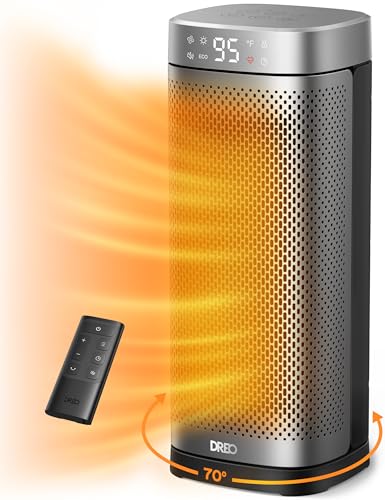
DREO 16 Inch Electric Space Heater

Lasko 23 Inch Oscillating Ceramic Tower Heater

BEYOND HEAT Milkhouse 1500W Space Heater

Coolfor 600W Ceramic Desk Heater

GiveBest 450W Plug-in Space Heater
How Electric Heaters Fit Mobile Homes

Electric heaters are often the best choice for mobile homes because they provide zone or supplemental heat without the need for venting or combustion, which gas furnaces require. Unlike gas heaters, electric models don’t produce carbon monoxide or need special ventilation, making them safer and easier to install in the compact, sealed spaces of mobile homes.
Gas furnaces do heat faster and can warm an entire mobile home quickly, but they come with the added cost and complexity of installing vents and reliable carbon monoxide detectors. They also need regular maintenance to keep running safely, typically lasting around 20 years with care.
Electric heaters, by contrast, draw significant current — a 1,500 watt heater pulls about 12.5 amps at 120 volts, which is nearly half the load of a 30 amp electrical service often found in mobile homes. This limits how many heaters you can run at once without tripping breakers or overloading the wiring.
Mobile home electrical systems usually have smaller breakers and thinner wiring than standard homes, so you can’t just plug in multiple high-wattage heaters without checking your panel’s capacity. Planning your heater wattage and placement is critical to avoid nuisance trips or electrical hazards.
Electric heaters last longer and need less maintenance than gas furnaces, often up to 30 years, but they cost more to run. Using them as the sole heat source is possible but usually means higher monthly electric bills compared to gas. Many mobile home owners combine electric heaters with insulation upgrades or supplemental heating methods to balance comfort and cost.
Key Features That Matter in Mobile Home Heaters
Safety features are crucial when choosing an electric heater for a mobile home. Tip-over protection, which cuts power if the heater falls, is essential in tight spaces to prevent fires. Without it, even a small nudge could cause a dangerous situation.
Overheat shutoff is an essential safety feature. It cuts power if internal parts get too hot, preventing fires before they start. Many heaters include both overheat and tip-over protections, but some popular models lack tip-over switches, so check before buying.
Digital thermostats on electric heaters vary widely in accuracy and control. Models with ±1°F increments provide much better comfort and energy savings than those with 5-degree steps. Precise temperature control avoids wasted electricity and keeps your mobile home evenly warm.
The type of heating element also matters. Oil-filled radiator heaters hold heat longer after the element cycles off and run silently, making them good for bedrooms or all-night use. They tend to be bulky and heavy, which can be a downside in small mobile homes.
Ceramic heaters with fans deliver heat quickly and spread it around the room faster, but the fan noise might be noticeable in quiet spaces. Oscillating models improve heat distribution, so look for heaters that oscillate if you want even warmth throughout your mobile home.
Wattage affects both how fast and how much heat a unit produces. Most mobile home heaters top out at 1,500 watts to avoid overloading circuits. Choosing a heater with oscillation and a precise thermostat can make that wattage go further by spreading heat efficiently and avoiding temperature swings.
Sizing and Running Costs for Mobile Home Heating
Choosing the right heater size for your mobile home means aiming for about 10 watts per square foot of space you want to heat. That rule of thumb usually covers supplemental heat needs efficiently.
Most mobile home rooms range from 150 to 250 square feet. A 1,500 watt heater can handle the upper end of this comfortably, making it a common choice. For example, a 1,500 watt heater covers roughly 150 square feet at 10 watts per square foot, but can stretch to 250 square feet if your insulation is decent and you supplement with other heat sources.
Running a 1,500 watt heater for 8 hours consumes 12 kilowatt-hours (kWh) of electricity. At a typical rate of $0.17 per kWh, that adds up to about $2.04 per night. This calculation breaks down as 1,500 watts ÷ 1,000 × 8 hours × 0.17 dollars. For more efficient options, check out the propane boilers for home heating.
If your climate is mild or your space is smaller, consider lower-wattage heaters between 450 and 600 watts. These use less electricity and cost less to run but won’t heat large rooms effectively.
One risk with running multiple heaters in a mobile home is overloading your electrical circuits. Typical mobile home breakers often max out at 15 or 20 amps per circuit, and a 1,500 watt heater draws about 12.5 amps at 120 volts. Running two such heaters on one circuit would trip the breaker. Always check your panel and divide heaters across circuits to avoid overloads.
Safety and Certification for Mobile Home Heaters
Tip-over and overheat protection are essential features for electric heaters in mobile homes, where space is tight and fire risk is higher. These features cut power automatically if the heater falls or gets too hot.
Look specifically for heaters with ETL, UL, or CSA listings. These marks mean the heater has passed independent safety testing, a critical quality check for mobile home use.
Some popular heaters lack tip-over protection despite being widely recommended. Avoid these models to reduce fire risk. Even the best heater is unsafe without this feature.
Proper placement makes a big difference. Keep your heater at least 3 feet away from curtains, bedding, and other combustibles. Never plug heaters into extension cords or power strips; always use a dedicated wall outlet.
If you use a gas furnace or any combustion heating in your mobile home, install working smoke and carbon monoxide alarms nearby. While electric heaters don’t emit carbon monoxide, many mobile homes combine heating methods, so alarms remain vital.
What Competitors Miss About Mobile Home Heating
Maintaining an electric heater in a mobile home means keeping its vents and fans free of dust and debris to prevent overheating and maintain efficiency. Dust buildup can block airflow, causing the heater to run longer and waste electricity, or trip safety cutoffs.
You can integrate electric heaters with your mobile home’s existing gas furnace or heat pump to cut fuel consumption. Use the electric heater for zone heating in frequently used rooms while keeping the main system off or on a lower setting. This targeted approach saves fuel and lowers bills.
Place heaters firmly on stable, flat surfaces away from high traffic and any flammable materials like curtains or paper. Mobile homes have tighter quarters, so a knocked-over heater is a common fire hazard. A spot where the heater won’t be bumped reduces tip-over risk and keeps air circulation clear.
Mobile homes often have thinner walls and less insulation than site-built houses, which means drafts can quickly sap heat. Sealing window and door gaps with weatherstripping or foam tape improves the heater’s effectiveness by keeping warm air inside and cold air out.
Choose electric heaters equipped with digital thermostats that allow fine temperature adjustments. Mobile homes can have temperature swings due to less thermal mass, so setting the heater to maintain steady warmth avoids constant cycling and waste. A thermostat with 1-degree increments gives better comfort and efficiency than one with 5-degree steps.