

A half-true belief hangs around diesel heat: bigger output usually helps, and that part is right; bigger output only helps if the heater matches the space and the way you can safely vent or run it.
For a shop, the real choice is between a compact 12V air heater for steady background heat and a high-BTU forced-air unit for fast warm-up in a big, leaky bay. The wrong pick wastes fuel or leaves you still wearing gloves at the bench.
Compare The Specs That Actually Matter
| Model | Best for | Heat output | Power | Fuel use | Controls | Price |
|---|---|---|---|---|---|---|
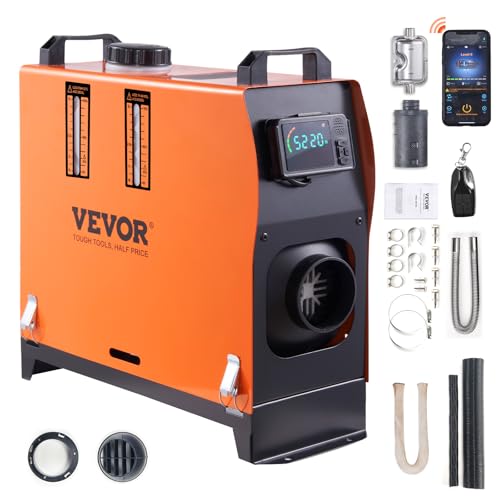
| VEVOR 8KW Diesel Heater with Bluetooth Control | Best for Most Shops | 8 KW | 12 V | 0.16-0.62 L/h | Bluetooth app, remote | View on Amazon |
| VEVOR 8KW Diesel Parking Heater with Altitude Adjust | Best for Larger Shops | 8 KW | 12 V | 0.16-0.62 L/h | Bluetooth app, remote | View on Amazon |
| VEVOR 215,000 BTU Kerosene Forced Air Heater | Best for Very Large Spaces | 215,000 BTU | — | 1.5 gal/h | Thermostat knob, display | View on Amazon |
| LF Bros 5KW Diesel Heater with Timer and 110V Support | Best Compact Heater with Timer | 5 KW | 110 V / 12 V / 24 V | 0.18-0.53 L/h | 24-hour timer | View on Amazon |
| LF Bros 5KW Diesel Heater All-In-One 12V/24V/110V | Best All-In-One Basic Heater | 5 KW | 12 V / 24 V / 110 V | 0.18-0.53 L/h | LCD switch, remote | View on Amazon |
Best Diesel Heater Picks for a Shop
VEVOR 8KW Diesel Heater with Bluetooth Control
VEVOR 8KW Diesel Parking Heater with Altitude Adjust
VEVOR 215,000 BTU Kerosene Forced Air Heater
LF Bros 5KW Diesel Heater with Timer and 110V Support
LF Bros 5KW Diesel Heater All-In-One 12V/24V/110V
Using Multiple Diesel Heaters In A Garage
You need to match the heater’s output to your garage’s size and how much air leaks in or out. A garage with an open door all winter is a different beast than a sealed, insulated shop.
Say your garage is 24 by 24 feet with a 10-foot ceiling. That’s 5,760 cubic feet. A compact 5 kW diesel heater outputs roughly 17,000 BTU per hour, enough for a tightly sealed, insulated room of that size. But if you open the door often or the building isn’t sealed, that heater won’t keep up.
In such a case, you might consider a higher-output forced-air heater rated for 50,000 BTU or more. These models warm the air quickly and handle drafts better. But they’re louder and use more fuel.
Two smaller heaters can work well if your garage is long or divided into zones. For example, place one near the door and one on the far side. This spreads heat evenly and speeds warm-up times where you need it.
However, two heaters mean double the cords, fuel lines, and exhaust pipes. Each adds complexity and points where a connection can loosen or leak. Installation and maintenance can take longer and cost more.
A 5 kW heater or similar is best for steady background heat in a smaller insulated shop. If your space is large, drafty, or in active use, a bigger forced-air model or multiple units often deliver better, more consistent warmth.
Diesel heaters can heat sheds and garages, but check that the unit matches your space and usage. Overloading one small heater leads to cold spots and high fuel use. Multiple heaters or a larger model avoid that.
For reviews on large space diesel heaters and detailed specs, see our guide on keeping your space warm with the best diesel air heater.
Compare The Specs That Actually Matter
Diesel heater specs that matter most are heat output, fuel consumption, tank size, and power options—this helps you pick a heater that fits your shop’s size and power availability.
| Model | Heat Output (kW) | Fuel Tank (liters) | Power Supply | Controls |
|---|---|---|---|---|
| LF Bros 5KW Diesel Heater | 5 | 5 | 12V only | Simple LCD thermostat control |
| VEVOR 8KW Diesel Heater with Bluetooth App Control | 8 | 10 | 12V only | Bluetooth app and timer |
| VEVOR Kerosene Forced Air Heater 215000 BTU | 63 (approx) | 15 | 12V only | Five-button controller with timer |
| LF Bros 110V/12/24V 5KW Diesel Heater with Timer | 5 | 5 | 12/24V and 110V transformer | Timer and thermostat control |
Timers and thermostats matter because they let the heater run efficiently and safely without constant attention. A timer starts the heater ahead of your workday, while a thermostat keeps temperature stable. Some models add Bluetooth control, handy for large shops where the heater is across the room.
A five-button diesel heater controller usually includes on/off, timer, temperature up/down, and mode buttons. This setup is intuitive if you want manual control without relying on a smartphone or complex menus.
If your shop has no 110V power, choose a 12V-only model that runs from a vehicle or battery system. Diesel heaters that need no electricity at all are rare and usually small, low-output units that won’t warm a typical shop well.
Altitude compensation only matters if your shop is in mountainous areas or if you move the heater between locations at different elevations. It adjusts fuel and air flow so the heater burns clean and efficient at high altitudes but is not needed for flatland garages.
Check Fuel, Venting, And Indoor Use Rules
Diesel heaters run on diesel fuel, but you should not use heating oil or any other substitute unless the manual explicitly allows it. Heating oil can have different additives and properties that may damage the burner or clog the fuel system. Stick to the specified diesel grade for your heater.
These heaters are combustion appliances, so carbon monoxide is a real risk. A working CO alarm is mandatory in your shop when using a diesel heater indoors. Never rely solely on ventilation; the alarm gives you early warning if something goes wrong.
Portable 12V diesel heaters need electrical power to run their fan, fuel pump, and control system even though diesel fuel provides the heat. Without electricity, the heater won’t circulate warm air or keep the flame stable.
Kerosene heaters only work safely with 1-K kerosene. Using anything else risks harmful emissions or damage. Follow the manual’s ventilation and clearance instructions strictly if you use a kerosene heater indoors.
Outdoor, patio, or construction-style heaters are designed for open or well-ventilated spaces. They should never be used in tents, vehicle cabins, or unventilated shops unless the manufacturer clearly states they are rated for that use.
Vent-free gas heaters belong to a different category altogether and often face local restrictions or bans. Check your local code before considering one for your shop. They produce combustion gases directly into the air without venting.
Diesel heaters can be mounted outside or in garages, but make sure the exhaust and intake are routed properly. For example, roof top tent diesel heaters are common for camping but must follow safety and ventilation rules. Running a camper diesel heater while sleeping is generally safe only if the model is specifically designed for continuous operation and ventilation is adequate.
Pick The Right Ducting And Controls
The best ducting for diesel heaters matches the size and temperature rating specified by the heater manufacturer. Avoid using dryer duct; it isn’t built to handle the heat or airflow and can become a safety hazard.
Insulated ducting is worth the extra cost if your run is long or your shop is cold. It reduces heat loss before the air reaches your workspace, keeping the heat where you need it.
Keep intake and exhaust ducts clear and well separated. Exhaust gases must be routed outdoors when your heater requires it. Mixing intake and exhaust air can cause poor combustion and safety risks.
Controls range from simple LCD panels with thermostats to Bluetooth app control. A timer or app control helps you preheat your shop before you arrive, while a basic thermostat allows set-and-forget operation once you’re inside.
Run The Numbers Before You Buy
A 2 kW portable diesel heater often sounds like a good budget or overlanding pick, but it’s usually too small for a garage or shop unless the space is very well insulated and under 150 square feet.
A diesel heater for a garage typically needs between 5 kW and 8 kW of output. A 5 kW heater suits smaller, insulated garages up to about 250 square feet. Larger or leakier shops require 8 kW or more, with a 215,000 BTU forced-air model best reserved for big workshops or fast heat recovery.
What do you power a 12-volt diesel heater with? Most run off a stable 12 V DC source, usually a deep-cycle battery or an AC-to-DC converter setup. Running one directly from a car battery is possible but only for short periods, as the heater can draw over 10 amps when starting.
Fuel consumption can matter as much as heat output. A 5 kW unit might save money if your shop stays warm enough at lower power. If you need quick warm-up or have a drafty space, a higher output heater is worth the fuel.
Use this simple decision rule: if your shop is under 250 square feet and insulated, start with a compact 5 kW heater. If it’s larger, draftier, or has a high ceiling, choose 8 kW or a forced-air 215,000 BTU model for effective heating.
Before You Buy Or Call A Technician
Diesel heater air intake must be positioned outside or in a well-ventilated spot in the garage, never sealed inside the workspace. This ensures fresh combustion air and safe operation.
Installing a diesel heater inside a garage is common but demands proper venting, clearance, and a carbon monoxide alarm to ensure safety. Outdoor mounting suits larger forced-air units, but always follow the manufacturer’s guidelines on duct length and installation limits.
A thermostat control lets you maintain a steady temperature without wasting fuel. Timer controls can automate operation but may need manual adjustment for changing weather.
Do you drain a Bougerv diesel heater when not in use? Follow the manual, but typically you let it cool, then drain or cap fuel lines to avoid leaks or clogs during storage. Keep fuel clean and capped to prevent contamination.
Questions People Ask
Can you use heating oil in a diesel heater?
Are diesel heaters noisy in a shop?
What do you power a 12-volt diesel heater with?
Can a camper diesel heater be on while sleeping?
What is the best ducting for diesel heaters?
Do you drain a diesel heater when not in use?
Should a diesel heater sit outside or in the garage?

HeaterGuides covers home heating, water heating and HVAC: how the equipment works, what it costs to run, and how to use it safely.