For most readers, Product 4 is the best reliable backup heater for power outages: it delivers 18,000 BTU without electricity and lists CSA certification, oxygen-depletion shutoff and tip-over protection. Choose Product 3 for its stated long runtime, or a power station and electric blanket for one sleeping person.
Key takeaways
Use only a heater whose manual and certification approve the exact indoor location; outdoor, patio and construction heaters stay outside.
Product 4 is the strongest general pick for a ventilated room up to its stated coverage, while Product 3 has the longest stated kerosene runtime.
A 1,500-watt electric heater needs a power station that can supply that load; a heated blanket uses far less energy for one person.
An oxygen-depletion sensor is not a carbon-monoxide alarm. Use a working battery-backed CO alarm with any fuel-burning heater.
Plan one heated room, store the correct fuel safely, and run an alarm-and-ignition check before the outage.
Choosing an outdoor heater for a bedroom can expose your household to carbon monoxide, while choosing too little heat leaves pipes, pets and people at risk in a long outage.
The right decision depends on the room you need to heat, how long the fuel lasts, whether anyone will sleep, and what safety equipment you can monitor.
The Best Heaters for Power Outages
#1Best Overall
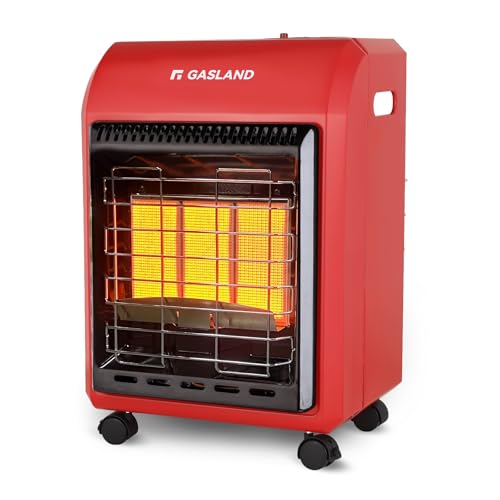
GASLAND MHA18B Propane Radiant Heater
Best for Power outages in ventilated spaces up to 450 square feet
Product 4 gives you 18,000 BTU without electricity and includes the safety features most useful during an outage: CSA certification, oxygen-depletion shutoff and tip-over protection. Three heat modes and the included regulator and hose make it easier to adjust heat around a 20 lb propane cylinder. Use it only where the manual permits, with required ventilation and a working carbon monoxide alarm.
Heat output 18,000 BTURoom coverage Up to 450 square feetFuel 20 lb liquid propane cylinderSafety CSA certified; oxygen-depletion shutoff and tip-over protectPower No electricity required
Why it made the cut
18,000 BTU output
CSA certified with ODS and tip-over protection
Three heat modes; regulator and hose included
Good to know
Requires a 20 lb liquid propane cylinder
Needs ventilation and carbon monoxide protection
Skip it if Skip it if you need a heater for an unventilated room or a sleeping area.
Best for Large ventilated rooms, garages and workshops during outages
Product 5 matches Product 4’s stated 18,000 BTU output and 450-square-foot coverage, with three heating modes for dialing the output back. CSA certification, oxygen-depletion shutoff and tip-over protection add useful safeguards when the power is out. The product data doesn’t state its runtime on a 20 lb cylinder, so plan fuel conservatively.
Heat output 18,000 BTURoom coverage Up to 450 square feetFuel 20 lb liquid propane cylinderSafety CSA certified; oxygen-depletion shutoff and tip-over protectPower No electricity required
Why it made the cut
18,000 BTU output
Stated coverage up to 450 square feet
CSA certified with ODS and tip-over protection
Good to know
Runtime on a 20 lb cylinder isn’t stated
Requires a propane cylinder and ventilation
Skip it if Skip it if you need a published runtime estimate before storing fuel.
Best for Outages where fewer refills matter more than maximum heat
Product 3 lists up to 16–21 hours of warmth from its 4.5-liter kerosene tank, the clearest long-runtime claim in this group. Its 9,000 BTU radiant output works without electricity, and the top surface can boil water or cook food. Use only 1-K kerosene, follow the indoor-use instructions exactly, and never treat the tent claim as permission to use a combustion heater in a tent.
Heat output 9,000 BTU (2,600W)Fuel tank 4.5 litersRuntime Up to 16–21 hoursFuel KerosenePower No electricity required
Why it made the cut
Up to 16–21 hours of stated runtime
9,000 BTU radiant heat
Can cook or boil water without electricity
Good to know
Less heat output than the 18,000 BTU propane models
Requires kerosene and careful ventilation
Skip it if Skip it if you need maximum heat for a large space or a heater with stated certification and shutoff features.
Best for Portable emergency heat when a 1.6-gallon tank fits your plan
Product 2 supplies 15,000 BTU and lists 0.07–0.09 gallons per hour, making its 1.6-gallon tank useful for extended outage heating. The 24-hour timer and compact 13.2-pound build add convenience when you need to move it or limit run time. Its product data doesn’t state certification or oxygen-depletion protection, so verify the manual and use a carbon monoxide alarm before relying on it indoors.
Heat output 15,000 BTURoom coverage 130–260 square feetFuel tank 1.6 gallonsFuel consumption 0.07–0.09 gal/hrPower No electricity required
Why it made the cut
15,000 BTU output
1.6-gallon tank with stated 0.07–0.09 gal/hr consumption
24-hour timer and 13.2-pound portable design
Good to know
Certification and oxygen-depletion protection aren’t stated
Requires kerosene and ventilation
Skip it if Skip it if documented indoor safety features are your deciding factor.
Best for Emergency cooking with limited supplemental heat
Product 1 is primarily an eight-wick kerosene stove: it boils water in 7–8 minutes and runs up to 5–6 hours on a full tank. The adjustable flame rod and built-in wind shield help control cooking heat, but the data doesn’t give a BTU output, room coverage, certification or automatic shutoff. Choose it only after checking the manual and certification for your intended indoor use; use 1-K kerosene and the required ventilation.
Burners 8 wicksCooking time Boils water in 7–8 minutesRuntime Up to 5–6 hoursFuel KerosenePower No electricity required
Why it made the cut
Boils water in 7–8 minutes
Up to 5–6 hours of stated high-heat runtime
Adjustable flame and compact construction
Good to know
No BTU output or room coverage is stated
Safety certification and automatic shutoff aren’t stated
Primarily designed for cooking
Skip it if Skip it if your main need is reliable whole-room heat rather than emergency cooking.
Solar Power Heater With a Battery Backup: What It Can Run
A solar power heater is really a battery-powered electric heater: solar panels recharge the battery in daylight, but they don’t guarantee heat after dark. For one person, a power station and electric blanket are usually more practical than using stored electricity to run a room heater; fuel heat makes more sense when several people need warmth.
Worked Example
The EcoFlow DELTA 2 is listed with a 1,024 Wh battery and 1,800 W AC output. A 1,500 W space heater can use about 1,500 Wh in one hour before conversion losses, so the battery won’t run it for a full night. A 100 W electric blanket uses about 100 Wh per hour; the same battery has roughly ten hours of ideal blanket runtime before losses and other loads. Real runtime will be shorter.
Power station battery1,024 Wh
AC output1,800 W
Room heater load1,500 Wh per hour
Electric blanket load100 Wh per hour
Backup setup
What it can realistically do
Best fit
Power station + 1,500 W heater
Provides brief room heat and drains the battery quickly
A short emergency warm-up
Power station + 100 W blanket
Uses far less stored energy per hour
One awake or sleeping person
Indoor-rated propane or kerosene heater
Makes heat from fuel without drawing battery power
Shared room warmth during a longer outage
Battery capacity, appliance load and the number of people determine the useful runtime.
A power station and electric blanket are more suitable than combustion heat for one person who can stay in bed or near the battery. The lower wattage leaves room for a CPAP, phone charging or a medical device, but check each device’s rated and startup wattage and calculate the expected runtime; no listed power station should be assumed to run every device all night.
Myth
Solar panels will keep a heater running through the night.
Fact
Panels can recharge a power station during daylight, but nighttime heat comes from the stored battery energy. A 1,500 W heater consumes that reserve far faster than a 100 W blanket.
Use The Right Connection
During normal operation, plug an electric heater directly into a wall outlet, never an extension cord or power strip. A power station must be rated for the appliance’s running load and any startup demand. Fuel-burning heaters bring carbon-monoxide risk: use only an indoor-rated model as directed, keep a working CO alarm nearby, and never treat an oxygen-depletion sensor as a replacement for that alarm.
Before The Outage
Check the power station’s watt and watt-hour ratings.
Confirm the blanket’s auto shutoff and follow its instructions.
Charge the power station before severe weather.
Keep a separate battery-backed CO alarm for combustion heat.
Choose Fuel That Still Works at 2 A.M.
The best non-electric backup heat source for a power outage depends on how much space must stay warm: a propane heater suits one occupied room, kerosene carries more stored energy for longer heating, and a furnace or boiler needs a separate generator plan. For reliable warmth, a convection heater spreads heat through a room, while radiant heat warms people and nearby surfaces faster.
1
One person, one room
Pick an indoor-rated radiant propane heater, catalytic propane heater, or electric blanket with a power station. The GASLAND MHA18B provides no-electric propane heat; a catalytic model such as the Camco Olympian Wave-3 uses a smaller 1,600-to-3,000-BTU output for a more focused space. An electric blanket uses far less battery power than a room heater, but it warms one person rather than the room.
2
Family in one room
Use an indoor-rated propane radiant heater sized for the room, such as the GASLAND MHA18B, and keep everyone in that heated zone. A 20-pound cylinder can extend propane runtime when the heater and connector are approved for that setup; don’t improvise an adapter.
3
Several connected rooms
A kerosene convection heater can distribute warmth more evenly than a small radiant heater. The Dyna-Glo WK24 is listed at 23,800 BTU, while the JHYCCDD Kerosene Heater Indoor and Reheyre Kerosene Heater are portable non-electric options. Use only 1-K kerosene, provide the ventilation required by the manual, and plan fuel storage before the outage.
4
Whole-home system
Don’t expect a portable heater to run your boiler or furnace. Ignition controls, thermostats, pumps and blower motors may still need electricity even when the burner uses propane or natural gas. A properly sized generator, outdoor connection and transfer switch are a separate plan; have electrical and fuel connections handled to local code.
Option
Where it fits
What to remember
Propane radiant
One room or a group nearby
Fast warmth without electricity; use indoor-rated equipment and an approved cylinder setup.
Blue-flame convection
A room needing more even heat
Vent-free models may be restricted by local code; follow the manual’s ventilation rules.
Kerosene convection
Several rooms or longer fuel storage
Use 1-K kerosene only; odor, ventilation and refueling matter.
Catalytic propane
One person or a small occupied zone
Low output can suit close-range warmth; it isn’t whole-home heat.
Canned heat
Emergency cooking and brief warmth
A fallback, not a whole-room heating system. VESTA combines canned heat with a cooking surface.
Electric heater
A power station with enough capacity
A 1,500-watt heater drains batteries quickly; an electric blanket lasts far longer.
Fuel type changes the practical coverage, runtime and safety setup.
Outdoor Rating Overrides BTU
Patio, outdoor, construction and torpedo heaters stay outdoors, even if their BTU number looks ideal. Never move one into a room, tent or vehicle cabin. Indoor certification, required clearances, ventilation and a working carbon-monoxide alarm are separate requirements; an oxygen-depletion sensor doesn’t replace the alarm.
Two Outage Examples
Say one person needs warmth beside a bed: a power station and electric blanket conserve battery energy, while a small indoor-rated propane heater warms the surrounding space. If four people can share a 12-by-14-foot room, an indoor-rated propane radiant heater can concentrate heat there; several rooms call for a properly rated convection heater and a larger fuel plan, not three patio heaters.
One personElectric blanket plus power station
One shared roomIndoor-rated propane radiant heater
Several roomsIndoor-rated kerosene convection heater
For a closer comparison of indoor models, see our guide to the indoor-safe portable propane heater options. Fuel still needs a place to sit safely, and the heater still needs a practiced startup before the lights go out.
A Boiler Needs Its Own Backup Plan
A backup propane boiler for a power outage system diagram has a fixed path: propane supply feeds the burner, the burner heats a heat exchanger, and a pump and controls move hot water to radiators or an air handler. The boiler’s listed venting and combustion-air arrangement belong to that appliance; a portable heater isn’t part of the loop.
System part
What it does
What the outage can stop
Propane supply and burner
Provides and burns fuel
Gas shutoff, regulator or burner fault
Heat exchanger
Transfers flame heat to water
Boiler safety lockout
Circulator pump
Moves heated water through the loop
No circulation without power
Controls and ignition
Starts, senses and protects the boiler
No electricity for ignition or controls
Venting and combustion air
Carries exhaust away and supplies air
Blocked or incorrect venting is dangerous
The boiler is one coordinated appliance, not a portable heater with extra plumbing.
A gas boiler can still stop during an outage even when propane is available, because its ignition, controls or circulator pump need electricity. A properly sized generator connected through correctly installed transfer equipment may keep the existing boiler operating, but sizing and wiring depend on the boiler, pump load and other circuits you want to run.
Don’t improvise the connection
Never connect a portable propane heater to a boiler water loop or furnace ductwork with a hose, adapter or homemade fitting. The heater has different combustion, pressure, heat-transfer and safety requirements; forcing the connection can cause fire, carbon monoxide or equipment damage.
Choose one of two separate plans: use a listed portable heater such as the GASLAND MHA18B in one safe room, or have a licensed professional design backup power for the existing boiler. The portable heater warms people and surfaces directly; the generator plan restores the boiler’s normal distribution system.
Ask a licensed professional about
The boiler’s ignition, control and circulator wattage
Generator size and which heating circuits it must support
A code-compliant transfer switch or other approved transfer equipment
Propane piping, regulator capacity and shutoff locations
Boiler venting, combustion air and local permit requirements
Gas connections, venting, transfer switches and 240-volt work belong to licensed trades where local code requires it. Don’t backfeed a panel or connect a generator to a receptacle; that can energize lines and injure utility workers.
Match Heat Output to Fuel Load
Runtime comes from fuel flow, not the BTU number on the box: Product 2 has a stated 1.6-gallon tank and 0.07 to 0.09 gallon-per-hour use, while Product 3 lists 16 to 21 hours from its 4.5-liter tank. Output tells you how hard a heater can work; fuel load tells you how long it can keep working.
Heater
Heat output
Fuel load and stated runtime
Coverage information
Portable 8-Wick Kerosene Stove
Not stated
5 to 6 hours on high heat
Cooking appliance; no room-heating BTU figure
JHYCCDD Kerosene Heater Indoor
15,000 BTU
1.6-gallon tank; 0.07 to 0.09 gal./hr.
130 to 260 sq. ft.
Reheyre Kerosene Heater
9,000 BTU
4.5-liter tank; 16 to 21 hours
No coverage figure supplied
GASLAND MHA18B Propane Radiant heater
18,000 BTU
Fuel-load runtime not supplied
Use the listing and room conditions as the limit
GASLAND 18,000 BTU Small Propane Heater
18,000 BTU
Fuel-load runtime not supplied
Use the listing and room conditions as the limit
These are stated figures, not a promise that every room will reach the same temperature.
Product 2’s numbers provide a useful check: 1.6 gallons divided by 0.09 gallon per hour is about 18 hours, while dividing by 0.07 is about 23 hours. Treat that as a rough range, because high settings consume fuel faster and drafts make the heater run harder. Product 3’s stated 16-to-21-hour runtime is the better number to use for planning its tank.
Worked example
Say you use Product 2 in a 200-square-foot room. Its 130-to-260-square-foot claim includes your room on paper, and its tank calculation suggests roughly 18 to 23 hours. An open door, leaky windows, tall ceiling or below-freezing outdoor temperature can make that same heater feel undersized and shorten the practical heating time.
Heater15,000 BTU Product 2
Room200 sq. ft.
Fuel check1.6 gal. ÷ 0.07–0.09 gal./hr. = about 18
The 5-to-6-hour figure for the Portable 8-Wick Kerosene Stove describes its fuel time at high heat, but its cooking purpose and missing BTU rating make it a poor room-size comparison. Product 4 and Product 5 provide 18,000 BTU, yet a stated output alone can’t tell you their runtime without the cylinder size and burn rate.
Myth
A 15,000-BTU heater automatically warms more space than a 9,000-BTU heater.
Fact
BTU output helps, but insulation, drafts, ceiling height, outdoor temperature and open doors decide how much heat stays in the room. The 130-to-260-square-foot claim for Product 2 is a starting point, not a guarantee.
Fuel contains more energy than the room receives as usable heat. A gallon of propane holds about 91,500 BTU, and a gallon of kerosene about 135,000 BTU, but those figures don’t promise a matching temperature rise; heater design, setting and heat loss determine the result.
Electric heat is easier to price: watts ÷ 1,000 × hours × your electricity rate gives kilowatt-hours and cost. At 1,500 watts for eight hours, the calculation is 1.5 × 8 = 12 kWh; the block below uses an assumed rate of 17 cents per kWh.
Heater
Watts
Per hour
Per day (8 h)
Per month (30 days)
1,500 W electric heater
1,500 W
26¢
$2.04
$61.20
Calculated at 17¢ per kWh. Assumes eight hours per day, 30 days and $0.17 per kWh.
Keep Combustion Heat Safe Indoors
Only Products 4 and 5 have supplied details identifying CSA certification, an oxygen-depletion sensor and tip-over protection. Products 2 and 3 are described as indoor kerosene heaters, but check their current manuals and certification markings before using either in your room. The supplied details don’t establish indoor approval for Product 1, so its name alone isn’t permission to use it indoors.
Heater
What the supplied details establish
What you still need to check
Product 1
No indoor approval established
Manual, listing and local code
Product 2
Description says indoor kerosene heater
Current manual, 1-K fuel, ventilation and clearances
Product 3
Description says indoor kerosene heater
Current manual, 1-K fuel, ventilation and clearances
Product 4
CSA, ODS and tip-over protection listed
Manual clearance, ventilation and local code
Product 5
CSA, ODS and tip-over protection listed
Manual clearance, ventilation and local code
A product description saying indoor doesn’t replace the current listing, manual or local code.
Myth
An oxygen-depletion sensor makes a carbon-monoxide alarm unnecessary.
Fact
An ODS watches oxygen levels and shuts a propane heater down when oxygen falls too low. A carbon-monoxide alarm detects a separate combustion hazard; keep a working battery-backed CO alarm in the heated area and follow its placement instructions.
Clearance depends on the heater’s listing, so place fuel-burning units exactly as the manual says, with every required combustion-air opening and ventilation path clear. Never cover a vent, push the heater against furniture, or assume a cracked window is enough unless the manual specifies that arrangement. Electric heaters need at least 3 feet from bedding, curtains and furniture, and must plug directly into a wall outlet.
Use This Indoor Safety Check
Before lighting
Confirm the manual approves indoor use in the actual room and check local fire code.
Set the heater on a stable, level surface with the specified clearance.
Install a working battery-backed CO alarm and test it.
Use fresh fuel; kerosene heaters take 1-K kerosene only, never gasoline.
Keep vents and combustion-air openings unobstructed.
Keep children, pets and anything that can fall away from the heater.
Sleeping and leaving home
Don’t sleep with a fuel-burning heater running unless the manufacturer specifically permits it and the installation meets code. Children, pets, mobility limits and an unattended house raise the chance that a tip-over, blocked vent or fuel problem goes unnoticed. For one sleeping person, a power station and electric blanket can be a better fit; follow the blanket’s auto-shutoff instructions and never fold or bunch it while on.
Store propane cylinders and kerosene in approved containers away from ignition sources, living spaces and heat, within local fire-code limits. Keep gasoline out of the fuel supply entirely. A larger propane cylinder can work only when the manufacturer approves that cylinder arrangement and supplies or specifies the hose, connector and regulator; never improvise an adapter.
1
Run a supervised test
Light the heater before an outage, confirm the controls work, check for unusual odor or smoke, and verify that the CO alarm responds to its test button.
2
Mark the safe position
Use tape on the floor to show the stable placement and clearance, then store the manual, approved fuel and shutoff instructions nearby.
Run the First Outage Drill Before Winter Weather
A supervised dry run will show whether your backup heater is usable before the house is cold and dark. Test the complete setup, not merely the ignition button: heater, fuel or battery, alarm, clearances, room thermometer and the people who may need to operate it.
1
Read the manual first
Confirm the approved fuel, indoor rating, ventilation, clearances, ignition method and any limits on sleeping or unattended use. An outdoor construction heater stays outdoors; an indoor-rated model still needs the manual’s setup.
2
Prepare the room
Choose the occupied room, move combustibles away by the listed clearance, install or test a working carbon-monoxide alarm, and keep a thermometer nearby. Put blankets, flashlights and the heater manual within reach.
3
Start safely
Use the ignition procedure exactly as written. If the manual requires ignition or initial operation outdoors, do that outdoors, then confirm the indoor setup before bringing the heater into service. Never improvise a hose, adapter or fuel container.
4
Record what happens
Write down ignition time, burner or fan noise, room temperature before and after a known interval, and fuel or battery use. For a power station, record the starting and ending watt-hours if its display provides them.
5
Check the overnight plan
A stated runtime is a claim to compare with your fuel load and heat setting, not a promise that high heat will last all night. Don’t sleep with a heater running unless the manufacturer specifically says the model is designed for that use.
Outage situation
Action order
One room
Choose the occupied room, use an approved indoor heat source, confirm fuel or watt-hours, and keep the door arrangement and clearances exactly as tested.
Family sharing one room
Place the heater where warm air can reach people without blocking an exit, test the carbon-monoxide alarm, and stage extra blankets for children and pets.
Generator or boiler backup
Follow the generator or boiler plan first; use a portable heater only as a separate room-level backup. Don’t connect a portable heater to a boiler circuit or improvise electrical wiring.
A simple plan is easier to follow during a cold outage.
Stage Before Winter
Charge the power station and record its available watt-hours.
Buy the correct fuel; kerosene heaters use 1-K kerosene, never gasoline.
Test the carbon-monoxide alarm and keep spare batteries if the alarm uses them.
Place blankets, flashlights and the heater manual with the equipment.
Make the comparison fair
Run each candidate for the same measured interval at the setting you expect to use. Product 3’s stated long runtime and Product 4’s 18,000-BTU output answer different questions; your notes reveal whether the fuel supply, warmth and noise fit your room.
Next move
Choose the room, choose the approved heat source, confirm fuel or watt-hours, check the safety equipment, then run a supervised trial before relying on it.
Frequently Asked Questions
Which listed heaters are actually approved for indoor use?
The listed indoor options include the Mr. Heater MH9BX, Big Buddy MH18B, Dyna-Glo WK24 and Camco Olympian Wave-3, but the heater label and current manual control. Product listings alone aren’t enough for a room, garage or enclosed shelter; outdoor, patio and construction heaters stay outdoors.
How long will each model run on one cylinder, tank, or fuel load?
The MH9BX is listed for 3 to 6 hours on a 1-pound cylinder, while the 9,000-BTU Portable Buddy ran more than 5 hours on a standard cylinder at low output. Product 2’s 1.6-gallon tank and 0.07-to-0.09-gallon-per-hour use work out to roughly 18 to 23 hours; the other listed models don’t have enough supplied runtime data for a fair estimate.
What room size can each heater realistically warm?
The MH9BX is rated for 225 square feet, and the Big Buddy MH18B for about 450 square feet. No supplied coverage figure supports a room-size claim for the Dyna-Glo, Camco or electric options, so use their output and the manufacturer’s room guidance rather than stretching a rating across an open floor plan.
Which models include an oxygen-depletion sensor or tip-over shutoff?
The supplied details identify an oxygen-depletion sensor and tip-over protection on Product 4 and Product 5. Treat those as separate safeguards: an ODS can shut off gas when oxygen falls, but it doesn’t replace a working battery-backed carbon-monoxide alarm.
What clearance and ventilation does each heater require?
Follow the exact clearance label and manual for the heater, since combustion models differ and local code may add requirements. Keep a working carbon-monoxide alarm nearby, provide the ventilation the manual requires, and give electric heaters at least 3 feet of clearance while plugging them directly into a wall outlet.
Can a larger propane tank be connected, and what adapter is needed?
The MH9BX lists a connector for a 20-pound propane tank as an option. Use only the manufacturer’s specified hose or connector; don’t improvise fittings or place a cylinder indoors, and check every connection for leaks before lighting.
Which option is appropriate for sleeping?
A power station paired with an electric blanket is the safer fit for one sleeping person than a combustion heater running unattended. Don’t sleep with a fuel-burning heater unless its manufacturer expressly allows that use, and never leave a portable heater operating while you leave the house.