For most readers searching best tankless water heater brands, the safest first choice is a brand with local service, the right flow rate, and parts you can actually get. One bad fit can leave you with lukewarm showers and a 40,000 BTU label that means very little if the unit can’t deliver enough gallons per minute.
A tankless heater’s brand matters because the installer, venting kit, service network, and replacement parts matter too. A 7 GPM unit on paper can still disappoint if your winter inlet water is cold and your household wants two showers at once.
The quick number to keep in mind is 3 GPM for one shower at a time, 5 to 6 GPM for a typical two-shower household, and a standard 1/2-inch gas line may be too small for many gas tankless units. That is why the right brand is the one that matches your flow need and your home’s utilities, not the loudest badge on the box.
Best Water Heater Brand Picks
#1Under-Sink Pick
xwdzswgs 3000W Point-of-Use Tankless
Best for A single sink that needs a small, point-of-use hot-water boost
The 3000W unit is designed for point-of-use installation, and its listed temperature rise is 82°F at 0.3 GPM or 131°F at 0.5 GPM. That low flow makes it a fit for a small sink draw, not a whole-house shower. The listing calls for vertical installation only.
Power 3000WVoltage 110VTemperature rise 82°F at 0.3 GPM; 131°F at 0.5 GPMInstallation Vertical only; 1/2-inch NPT connections
Why it made the cut
Compact, wall-mounted design
LED display and listed leakage, dry-boil and overheat protections
1/2-inch NPT connections
Good to know
Listed temperature rise is tied to very low flow rates
Requires a suitable electrical circuit and plumbing installation
Skip it if Skip it if you need to supply a shower or multiple fixtures; the listed flow rates are too low for that job.
Best for Heating water in a suitable bucket or basin where no built-in heater is available
The 2000W element is intended for container heating, and the stainless-steel guard helps keep people and animals away from the element. It includes an LCD thermometer for checking water temperature. The listing says to fully submerge the heater before connecting power.
Power 2000WVoltage 110–125V ACGuard 304 stainless steelIncluded LCD thermometer
Why it made the cut
UL-certified, according to the product data
304 stainless-steel protective guard
LCD digital thermometer included
Good to know
Heats water in a container; it does not supply plumbing fixtures
Must be fully submerged before power is connected
Skip it if Skip it if you need a permanent household water heater or cannot follow the immersion and electrical instructions exactly.
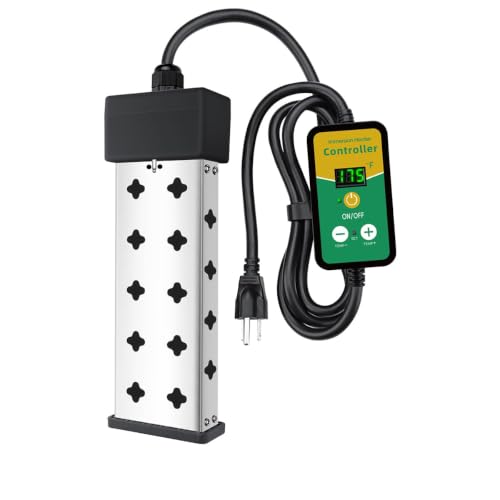
Best for Heating water in a bucket or tub with a set temperature and display
A controller with an LCD display shows water temperature and lets you set a target up to 175°F. The listing also describes anti-dry-burn protection and automatic shutoff, useful safeguards for an immersion heater. Use it only as directed in the manual and keep the heating element properly immersed.
Power 1800WMaximum set temperature 175°FHeating tube 304 stainless steelCord 14 AWG
Why it made the cut
Temperature setting up to 175°F
LCD temperature display
Anti-dry-burn protection and auto shutoff listed
Good to know
For heating water in a container, not for supplying household plumbing
The product data does not state a certification
Skip it if Skip it if you want a conventional tank or tankless water heater installed on your plumbing.
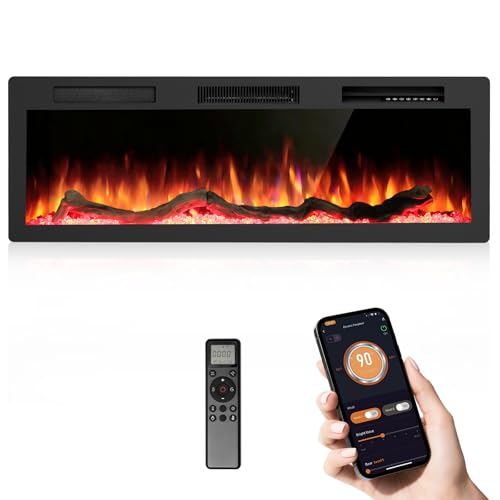
Best for Supplemental room heat and a fireplace-style display, not hot water
This is an electric fireplace, not a water heater, so it cannot solve a hot-water problem. Its 750W and 1500W heating modes are for supplemental zone heating, with wall-mounted or recessed installation options. The product data lists coverage up to 400 square feet.
Heating modes 750W and 1500WListed supplemental coverage Up to 400 square feetDimensions 50 in. L × 17.32 in. H × 5.71 in. WInstallation Wall-mounted or recessed
Why it made the cut
Two heating modes: 750W and 1500W
Wall-mounted or recessed installation
Remote, touch-panel, smartphone and Alexa controls
Good to know
Does not heat or store water
Requires a correctly sized fireplace opening for recessed installation
Skip it if Skip it if your search is for a water heater, replacement parts or hot water at a fixture.
Best for Portable supplemental room heat, not heating water
This portable ceramic space heater has a 1500W high setting, thermostat, timer and remote. The product data lists ETL certification, overheat protection and a 45° tip-over shutoff. Those features relate to room heating; the unit is not a water heater.
Power 1500WListed coverage Up to 200 square feetNoise level 35dBTimer 24 hours
Why it made the cut
1500W high setting with thermostat
ETL-certified, according to the product data
Overheat and 45° tip-over shutoff listed
Good to know
Does not heat water or connect to plumbing
Product data does not give a specific circuit requirement
Skip it if Skip it if you need hot water at a sink, shower or tub.
How To Choose The Best Tankless Water Heater Brands
The best tankless water heater brands are the ones that match your fuel type, required flow rate, winter inlet temperature, and local service support. A useful tankless water heater brands list starts with those four checks, not with a glossy BTU number or a long list of features.
Gas and electric units solve different problems. Gas tankless heaters can supply higher flow for several fixtures, but they need approved venting, a gas line sized for the load, and technicians who can get the brand’s parts. Electric units avoid combustion venting, though whole-house models often need substantial electrical capacity. A low kilowatt rating can still be fine for one handwashing sink; it simply won’t heat a large flow as quickly.
The Four Filters That Matter
Fuel and installation: Choose gas only when the home has suitable gas service, venting options, and local technicians. Choose electric when the electrical panel and wiring can support the unit and your demand is modest.
Flow rate: Size the heater for simultaneous use. About 3 GPM is usually one shower; 5 to 6 GPM covers a small family’s morning overlap more comfortably.
Inlet temperature: Cold water entering the heater in January needs more heating than mild-weather water. The same unit can deliver less hot-water flow when the incoming temperature drops.
Warranty and service: Ask who handles warranty work locally, which parts are stocked nearby, and what maintenance the warranty requires. A strong warranty is less useful if the only authorized installer is several hours away.
Worked Example
Say one shower uses about 3 GPM and your household sometimes runs a second fixture at the same time. A unit rated for 5 to 6 GPM is a more sensible starting point than a 3 GPM model, especially when January water arrives colder and the heater has less capacity left for each gallon.
Why BTUs Don’t Settle It
BTU input tells you how much gas energy the burner can use, not the hot-water flow your house will receive at a given temperature rise. Compare the unit’s flow-rate chart at your expected winter inlet temperature. Electric models need the same treatment: check gallons per minute at the required temperature rise instead of judging the unit by kilowatts alone.
The same rule applies to tankless hot water heater brands, tankless water heaters gas brands, and electric models: compare delivered flow, installation requirements, and support as a package. For a side-by-side buying guide, see tankless water heater brands.
Ask Before You Buy
What fuel and electrical service does this model require?
What flow rate does it deliver at my winter inlet temperature?
Which fixtures will run at the same time?
Who locally installs, services, and supplies warranty parts for this brand?
From HeaterGuides · our own guideTankless? Page 8 is the descaling routine, page 15 checks the size.Water Heater Owner's ToolkitFix the common faults yourself, keep it running for years, and know when a repair is money wasted.No-hot-water flowcharts, gas and electricFlush, anode, relief valve and descaling stepsRepair-or-replace calculator (Excel)$14.99$9.99Get it for $9.99See what's inside and watch the 2-minute video →18-page printable PDF + Excel calculator · instant download · 30-day refund
Best Gas Water Heater Brands Ranked By House Size
Gas water heater brands ranked for your home come down to household demand and the kind of replacement you need: tank models suit straightforward swaps and lower upfront cost, while tankless models suit homes that want continuous hot water and can handle the installation changes. Rheem and Bradford White are common names to compare, but the best gas water heater brands—and the best gas water heater brands and models—depend on capacity, local service, and the right fit for your plumbing. There’s no universal top five that works for every house.
For gas water heater brands reliability, check who can service the model near you and get its parts, then compare the unit’s capacity and warranty. A 40-gallon tank stores hot water for later use; a tankless unit heats water as it flows, so its usable flow rate and venting requirements matter more than a tank-size label. A licensed plumber usually handles gas connections, venting, and combustion-air checks.
Household situation
Often the better fit
Why
Simple replacement with similar hot-water use
Gas tank
Can fit an existing tank setup with fewer changes; stored hot water covers short demand peaks.
Several hot-water uses close together
Larger gas tank or correctly sized gas tankless
A larger tank adds stored capacity; tankless avoids running out only if its flow rate meets simultaneous demand and the gas line and venting support it.
Compare installation needs and household demand, not brand names alone.
A busy morning for a larger household
Say two showers and a dishwasher may run close together. A tank provides a finite reserve, so compare its capacity and recovery rate with that pattern. A tankless model can keep heating water, but only if it can supply the combined flow at your winter inlet temperature; a plumber needs to confirm the gas line and venting can support the chosen unit.
TankStores hot water
TanklessHeats on demand; flow rate limits simult
Hard-water maintenance
Mineral scale can build up in either style. Follow the manufacturer’s flushing and maintenance schedule, and ask a plumber whether your water needs scale control; tankless heat exchangers can be especially sensitive to mineral buildup.
Tankless Water Heater Brands In The US That Fit Small Homes
Tankless water heater brands in the US can suit a compact home, apartment, or single-bathroom layout, but the right choice depends on fixture count and flow—not on the home’s square footage alone. The best brands of tankless water heater include both gas and electric options; compare their rated flow at your incoming water temperature and confirm who can install and service the model locally.
A compact whole-home unit may work well for one bathroom if it can supply the shower and another fixture at the same time. Point-of-use tankless units can make sense for a sink far from the main heater, where the wait for hot water is the problem. For a small home, skip a large unit that exceeds your actual demand, but don’t undersize: the kitchen tap can steal flow from a shower.
One shower plus a lavatory sink
Say your shower needs 2 gallons per minute and the lavatory sink draws 0.5 gallons per minute while someone washes up. The heater must supply about 2.5 gallons per minute at the required temperature rise to serve both together. Check the manufacturer’s flow chart for your winter inlet temperature; a headline maximum at a smaller temperature rise may overstate what you’ll get on a cold morning.
Shower2 gpm in this example
Sink0.5 gpm in this example
Combined demand2.5 gpm in this example
Myth
A recirculation feature fixes a tankless unit that can’t keep up.
Fact
Recirculation can shorten the wait for hot water at a distant tap, but it doesn’t raise the heater’s available flow rate. Size the unit for fixtures you may run at once.
For general single-bathroom water heater brands and on-demand water heater brands, compare the same basics: flow at your temperature rise, fuel and electrical requirements, installation constraints, and local parts support. Ratings are useful only when they refer to the same model and comparable conditions; brands of tankless water heaters and ratings don’t replace the sizing chart.
How Long A Tankless Water Heater Lasts
Tankless water heaters typically last 15 to 20 years, often outliving storage-tank models if maintained properly and kept free of scale buildup. Popular brands include Rinnai, Navien, Rheem, and Noritz. When choosing a tankless water heater, service availability and access to replacement parts matter as much as the model’s features. Finding a local technician familiar with your unit is key to long-term reliability. Instead of focusing solely on brand reputation, compare options based on fuel type, service network, and parts availability. The best gas tankless water heater brands for your home are those supported by reliable local service.
Scale in the heat exchanger is a common cause of trouble, along with clogged inlet screens and, on gas units, neglected venting or combustion components. Hard water can require more frequent descaling than soft water, so follow the manual’s maintenance schedule and ask a local technician how your water affects it. Annual servicing is a useful starting point, not a substitute for the manufacturer’s instructions.
Hard Water Can Shorten The Run
A strong brand reputation doesn’t cancel out local water quality. Hard water can damage a premium unit just as quickly if mineral scale is allowed to build up; check for scale symptoms such as reduced hot-water flow or trouble maintaining temperature, and arrange service rather than opening the unit yourself.
A Longer Warranty Isn’t Cheap Maintenance
Warranty coverage and upkeep costs are separate questions. A longer parts warranty doesn’t prevent scale, guarantee local parts are in stock, or pay for routine service. Before buying, check which components are covered, what maintenance the warranty requires, and whether a qualified technician nearby can get the parts.
Running Costs For Gas And Electric Water Heaters
The brand of your water heater affects your bill less than the unit’s power draw, efficiency, and how you use hot water. Electric models’ energy use depends on wattage and run time, while gas models’ costs hinge on burner input, efficiency, and local fuel prices. Tankless water heaters from top brands can’t guarantee the lowest cost without knowing your household’s hot water demand. For electric tankless units, check the electrical requirements against your home’s capacity. The best electric tankless water heater brands fit both your water needs and your electrical system.
Check The Electric Math
Say a point-of-use unit draws 3,000 W for 2 hours in a day. Divide watts by 1,000, then multiply by hours: 3,000 ÷ 1,000 × 2 = 6 kWh. At an assumed rate of 17 cents per kWh, 6 × $0.17 = about $1.02 for that use. Your bill depends on your actual run time and electricity rate.
Energy used6 kWh
Assumed electricity rate$0.17 per kWh
Estimated costAbout 1.02 kWh
A gas unit’s bill is harder to estimate from its label alone: BTU input shows the burner’s fuel use rate, while efficiency and local gas prices affect the cost of the hot water you get. A low purchase cost or a familiar logo doesn’t guarantee low operating cost. Tankless models can reduce standby heat loss because they don’t keep a tank of water hot, but the savings depend on your household’s draw pattern and the system being replaced—not simply the brand.
Heater
Watts
Per hour
Per day (2 h)
Per month (30 days)
3,000 W point-of-use heater
3,000 W
51¢
$1.02
$30.60
Calculated at 17¢ per kWh. Illustration assumes 2 hours of use each day for 30 days and electricity at $0.17 per kWh; actual use varies.
Waste Less Hot Water
Insulate accessible hot-water pipes and keep the heater close to the fixtures it serves where practical. Shorter, insulated runs mean less heat escapes while water travels and less time waiting for hot water.
Safety And Certification For Water Heater Brands
For tankless gas water heaters and hot-water-on-demand brands, choose a model with local service, the right fuel and a listed installation path; no brand is a safe fit if its venting or electrical needs don’t match your home. “Best near me” means a qualified installer can service the model and source parts in your area. Stainless-steel heat exchangers are model-specific, so check the exact model’s spec sheet rather than assuming every unit from a brand uses one.
Brand availability and reliability in Belarus or the Dominican Republic can’t be determined from the brand name alone. Check local stock, authorized service, parts access, water conditions and, for electric tankless units, whether the home’s supply supports the required voltage and capacity before buying.
Gas water heaters need proper venting and combustion air, plus a working carbon monoxide alarm. Use indoor-rated equipment indoors. Vent-free gas appliances may be restricted by local code, so check local rules before ordering.
Leave critical connections to licensed pros
Gas piping, venting, 240 V wiring and T&P valve discharge lines are licensed-pro work in most places. Never cap or plug a T&P valve; it releases dangerous pressure if the tank overheats.
Check Before You Sign
Look for a UL, ETL or CSA listing where applicable.
Confirm the manufacturer’s installation instructions list the intended fuel, location and venting arrangement.
Have the installer verify gas supply or electrical voltage and breaker requirements before purchase.
Confirm required clearances and combustion-air provisions against the installation instructions and local code.
Before You Buy, Install Or Call A Technician
The best tankless water heater brands are the ones that fit your home’s fuel, demand and service options; use the checks below to decide whether a model is ready to order. To choose well, compare the exact model’s flow capacity and installation requirements—not just a tankless water heater brands list or a gas water heater brand’s reputation.
Final Go/No-Go Check
Fuel type: does the unit match the gas or electrical supply available?
Gas line or breaker capacity: has an installer confirmed it can support the model?
Vent path: can the required vent be installed as specified and allowed by local code?
Fixture count: will the unit cover the hot-water fixtures you expect to use at once?
Water hardness: does the manual call for treatment or regular descaling in your conditions?
Service access: can a technician reach the unit and its required service connections?
Gas water heater reliability depends on correct sizing, installation and service access as well as brand. A higher BTU or watt rating won’t fix an undersized gas line, an unsuitable vent route or an electrical supply that can’t support the unit.
Before ordering, compare the manufacturer’s dimensions and clearance requirements with the existing closet, alcove or utility room. Include room for connections and future servicing; a unit that fits on paper may still be impossible to install or maintain in a tight space.
Booking checkpoint
If any capacity, venting or clearance check is uncertain, ask the installer to verify it before you buy. Measure the available space, including required clearances, before placing the order.
Questions People Ask
Which brand is best for tankless water heaters?
The best brand is the one with qualified local service, available replacement parts, and a model sized for your peak flow rate. Compare the heat-exchanger warranty, required maintenance, venting options, and installer support before comparing brand reputation.
What is the difference between gas and tankless water heater brands?
Gas describes the fuel, while tankless describes the heating method. A gas tankless unit heats water as it flows; a gas storage heater keeps a tank of hot water ready, so the installation, venting, recovery behavior, and space requirements differ.
How many gallons per minute do I need for my house?
Add the flow rates of fixtures you may use at the same time, then choose a unit that can meet that total at your winter inlet temperature. A shower using 2 GPM plus a sink using 1 GPM calls for at least 3 GPM of delivered hot water, with extra capacity preferable for temperature swings.
Are gas tankless water heaters better than storage tanks?
Gas tankless heaters can reduce standby losses and provide continuous hot water, but they usually need more involved venting and can struggle if their flow rating is too low for the temperature rise. A storage tank is often the simpler, lower-cost replacement when the existing gas line, vent, and household demand already suit it.
How long does a tankless water heater usually last?
A tankless water heater commonly lasts about 15 to 20 years with proper maintenance. Hard water, neglected flushing, poor water quality, and delayed repairs can shorten that life, while a nearby service provider makes routine maintenance easier to keep up with.
Do I need a plumber to install a gas water heater?
In most places, gas connections, venting, gas tank installation, and tankless conversions should be handled by a licensed plumber or another qualified professional allowed by local code. The job may require permits, combustion checks, a pressure test, and a correctly routed discharge line, so a swap is rarely a simple appliance hookup.
What should I check before buying a water heater brand?
Confirm the fuel, peak gallons-per-minute demand, winter inlet temperature, venting or electrical requirements, and the model’s local parts and service support. Also check local code, installation space, warranty terms, and whether the available installers work on that brand.
Before you go · a welcome giftGet the Water Heater Owner's Toolkit for $4.99Fix the common faults yourself, keep it running for years, and know when a repair is money wasted. Normally $14.99; your welcome price saves $10.00. We'll email your link right now.or buy it now for $9.99 without the gift →One email with your link now. We never share your address.



 Water Heater Owner's ToolkitFix the common faults yourself, keep it running for years, and know when a repair is money wasted.No-hot-water flowcharts, gas and electricFlush, anode, relief valve and descaling stepsRepair-or-replace calculator (Excel)