For most 30-gallon aquariums, the best pick is a 150-watt adjustable submersible heater, paired with a separate thermometer and GFCI-protected outlet. It gives useful headroom in a cool room without forcing a fixed preset, while a 100-watt model can work when the room stays mild.
What to remember
Choose 100W for a mild room and 150W for a colder room or a larger temperature gap.
Use an adjustable submersible heater near filter outflow, with the heater fully submerged as its manual requires.
A separate thermometer catches thermostat drift that the heater’s own display may miss.
Unplug the heater before draining or changing water, then let it cool before removing it.
Tank volume gives you a starting point, but the room temperature, target water temperature and heater control matter just as much. An adjustable submersible model spreads heat through the tank when placed near filter flow.
Choosing poorly can mean stressed fish, a heater that runs constantly, or a cracked heater after a water change. The fix is simple: size for the temperature gap, verify the water with a separate thermometer and unplug before your hands enter the tank.
Best Aquarium Heaters For 30 Gallon Tanks
#1Not for aquariums
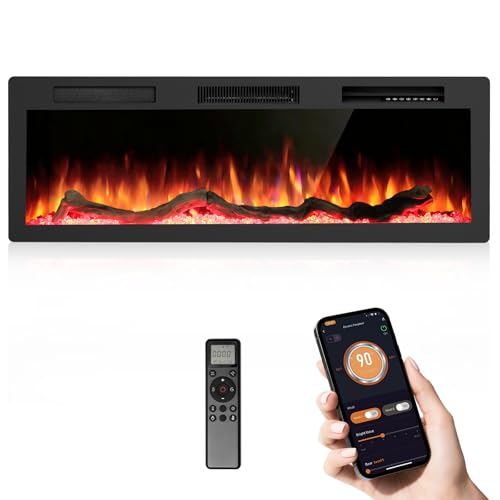
R.W.FLAME 50-Inch Electric Fireplace
Best for Indoor room heating, not aquarium water
This is a wall-mounted or recessed electric fireplace with 750W and 1,500W heating modes. Its product details describe supplemental room heating; they do not say it can be submerged or used to control aquarium temperature.
Heating modes 750W and 1500WTemperature setting range 59-95 ℉Installation Wall-mounted or recessed
Why it made the cut
Two room-heating modes: 750W and 1,500W
Wall-mounted or recessed installation
Good to know
Not a submersible aquarium heater
No aquarium tank range or water-temperature control stated
Skip it if Skip it for aquarium heating; choose a heater specifically rated for aquarium use.
Its ceramic element and fan are described for warming indoor spaces, with a stated heating area of 108-130. The product data gives no submersion rating or aquarium temperature control, so it is not an aquarium-heater option.
Heating settings Low-950W/high-1500WHeating area 108-130Safety features Overheat and tip-over protection
Why it made the cut
Low and high heat settings: 950W and 1,500W
Overheat and tip-over protection stated
Good to know
Not described for use in water
No aquarium tank range stated
Skip it if Skip it if you need to heat tank water; use an aquarium-rated model instead.
The product lists a 1,500W output, thermostat, and timer for indoor space heating. Those features do not establish safe operation in aquarium water, and no tank range or water-temperature control is provided.
Power 1500WTimer 24HSafety features Overheat protection and 45° tip-over shutoff
Why it made the cut
Thermostat and 24H timer stated
ETL-certified, according to product data
Good to know
Not described as submersible
No aquarium tank range stated
Skip it if Choose a different product for a 30-gallon aquarium; this is a household room heater.
This portable ceramic heater has a thermostat adjustable from 41-95℉ and multiple heating modes, but the product data describes indoor room use. It does not state that the heater can be submerged or used with an aquarium.
Power 1500WTemperature range 41-95℉Modes Power heat, ECO, Fan Only
Why it made the cut
Thermostat range of 41-95℉
Tip-over and overheat protection stated
Good to know
No submersion rating stated
No aquarium tank range stated
Skip it if Skip it for aquarium use; its room-heating features are not a substitute for an aquarium-rated heater.
The DR-968 combines infrared quartz and PTC heating for indoor spaces and includes a thermostat with a 50°F to 85°F setting range. Its product details do not describe aquarium use, submersion, or a tank-size rating.
Power 1500-WattTemperature range 50°F to 85°FSafety features Tip-over protection, overheat protection, automatic shutoff
Why it made the cut
Infrared quartz and PTC heating
Tip-over and overheat protection stated
Good to know
Not described for use in water
No aquarium tank range stated
Skip it if Do not use it to heat aquarium water; look for a heater specifically made for aquariums.
Choosing the Best Aquarium Heater For 30 Gallon Tank
For most 30-gallon aquariums, choose a 150W adjustable submersible heater; a 100W model is usually enough only if the room stays close to your target water temperature. Adjustable control lets you set a temperature that suits your fish, while a separate aquarium thermometer checks what the water actually reaches.
An aquarium heater is designed to operate in water; a household electric water heater heats plumbing, and a room space heater heats air. Neither household appliance belongs in the aquarium. Keep room heaters away from splashes and water.
Specification
What to choose
Wattage
100W for a consistently mild room; 150W for more heating capacity.
Temperature control
Adjustable thermostat, with a separate thermometer for verification.
Housing
Glass is common and affordable; titanium may suit setups where impact resistance matters.
Display
Digital controls are easier to read, but a screen alone doesn’t guarantee better accuracy.
Check the specific heater’s listing and instructions; materials and controls vary by model.
A heater sold for an aquarium heater 5 gallon setup shouldn’t be assumed suitable for 30 gallons; compare its stated tank range with your needs. See our best aquarium heater for small tanks guide for smaller aquariums.
Choose by the full specification, not the display or housing alone: tank range, adjustable temperature control, and a way to verify the water temperature matter more than a digital readout. A digital aquarium heater can make settings easier to see, but it still needs an independent thermometer.
What Wattage Is Optimal For A 30 Gallon Tank?
For a 30-gallon tank, 100W can suit a mild room, while 150W provides more capacity when the room is colder or the water target is higher. The right choice depends on the gap between room and target temperatures, not tank volume alone.
Room temperature changes the load
A 68°F room with a 78°F target needs less heating effort than a 60°F room with an 80°F target: the second setup has a larger temperature gap. Those temperatures are examples, not a universal fish-care recommendation; set the target for your livestock.
Milder example68°F room; 78°F target
Colder example60°F room; 80°F target
Nameplate watts are a ceiling
A thermostat cycles the heater on and off as the water approaches its setting, so 150W is its maximum draw while running, not a promise that it uses 150W every hour. An uncovered tank, drafts, a cold room, or frequent water changes can make it run more often.
Heater
Watts
Per hour
Per day (24 h)
Per month (30 days)
150W aquarium heater running continuously
150 W
2.6¢
61¢
$18.36
Calculated at 17¢ per kWh. This is the continuous-run cost ceiling at an assumed electricity rate of $0.17 per kWh; thermostat cycling usually lowers actual use.
A 30-gallon aquarium heater and a 30-gallon electric water heater for a house are different products with different jobs. If you’re choosing a household unit, use a dedicated 30-gallon electric water heater guide; aquarium wattage doesn’t size a plumbing tank.
Where To Put A Submersible Aquarium Heater
Place a submersible aquarium heater near the filter outflow or another steady-current area, and unplug it before draining water around it. Circulation carries warmed water through the tank instead of leaving one hot pocket beside the heater.
1
Choose the position
Keep the heater away from gravel, decorations and spots where fish can strike it. Use the supplied suction cups or guard when provided, and follow the model’s minimum and maximum submersion marks.
2
Prepare for a water change
Unplug the heater before touching the water or equipment. If the water level will expose the heater, follow the manual’s procedure; let the heater cool before removing it. Never pull a hot glass heater into open air.
3
Drain and refill
The aquarium heater isn’t drained; tank water is drained around it. Refill the tank, then confirm the heater is fully submerged before restoring power.
4
Check the result
After the water has had time to stabilize, check the separate thermometer and confirm the heater is cycling normally.
Placement check
Steady water movement near the heater
Correct submersion range marked on the heater
Clearance from gravel, decorations and fish traffic
Cord and plug kept away from splashes
Avoid thermal shock
A hot heater exposed to cooler air or replacement water can crack, and running a submersible heater dry can damage it quickly. Unplug first, let it cool, and restore power only after the heater is covered to the required level.
Aquarium Heater Safety And Certification
The safety features that matter most are GFCI protection, a dry plug connection with a drip loop, a separate thermometer and a heater with a genuine recognized listing such as UL, ETL or CSA. Preset thermostats can be convenient, but they’re accurate enough only when the thermometer confirms the water temperature.
Keep the power connection above the tank’s waterline and form a drip loop so water runs to the low point of the cord instead of the outlet. Follow the heater’s grounding and installation instructions, and unplug before touching the heater, filter or aquarium water.
Inspect before use
GFCI-protected outlet
Dry plug and a visible drip loop
Listing mark from UL, ETL or CSA on the product when claimed
Separate thermometer placed where you can read it
No cracks, cloudy glass, exposed wiring, swelling or corrosion
Myth
A preset thermostat is automatically accurate.
Fact
A preset heater controls its own internal sensor, not the temperature at every point in your aquarium. A faulty sensor can switch the heater off too early or too late, so compare the tank water with a separate thermometer.
Replace a heater that cycles erratically, shows damage or has been run dry instead of testing it again in the tank. Overheat protection and automatic shutoff can limit some failures, but neither feature makes cracked glass, exposed wiring or a damaged seal safe.
Stop using it
Unplug the heater if you see a crack, cloudy glass, corrosion, swelling or exposed wiring. Don’t handle a damaged unit in the water; replace it and correct the cause of the damage before installing another one.
Room Temperature Changes The Heater You Need
The best aquarium heater for large tanks requires its own sizing calculation, and even a 30-gallon tank needs different capacity in a heated living room than in an unheated basement. Measure the room at its coldest normal point, then compare that temperature with your fish’s required water temperature.
Worked Example
Say the fish need 78°F water. A heated room that stays at 72°F may suit a 100W adjustable heater, while a drafty room that falls to 65°F creates a much larger gap and makes 150W the more sensible starting point. The thermostat still cycles; it doesn’t draw full power every minute.
Water target78°F
Mild room72°F
Cold room65°F
Before You Buy
Confirm the fish’s required temperature
Measure the room at its coldest normal point
Choose an adjustable 100W or 150W heater based on that temperature gap
Check the aquarium and heater instructions before using two heaters
A large temperature gap may justify two smaller heaters, but only when the aquarium manufacturer and heater instructions support that setup. Use independent temperature checks and place the heaters where circulation spreads warmth instead of concentrating it in one spot. Large tanks need their own calculation; see our guide to the best aquarium heater for large tank before simply scaling up this recommendation.
Keep Household Heaters Away
Don’t place an indoor room heater beside the aquarium to solve a cold-room problem, and don’t use a household water-heating product in the tank. Water, electricity and improvised equipment make a poor team.
1
Confirm the target
Check the fish temperature requirement before choosing the heater.
2
Measure the room
Record the room temperature at its coldest normal point.
3
Choose adjustable wattage
Select 100W for a mild, stable room or 150W when the temperature gap is larger.
4
Install near circulation
Position the submersible heater near steady filter flow, following its instructions.
5
Add a separate thermometer
Verify the water temperature independently instead of trusting the heater dial.
6
Test and monitor
Test the GFCI, then watch the tank during its first 24 hours for stable temperature and normal heater cycling.
Questions People Ask
Can you use a 100W heater in a 30-gallon tank?
Yes, a 100W heater can work when the room stays close to the aquarium’s target temperature. Check the water temperature with a separate thermometer during the coldest part of the day; if the heater runs constantly or the tank stays below target, a 150W adjustable model gives more capacity.
How do you drain an aquarium heater safely?
Unplug the heater before lowering the water level, then wait for it to cool before removing it. Keep the heater submerged until it has cooled, and never power it while exposed to air; refill the tank and confirm full submersion before plugging it back in.
Are preset aquarium heater thermostats accurate enough?
A preset heater may be adequate for a stable room, but its fixed temperature gives you less control when seasons change. Use a separate thermometer to verify the actual water temperature, and choose an adjustable heater if the tank needs a specific target or the room temperature varies.
How often should you service or replace an aquarium heater?
Inspect the heater whenever you clean the tank and look for cracked glass, damaged insulation, corrosion, or a cord that feels compromised. Unplug it before removing algae or mineral buildup, and replace it immediately if the housing or cord is damaged; a heater that no longer cycles normally also deserves replacement rather than a risky repair.