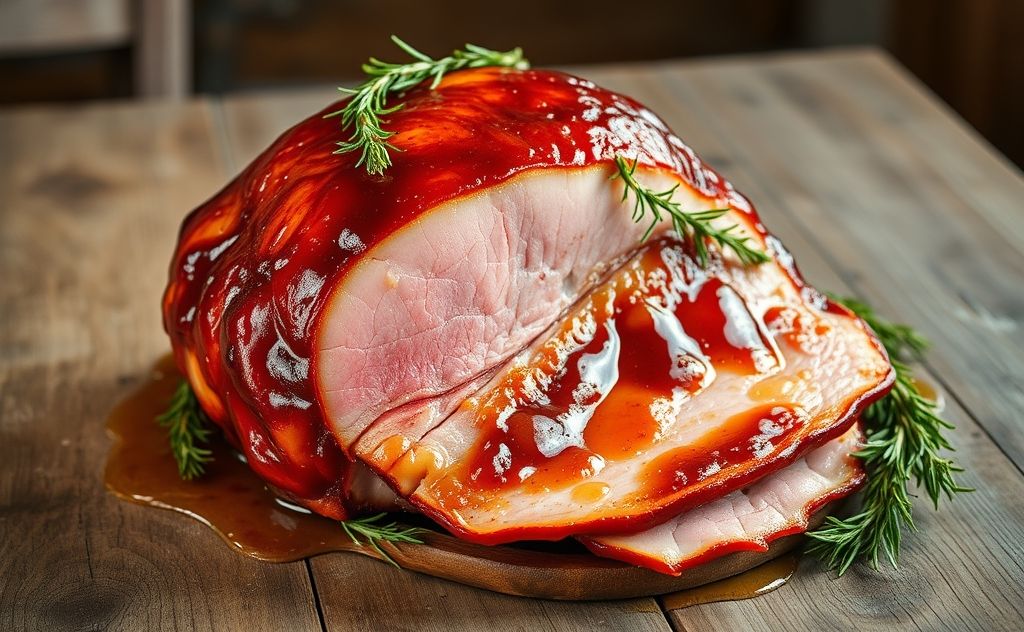
You spent good money on that spiral-sliced Honey Baked Ham. The glaze is caramelized, the meat is tender, and the last thing you want is to dry it out or melt that signature sugar coating into a sticky puddle. Most people panic here. They either nuke it into leather or unwrap it too early and lose all the moisture.
The good news: reheating this ham is forgiving if you follow a few rules. The bad news: most online advice is vague (“just warm it slowly”) or flat-out wrong (boiling it in a covered pot). This guide gives you seven specific methods with exact temperatures, times, and the physics behind each one. You’ll walk away knowing how to hit that sweet spot—warm center, intact glaze, juicy texture.
VANKUTL
16 Inch Roasting Pan with Lid -…
- SIZE - 16L x 12W x 6H inch and inside dimensions 15L x 10.5W x 3.5H inch.
- HEAVY DUTY CONSTRUCTION - Carbon Steel Turkey Roaster features a spacious and thermally efficient design that's perfect for roasti…
- NATURALLY NONSTICK - Roasting pans are carefully crafted with a core of carbon steel, then covered on the inside and outside with…
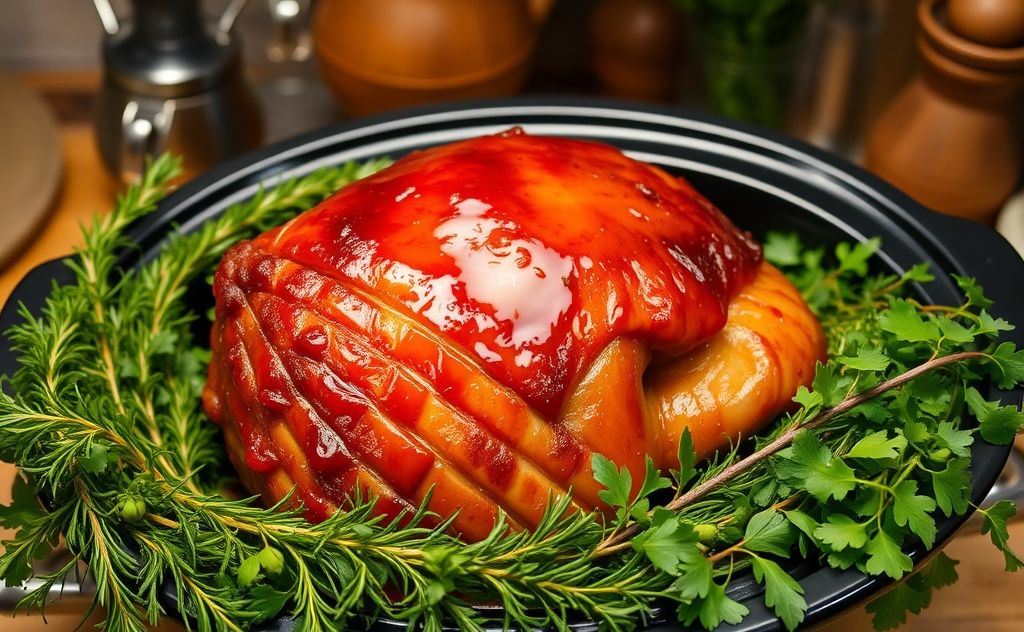
Before we dive in, one tool makes every oven method easier: a quality roasting pan with a tight-fitting lid. The VANKUTL 16-inch enameled carbon steel roaster holds a full ham with room to spare, distributes heat evenly, and its lid traps steam so the meat stays moist. It’s not a requirement, but it removes the biggest variable—uneven heating—before you even start.

Why Honey Baked Ham Needs Special Handling
This isn’t a raw ham you’re cooking. It’s fully cooked, cured, and coated with a sugar-based glaze. The glaze is the whole point. It’s brittle when cold and melts around 275°F (135°C). Push past that and the sugar burns, turning bitter and dark.
The meat itself is already tender. You’re not trying to break down collagen or render fat. You’re just raising the internal temperature from fridge-cold (around 38°F) to serving warmth (140°F). That’s a narrow window. Overshoot by 20 degrees and the slices dry out.
So the core principle is simple: slow, low, and covered. Every method below follows that logic, just with different hardware.
Method 1: Oven Reheating (The Classic, Most Reliable)
This is the gold standard for whole hams and half hams. It gives you the most control and preserves the glaze better than any other method.
Temperature: 275°F (135°C). Not 350°F. Not 300°F. 275 is the sweet spot where the glaze softens without liquefying.
Time: 10-12 minutes per pound. A 10-pound ham takes 100-120 minutes. A 5-pound half ham takes 50-60 minutes.
Steps:
- Take the ham out of the fridge 30-45 minutes before heating. Room-temperature meat heats more evenly.
- Leave the plastic wrap off. Place the ham cut-side down in a roasting pan. The cut side is where moisture escapes, so facing it down traps the juices.
- Add 1/4 cup of water, apple juice, or chicken broth to the bottom of the pan. This creates steam and keeps the pan from scorching.
- Cover tightly with foil or a lid. You want a sealed environment.
- Heat until the internal temperature hits 135-140°F. Use an instant-read thermometer inserted into the thickest part, avoiding the bone.
- Rest for 10-15 minutes, tented with foil. The temperature will climb another 5 degrees during rest.
One thing to watch: if the glaze starts to look sticky or weepy, you’re at the edge. Pull it out immediately. You can always warm it more, but you can’t un-burn sugar.
Method 2: Slow Cooker (Best for Small Portions or Hands-Off)
This works well for a 2-3 pound chunk or a spiral ham that’s already been cut. It’s not ideal for a whole 10-pounder—too much meat, not enough heat control.
Temperature: Low setting (around 200°F). Never use High.
Time: 2-3 hours for a small ham. Check at 90 minutes.
Steps:
- Place the ham in the slow cooker. If it’s spiral-cut, keep the slices together.
- Add 1/2 cup of liquid (apple juice or water) to the bottom.
- Cover and set to Low.
- After 90 minutes, check the internal temp. You want 135-140°F.
- Once warm, switch to the Warm setting. It’ll hold safely for up to 2 hours.
The trade-off: the glaze won’t caramelize further. It’ll soften and stay glossy, which is fine, but you lose that slight crunch from the oven. If you want the glaze to set, transfer the ham to a baking sheet and broil for 2-3 minutes at the end. Watch it like a hawk.
Method 3: Air Fryer (For Slices and Small Portions)
The air fryer is the fastest method, but it only works for individual slices or a small 1-2 pound piece. Whole hams don’t fit, and the high air circulation will dry out a large surface quickly.
Temperature: 300°F (150°C).
Time: 5-7 minutes for slices, 15-20 minutes for a small chunk.
Steps:
- Wrap slices in a single layer in the air fryer basket. Don’t overlap.
- For extra moisture, brush a little apple juice or butter on each slice.
- Heat for 5 minutes, then check. The goal is warm, not crispy.
- For a small ham piece, cover it with foil first, then remove the foil for the last 2 minutes to crisp the glaze.
This method is great for leftovers the next day. It’s not great for a holiday centerpiece. Use it for speed, not for show.
Method 4: Microwave (Fastest, Riskiest, Use Only for Slices)
I’ll be honest: the microwave ruins whole hams. It heats unevenly, turns the glaze into a sticky mess, and makes the meat rubbery. But for a single slice or two, it’s acceptable.
Power: 50% power. Never full power.
Time: 30-45 seconds per slice. Flip halfway.
Steps:
- Place slices on a microwave-safe plate.
- Cover with a damp paper towel. This creates steam and prevents drying.
- Heat at 50% power for 30 seconds. Check. Add 10-second bursts until warm.
- Let it sit for 1 minute. The residual heat finishes the job.
The damp paper towel is non-negotiable. Without it, the ham will be tough and dry. Also, don’t try to heat a whole half ham this way. The center will stay cold while the edges boil.
Method 5: Sous Vide (Precision, Restaurant-Quality)
If you own a sous vide circulator, this is the best way to reheat a ham without losing a single drop of moisture. The water bath holds a constant temperature, so the ham can’t overshoot.
Temperature: 135°F (57°C).
Time: 1-2 hours for slices, 3-4 hours for a whole ham.
Steps:
- Set the circulator to 135°F.
- Seal the ham in a vacuum bag or a heavy-duty zip-top bag with the air pressed out.
- Submerge in the water bath.
- Heat for at least 1 hour. The ham is already cooked, so you’re just bringing it to temp.
- Remove, pat dry, and (optional) sear the glaze in a hot pan for 30 seconds per side.
The downside: the glaze stays soft. It won’t caramelize or crisp. But the texture of the meat is unmatched—it’s like it just came out of the original package. If you’re a perfectionist, this is your method.
Method 6: Steaming (Gentle, But Requires Equipment)
Steaming is a classic restaurant trick for reheating cured meats. It’s gentle and adds moisture, but it won’t do anything for the glaze.
Setup: A pot with a steamer basket, or a roasting pan with a wire rack and 1 inch of water.
Time: 10-15 minutes for slices, 30-40 minutes for a small ham.
Steps:
- Bring water to a simmer, not a rolling boil.
- Place the ham in the steamer basket or on the rack.
- Cover and steam until the internal temp hits 140°F.
- Remove and blot dry with a paper towel.
The issue: the steam will wash away some of the glaze. If you go this route, plan to re-glaze afterward. Brush on a little honey or brown sugar and hit it with a torch or broiler for 2 minutes.
Method 7: Grill or Smoker (For a Smoky Twist)
This is the outdoor option. It adds a subtle smoke flavor, but it’s easy to overdo it. The key is indirect heat and a low temperature.
Temperature: 250°F (120°C) on the indirect side.
Time: 15-20 minutes per pound.
Steps:
- Set up your grill for two-zone cooking. Charcoal: coals on one side, ham on the other. Gas: one burner on, ham on the unlit side.
- Place the ham in a disposable aluminum pan with 1/2 cup of liquid.
- Cover the pan with foil for the first half of the cook. This keeps it moist.
- Remove the foil for the last 30 minutes to let the glaze set.
- Add wood chips (hickory or apple) for the first 30 minutes only. Too much smoke makes the ham taste like bacon.
This method takes longer than the oven, but the flavor payoff is real. Just don’t use mesquite. It’s too aggressive for a sweet-glazed ham.
Comparison Table: Method vs. Time vs. Best Use
| Method | Temperature | Time (per lb or per slice) | Best For | Glaze Integrity |
|---|---|---|---|---|
| Oven | 275°F | 10-12 min/lb | Whole or half hams | Excellent |
| Slow Cooker | Low (200°F) | 2-3 hrs total | Small portions, hands-off | Good (soft) |
| Air Fryer | 300°F | 5-7 min/slice | Slices, next-day leftovers | Good |
| Microwave | 50% power | 30-45 sec/slice | Single slices, emergencies | Poor |
| Sous Vide | 135°F | 1-2 hrs total | Maximum moisture retention | Poor (soft) |
| Steaming | Simmering water | 10-15 min/slice | Gentle reheating | Poor (washes off) |
| Grill/Smoker | 250°F indirect | 15-20 min/lb | Outdoor cooking, smoky flavor | Good |
Frequently Asked Questions
Can I reheat a Honey Baked Ham in the foil it came in?
If it’s the original foil wrapper, yes, it’s oven-safe up to 400°F. The foil acts as a sealed pouch, trapping steam and moisture. Just place it directly on a baking sheet and follow the oven times above. Remove the foil for the last 15 minutes if you want the glaze to set. Don’t use the plastic lid or any plastic wrap.
How do I keep the glaze from burning?
The glaze burns because it’s exposed to direct heat above 300°F. Keep it covered for most of the cook, and only expose it at the end. If you’re using the oven, cover the ham tightly with foil or a lid. If you’re using a grill, keep the ham in a covered pan. And never brush extra glaze on early—wait until the last 20 minutes.
What internal temperature should the ham reach?
The USDA says 140°F for reheating fully cooked hams. That’s your target. Pull it out at 135°F if you’re going to rest it, because the temperature will climb 5 degrees. Don’t go past 145°F—you’ll start drying out the meat and melting the glaze into a puddle.
Can I freeze a Honey Baked Ham and reheat it later?
Yes, but the texture will suffer slightly. Freeze it in the original packaging or a vacuum-sealed bag. Thaw in the fridge for 24-48 hours, then reheat using the oven method. Expect the glaze to be less shiny after freezing. You can refresh it with a thin brush of honey or maple syrup before reheating.
Is it safe to leave the ham out at room temperature while reheating?
You can leave it out for 30-45 minutes before heating. That’s within the safe zone. But don’t leave it out for hours. The USDA says perishable foods shouldn’t sit at room temperature for more than 2 hours total. If you’re reheating a large ham, take it out, let it warm slightly, then get it into the oven. Don’t let it sit on the counter all afternoon.
What Actually Matters (A Quick Recap)
- Always reheat at 275°F or lower. Higher temps ruin the glaze and dry the meat.
- Cover the ham for at least 80% of the cook time. Trapped steam is your friend.
- Use a thermometer. Guessing leads to rubbery ham or cold centers.
- Rest the ham for 10-15 minutes after reheating. The carryover heat finishes the job.
- For slices, the air fryer beats the microwave every time. The microwave only works with a damp paper towel.
- If you own a sous vide circulator, use it. It’s the most foolproof method for whole hams.
- Don’t reheat more than once. Serve what you heat, and store leftovers cold.
One last thought: the glaze is the star. Treat it like a delicate crust, not a sauce. Keep it covered, keep the heat low, and you’ll serve a ham that tastes like it just came from the store. For more on managing moisture and heat in other contexts, check out this guide on temperature control or this overview of heating strategies.
Related guides
Stay Warm & Worry-Free: A Guide to Heating System Warranties
Protect your heating system with the best home warranty. Get peace of mind and keep your home cozy…
Best Boxers for Heat: Stay Cool All Day Long
Stay cool all day long with the best boxers for heat! Find your perfect fit and beat the…
Heated Back Massagers That Ease Tension Instantly
Imagine sinking into a chair that not only cradles you in comfort but also soothes your muscles with…