For most 10-gallon aquariums, start with a 50W adjustable, submersible aquarium heater and verify the water temperature with a separate thermometer. The right wattage depends on how cool the room gets and the temperature your fish need; a heater sold for livestock tanks or household rooms is not an aquarium heater.
Key takeaways
A 50W adjustable aquarium heater is a reasonable starting point for many 10-gallon tanks; check the manufacturer’s tank-size guidance.
Use a separate thermometer to confirm the water temperature instead of trusting the heater dial or display alone.
A livestock-tank de-icer is not an aquarium heater, even though both products warm water.
Choose wattage based on the room’s coldest temperature and the required tank temperature, not gallons alone.
A 5-gallon fish tank heater usually needs less output than a 10-gallon model, but room temperature and the fish’s needs still matter. Choose an aquarium-rated heater, not a product that merely warms water.
The supplied product list contains no aquarium heater, so it cannot support an honest ranked product list or product comparison for this search. Do not present its space heaters, patio heater or livestock de-icer as aquarium picks.
Aquarium Heater Picks for 10 Gallons
#1Closest, Still Wrong
JXJHOVV 250W Livestock De-Icer
Best for Livestock tanks and winter bird baths, not aquariums
This is the closest match by shape and purpose, but its data identifies it as a livestock-tank and bird-bath de-icer. The thermostat activates below 35°F and shuts off at 77°F, which isn’t the same as controlled aquarium heating for fish.
Why it made the cut
250W heating element
Automatic thermostat
Cast aluminum construction
Good to know
Designed for livestock tanks and bird baths
Must be fully submerged before power is connected
Dry operation can cause permanent damage
Skip it if Skip it for a 10-gallon aquarium because the product data does not identify it as an aquarium heater.
Best for Small rooms, offices and RVs—not tank water
The 1,500W ceramic PTC element and built-in thermostat are meant to heat up to 200 square feet of room space. ETL certification, overheat protection and 45° tip-over shutoff help with room use, but none makes this heater suitable for submersion.
Why it made the cut
1,500W power
Thermostat with ±1°F precision
ETL-certified with overheat and tip-over protection
Good to know
Not submersible
Designed to heat rooms rather than aquarium water
A 24-hour timer does not provide aquarium temperature control
Skip it if Skip it unless your actual goal is warming a room around the aquarium.
DREO’s 1,500W PTC system, 41-95°F setting range and 1°F increments control room air temperature. The tilt-detection sensor and overheat protection address portable room-heater risks, not immersion or fish-safe temperature control.
Why it made the cut
1,500W PTC heating system
41-95°F temperature range
1°F temperature increments and 34dB operation
Good to know
Not submersible
Heats air, not aquarium water
No tank-size range is provided
Skip it if Skip it if you need a heater that sits in the aquarium.
Best for Supplemental heat in rooms up to 400 square feet
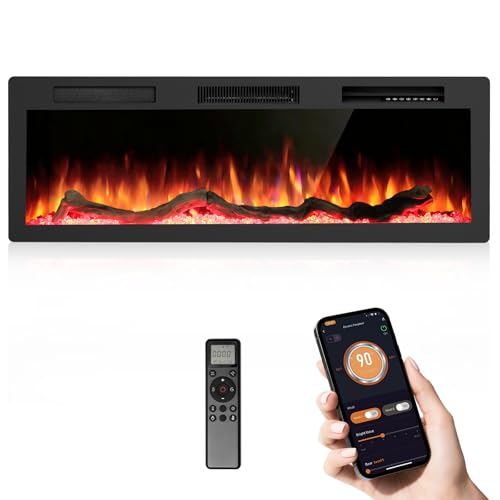
This recessed or wall-mounted fireplace offers 750W and 1,500W heating modes with a 59-95°F setting range. Its flame controls, remote, touch screen and Alexa/WiFi features are useful for room ambiance, but the unit is not an aquarium heater.
Why it made the cut
750W and 1,500W heating modes
59-95°F temperature setting range
Wall-mounted or recessed installation
Good to know
Not submersible
Designed for indoor room heating
Large 50-inch fireplace format is unsuitable for a tank
Skip it if Skip it for aquarium heating; its heating and installation design are for a room.
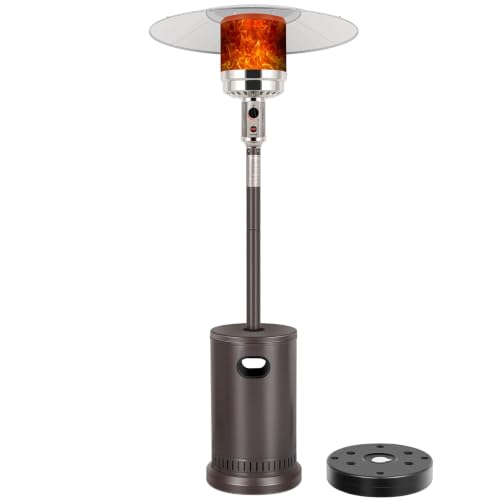
This propane patio heater is built to warm outdoor areas up to 200 square feet and uses one-press ignition with a control valve. Its 50,000 BTU burner and outdoor design have no place in or beside an aquarium as a water-heating device.
Why it made the cut
50,000 BTU outdoor heating
Tip-over protection system
Wheels and a weight-adjustable water tank
Good to know
Outdoor-only patio heater
Uses propane combustion
Not submersible or aquarium-rated
Skip it if Skip it for any aquarium; it is an outdoor gas heater, not a water heater.
Best Aquarium Heater for 10 Gallon Tanks: Choose the Right Type
For most 10-gallon tanks, a 50W adjustable, submersible aquarium heater is a common starting point, not a guarantee for every room or fish species. For an aquarium heater 5 gallon setup, you’ll generally need less output; use the specific heater’s tank-size guidance rather than scaling its wattage down by guesswork. A digital aquarium heater makes the set temperature easier to read, but a separate thermometer is still how you check the water.
Heater type
What to check
Adjustable submersible aquarium heater
Tank-size range, adjustable temperature, and instructions for placement and submersion.
Digital aquarium heater
Readable set temperature; verify actual water temperature with a separate thermometer.
Livestock-water de-icer
Not designed or specified as an aquarium heater.
Choose equipment labeled and sized for an aquarium.
Don’t Substitute a Livestock De-Icer
The JXJHOVV 250W Submersible Cast Aluminum De-Icer is for livestock water, not a fish tank. Its instruction to fully submerge the unit before powering it doesn’t make it suitable for aquarium use. The products listed for this article aren’t aquarium heaters, so there’s no supported winner to rank among them.
Check Before You Buy
The product is explicitly made for aquariums.
Its stated tank-size range includes your tank.
The instructions explain temperature adjustment and installation.
You’ll check water temperature with a separate thermometer.
If you’re comparing models for a 10-gallon setup, see our perfect fit guide. For small tanks, heater output and the maker’s stated tank range matter more than a digital display alone.
Size the Heater for the Room and Tank
For a 120-gallon aquarium, use the manufacturer’s sizing chart rather than guessing a wattage: heater needs depend on tank volume and how far the coldest room temperature sits below your target water temperature. The same rule applies when choosing the best aquarium heater for large tanks.
1
Measure the coldest room temperature
Use the temperature the room reaches during a cold spell, not its daytime average.
2
Set the fish’s target temperature
Check the required water temperature for the species you keep.
3
Compare the chart and tank range
Choose a heater whose stated capacity and tank-size guidance fit both measurements. If considering multiple heaters, check that their combined capacity and placement suit the setup.
Work From Your Own Temperatures
Say your room reaches 60°F and your fish need water at 76°F. The heater must maintain a 16°F difference. Check the maker’s sizing chart for that room-to-water gap and your tank volume; don’t turn the temperature difference into an invented wattage.
Coldest room60°F
Target water76°F
Temperature difference16°F
Good circulation helps carry warmed water through the tank. Follow the heater manual’s placement instructions; avoid dead spots and keep the heater from touching substrate or decorations if the manual says to.
A compact aquarium heater’s lifespan varies by model, conditions and maintenance; the supplied product data gives no reliable lifetime figure. For running cost, multiply heater watts ÷ 1,000 × hours actually powered × your electricity price per kWh. The thermostat switches the heater on and off, so it usually draws full power for only part of the day.
Heater
Watts
Per hour
Per day (4 h)
Per month (30 days)
50W aquarium heater
50 W
0.9¢
3.4¢
$1.02
Calculated at 17¢ per kWh. Example only: assumes a 50W heater is powered for 4 hours a day and electricity costs $0.17 per kWh. Actual runtime depends on room temperature, tank conditions and the heater’s thermostat.
Why There’s No Universal Lifespan
A single lifetime claim would be misleading: model, operating conditions and maintenance all affect how long a heater lasts. Check the cord, housing and suction cups regularly. Replace the heater if you find cracks, corrosion, erratic temperature control or damaged wiring; don’t keep using a suspect heater just because it still turns on.
Keep Aquarium Heater Use Safe
Aquarium heater safety starts with following the model’s instructions: submersion depth, mounting position and water-change steps can differ. Use a separate thermometer to check that the tank stays near the temperature your fish need, and make temperature adjustments gradually.
1
Check the label and manual
Confirm the heater is designed and labeled for aquarium use, then follow its instructions for mounting and submersion. A UL, ETL or CSA claim alone does not establish that a product is suitable for an aquarium.
2
Verify the water temperature
Place a separate thermometer where you can read it easily. Check the reading against the heater setting and your fish’s target temperature; don’t rely on the heater dial as your only check.
3
Unplug before water changes
Unplug the heater before removing it or lowering the water below its required operating level. Let it cool for the time and in the way specified by the manual before handling it.
Prevent Dry Operation
Never leave a heater powered when the water level is below the model’s required operating level. Follow the manual during water changes; a heater that must remain submerged can be damaged if exposed to air while running.
Separate Aquarium Heaters From Household Water Heaters
A Rheem 40-gallon gas or electric water heater heats household tap water; it cannot serve as an aquarium heater. Its tank capacity or heating rating says nothing about whether it can safely control aquarium water. The query doesn’t provide a Rheem model number or rating, so a specific rating—or dimensions such as 18 inches wide and 58 inches tall—can’t be confirmed.
Equipment
What it heats
What to check
Aquarium heater
Water in a fish tank
Aquarium rating, tank-size guidance and temperature controls
Rheem 40-gallon storage water heater
Household hot water
Exact model’s dimensions, energy specifications and household hot-water needs
A 40-gallon electric model can’t be recommended without knowing which model you mean.
If you’re searching for the best 40-gallon electric water heater, compare the actual models against your home’s hot-water demand and installation space. That’s a separate choice from sizing a heater for a 10-gallon aquarium.
Run This Checklist Before You Buy
Before buying, confirm the heater is made for aquariums and suits your fish and the room’s lowest temperature. A livestock de-icer, household space heater or patio heater is not a substitute.
Check Before You Buy
The label identifies it as an aquarium heater.
The manufacturer’s tank-size guidance includes your tank.
The wattage suits the tank and the room’s coldest conditions.
Temperature adjustment is available if your fish need it.
You have a separate thermometer to verify water temperature.
The cord and heater housing are intact, with no cracks, exposed wires or other damage.
If the model’s guidance doesn’t match your tank or the room gets colder than its listed conditions, choose a different aquarium heater rather than guessing.
Frequently Asked Questions
What size heater should I use for a 5-gallon fish tank?
A 25W aquarium heater is a common starting point for a 5-gallon tank, but check the heater’s sizing chart against the room’s coldest temperature and your fish’s needs. Use an adjustable model if the target temperature isn’t fixed, and verify the water with a separate thermometer.
Can I use a 50W aquarium heater in a 5-gallon tank?
Yes, if the manufacturer lists it for that tank size and the heater has suitable temperature control. A higher-wattage heater can warm a small tank quickly, so monitor the temperature and follow the maker’s placement and submersion instructions.
How big a heater do I need for a 120-gallon aquarium?
Use the heater manufacturer’s chart for a 120-gallon tank and the temperature difference between the room and your target water temperature. Large tanks may need more than one heater for even heating, but follow the equipment maker’s guidance and check the temperature in more than one area.
Is a digital aquarium heater more accurate?
A digital display shows the heater’s reading; it doesn’t prove that reading matches the water temperature. Compare it with a separate aquarium thermometer, especially after setup or if the display disagrees with your fish’s temperature requirements.
How long does a compact aquarium heater last?
There’s no dependable lifespan that applies to every compact heater; model quality, use and maintenance all matter. Replace a heater that has cracked glass, damaged wiring, inconsistent temperature control or visible corrosion, and unplug it before removing it from water.
Can I use a livestock water de-icer in an aquarium?
No. A livestock de-icer is designed for a stock tank, not an aquarium, and may not control temperature safely for fish. Use a heater specifically rated for aquariums and suitable for your tank size.