The best Rheem water heater anode rod replacement depends on your tank’s thread, length, and water chemistry. A magnesium rod is the usual repair choice, while a powered anode suits homes fighting rotten-egg odor or rapid corrosion. The portable heaters listed here heat containers, not storage-tank anode ports.
The essentials
Match the replacement rod to the tank’s thread, length, and manufacturer instructions before ordering.
Choose magnesium for common tank protection; consider a powered anode when odor or fast rod consumption is the main problem.
A portable immersion heater heats water in a bucket or tub; it does not protect or repair a storage water heater.
Shut off power or gas and water before removing a tank anode, and get help if the fitting will not break free.
Never cap or plug a water heater’s temperature-and-pressure relief valve.
Say your 40-gallon Rheem tank is still heating normally but the anode rod is badly eaten away. Replacing that rod now costs far less trouble than letting corrosion reach the steel tank.
The supplied products include portable immersion heaters and electric room-heating appliances, so check the use case carefully: none replaces a threaded Rheem or Bradford White tank anode. The picks below are ranked by the jobs their specifications actually support.
The Right Pick For Each Heating Job
#1Best for Buckets
FIVECUBS Portable Immersion Heater
Best for Heating water in a bucket, portable tub, or small inflatable pool
For portable container heating, this model pairs a 2000W element with a digital thermometer and automatic shutoff. Its stainless steel guard helps keep the element from touching the container, and the dry-burn protection cuts power if it detects dry operation.
Power 2000W, 120VGuard 304 stainless steelControl Digital thermometer and auto shut-offStated uses Small inflatable pools, bathtubs, buckets, and camping
Why it made the cut
Digital thermometer shows water temperature
Auto shutoff includes dry-burn protection
304 stainless steel guard
Good to know
Heats containers, not a storage-tank anode port
Skip it if Skip it if you need a replacement anode rod for a Rheem tank; this is an immersion heater.
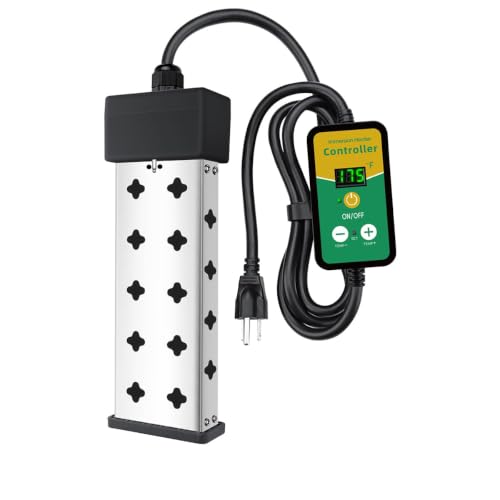
Best for Heating bucket or tub water with a settable temperature
The LCD controller displays the water temperature and lets you set a target up to 175°F. Anti-dry-burn protection and automatic shutoff are useful safeguards for container heating, though this still has no role in a tank’s anode opening.
Power 1800WTemperature setting Up to 175°FCord 14AWGGuard 304 stainless steelSafety feature Auto shut-off and anti-dry burn
Why it made the cut
Temperature setting up to 175°F
LCD temperature display
Auto shutoff and anti-dry-burn protection
Good to know
The listed use is portable container heating, not tank maintenance
Skip it if Skip it if you’re shopping for a Rheem replacement anode rod.
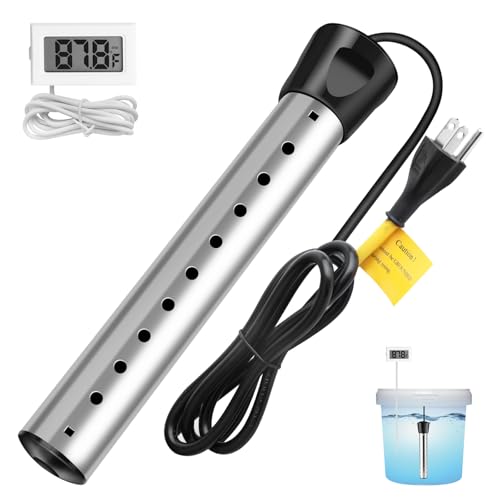
Best for Portable bucket or bathtub water heating with a temperature display
This 2000W immersion heater is described for buckets, bathtubs, and portable wash-up jobs. The LCD thermometer lets you monitor the water, while its stainless steel guard keeps the heating element separated from direct contact; it is not a water-heater tank component.
Power 2000WLength About 10.8 inchesWeight 1.04 poundsGuard 304 stainless steelDisplay Digital temperature display
Why it made the cut
LCD thermometer displays water temperature
304 stainless steel heating element
Compact and lightweight, according to the product data
Good to know
Does not replace a storage-tank anode rod
Skip it if Skip it if your goal is to stop tank corrosion or remove rotten-egg odor from a Rheem water heater.
Best for Supplemental heat at a desk or in a small room
A 1500W ceramic heater provides room heat, not hot-water treatment. Its thermostat, timer, and remote suit someone warming a small space, and the listed tip-over and overheat protections address two common portable-heater risks.
Power 1500WListed coverage Up to 200 sq.ftTimer 24HSafety features Tip-over shutoff and overheat protectionCertification ETL-certified
Why it made the cut
1500W power with thermostat
24-hour timer and remote control
Tip-over and overheat protection
Good to know
Heats room air, not water in a tank or container
Skip it if Skip it if you need a water-heater anode rod or a device that heats water.
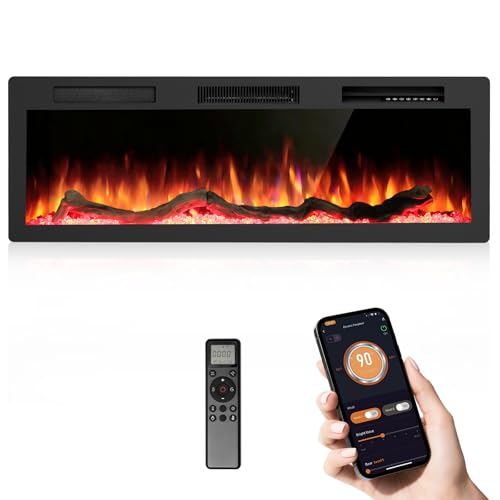
Best for Supplemental zone heating and fireplace-style ambiance
This electric fireplace offers 750W and 1500W heating modes, with a stated supplemental heating area of up to 400 square feet. Remote, touch, smartphone, and Alexa controls give you several ways to adjust it, but it has no connection to a storage tank’s anode rod.
Width 50 inchesHeating modes 750W and 1500WTemperature setting range 59-95°FStated supplemental heating ar Up to 400 square feetInstallation Wall-mounted or recessed
Why it made the cut
Two heating modes: 750W and 1500W
Stated supplemental zone heating up to 400 square feet
Remote, touch, smartphone, and Alexa controls
Good to know
A room-heating appliance, not a water-heater repair part
Skip it if Skip it if your search is about tank corrosion, anode threads, or rotten-egg water odor.
Top Picks That Transform Your Water Heater Experience Today
The best water heater pick here depends on the job: portable water heaters heat buckets, tubs, and small pools, while a Rheem tank needs a correctly fitted anode rod. None of these five products replaces a Rheem anode.
Rank
Best for
Product
Why it fits
1
Portable bucket, bathtub, camping, or small inflatable pool
FIVECUBS Portable Water Heater, Immersion Heater for Bucket…
Its 2,000 W output, digital thermometer, auto shut-off, dry-burn protection, and 304 stainless steel guard make it the strongest all-around portable pick.
2
Large containers or tubs
Immersion Water Heater with Controller, 1800W Portable Buck…
The 1,800 W heater has a controller, LCD display, anti-dry-burn protection, and a 175°F setting. Large containers—not large rooms.
3
Quiet heat for a small room
R.W.FLAME Small Space Heaters for Indoor Use
This 1,500 W ceramic space heater claims 200-square-foot coverage and 35 dB operation. It heats air, not water.
4
Budget portable heating
2000W Immersion Water Heater Electric,Portable Water Heater…
The 2,000 W output, digital temperature display, 304 stainless steel guard, 10.8-inch length, and 1.04-pound weight cover the useful basics.
5
Smart supplemental room heat
R.W.FLAME Smart Electric Fireplace 50 Inch,Recessed & Wall…
It offers 750 W and 1,500 W modes, a stated 400-square-foot supplemental zone, Wi-Fi, Alexa, a remote, and touch controls.
These rankings separate water heating from room heating.
Myth
A portable water heater can replace the anode rod in a Rheem tank.
Fact
An immersion heater warms water in a container. A Rheem anode rod protects the tank by corroding in place, so the repair requires a rod matched to the tank’s opening and specifications.
Before You Buy
Decide whether you need hot water in a container or protection inside a storage tank.
For portable heating, check the wattage, temperature controls, dry-burn protection, and shut-off features.
For a Rheem tank, record the model, serial number, thread, rod length, and available clearance before ordering.
For a separate room-heating search, the heating picks that will transform your heating experience belong in that comparison—not in a water-heater repair. The right anode selection must come from the tank’s actual specifications.
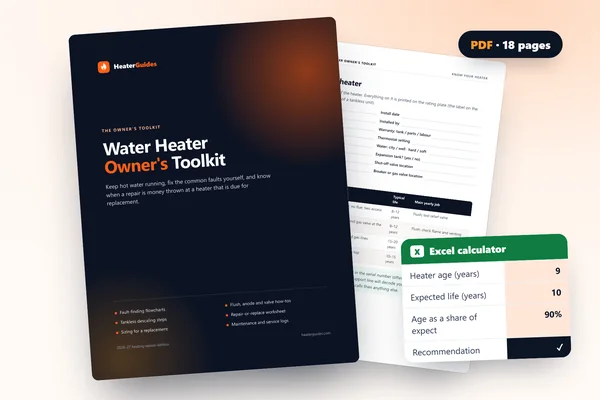
From HeaterGuides · our own guidePages 9 to 13 are the fault flowcharts: no hot water, noises, smells and leaks, in order.Water Heater Owner's ToolkitFix the common faults yourself, keep it running for years, and know when a repair is money wasted.No-hot-water flowcharts, gas and electricFlush, anode, relief valve and descaling stepsRepair-or-replace calculator (Excel)$14.99$9.99Get it for $9.99See what's inside and watch the 2-minute video →18-page printable PDF + Excel calculator · instant download · 30-day refund
Match The Rod To The Tank
A Rheem water heater anode rod replacement must match the tank’s thread, length, and approved material because the anode is the part designed to corrode before the steel tank does.
The rod is a sacrificial metal component: corrosive water attacks it first, reducing the tank steel’s exposure. Magnesium is a common replacement material, while aluminum or aluminum-zinc can suit different water chemistry and manufacturer requirements.
Record These Details First
Rheem model and serial number
Tank capacity and fuel type
Anode-port thread and replacement rod length
Overhead clearance above the tank
The model documentation’s approved anode options
Many Rheem tank anodes sit in a dedicated opening on top of the tank, which is the usual Rheem water heater anode location, but the exact arrangement varies. The installation manual and model documentation control; a top-mounted rod may also need more clearance than the tank has above it.
Powered anode rods for hot water heaters use electronic protection rather than relying on the same sacrificial metal consumption. A powered rod may help with rotten-egg odor, but odor can also come from water chemistry or plumbing, so it isn’t a universal cure.
Fit Matters
A powered anode isn’t automatically better. The wrong thread can prevent sealing, and the wrong length can interfere with the tank or fail to protect the intended area. Don’t force a generic rod into a Rheem opening.
For a Bradford White 40-gallon gas water heater, identify the exact model and its approved rod before buying a zinc or aluminum-zinc replacement. A generic Rheem rod may have the wrong thread, length, or approval, even when the tank capacity and gas fuel type look similar.
Myth
Any Rheem replacement anode rods for water heaters will fit any Rheem tank.
Fact
Rheem tanks use different specifications, and clearance can matter as much as thread size. Match the model documentation, port, length, and water chemistry instead of buying by brand alone.
Remove The Old Rod Without Stripping The Tank
Removing an anode rod from a Rheem water heater starts with identifying the tank and shutting down every energy and water source before touching the anode port. Gas burners, 240-volt wiring, hot water, and a seized rod each bring a different hazard, so a licensed plumber should handle gas connections, electrical work, or any job that requires moving an unsafe tank.
1
Identify the tank
Record the Rheem model and fuel type, then confirm the replacement rod matches the thread, length, and approved material.
2
Shut off energy
Turn the gas control to the required off position for a gas tank, or shut off the correct breaker for an electric tank. Let the water cool.
3
Close the water
Close the cold-water supply above the tank. Open a nearby hot-water tap to relieve pressure, then wait until flow drops before working at the anode port.
4
Break the rod loose
Use a deep socket or breaker bar that fits the anode hex head. Controlled force is the goal; overhead clearance may call for a flexible or segmented replacement rod.
5
Install and check
Seal the new rod using the method specified for that rod and tank, tighten it as directed, reopen the water supply, and check the fitting for leaks before restoring energy.
Stop before the tank becomes scrap
Stop if the tank twists, the fitting starts to round off, the tank leaks, or the rod will not move with controlled force. Forcing a seized anode can turn a maintenance job into a tank replacement.
A trustworthy Rheem 40 gas replacement video should show
Model identification and the anode location
Fuel shutoff and pressure relief
The correct removal direction
The sealing method and leak check
How to inspect the replacement rod later
Searches for Rheem 40 gas water heater anode rod replacement video instructions should lead to those details, not a fast wrench demonstration. Inspect the replacement rod periodically and replace it when substantially consumed; water chemistry changes the timing, so one universal interval would be false precision.
Calculate Heat, Current, And Real Use
A 2,000-watt immersion heater costs about $0.34 for one hour at $0.17 per kWh, making it a portable bathtub water heater for a container—not a replacement for a household tank’s recovery system.
Worked example
Product 3 uses 2,000 W ÷ 1,000 × 1 hour × $0.17 per kWh = $0.34 for one hour. Product 4 uses 1,800 W: 1.8 × 1 × $0.17 = $0.31 for one hour. Actual heating time depends on gallons, starting temperature, container material, insulation, a lid or cover, and heat loss from an open container.
Product 32,000 W; about $0.34 per hour
Product 41,800 W; about $0.31 per hour
Assumed electricity rate$0.17 per kWh
Heater
Watts
Per hour
Per day (1 h)
Per month (1 days)
2,000 W immersion heater
2,000 W
34¢
34¢
34¢
1,800 W immersion heater
1,800 W
31¢
31¢
31¢
1,500 W room heater
1,500 W
26¢
26¢
26¢
Calculated at 17¢ per kWh. One hour of operation at an assumed $0.17 per kWh; actual water-heater running cost depends on runtime.
12.5 A
Approximate draw of a 1,500 W room heater at 120 V
Product 1 must plug directly into a wall outlet, never an extension cord or power strip.
Read the five-gallon claim carefully
Product 3’s claim about heating 5 gallons in minutes is a product claim, not a guarantee for every container or starting temperature. Monitor the water temperature and follow the manual; an immersion heater can’t supply whole-house showers or replace a tank’s recovery system.
Keep Water And Electricity Apart
Immersion water heater safety starts with keeping the heater unplugged until its element is fully submerged; water heater anode replacement safety means leaving gas, venting, 240-volt wiring, and T&P discharge piping to a licensed trade where local rules require it. Water above 120°F at the tap can scald, so check portable bath water with a thermometer, not your hand.
Before Using An Immersion Heater
Follow the manufacturer’s instructions for the container and minimum water level; keep the element fully submerged before plugging it in.
Unplug the heater before touching the water or the heater. Keep the plug, cord connections, and outlet dry.
Use a working GFCI-protected outlet where required by the installation and local code.
Stop using the heater if its insulation is damaged or the plug gets hot.
A Guard Is Not Permission To Touch
A stainless guard can help keep the heating element away from the container, but it doesn’t make an energized heater safe to touch or safe to leave unattended. Never handle it while plugged in; follow the manual’s instructions for use and removal.
Room heaters need their own rules: plug them directly into a wall outlet, leave 3 feet of clearance, and choose a model with tip-over and overheat protection plus a UL, ETL, or CSA listing. Don’t leave one running unattended unless the manufacturer specifically says the model is designed for that use.
Tank repairs can cross into licensed work. Gas connections, venting, 240-volt electrical work, and T&P valve discharge piping are jobs for a licensed plumber or electrician in many locations. Never cap or plug the T&P valve; it must be able to discharge if pressure or temperature gets too high.
In short
Keep immersion heaters unplugged until fully submerged, and unplug them before contact with water or the device. Use a thermometer for bath water, and leave regulated tank connections and safety-valve piping to qualified tradespeople.
More Questions, Answered
What is the best anode rod for a Rheem water heater?
A magnesium anode is the usual choice for a Rheem tank because it sacrifices itself to protect the steel lining. A powered anode can make more sense if the tank has recurring rotten-egg odor or consumes replacement rods quickly. Confirm the thread and usable length before ordering.
Where is the anode rod located on a Rheem water heater?
The anode is usually installed at the top of the tank, under a hex-head plug or beneath the hot-water outlet fitting. Some models use a combination outlet and anode, so the model label and installation manual are the safest way to identify it.
Are powered anode rods worth using in hot water heaters?
Powered anode rods can be worthwhile when water chemistry causes repeated odor or rapid sacrificial-rod wear. They need a nearby electrical connection and correct installation, and they still must fit the tank’s port. A standard magnesium rod is simpler when corrosion and odor aren’t recurring problems.
How do I remove an anode rod from a Rheem water heater?
Shut off the heater’s energy source, close the cold-water supply, and relieve tank pressure before loosening the anode. Drain enough water to lower the level below the port, then use the correct socket and steady force; a stuck plug may need a plumber because twisting the tank fitting can cause a leak.
What anode rod fits a Bradford White 40-gallon gas water heater?
The gallon size and fuel type alone don’t identify the right rod. Use the model number to confirm the thread, total length, and whether the tank uses a dedicated or combination anode. A rod that is too long, short, or incorrectly threaded is the wrong repair.
Can a portable immersion heater replace a water heater anode rod?
No. An immersion heater adds heat to an open container, while an anode rod protects the steel tank from corrosion. Using the portable heater may warm a bucket or tub, but it doesn’t protect or repair a household water heater.
How often should a Rheem water heater replacement anode be inspected?
Follow the service schedule for your exact Rheem model, with an inspection after about three years as a practical starting point. Check sooner if the tank has softened water, a persistent odor, unusually fast rod wear, or a history of leaks.
Before you go · a welcome giftGet the Water Heater Owner's Toolkit for $4.99Fix the common faults yourself, keep it running for years, and know when a repair is money wasted. Normally $14.99; your welcome price saves $10.00. We'll email your link right now.or buy it now for $9.99 without the gift →One email with your link now. We never share your address.



 Water Heater Owner's ToolkitFix the common faults yourself, keep it running for years, and know when a repair is money wasted.No-hot-water flowcharts, gas and electricFlush, anode, relief valve and descaling stepsRepair-or-replace calculator (Excel)