

You’ve seen the routine: a nurse walks in, holds a thermometer to a patient’s forehead or ear, waits a few seconds, and jots down a number on a chart. That number becomes the official record for the next four to eight hours. It feels standard, but it’s a snapshot, not a story. A fever that spikes at 2:00 AM and breaks by 6:00 AM might never get caught. For a post-surgical patient or someone on immunosuppressants, that missed spike can be the difference between a mild infection and full-blown sepsis.
Temperature sensors have moved far beyond that plastic stick in a drawer. They’re now continuous, wireless, and smart enough to stream data straight into electronic health records. This article walks through how temperature sensors revolutionize healthcare, from the physics of where you place a sensor to the financial math of avoiding readmissions. You’ll learn the clinical trade-offs, the engineering bottlenecks, and what actually works on a busy hospital floor.
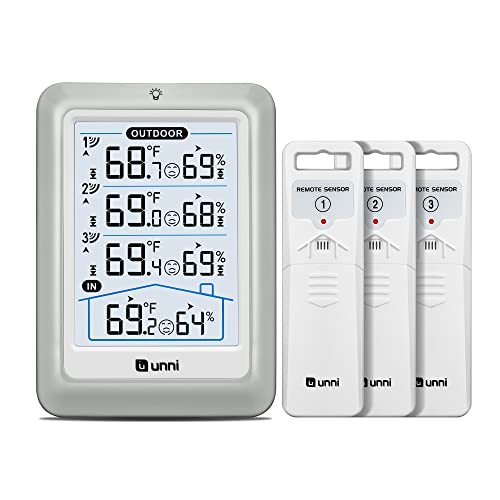
U UNNI
Indoor Outdoor Thermometer Wireless 4.5 Inch Display…
- HIGH-ACCURARY TEMPERATURE HUMIDITY GAUGE – We pre-calibrate the sensor to make it extremely accurate! The indoor temperature range…
- DISPLAY 3 SENSORS DATA, TRANSMISSION 328FT/100M – Unni has advanced patented wireless technology that provides more powerful and s…
- SPECIAL FEATURES – Stop worrying about the climate! You will be able to know in real time indoor and outdoor temperature and humid…
You’ll also see a practical example of a wireless monitoring station that fits into home care scenarios, because the revolution isn’t just in hospitals—it’s in living rooms too.
If you’re managing a household with a vulnerable person—an elderly parent, a child prone to fevers, or someone recovering from surgery—a reliable wireless indoor outdoor thermometer with multiple remote sensors gives you the same continuous picture a hospital gets, minus the IV poles. Monitoring three different rooms or the porch versus the nursery from a single display changes how quickly you react to a changing environment.

The Shift from Spot Checks to Continuous Monitoring
Traditional thermometry is a point-in-time measurement. You grab a value, you record it, you move on. The problem is that body temperature is a dynamic variable. It fluctuates with circadian rhythm, activity, digestion, and inflammation. A single reading taken at 8 AM tells you almost nothing about the trajectory overnight.
Continuous monitoring changes the question from “What is the temperature right now?” to “How is the temperature trending over the last six hours?” That trend line is clinically far more valuable. A slow upward drift is an early warning sign. A sudden spike is an acute event. Spot checks catch the latter only if someone happens to be in the room at that exact moment.
Consider postoperative patients. Studies show that surgical site infections often present with a fever 48 to 72 hours after the procedure. With spot checks every 8 hours, you might catch that fever late. With continuous monitoring, the nursing staff sees the uptrend start at hour 40 and can order labs or imaging earlier. That early intervention is where the ROI lives.
The economic case is stark. A single hospital-acquired infection costs an average of $20,000 to $40,000 to treat, depending on the organism and the length of stay. Preventable readmissions for conditions like pneumonia or urinary tract infections carry penalties under Medicare’s Hospital Readmissions Reduction Program. Continuous temperature monitoring is not a luxury gadget; it’s a cost-containment tool that pays for itself after one avoided complication.
How Temperature Sensors Work in Modern Healthcare
Not all temperature sensors are created equal. The clinical world relies on several distinct technologies, each with its own strengths and failure modes.
Thermistors are the workhorses. They’re small, cheap, and accurate to within ±0.1°C when properly calibrated. They work by changing electrical resistance with temperature. Most wearable patches and ingestible pills use thermistors because they’re tiny and draw very little power.
Thermocouples measure temperature via the voltage difference between two dissimilar metals. They handle a wider range than thermistors but are less accurate in the narrow physiological range (35°C to 42°C). You’ll find them in laboratory equipment and some industrial-grade patient warmers, not typically on the skin.
Infrared sensors read the thermal radiation emitted by a surface. Tympanic (ear) and temporal (forehead) thermometers use this method. They’re fast and non-invasive, but they measure skin or membrane temperature, not core temperature. That distinction matters more than most people realize.
Finally, there are ingestible core body temperature pills. These are small electronic capsules that transmit temperature data as they pass through the gastrointestinal tract. They’re used in athletic performance research, military settings, and some surgical recovery protocols. They give the truest core temperature reading available outside of an invasive esophageal or bladder probe, but they’re expensive and only work for a few days.
Core vs. Surface Temperature: Why Placement Matters
Your body maintains a core temperature around 37°C (98.6°F), but your skin is usually 2 to 4 degrees cooler. The difference depends on ambient temperature, blood flow to the skin, and sweating. A sensor on the wrist or chest is measuring peripheral temperature, which lags behind and can diverge from core temperature significantly.
Axillary (armpit) sensors read lower than oral, which reads lower than rectal or esophageal. Tympanic readings sit close to core because the eardrum shares blood supply with the hypothalamus, the brain’s thermostat. But earwax, improper positioning, or a cold environment can skew the reading by a full degree.
Temporal artery thermometers scan the forehead and behind the ear. They’re convenient and non-invasive, but they’re measuring skin temperature over a superficial artery, not core. In a sweating or shivering patient, the accuracy drops noticeably.
For continuous monitoring, the most reliable non-invasive sites are the chest (using a patch that estimates core temperature from skin heat flux) and the axilla (using a dedicated probe). Ingestible pills remain the gold standard for true core temperature, but they’re not practical for routine hospital use.
The takeaway: a number from a wrist sensor is not the same as a number from a rectal probe. Clinicians need to know which type of temperature they’re looking at, or they’ll make treatment decisions based on misleading data. This is why calibration and sensor placement protocols are not administrative trivia—they’re patient safety issues.
The Role of IoT and Wireless Connectivity
Continuous monitoring generates a lot of data. A sensor that samples every 30 seconds produces 2,880 readings per day. That’s impossible to chart by hand. IoT (Internet of Things) infrastructure solves this by transmitting readings wirelessly to a central hub, which forwards them to the electronic health record (EHR) system.
Wireless protocols vary by use case. Bluetooth Low Energy (BLE) is common for short-range wearable patches because it sips power and pairs easily with smartphones or bedside monitors. Zigbee and Z-Wave are used in smart hospital rooms where many sensors form a mesh network. Cellular (LTE-M or NB-IoT) comes into play for remote patient monitoring at home, where there’s no local gateway.
Transmission range and reliability matter. A typical BLE patch transmits up to 10 meters indoors. A hospital room with thick walls or metal fixtures can drop that signal. That’s why many clinical systems use a bedside hub that receives the signal and relays it over Wi-Fi or Ethernet, rather than relying on direct sensor-to-router communication.
Latency is another factor. For temperature monitoring, a delay of 30 to 60 seconds is perfectly acceptable. You’re not controlling a ventilator or a drug infusion pump. The system needs to be reliable, not instantaneous. But it does need to handle data gaps gracefully—if a patient walks to the bathroom and the sensor loses connection for five minutes, the system should note the gap rather than interpolate across it.
For home use, a consumer-grade system like the home temperature sensor guide explains how to set up multiple remote sensors to cover different rooms. The same principle applies in a hospital ward, just with more rigorous data governance.
Clinical Applications Transforming Patient Outcomes
The technology is only as good as the workflows it enables. Here are the three areas where continuous temperature monitoring has the clearest evidence of benefit.
Early Sepsis Detection and Infection Control
Sepsis is a time-critical emergency. Mortality increases by roughly 8% for every hour that antibiotic administration is delayed. Fever is one of the earliest signs, but it’s often subtle—a 0.5°C rise that a spot check misses.
Continuous monitoring allows algorithms to detect a fever curve in real time. Instead of waiting for a nurse to notice a patient feels warm, the system flags a rising trend and triggers a sepsis screening protocol. Some systems integrate with the EHR to automatically calculate a qSOFA score (quick Sequential Organ Failure Assessment) when temperature, blood pressure, and respiratory rate data align.
Infection control is a related win. In isolation wards, continuous monitoring reduces the number of times staff need to enter a room just to take vitals. Each entry is a potential exposure and a gown-and-glove cycle that costs time and money. Fewer entries mean lower transmission risk and lower supply costs.
Remote Patient Monitoring and Chronic Disease Management
Patients with chronic conditions—heart failure, COPD, diabetes—often have temperature instability as a secondary symptom. A low-grade fever can signal an exacerbation days before other symptoms appear. Continuous monitoring at home gives care teams an early warning system.
For post-discharge patients, a wearable temperature patch can bridge the gap between hospital and home. If the temperature trend starts climbing, the remote monitoring team calls the patient to check for other symptoms. This intervention often prevents a readmission, which saves thousands of dollars and spares the patient the stress of another hospital stay.
There’s also a role in maternal and neonatal care. Preterm infants struggle to maintain body temperature, and hypothermia is a leading cause of complications. Continuous skin temperature monitoring with an alarm for low readings has been shown to reduce the incidence of cold stress in NICUs.
Cold Chain Integrity for Vaccines and Biologics
This isn’t about patient temperature, but it’s a critical healthcare application. Vaccines, insulin, and many biologic drugs lose potency if they get too warm or freeze. The cold chain—the temperature-controlled supply chain from manufacturer to clinic—must stay between 2°C and 8°C for most vaccines.
Wireless temperature sensors placed in storage refrigerators, transport boxes, and even individual vaccine carriers transmit data continuously. If a fridge fails overnight, the system sends an alert before the contents are ruined. This saves not just product cost but also the logistical nightmare of re-supplying a remote clinic.
The same technology monitors operating rooms, blood banks, and pharmacy storage. A wireless sensor network can cover hundreds of locations with a single dashboard, flagging any excursion outside the acceptable range.
The Critical Challenges Holding Back Adoption
For all its promise, continuous temperature monitoring has real friction points. Understanding these helps you evaluate products and plan implementations honestly.
Data Security and Patient Privacy Compliance
Temperature data is protected health information (PHI) under HIPAA in the US. That means it must be encrypted in transit and at rest, access must be logged, and breaches must be reported. Many consumer-grade sensors are not built for this level of compliance.
Clinical-grade systems need to demonstrate HIPAA-compliant data handling, which includes role-based access controls, audit trails, and business associate agreements with the technology vendor. This adds cost and complexity, but it’s non-negotiable for any deployment that touches patient records.
Cybersecurity is a growing concern. A network of thousands of connected sensors is an attack surface. A compromised sensor could be used to inject false data into the EHR, causing a clinical misdiagnosis. Hospitals need to segment their IoT networks from the main clinical network, and vendors need to provide firmware update mechanisms that don’t disrupt care.
Battery Life and Sensor Calibration
Continuous sensors are power-hungry. A wearable patch that samples every second and transmits every 30 seconds will drain a coin cell battery in days, not weeks. Engineers solve this with duty cycling—waking the sensor only when needed—and using low-power radios like BLE.
Some research groups are exploring body-heat harvesting, where a thermoelectric generator uses the temperature difference between skin and ambient air to power the sensor. It’s elegant but produces only microwatts, which is barely enough for a low-power sensor, let alone wireless transmission. Practical deployments still rely on batteries, and battery life remains a top purchasing criterion.
Calibration is an equally thorny issue. A sensor that drifts by 0.5°C over a year is clinically useless. Most clinical sensors require recalibration every 6 to 12 months, which means taking them out of service. Some systems use self-calibrating algorithms that compare the sensor against a known reference periodically, but these add cost and complexity.
For consumer devices, calibration is often skipped entirely. The temperature sensor calibration process is a useful primer on what to look for in a device’s accuracy specs. If a product doesn’t state its calibration interval, assume it’s not calibrated for clinical use.
Overcoming Clinical Alert Fatigue
An alarm that goes off constantly is ignored. This is a well-documented phenomenon in hospitals—staff become desensitized to alerts, and genuine emergencies get missed because they blend into the noise.
Continuous temperature monitoring generates a lot of alerts if you set the threshold too tight. A patient’s temperature naturally fluctuates by ±0.5°C throughout the day. If you alarm on every reading above 38°C, you’ll get dozens of false positives per shift.
The solution is algorithmic filtering. Smart systems look at the rate of change, not just the absolute value. A slow rise from 37.2°C to 37.8°C over six hours is more concerning than a single 38.2°C reading that drops back down in 20 minutes. The algorithm can suppress transient spikes and only alert when a sustained trend is detected.
Another approach is tiered alerts. A yellow alert goes to the charge nurse’s dashboard but doesn’t page anyone. A red alert, triggered by a rapid rise over a short period, pages the primary nurse directly. This reduces noise while ensuring that true emergencies get immediate attention.
Implementation also matters. Nursing staff need to trust the system. If it cries wolf on the first day, they’ll disable it by the second. A phased rollout with transparent alert threshold adjustment based on real-world data is essential.
The Future: AI-Driven Predictive Analytics and Smart Alerts
We’re at the point where temperature data is abundant, but insight is scarce. The next wave is using machine learning to turn raw temperature streams into predictive clinical signals.
Imagine an algorithm trained on thousands of post-surgical patients. It learns that a specific temperature pattern—a 0.3°C rise between hours 24 and 36, followed by a plateau and then a second rise—predicts surgical site infection with 85% accuracy. It flags this pattern in real time, days before clinical symptoms appear.
This is not science fiction. Early work on sepsis prediction using vital sign data, including temperature, has shown that machine learning models can identify at-risk patients 6 to 12 hours before conventional screening tools. The challenge is validation. A model that works in one hospital’s patient population may not generalize to another with different demographics or protocols.
AI can also help with sensor fusion. Combining temperature with heart rate, respiratory rate, and oxygen saturation gives a richer picture than any single variable. An elevated temperature with a rising heart rate and falling blood pressure is a much stronger sepsis signal than temperature alone.
The regulatory path for these algorithms is still evolving. The FDA has cleared several AI-based clinical decision support tools, but each one requires rigorous clinical validation. The data requirements are substantial—you need tens of thousands of patient episodes to train and validate a robust model.
For now, the practical step is to build the data infrastructure. Deploy continuous sensors, collect the data, and start correlating temperature patterns with outcomes. The AI models will come, but they need clean, well-labeled data to work from.
Practical Buying Guide: What to Look For
Whether you’re a hospital procurement officer or a caregiver shopping for home use, the same evaluation criteria apply.
| Feature | Clinical-Grade Wearable | Consumer Wireless Station | Ingestible Pill |
|---|---|---|---|
| Accuracy | ±0.1°C | ±1°C (±2°F) | ±0.1°C |
| Core vs. Surface | Skin estimate | Ambient air | True core |
| Battery Life | 7–14 days | 6–12 months | 2–3 days |
| Data Transmission | BLE to hub | RF to display | RF to receiver |
| Regulatory Clearance | FDA cleared | Not medical device | FDA cleared |
| Cost per Unit | $100–$500 | $30–$80 | $50–$100 |
| Best Use Case | Post-op monitoring | Home environment | Athletic research |
For a home setting, a wireless temperature sensor system with multiple remote probes gives you coverage of different rooms or zones. The U UNNI model mentioned earlier fits this niche well—it reads three separate sensors, covers a broad temperature range, and updates every 30 seconds. It’s not a medical device, but it’s excellent for tracking ambient conditions that affect a vulnerable person’s comfort and recovery.
Check the accuracy spec carefully. Consumer devices typically quote ±2°F, which is fine for room temperature but useless for clinical decisions. If you need to track a fever, you need a medical-grade device with documented accuracy and calibration.
Frequently Asked Questions
How accurate are wearable temperature sensors compared to traditional thermometers?
Wearable skin sensors are typically accurate to ±0.2°C to ±0.5°C when properly placed. That’s comparable to an oral thermometer but less accurate than a rectal or esophageal probe. The bigger issue is that they measure skin temperature, which runs 2–4°C cooler than core. Most clinical wearables use an algorithm to estimate core temperature from skin temperature and heat flux, and these estimates are within ±0.3°C of true core in stable patients. In patients who are sweating or shivering, accuracy degrades.
Can temperature sensors detect COVID-19 or other infections early?
They can detect fever, which is a common symptom of many infections, including COVID-19. But fever is not specific—many infections don’t cause fever, and many fevers aren’t infections. Continuous monitoring helps by detecting a fever earlier than spot checks, which can prompt earlier testing and isolation. Some studies suggest that continuous temperature monitoring can identify infection 24–48 hours before symptom onset, but this is not a diagnostic test for any specific disease.
What’s the difference between a medical-grade and consumer temperature sensor?
Medical-grade sensors have documented accuracy, calibration traceability, and regulatory clearance (FDA 510(k) or CE mark). They’re designed for continuous use on patients and integrate with clinical data systems. Consumer sensors are designed for ambient temperature or basic wellness tracking. They may be accurate, but they lack the validation, security, and liability protections required for clinical decision-making. Using a consumer sensor to guide medical treatment is risky.
How long do wireless temperature sensors last in a hospital setting?
Battery life varies by device. Wearable patches last 7–14 days with continuous use. Wireless room sensors, which transmit less frequently, can run 6–12 months on a coin cell. Ingestible pills last 2–3 days before passing through the digestive tract. Hospitals typically choose devices based on the expected length of stay—a 14-day patch covers most post-surgical recoveries without needing a mid-stay replacement.
Are there privacy risks with continuous temperature monitoring?
Yes, there are real risks. Temperature data is PHI, so it must be protected under HIPAA. Risks include unauthorized access, data breaches, and re-identification of de-identified data. Hospitals should require vendors to sign business associate agreements, encrypt all data, and provide audit logs. Patients should be informed about what data is collected and who can see it. For home use, consumer devices typically have weaker security, so avoid connecting them to the same network as your financial accounts.
What This Means for You: Practical Next Steps
- If you’re a clinician, push for continuous monitoring protocols on high-risk wards (post-op, ICU step-down, oncology) and track the time-to-antibiotics metric before and after implementation.
- If you’re a hospital administrator, run the ROI math on one avoided readmission versus the cost of a sensor deployment. The breakeven is often a single case.
- If you’re a caregiver, buy a consumer wireless station with multiple remote sensors to monitor a vulnerable person’s environment, but don’t use it to diagnose fevers.
- Always check the calibration spec and accuracy range before buying any temperature sensor. A device that doesn’t state its accuracy is not worth your money.
- Demand alert filtering. Any system that alarms on every reading will be ignored. Look for trend-based alerts that suppress transient spikes.
- Ask about data security. For clinical use, HIPAA compliance is non-negotiable. For home use, at least use a separate network for your IoT devices.
- Start small. Pilot continuous monitoring on one ward or one patient population, measure the outcomes, then scale. The technology is proven, but your workflow needs to adapt to it.
The shift from spot checks to continuous streams is not a gadget trend. It’s a fundamental change in how we detect deterioration, prevent complications, and allocate clinical attention. The sensors are ready. The question is whether your workflow is.

I am a mechanical engineer and love doing research on different home and outdoor heating options. When I am not working, I love spending time with my family and friends. I also enjoy blogging about my findings and helping others to find the best heating options for their needs.
Related guides
Breakthroughs in Temperature Sensor Tech: Smarter, Smaller, More Connected
Recent advances in temperature sensor technology include improved accuracy, miniaturization, and integration with IoT for real-time monitoring and…

Smart Temperature Sensors for Home Automation: The Ultimate Guide
Temperature sensors for home automation enable precise climate control, enhancing comfort and energy efficiency by integrating with smart…

How Smart Temperature Sensors Slash Energy Bills by 30%
You set the thermostat to 72°F, but the living room feels like a sauna while the bedroom is…
