You’ve seen it happen: a polycarbonate housing that shatters in a cold warehouse, a nylon gear that softens under a hot hood, a polyethylene pipe that creeps out of shape after a few hot summers. Plastics don’t fail at random. They fail because temperature changes the polymer’s internal behavior in predictable, measurable ways. Once you understand those mechanisms, you can select materials, design parts, and set testing protocols that survive the real world.
This guide covers the physics of polymer temperature response, the mechanical and dimensional shifts you’ll measure, long-term degradation modes, and practical engineering fixes. You’ll walk away with specific temperature limits, failure predictions, and material selection rules—not vague advice. If you’re specifying polymers for a product, this is the field reference you’ll want to keep open.
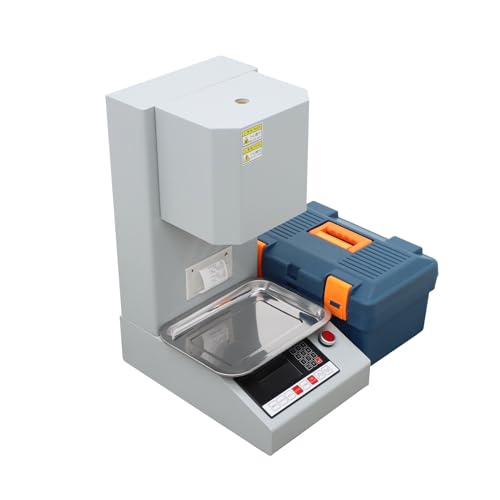
HayWHNKN
HayWHNKN Automatic Melt Flow Index Rate Tester…
- 【Quality Assurance】The instrument complies with the provisions of GB/3682-2000; ASTM-D1238, D3364; JIS-K7210; ISO1133 standard.
- 【Scope of Application】This instrument is used to measure the melting of various polymers in the state of viscous flow.It is suitab…
- 【High Efficiency】The heating speed is fast and the overshoot is extremely small.After filling, it can quickly restore the constant…
To measure how a polymer flows at elevated temperatures, a melt flow index tester is your primary tool. The HayWHNKN Automatic Melt Flow Index Rate Tester follows ASTM D1238 and ISO 1133 standards, so you can quantify melt viscosity shifts across temperatures. It’s handy for comparing batches or verifying that a material still meets spec after processing.

Why Temperature is the Silent Killer of Polymer Performance
Metals show gradual, linear property changes with temperature. Polymers don’t. They undergo phase transitions where stiffness, strength, and ductility change by orders of magnitude over a narrow temperature window. A plastic that’s tough at 25°C can become brittle at 0°C or rubbery at 80°C.
The root cause is polymer chain mobility. At low temperatures, chains are frozen in place, packed tightly, and resist deformation. As temperature rises, thermal energy gives chains more freedom to slide, rotate, and uncoil. This affects everything from tensile strength to impact resistance to dimensional stability.
Designers often specify materials based on room-temperature datasheet values. That’s a mistake. Real parts face under-hood temperatures of 120°C, outdoor piping that cycles from -30°C to 60°C, and electronic enclosures that see repeated thermal spikes. Each of those environments changes polymer behavior differently.
The Glass Transition (Tg) and What It Actually Controls
The glass transition temperature is the single most important number on a polymer datasheet. Below Tg, polymer chains are in a glassy state—rigid, brittle, and dimensionally stable. Above Tg, they enter a rubbery state—flexible, compliant, and far more sensitive to load over time.
For amorphous polymers like polycarbonate (PC) and polystyrene (PS), Tg is a sharp, dramatic change. PC has a Tg around 147°C; PS around 100°C. Below that point, these materials behave like stiff glasses. Above it, they become leathery and eventually flow. The modulus can drop by a factor of 1000 across the transition.
Semi-crystalline polymers like polyethylene (PE) and nylon (PA) are different. They have both a Tg (for the amorphous regions) and a crystalline melting point (Tm). Their Tg values are often below room temperature—PE’s is around -120°C, nylon 6’s around 50°C. Above Tg, the amorphous regions soften, but the crystalline regions hold the material together. So the drop in stiffness is less dramatic, but creep and stress relaxation become much more significant.
How Tg Differs Between Amorphous and Semi-Crystalline Polymers
Amorphous polymers: The entire material softens at Tg. Mechanical properties collapse. You’ll see a sharp drop in modulus and a spike in damping. These materials need to be used well below Tg for structural applications.
Semi-crystalline polymers: Tg only affects the amorphous fraction. The crystalline regions act as physical crosslinks, maintaining some stiffness well above Tg. However, creep accelerates dramatically above Tg because the amorphous chains can now slide past each other. The useful service temperature for semi-crystalline polymers is often set by the heat deflection temperature, not Tg.
Mechanical Property Shifts: Strength, Stiffness, and Impact
As temperature rises, tensile strength and modulus typically decrease. The rate depends on whether you’re above or below Tg. Below Tg, most polymers lose roughly 10-15% of their modulus for every 10°C increase. Above Tg, the drop is far steeper—often 50% or more over a 10°C window.
Impact resistance is trickier. Many polymers show a ductile-to-brittle transition at low temperatures. Polycarbonate, for instance, is famously tough at room temperature but becomes brittle below about -20°C, especially in thick sections or with sharp notches. This transition isn’t a single temperature—it depends on strain rate, part geometry, and processing history.
Here’s a practical example: an automotive bumper made of polypropylene (PP) copolymer. At 23°C, it absorbs a 5 mph impact without cracking. At -30°C, the same material fails at 2 mph. The PP’s Tg is around -20°C, so at -30°C it’s fully glassy. The fix isn’t a thicker part—it’s a material with a lower Tg, like an impact-modified PP or a thermoplastic olefin (TPO).
High temperatures create opposite problems. A nylon gear under a hot hood at 120°C will soften significantly. Its tensile strength might drop to half the room-temperature value. If the design assumed the room-temperature strength, the gear will deform or strip teeth. You need to check the heat deflection temperature (HDT) of the material, not just its melting point.
Thermal Expansion and Dimensional Stability
Polymers expand and contract with temperature far more than metals. The coefficient of thermal expansion (CTE) for typical plastics ranges from 50 to 200 ppm/°C. Aluminum is about 23 ppm/°C; steel around 12 ppm/°C. A 100 mm plastic part can change length by 1 mm over a 100°C temperature swing. That’s a huge deal for precision assemblies.
This matters in real applications. A plastic gear housing bolted to an aluminum frame will develop stress as temperatures change because the two materials expand at different rates. Over thermal cycles, that stress can cause warping, cracking, or loosening of fasteners. Designers often add glass fibers to reduce CTE—a 30% glass-filled nylon has roughly half the CTE of unfilled nylon.
Dimensional stability also depends on whether the polymer is amorphous or semi-crystalline. Amorphous polymers like PC and ABS have relatively low, uniform shrinkage. Semi-crystalline polymers like PE and nylon shrink more overall and do so anisotropically—differently in flow and cross-flow directions. This makes precision molding of semi-crystalline parts harder, especially when parts see wide temperature swings.
Annealing can help. For semi-crystalline polymers, annealing at a temperature just below Tm allows the crystalline regions to reorganize and relieve internal stresses. This improves dimensional stability and reduces warpage after molding. It’s an extra process step, but it’s often worth it for parts that must hold tight tolerances.
Long-Term Effects: Creep, Stress Relaxation, and Thermal Degradation
Creep is the slow, continuous deformation of a polymer under constant load. It’s negligible below Tg but becomes significant above it. A polyethylene pipe carrying hot water at 60°C will creep and sag over years, even if the initial stress is well below the yield strength. The rate of creep roughly doubles for every 10°C increase in temperature.
Stress relaxation is the flip side: a polymer held at constant strain gradually loses its internal stress. This is why plastic clips and snap-fits lose their holding force over time, especially in warm environments. A nylon clip in a car cabin that sees 80°C in summer might lose 50% of its retention force within a year. The material hasn’t failed—it has simply relaxed.
Thermal degradation is a chemical process, not a physical one. At high temperatures, polymer chains break, crosslink, or oxidize. This causes discoloration, embrittlement, and loss of mechanical properties. For most thermoplastics, degradation becomes noticeable above 200°C, but long-term exposure at lower temperatures—say, 150°C for years—also causes gradual damage. The Arrhenius equation predicts that degradation rate roughly doubles for every 10°C rise, which is why accelerated aging tests use elevated temperatures to simulate long-term service.
Thermal Cycling: The Hidden Fatigue Risk
Constant temperature exposure is bad, but repeated temperature swings are often worse. Thermal cycling creates internal stresses from differential expansion between different materials or between different sections of the same part. These stresses can cause fatigue cracking, even when the peak temperature alone wouldn’t cause failure.
A classic failure: an outdoor electrical enclosure made of ABS. During the day, it heats to 60°C; at night, it cools to 10°C. The expansion and contraction cycles create stress concentrations at corners and mounting points. After a few thousand cycles, microcracks form and propagate. The enclosure looks fine until a cold impact shatters it.
The severity of thermal cycling damage depends on the temperature range, the cycle frequency, and the part’s geometry. Rapid temperature changes cause more damage than slow ones because the thermal gradient across the part is steeper. A part that’s uniformly heated and cooled experiences less stress than one where one side is hot and the other is cold.
Testing for thermal cycling is essential. A standard approach is to cycle parts between -40°C and 85°C for several hundred cycles, then inspect for cracks, warpage, and loss of mechanical properties. This test is far more predictive of real-world performance than a single high-temperature exposure.
Comparing Common Polymers: A Practical Temperature Guide
Not all polymers respond to temperature the same way. Here’s a quick reference for five common engineering plastics, based on typical datasheet values and real-world experience.
| Polymer | Tg (°C) | Continuous Use Temp (°C) | Low-Temp Behavior | High-Temp Failure Mode |
|---|---|---|---|---|
| Polyethylene (PE) | -120 | 60-80 | Stays tough, some embrittlement below -50°C | Creep and softening above 60°C |
| Polypropylene (PP) | -20 | 80-100 | Becomes brittle below -10°C | Softens and loses stiffness above 100°C |
| Polycarbonate (PC) | 147 | 120-130 | Ductile-to-brittle transition around -20°C | Thermal degradation above 130°C |
| Nylon 66 (PA66) | 50-80 | 100-120 | Tough, but absorbs moisture which affects properties | Softening, creep, and hydrolysis above 120°C |
| PTFE (Teflon) | 127 | 250 | Excellent toughness down to -200°C | Degradation above 260°C, releases toxic fumes |
These numbers are starting points. Actual values depend on molecular weight, additives, fillers, and processing conditions. Always test your specific material under your specific service conditions.
Engineering Solutions to Stabilize Polymer Performance
You don’t have to accept temperature-induced failures. Several practical strategies can stabilize polymer performance across a wider temperature range.
Add fillers and reinforcements. Glass fibers, carbon fibers, and mineral fillers all reduce CTE, increase stiffness, and improve creep resistance. A 30% glass-filled nylon has a CTE roughly half that of unfilled nylon and significantly better high-temperature creep performance. The trade-off is reduced impact resistance and increased mold wear.
Choose copolymers or blends. Copolymers like ABS (acrylonitrile-butadiene-styrene) combine the rigidity of styrene with the toughness of polybutadiene rubber. The rubber phase has a very low Tg, so it stays flexible at low temperatures, preventing the ductile-to-brittle transition. Impact-modified PP and TPOs work the same way for outdoor and automotive applications.
Design for thermal expansion. Allow clearance for expansion in assemblies. Use slotted holes for fasteners, design in expansion gaps, and avoid rigidly constraining parts that will see wide temperature swings. For precision assemblies, match CTEs by choosing materials with similar coefficients or by using metal inserts.
Annealing and stress relief. After molding, slowly cooling a part through its Tg region relieves internal stresses. This is especially important for semi-crystalline polymers and for parts with thick sections or complex geometries. Annealing improves dimensional stability and reduces warpage during thermal cycling.
Use thermal stabilizers. Additives like hindered amine light stabilizers (HALS) and antioxidants slow down thermal degradation. They’re essential for polymers exposed to prolonged high temperatures or UV radiation. Without them, polypropylene and polyethylene degrade significantly faster.
Consider alternative materials. If a polymer just won’t survive your temperature range, switch. For high-temperature applications, consider PEEK (Tg around 143°C, continuous use to 250°C), polyimide, or PTFE. For low-temperature toughness, consider PC/ABS blends or impact-modified nylons.
Testing and Specifying for Real-World Temperatures
Your material selection is only as good as your testing. A melt flow index tester measures how easily a polymer flows when molten, which correlates with molecular weight and processing behavior. But for temperature performance, you need more targeted tests.
Differential scanning calorimetry (DSC) measures Tg and Tm precisely. Dynamic mechanical analysis (DMA) measures modulus and damping as a function of temperature, giving you the full viscoelastic picture. Heat deflection temperature (HDT) tests tell you the temperature at which a loaded bar deflects by a set amount. Each test provides a different piece of the puzzle.
For real-world validation, thermal cycling tests are non-negotiable. Cycle parts between your minimum and maximum service temperatures for hundreds of cycles. Inspect for cracks, warpage, and property changes. This is the test that catches the failures that datasheets miss.
When specifying a polymer, write down the full temperature envelope: minimum and maximum service temperatures, the rate of temperature change, and the number of cycles expected. Then verify that your material’s Tg, HDT, and creep data cover that envelope with a safety margin. A 20°C margin above the maximum service temperature is a reasonable starting point.
Frequently Asked Questions
What temperature range do most polymers tolerate?
Most commodity plastics work between -20°C and 80°C. Engineering plastics like polycarbonate and nylon extend that to -40°C to 120°C. High-performance plastics like PEEK and PTFE handle -200°C to 250°C. The exact range depends on the specific grade, fillers, and additives.
How do I find the glass transition temperature of my polymer?
Check the material datasheet from the resin supplier. If it’s not listed, run a DSC test. You’ll see a step change in heat flow at Tg. For semi-crystalline polymers, you’ll also see a melting peak at Tm. Both are essential for understanding temperature limits.
Why does my plastic part crack in cold weather?
Your polymer has a ductile-to-brittle transition temperature above your coldest service temperature. Below that point, the material behaves like glass—stiff but fragile. Solutions include switching to a polymer with a lower Tg, adding impact modifiers, or redesigning the part to reduce stress concentrations.
Can I use a plastic part above its Tg?
Sometimes, but only for semi-crystalline polymers and only for non-structural applications. Above Tg, amorphous polymers lose most of their stiffness. Semi-crystalline polymers retain some stiffness due to their crystalline regions, but they’ll creep significantly under load. If you need dimensional stability or load-bearing capacity, stay below Tg.
How does moisture affect temperature performance?
Nylons and other hygroscopic polymers absorb moisture, which plasticizes them. This lowers Tg and increases creep, especially at elevated temperatures. A dry nylon might have a Tg of 80°C, but a moisture-saturated one could drop to 40°C. Always test in the humidity condition your part will actually see.
What to Remember When Specifying for Temperature
- Know your full temperature envelope: minimum, maximum, and cycle count. Don’t design for room temperature alone.
- Check Tg, HDT, and continuous use temperature before selecting a material. All three matter for different failure modes.
- Below Tg, watch for brittle impact failures. Above Tg, watch for creep and stiffness loss.
- Thermal cycling causes fatigue cracks that constant-temperature exposure won’t. Always test for cycling.
- Fillers like glass fibers reduce expansion and improve creep, but they hurt impact resistance. Balance the trade-offs.
- Annealing relieves internal stresses and improves dimensional stability, especially for semi-crystalline polymers.
- Use a melt flow index tester to verify consistency between batches, but pair it with DSC and thermal cycling tests for full temperature validation.
Temperature doesn’t have to be a mystery. Once you understand Tg, creep, and thermal expansion, you can predict how a polymer will behave in any environment. Test your materials under real conditions, design with safety margins, and you’ll avoid the failures that plague so many plastic parts.
For a deeper look at how temperature changes affect other materials and systems, check our HVAC performance guide or the temperature sensor testing article for related insights.

I am a mechanical engineer and love doing research on different home and outdoor heating options. When I am not working, I love spending time with my family and friends. I also enjoy blogging about my findings and helping others to find the best heating options for their needs.
Related guides

How Cold Affects Metals: Brittleness, Contraction & More
You've seen it happen. A steel railing snaps clean off in January, but the same railing bends and…
How High Temperatures Affect Rubber & Its Durability
Rubber is everywhere. From your car tires to the seals in your appliances, it's a material we rely…

How Temperature Changes Impact Stone Durability
Stone feels permanent. It's the bedrock of our cities and the foundation of our homes. But it's not…