

You step into the shower expecting a steady stream of hot water. Instead, you get a lukewarm trickle that fades to cold after five minutes. The usual suspect? A single thermostat water heater that simply can’t keep up. Nearly every full-size electric water heater — the 40-, 50-, and 80-gallon tanks found in homes — uses two thermostats and two heating elements. This isn’t a design accident. It’s a deliberate engineering choice that lets you drain a tank halfway and still get hot water at the tap. By the end of this article, you’ll know exactly why two thermostats exist, how they interact, and what happens when one fails.
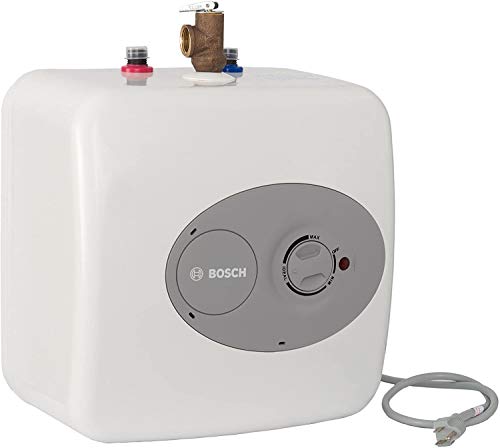
If you’re working in a tight space — a kitchen sink, a bathroom vanity, or a small workshop — a single-element point-of-use heater can be a more practical solution. The Bosch Electric Mini-Tank Water Heater Tronic 3000 T 2.5-Gallon (ES2.5) is a compact unit that plugs into a standard 120V outlet and delivers hot water right at the sink. It uses a single thermostat because its job is simpler: heat a small volume of water on demand. For larger tanks, though, two thermostats are the norm, and here’s why.
Bosch
BOSCH Electric Mini-Tank Water Heater Tronic 3000…
- CONVENIENT HOT WATER HEATER: 2.5 gallon point-of-use mini-tank fits under your sink to provide hot water right where you need it.…
- LONG LASTING QUALITY: This electric water heater is easy to maintain and has premium glass-lined material for a long service life.…
- INDEPENDENT INSTALLATION: 36-37" cord plugs into a 120 volt outlet for independent installation or in-line with a large hot water…
The Core Concept: Stack Effect and Thermal Stratification
Hot water rises. Cold water sinks. Inside a tall vertical tank, this natural separation — called thermal stratification — is your friend. The hottest water collects at the top, ready to be drawn off first. The coldest water settles at the bottom, waiting to be heated. One heating element near the top would only heat the top layer and leave the bottom cold. One element near the bottom would heat the entire tank but waste energy by overheating the top.
Two thermostats solve this by dividing the tank into two zones. The upper thermostat controls the upper heating element, which heats the top portion of the tank — the water you use first. The lower thermostat controls the lower element, which heats the bottom portion. When you draw hot water, cold water enters at the bottom, and the lower element kicks on. Only after the top half is satisfied does the upper element activate. This sequential operation ensures you always have a reserve of hot water at the top, even when the tank is half empty.
In a typical 50-gallon electric water heater, the upper element is rated around 4,500 watts, and the lower element matches that. Together, they can recover about 20 gallons per hour — but only if both thermostats are working correctly. A tripping breaker often points to a shorted element, not a thermostat problem.
How the Two Thermostats Communicate (Without Talking)
There’s no data cable between the two thermostats. They’re wired in series through a clever switching scheme. The upper thermostat has three terminals: common, hot (from the breaker), and a switched output that feeds the lower thermostat. When the upper thermostat senses the top of the tank is below its setpoint (typically 120–140°F), it energizes the upper element directly. It also opens the switch to the lower thermostat, cutting power to the lower element. This forces the system to heat the top first.
Once the upper thermostat is satisfied — say, the top 10 gallons reach 130°F — it flips internal contacts. It disconnects the upper element and connects power to the lower thermostat. Now the lower element can run. The lower thermostat does its own temperature check. If the bottom is cold (below setpoint), the lower element heats until the bottom reaches temperature. Then both elements sit idle until the next draw.
This sequencing prevents both elements from running simultaneously. In most residential tanks, the electrical circuit can’t handle 9,000 watts continuous — that would require a 40-amp breaker plus heavy-gauge wire. By alternating, the system stays within a single 30-amp 240V circuit. It’s a good compromise: you can’t recover as fast as two simultaneous elements, but you don’t need to rewire your house.
What Happens When One Thermostat Fails
A failed thermostat usually shows itself in two ways: no hot water, or water that’s too hot. If the upper thermostat fails open (stuck in the off position), the lower thermostat never gets power. The tank stays cold from top to bottom. If it fails closed (stuck on), the upper element runs constantly, boiling the top of the tank. You’ll hear sizzling or see steam from the pressure relief valve. The lower thermostat may also fail, but often the upper failure masks it.
A common symptom is a short burst of hot water followed by cold. That means the upper element works, but the lower element never fires because the lower thermostat is bad. You get whatever hot water was stored in the top third of the tank — maybe 10-15 gallons — then freezing water. Replacing both thermostats and both elements simultaneously is the standard fix because the failure of one often stresses the other.
Temperature settings matter. If you set the upper thermostat to 140°F and the lower to 120°F, the upper thermostat will constantly satisfy itself and never pass power to the lower. You’ll get very hot water but only from the top half. The solution is to set both thermostats to the same temperature — 120°F is the usual recommendation for safety and energy savings. A gas water heater’s thermostat works differently, but the principle of consistent setpoints applies.
Comparing Single vs. Dual Thermostat Electric Water Heaters
The table below lays out the practical differences. If you’re deciding between a point-of-use unit and a full-size tank, these numbers will help.
| Feature | Single Thermostat (Point-of-Use) | Dual Thermostat (Full-Size Tank) |
|---|---|---|
| Typical tank size | 2.5–7 gallons | 30–80 gallons |
| Number of heating elements | 1 | 2 |
| Recovery rate (per hour) | ~6 gallons (120V unit) | ~20 gallons (240V, both elements) |
| Wiring requirement | Standard 120V 15A outlet | 240V 30A dedicated circuit |
| Hot water during draw | Full tank temperature until empty | Top remains hot while bottom recovers |
| Best use case | Single sink, wet bar, RV | Whole-house supply |
| Thermostat failure symptom | No heat or constant overheating | Short hot water followed by cold |
The Bosch mini-tank uses a single thermostat because it’s designed for one or two sinks. You don’t need complex zoning when the entire tank holds only 2.5 gallons. For whole-house service, though, dual thermostats are not optional — they’re the only practical way to deliver consistent temperature under typical usage patterns.
Frequently Asked Questions
Why does my electric water heater have two thermostats when my old one only had one?
Older electric water heaters often used a single thermostat and a single element near the bottom. That design heated the entire tank slowly and didn’t maintain a temperature gradient. When you drew hot water, cold water entered and mixed, dropping the overall temperature quickly. Modern dual-thermostat systems came about in the 1970s as energy codes tightened. They give faster recovery and more stable output. If you have a tank larger than 20 gallons, two thermostats are standard. Point-of-use units like the Bosch mini-tank still use one because the physics works for small volumes.
Can I replace one thermostat without replacing the other?
You can, but it’s not recommended. Thermostats wear similarly over time. If one fails, the other is likely close to failing too. The labor to replace them is the same whether you do one or two — you’re already draining the tank and removing access panels. For the cost of a second thermostat (roughly $10–15), you save yourself a future service call. Many plumbers replace both as a pair by default. Always turn off power at the breaker before touching any wiring.
How do I test which thermostat is bad?
Set a multimeter to resistance (ohms). First, turn off power and remove the access panels. On the upper thermostat, check continuity between the common and heating element terminals. If you get infinite resistance, the thermostat is open and not passing power. For the lower thermostat, you need the upper to be satisfied (closed to lower) — so you may have to manually cool the upper with a wet cloth to trigger it. A simpler approach: if only the top element runs, the upper thermostat is working but the lower isn’t getting power. That points to a failed upper thermostat switch or a bad lower thermostat. Water heater fuses are rare in modern units, but thermal cutoffs can blow if the unit overheats.
What temperature should I set both thermostats to?
Set both to 120°F (about midway on the dial). This is the Department of Energy’s recommendation for safety — 120°F reduces scalding risk and saves up to 10% in energy costs compared to 140°F. It also minimizes mineral scaling inside the tank. If you have a dishwasher that requires 140°F, you can boost the upper thermostat only, but be aware that the lower will still be at 120°F. Some modern dishwashers have internal heaters, so 120°F tank water is sufficient. Never set above 140°F without a mixing valve to temper the output.
Does the number of thermostats affect the water heater’s lifespan?
Indirectly, yes. Dual thermostats reduce thermal stress by distributing heating more evenly. A single-element heater cycles the element on and off more frequently, which can cause earlier element burnout. The Bosch mini-tank with one thermostat is built for intermittent use, not continuous draw. In a full-size tank, two thermostats mean each element runs less often per gallon of hot water delivered. That reduces wear on the elements and the thermostats themselves. With proper maintenance (yearly flushing, anode rod inspection), a dual-thermostat electric water heater can last 10–15 years.
Key Takeaways
- Two thermostats enable sequential heating: top half first, then bottom half, ensuring hot water at the tap even when the tank is partially drained.
- The upper thermostat always has priority; the lower receives power only when the upper is satisfied.
- Set both thermostats to the same temperature — 120°F is the sweet spot for safety and efficiency.
- If you get only a few minutes of hot water, suspect a failed lower thermostat or element.
- Replace both thermostats together when one fails; the extra cost is minimal and prevents repeat trouble.
- For small installations where you only need hot water at one sink, a single-thermostat mini-tank like the Bosch ES2.5 is simpler and more cost-effective.
- Always kill power at the breaker before opening any electrical panel on a water heater — the 240V inside can be lethal.

I am a mechanical engineer and love doing research on different home and outdoor heating options. When I am not working, I love spending time with my family and friends. I also enjoy blogging about my findings and helping others to find the best heating options for their needs.
Related guides

Pet-Safe Heating: The Ultimate Electric Heater Guide
Warm up safely this winter! Our pet-friendly space heater with tip-over protection keeps your furry friends cozy and…
Space Heaters for 2-Car Garages: Power, Safety & Coverage
Ever wonder how to heat a 2-car garage? Get the essential guide to choosing the right 2-car garage…
Black+Decker Space Heater Review: Which Model Delivers the Best Value?
What makes this heater a top pick? Get the essential Black+Decker Space Heater guide and trusted reviews to…
