

You plug in your space heater on a cold morning, and within five minutes the room goes dark. The fuse blew again. Or the breaker tripped. Either way, you’re left shivering and wondering if the heater is broken or if your house is just old. The truth is usually simpler than you think.
Most of the time, a space heater blows a fuse because it draws more current than the circuit can safely handle. But there are other causes too, like a faulty heater, a worn-out cord, or even a loose connection in the outlet. This guide walks you through the electrical math behind the trip, shows you how to tell a bad heater from a bad circuit, and gives you a clear fix for each scenario.
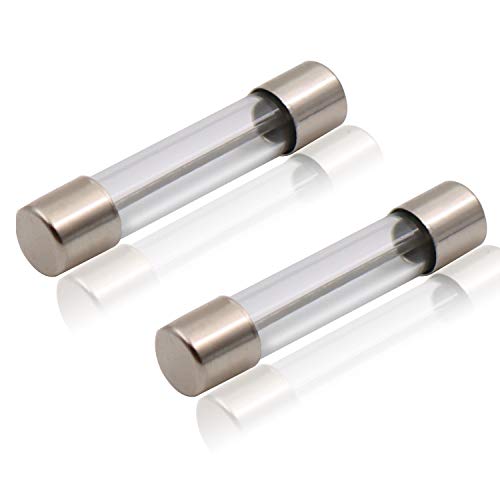
HLLNWB
2 Pcs 20 Amp 125 Volt 611…
- 【Product Category】===20 Amp 125 Volt 611 Microwave Fuses WB27X11138 Microwave Fuse Replacement For GE,Frigidaire Microwave( 6 mm *…
- 【Product Replacement Model】=== Microwave Fuse 20a 125v replace models: WB27X11138 5304509451 5304464087 5304488359 AP5648907 PS513…
- 【Product Description】=== 20A 125V Microwave Fuses protects the microwave from damage by shutting off the microwave if there's a po…
If you end up needing a replacement fuse, the HLLNWB 20 Amp 125 Volt microwave fuse is a common size that fits many appliances, though it’s designed for microwaves. For space heaters, make sure you match the fuse rating printed on the unit’s label. This article focuses on the diagnosis, not just the swap.
Why Your Space Heater Keeps Tripping the Breaker
A space heater is the hardest-working appliance in your home during winter. A typical 1500-watt heater on a 120-volt circuit draws 12.5 amps. Most household circuits are rated for 15 or 20 amps. That leaves very little headroom for anything else on the same circuit.
When you turn on the heater and then a lamp, a TV, or a phone charger, the combined load can exceed the circuit’s rating. The breaker trips (or the fuse blows) to stop the wires from overheating. That’s the protection working as intended.
But there’s a catch. Many older homes have 15-amp circuits, and if your heater is on the same circuit as a refrigerator or a microwave, the math gets tight. You can’t just add a heater to an already-loaded circuit and expect it to work.
Fuses vs. Breakers: Understanding Your Electrical Panel
People use the words “fuse” and “breaker” interchangeably, but they’re different devices. A circuit breaker is a switch that trips when current exceeds the limit. You reset it by flipping it back on. A fuse is a one-time device with a metal filament that melts when overloaded. You have to replace it.
If your home has a fuse box (common in homes built before the 1960s), you’ll see round glass or ceramic fuses. When one blows, you need to find the right amperage and screw in a new one. If you have a breaker panel, the handle flips to the middle or off position. Resetting it is as simple as pushing it firmly to off, then to on.
Knowing which one you have matters because the fix is different. With a fuse, you need a spare. With a breaker, you just reset it. But the underlying cause is the same: too much current on one circuit.
The #1 Culprit: Overloaded Circuits (and the Math Behind It)
An overloaded circuit is the reason most space heaters blow fuses. The math is simple: watts divided by volts equals amps. A 1500-watt heater on a 120-volt circuit draws 12.5 amps. A 15-amp circuit can handle that, but only if nothing else is running.
Here’s a real example. You have a 15-amp circuit in your living room. You plug in a 1500-watt heater (12.5 amps), a TV (2 amps), and a lamp (1 amp). That’s 15.5 amps total. The breaker trips. The heater alone wasn’t the problem; it was the combination.
To avoid this, you need to know what’s on each circuit. Go to your panel and turn off one breaker at a time, then check which outlets and lights go dead. Label them. That way you know exactly what you’re working with.
How to Calculate Your Heater’s Amp Draw
Look at the heater’s nameplate. It will list the wattage, usually 750 or 1500. Divide the wattage by your household voltage (120 volts in North America). So 1500 ÷ 120 = 12.5 amps. If you have a 750-watt setting, it draws 6.25 amps.
Now check the breaker size for that circuit. It’s printed on the switch handle (15 or 20). A 20-amp circuit can safely handle 16 amps continuously (80% rule). A 15-amp circuit can handle 12 amps continuously. That means a 1500-watt heater on a 15-amp circuit is already at the limit, even with nothing else on.
If your heater draws more than the circuit can handle, you have three options: use a lower wattage setting, move the heater to a different circuit, or don’t run other appliances on that circuit while the heater is on.
How to Fix a Tripped Breaker (Step-by-Step)
When the breaker trips, follow these steps:
- Unplug the space heater and any other devices on that circuit.
- Go to your electrical panel. Find the tripped breaker (it’s usually in the middle position, not fully off).
- Flip it to the off position, then firmly flip it to the on position.
- Plug the heater back in and turn it on. If it trips again immediately, you have a bigger problem.
If you have a fuse box, do the same except you’ll need to replace the blown fuse. Always use the same amperage rating as the old one. Never put a 20-amp fuse in a 15-amp circuit—that’s a fire hazard.
After you reset the breaker, test the heater on a different circuit to see if it trips there too. If it does, the heater itself is the problem.
Is Your Heater the Problem? (Troubleshooting the Unit)
Sometimes the heater is fine and the circuit is overloaded. Other times the heater has a short circuit or a damaged cord. Here’s how to tell the difference.
First, plug the heater into a known-good outlet on a different circuit—preferably one with nothing else on it. If it trips that breaker too, the heater is faulty. Common causes include a damaged power cord, a shorted heating element, or a faulty internal thermostat.
Second, inspect the plug and cord. Any burn marks, melted plastic, or exposed wires mean the heater is unsafe. Stop using it immediately. A damaged cord can cause arcing, which trips breakers and can start fires.
Third, listen for a buzzing or crackling sound when the heater runs. That could indicate an internal short. If you see any of these signs, replace the heater. It’s not worth the risk.
Safety Rules to Prevent Future Trips
Once you’ve fixed the immediate issue, you want to keep it from happening again. These rules might seem basic, but they’re the ones people ignore.
The Extension Cord Rule
Never plug a space heater into an extension cord or a power strip. Extension cords are often rated for 10 or 13 amps, and a 1500-watt heater draws 12.5 amps. That’s too much for many cords. The cord heats up, the resistance increases, and the breaker trips. In the worst case, the cord melts or catches fire.
If you absolutely must use an extension cord, use a heavy-duty one rated for 15 amps or more, and keep it as short as possible. But even then, it’s better to plug the heater directly into a wall outlet.
The “One Outlet” Rule
Give the heater its own outlet. Don’t plug it into the same outlet as a TV, computer, or other electronics. That outlet is on a circuit that likely powers other rooms too. Even if the outlet looks free, the circuit may already be carrying load from elsewhere.
A good habit is to feel the outlet after the heater has been running for an hour. If it’s warm to the touch, the connection is loose or the circuit is overloaded. That warmth is a warning sign.
When to Call a Licensed Electrician
If you’ve done the troubleshooting and the heater still trips the breaker on a dedicated circuit, call a professional. Same goes for any of these red flags:
- Burning smell near the outlet or panel
- Discolored or scorched outlet face
- Breaker trips even with the heater unplugged
- Frequent trips on a circuit that’s not heavily loaded
These signs point to wiring problems, like loose connections, corroded wires, or a failing breaker. A licensed electrician can diagnose and fix these safely. Don’t try to fix wiring yourself unless you know what you’re doing.
If your home has an older fuse box, you might want an electrician to upgrade it to a breaker panel. Fuse boxes are less convenient and often undersized for modern electrical loads.
Fuse vs. Breaker: Quick Comparison
| Aspect | Fuse | Circuit Breaker |
|---|---|---|
| Reusable | No, must replace | Yes, reset |
| Response time | Very fast (milliseconds) | Slightly slower |
| Cost per trip | ~$2-5 per fuse | Free (just reset) |
| Common in | Homes pre-1960s | Modern homes |
| User error risk | High (wrong amperage) | Low |
Frequently Asked Questions
Why does my space heater trip the breaker only after 10 minutes?
That’s a classic sign of an overloaded circuit. The breaker heats up gradually as the current flows, and after a few minutes, the thermal trip mechanism activates. It’s not a random delay; it’s the breaker reaching its thermal limit. Check what else is on that circuit and reduce the load.
Can a space heater blow a fuse if the heater is off?
No, a heater that’s off draws no current. If a fuse blows while the heater is unplugged, the problem is elsewhere on that circuit. Look for other appliances, wiring issues, or a faulty outlet.
Is it safe to use a power strip with a space heater?
No. Power strips are not designed for high-current loads like heaters. They have thin wires and often a built-in circuit breaker that trips at 15 amps, but the strip itself can overheat. Plug the heater directly into a wall outlet.
What size fuse do I need for a 1500-watt space heater?
On a 120-volt circuit, a 1500-watt heater draws 12.5 amps. The circuit should have a 15-amp fuse or breaker. If the circuit is 20-amp, that’s fine too, as long as the wire gauge is appropriate. Never use a fuse rated higher than the circuit’s wire rating.
Why does my heater trip the breaker but not the GFCI outlet?
A GFCI (ground fault circuit interrupter) detects current leaking to ground, not overload. Overload is handled by the breaker or fuse. If your heater trips the breaker but not the GFCI, it’s an overload issue, not a ground fault. If the GFCI trips, that’s a different problem—likely a short in the heater.
What to Do Now: Quick Action Points
- Calculate your heater’s amp draw: watts ÷ volts = amps. A 1500W heater on 120V = 12.5A.
- Know your circuit’s limit: 15A for most older homes, 20A for newer. Never exceed 80% continuously.
- Keep the heater on a dedicated circuit with nothing else running.
- Never use an extension cord or power strip. Plug directly into a wall outlet.
- If the heater trips a different circuit, it’s faulty—replace it.
- If you smell burning or see discolored outlets, call an electrician.
- For a fuse box, always replace with the correct amperage. For a breaker, reset it after unplugging the load.
Understanding why your space heater blows fuses is half the battle. The other half is applying these fixes. Start with the math, check your circuit, and never ignore warning signs. You’ll stay warm and safe all winter.

I am a mechanical engineer and love doing research on different home and outdoor heating options. When I am not working, I love spending time with my family and friends. I also enjoy blogging about my findings and helping others to find the best heating options for their needs.
Related guides

WiFi-Controlled Space Heaters: Smart Heating Without Complexity
Imagine cozy warmth before you arrive. A WiFi-controlled space heater makes it possible. Find your perfect match.
Infrared Space Heaters for Rooms: Deep Warmth Explained
Ever wonder how the best infrared room heater works? See our top picks compared for cozy, efficient warmth…
Cool-Touch Space Heaters: Child-Safe Surfaces Without Weak Heat
Ever wonder which heater is truly safe around kids? Our cool-touch kid-safe heater guide reveals the top picks…
