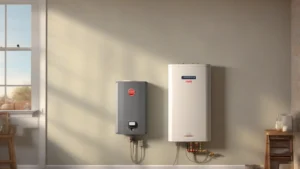
For most buyers, an authorized plumbing supplier or home-improvement retailer with local installation support is the safest pick. You can compare tankless water heaters there, confirm fuel and venting requirements, and protect the warranty. Small 3,000 W electric units are a different animal: they suit one sink or shower, not a whole house.
The essentials
Buy through an authorized seller that can confirm warranty coverage and local service.
A 3,000 W, 110 V point-of-use heater is for one low-flow fixture, not a whole-house replacement.
Size gas units by peak gallons per minute and temperature rise, not household size alone.
Indoor gas models need listed venting, combustion air, condensate management and a permit where required.
Budget for isolation valves and periodic descaling because tankless heaters still need maintenance.
Buying from the cheapest listing is only half true as a money-saving move: the unit may cost less. The other half is that a wrong fuel type, undersized flow rate or missing vent kit can turn that bargain into an installation problem.
This guide ranks the supplied products by what they can honestly do, then shows where to shop, how to size a unit, and which setup details deserve a plumber’s attention before you place the order.
Tankless Water Heater Picks by Use
#1Best Point-of-Use Pick
xwdzswgs 3000W Under-Sink Heater
Best for One sink or low-flow bathroom fixture
The 3,000 W unit is built for point-of-use heating, with 1/2-inch NPT connections, a digital display and wall-mounted design. Its listed output is 82°F at 0.3 GPM to 131°F at 0.5 GPM, so it suits one fixture rather than whole-house demand.
Power 3,000 WVoltage 110 VTemperature data 82°F at 0.3 GPM; 131°F at 0.5 GPMConnections 1/2-inch NPTProtection IPX4, leakage, dry-boil and overheat protection
Why it made the cut
Leakage, dry-boil and overheat protection
Vertical wall-mounted installation
Stainless steel and ABS construction
Good to know
Limited to 0.3 to 0.5 GPM in the listed temperature data
Vertical installation only
Skip it if Skip it if you need hot water at several fixtures at the same time.
Best for Under-sink kitchen or bathroom installation
This compact 110 V heater uses a digital display and standard 1/2-inch NPT connections for a small point-of-use installation. The manufacturer lists 82°F at 0.3 GPM and 131°F at 0.5 GPM, plus ETL-standard qualification and several automatic shutoffs.
Power 3,000 WVoltage 110 VTemperature data 82°F at 0.3 GPM; 131°F at 0.5 GPMConnections 1/2-inch NPTProtection and setup IPX4, leakage, dry-boil and overheat protection; vertical in
Why it made the cut
Compact under-sink design
Leakage, dry-boil and overheat protection
Vertical installation with 1/2-inch NPT connections
Good to know
The listed flow range is only 0.3 to 0.5 GPM
Vertical installation only
Skip it if Choose another unit if your installation needs whole-house flow or horizontal mounting.
Best for Flushing a tankless heater’s isolation valves
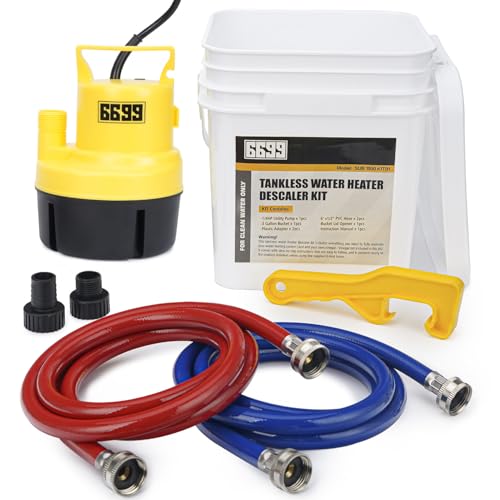
The kit pairs a 1/4 HP submersible pump with two 6-foot hoses, a 3-gallon pail and adapters for connecting to tankless isolation valves. Its pump is rated at 1,500 GPH and has thermal overload protection, making it a maintenance tool rather than a water heater.
Pump power 1/4 HPPump voltage 115 V/60 HzMaximum flow 1,500 GPHIncluded container 3-gallon pailHoses Two 6-foot, 1/2-inch PVC hoses
Why it made the cut
Includes pump, hoses, pail and adapters
1/4 HP pump with thermal overload protection
Pump has a 1,500 GPH maximum flow
Good to know
Doesn’t heat water
The pump’s maximum fluid temperature is 95°F
Skip it if Skip it if you need to buy the heater itself rather than flush an installed unit.
Best for Supplemental heat and fireplace appearance
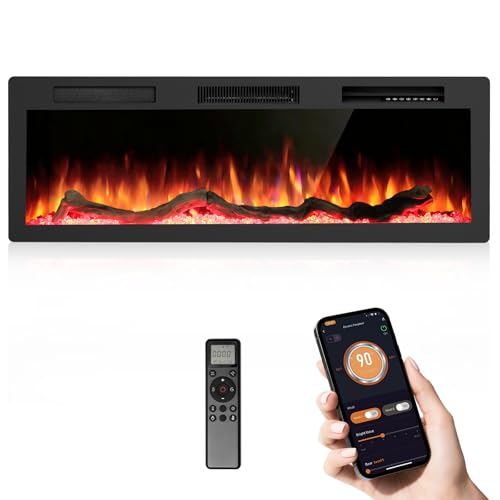
This is a 50-inch electric fireplace for wall-mounted or recessed installation, with 750 W and 1,500 W heating modes. It can provide supplemental heat for up to 400 square feet, but it doesn’t heat domestic water or connect to plumbing.
Dimensions 50 L × 17.32 H × 5.71 W inchesHeating modes 750 W and 1,500 WHeating area Up to 400 square feetTemperature range 59°F to 95°FInstallation Wall-mounted or recessed
Why it made the cut
750 W and 1,500 W heating modes
Wall-mounted or recessed installation
Remote, touch, smartphone and Alexa controls
Good to know
Not a tankless water heater
Requires a 48-inch by 16.9-inch by 6.1-inch opening for the listed fit
Skip it if Skip it for this search unless you actually want room heat and fireplace features.
Best for Portable supplemental heat in a small room
This 1,500 W ceramic space heater is designed for indoor room heating, with low and high settings, a thermostat and a 75° curved air outlet. Its compact 6.22-inch by 6.22-inch by 8.78-inch body is useful for a desk or small room, not a plumbing installation.
Power settings 950 W and 1,500 WHeating area 108 to 130 square feetDimensions 6.22 × 6.22 × 8.78 inchesCord length 6 feetSafety ETL certified; tip-over and overheat protection
Why it made the cut
950 W and 1,500 W heat settings
Tip-over and overheat protection
ETL certified with a built-in handle
Good to know
Not a tankless water heater
Heats air rather than water
Skip it if Skip it if your goal is hot water at a sink, shower or other fixture.
The best places to buy a tankless water heater in 2026 are authorized plumbing suppliers and home-improvement retailers with local installation support; online listings work when you’ve already confirmed the model, fuel, electrical service and return rules.
In short
Compare sellers by warranty help, replacement parts, installer availability and returns—not the headline price. A local plumbing supplier is often worth the extra step for a gas unit or a difficult replacement.
Seller
Best fit
Check before ordering
Authorized plumbing supplier
Gas units and replacements
Local service, parts access, approved installers
Home-improvement retailer
Common residential models
Installation package, return window, model number
Online marketplace
Simple point-of-use electric units
Exact listing, seller authorization, included parts
The seller matters because installation and warranty support follow the model and its approved requirements.
Searching for Navien, Rinnai or Noritz alone isn’t enough. Confirm the exact fuel, indoor or outdoor rating, vent type, required flow and local service coverage; a Navien tankless water heater listing can be wrong for your setup just as easily as a Rinnai or Noritz listing. The best tankless water heater brands still require the right model and installation.
Before You Click Buy
Exact model number and fuel type
Indoor or outdoor rating and vent requirements
What accessories are included, such as isolation valves or a power cord
Warranty terms, authorized-seller status and who handles a claim
Return rules for opened or installed equipment
A local installer who will service that model
Use the 3,000 W Unit Correctly
The Tankless Water Heater Electric 3000W and similar small electric units can suit one sink or shower after the plumbing and electrical requirements are confirmed. Don’t treat a compact point-of-use heater as a whole-house replacement.
Tankless Water Heater Cost
The purchase price is only one part of tankless water heater cost. Your total can also include venting or electrical work, isolation valves, condensate drainage, permits and labor, so a cheaper listing may become the more expensive installation.
From HeaterGuides · our own guideTankless? Page 8 is the descaling routine, page 15 checks the size.Water Heater Owner's ToolkitFix the common faults yourself, keep it running for years, and know when a repair is money wasted.No-hot-water flowcharts, gas and electricFlush, anode, relief valve and descaling stepsRepair-or-replace calculator (Excel)$14.99$9.99Get it for $9.99See what's inside and watch the 2-minute video →18-page printable PDF + Excel calculator · instant download · 30-day refund
Measure Peak Flow Before You Choose
The correct tankless water heater setup starts with simultaneous flow and temperature rise, not the number of people in your house. Add the shower, sink, dishwasher, or other hot-water loads that may run together, then compare that peak demand with the heater’s rated gallons per minute (GPM).
Tankless water heaters work when a flow sensor detects moving water and starts the burner or electric element. The heater raises incoming water to your set temperature as it passes through, instead of keeping a tankful hot all day.
Worked Example
Say a 2.0 GPM shower runs while a nearby sink uses 1.0 GPM. Your peak demand is 3.0 GPM. A small point-of-use heater rated below 3.0 GPM may deliver lukewarm water or restrict flow, even though it works fine at the sink alone.
Shower2.0 GPM
Sink1.0 GPM
Combined demand3.0 GPM
Temperature rise is the set temperature minus the incoming water temperature. If your inlet water arrives colder in winter, the same heater must add more heat, so its usable flow at the same outlet temperature falls.
82°F or 131°F
3,000 W electric heater temperature rise
According to the product data, the 110 V Tankless Water Heater Electric 3000W can raise water 82°F at 0.3 GPM or 131°F at 0.5 GPM. That makes it a one-sink or other low-flow point-of-use heater, not a whole-house unit.
Type
What fits it
Main tradeoff
Standard tank
Several fixtures together and limited installation capacity
Stores hot water and has standby losses
Tankless
Limited space, continuous hot water, and lower standby losses
Needs enough flow, electrical capacity, or gas and venting capacity
Condensing gas
Higher efficiency from recovering more heat from exhaust
Needs condensate drainage
Non-condensing gas
A simpler gas tankless arrangement when the listed venting suits the installation
Needs the correct listed hot venting
Choose by peak demand and installation requirements, not household size alone.
A propane tankless water heater follows the same GPM and temperature-rise math, but its burner, gas supply, and venting must support the demand. Condensing models recover more heat from exhaust; non-condensing models send hotter exhaust through the vent system. A heat-pump water heater is generally a separate storage-tank category, not a tankless replacement.
Myth
A tankless water heater is always better than a standard tank.
Fact
Tankless is better when space, continuous hot water, and lower standby losses matter. A tank can be simpler and more forgiving when several fixtures run together or your electrical, gas, or venting capacity is limited.
Check the Setup Before You Order
Installing a tankless water heater inside works only when the unit, fuel supply, venting, clearances and service access all match the manufacturer’s tankless water heater installation instructions. An outdoor-rated model cannot be moved indoors; its housing and venting are listed for outdoor exposure, not an interior room.
Gas installation needs the model’s listed vent system, enough combustion air, adequate gas capacity and the required clearances from combustibles. A condensing tankless water heater also needs a drain for condensate. Gas connections, venting, permits and final inspections belong with a licensed plumber or qualified gas professional where local rules require it.
Don’t Enclose It by Guesswork
A cabinet or closet is acceptable only if the manufacturer lists that location and the installation preserves ventilation, clearances and access for service. Blocking the flue, air openings or front panel can create a combustion hazard and make routine repairs impossible.
Electric installation isn’t automatically a DIY job. Whole-house electric tankless heaters can require substantial dedicated 240 V circuits, correctly sized wiring, breakers and electrical protection. The 110V Tankless Water Heater Electric and Tankless Water Heater Electric 3000W are point-of-use devices, not automatic substitutes for a whole-house system.
About 27 A
A 3,000 W load at 110 V draws
That calculation is 3,000 ÷ 110 = 27.3 A, so verify the circuit, breaker and installation instructions before connecting one. Never assume an ordinary receptacle can carry it.
Follow the tankless water heater installation guidelines for vertical orientation, water connections, shutoff valves, electrical protection, service clearance and discharge routing. Products 1 and 5 specify vertical installation, so mounting one sideways because the wall is crowded is not a harmless shortcut.
1
Photograph the existing connections
Capture the water lines, shutoff valves, electrical panel, gas line, vent and drain before removing anything.
2
Identify fuel and voltage
Confirm whether the replacement is gas or electric, then match its voltage and circuit requirements to the home.
3
Measure the installation space
Check wall width, height, depth, service clearance and the route for water, gas, wiring, venting and condensate.
4
Check the route and capacity
A gas unit needs listed venting and enough gas supply; an electric unit needs the required dedicated circuit and protection.
5
Get a written quote
Ask the installer to list new valves, venting, gas pipe, wiring, condensate drainage, permits and code work separately.
Before You Click Buy
Model listed for indoor or outdoor installation
Vertical orientation and service clearances confirmed
Fuel, voltage and circuit capacity verified
Gas vent, combustion air or condensate route planned
Permit and final inspection requirements checked
Installation Cost Has More Than the Heater
A retrofit may need new venting, larger gas piping, dedicated wiring, condensate drainage, isolation valves and code corrections. The purchase price is only one part of tankless water heater installation cost.
Plan Flushing and Winter Protection
Flush a tankless water heater on the manufacturer’s schedule, sooner in a hard-water home, because mineral scale forms where heated water crosses the heat exchanger, restricting flow and reducing heat transfer. For flushing Rinnai tankless water heater instructions, use the exact Rinnai model manual; the isolation procedure and approved solution matter.
A tankless water heater flush kit is maintenance equipment, not a heater. Product 2, the 6699 flushing kit, includes a 1/4 HP, 115 V pump, two 6-foot hoses and a 3-gallon pail. For a search such as tankless water heater D scale chemical solution, choose only the descaling solution approved by your heater’s manufacturer.
1
Shut down the energy source
Turn off gas or electrical power before service, then let the unit cool. Never open service valves casually while the heater is hot or pressurized.
2
Isolate the heater
Close the water isolation valves and connect the hoses according to the manual. Run the approved solution for the specified time, then flush with clean water before restoring service.
A 3,000 W point-of-use heater costs 3 kW × operating hours × your electricity rate. That makes the tankless water heater monthly cost depend on gallons, inlet temperature, setpoint and time running; the tankless water heater yearly cost uses the same formula over 365 days.
Heater
Watts
Per hour
Per day (1 h)
Per month (30 days)
3,000 W point-of-use heater
3,000 W
51¢
51¢
$15.30
Calculated at 17¢ per kWh. Example assumes one hour of use per day and $0.17 per kWh; replace both assumptions with your local figures.
Freeze protection
Outdoor and cold installations need the model’s listed freeze-protection method, protected water lines and reliable power. An unheated enclosure can still freeze during an outage, so follow the manual’s drain, isolation or backup-power instructions.
Set the temperature with the heater’s normal controls rather than overriding a safety limit. The answer to how to override the temperature on a tankless hot water heater should be “don’t bypass the limit”; scald risk rises above 120°F at the tap, so follow the mixing-valve instructions too.
Confirm before the installer leaves
Service valves are installed and labeled.
The heater has enough working room for hoses, pump and a future flush.
The approved descaler and flushing procedure are written in the handoff notes.
Water lines and freeze protection match the model’s listing.
One overlooked detail
A heater that cannot be serviced is a future wall ornament. Keep the 6699 kit with the manual if its fittings and procedure match your unit.
More Questions, Answered
Can you install a tankless water heater inside?
Yes, but the heater must be listed for indoor use and installed with the required venting, clearances, combustion air, drain and service access. Gas models need special attention to exhaust routing and carbon monoxide protection; outdoor-rated units belong outside.
Can you install a tankless water heater yourself?
Most homeowners should hire a licensed plumber, and gas, venting or 240-volt electrical work may require licensed trades under local rules. A mistake at the gas connection, flue or circuit can create fire, shock or carbon monoxide hazards.
What is the difference between condensing and non-condensing tankless heaters?
A condensing model recovers heat from its exhaust, usually improving efficiency, but it needs a condensate drain and compatible venting. A non-condensing model sends hotter exhaust outdoors and often has simpler venting, though some heat leaves with the flue gas.
How do you flush a Rinnai tankless water heater?
Turn off the heater, close its water isolation valves, connect service hoses to the flush ports and circulate the manufacturer-approved descaling solution through the heat exchanger. Follow the Rinnai manual for valve positions, solution time and restart steps; open a hot-water tap afterward to purge air.
What chemical solution removes scale from a tankless water heater?
Use the manufacturer-approved tankless-water-heater descaler; white vinegar is commonly used when the manual permits it. Strong acids or improvised cleaners can damage seals and the heat exchanger, so don’t substitute a bathroom or drain cleaner.
Can you enclose a tankless water heater?
Only when the manufacturer allows an enclosure and the design preserves every required clearance, vent opening, combustion-air path and service space. A tight cabinet can starve a gas heater of air or trap exhaust, so verify the installation manual and local code before framing around it.
Before you go · a welcome giftGet the Water Heater Owner's Toolkit for $4.99Fix the common faults yourself, keep it running for years, and know when a repair is money wasted. Normally $14.99; your welcome price saves $10.00. We'll email your link right now.or buy it now for $9.99 without the gift →One email with your link now. We never share your address.




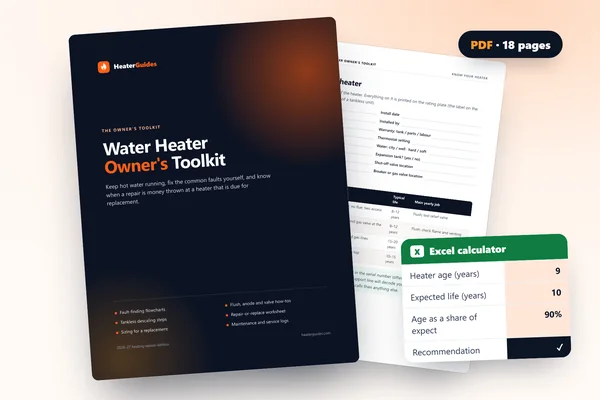 Water Heater Owner's ToolkitFix the common faults yourself, keep it running for years, and know when a repair is money wasted.No-hot-water flowcharts, gas and electricFlush, anode, relief valve and descaling stepsRepair-or-replace calculator (Excel)