Portable Space Heater Under $50: What To Buy In 2026
On this page 5 sections
Say your bedroom is 12 by 14 feet and the thermostat keeps dropping to 64°F at night. A 1,500 W portable heater can cover that kind of room, but only if you buy one with basic safety shutoffs and leave 3 feet of clear space around it.
The cheap part is the easy part. The tricky part is picking a heater that warms the room without tripping the breaker, cooking a power strip, or turning into a little orange paperweight.
Where To Buy An Affordable Portable Heater
Affordable portable heaters are available at Walmart, Amazon, home centers like Home Depot and Lowe’s, and local hardware stores—but the retailer is less critical than checking for safety certifications and a clear return policy. A solid budget heater has a UL, ETL, or CSA listing and features tip-over and overheat shutoff; these are key for safe operation.
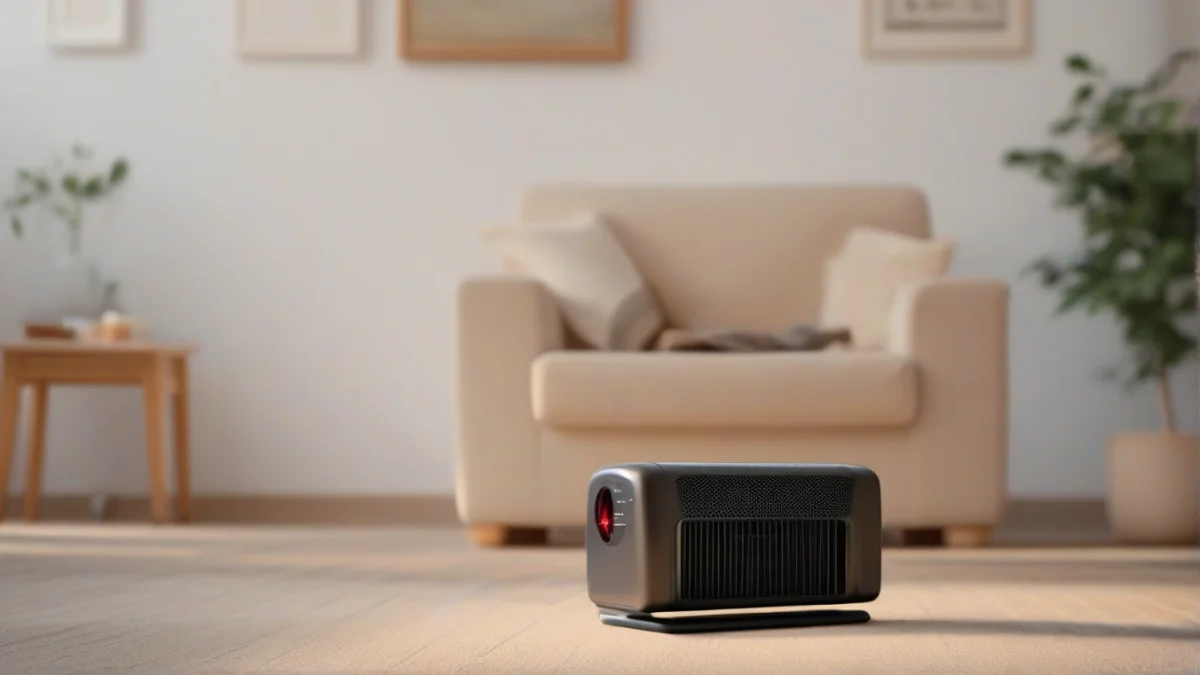
Walmart offers portable heaters both in physical stores and online, often with low-cost options during colder months. Amazon provides a wider variety with user reviews that help identify issues like cord quality or missing safety features, though you can’t inspect before buying. Home centers stock mid-range models year-round, and seasonal clearance sales can bring prices down significantly. Local hardware stores have fewer models but let you examine cord thickness, plug fit, and control markings firsthand.
In-store buying has one practical advantage: you can read the safety label, test the tip-over switch by tilting the unit, and confirm the cord is 14-gauge or heavier before handing over cash. Online shopping gives you more models to compare and often clearer specs, but a missing UL mark or a flimsy two-prong plug won’t show in a product photo. If you order online, check the listing for certification marks and a stated return window of at least 30 days.
Clearance heaters can be a good value if their safety components are intact. A tower fan heater discounted in spring still requires tip-over shutoff, overheat protection, and a grounded three-prong plug. Avoid any unit with cracked housing, loose plugs, or missing certification labels regardless of price. The least expensive portable heaters worth buying meet UL 1278 or CSA C22.2 safety standards and are comparable in quality to pricier models.
If you’re comparing cheap electric heaters that warm rooms quickly, focus on the features that matter in daily use: a working thermostat, a tip-over switch you can hear click, and a cord long enough to reach the outlet without an extension. The box and the brand name do not keep a room warm.
What A Cheap Portable Heater Must Have

A budget portable heater won’t cost much, but it still needs four non-negotiable safety features. Look for a UL, ETL, or CSA listing, which tells you an independent lab tested the electrical parts and thermal limits. The heater should have a tip-over switch that cuts power if it gets knocked over, and an overheat shutoff that trips before the housing melts or the coil ignites something nearby. The cord needs to reach your wall outlet without an extension cord or power strip—both create a junction that can overheat under the 12.5 A draw a 1,500 W heater pulls at 120 V.
That 12.5 A figure matters because most household circuits are rated for 15 A. A 1,500 W heater on high takes up about 83 percent of a 15 A circuit’s capacity, so anything else drawing serious power—a vacuum, a hairdryer, even a space heater in another room on the same circuit—can trip the breaker. Plug the heater straight into the wall outlet and leave the rest of that circuit as light as you can: lamps and phone chargers are fine, but skip the toaster oven.
A thermostat changes the math. Without one, the heater runs nonstop until you switch it off, burning 1.5 kWh every hour and heating the room past comfortable. A thermostat cycles the element on and off to hold a set temperature, cutting actual run time to somewhere between 30 and 60 percent depending on insulation and outdoor cold. That can drop an eight-hour night from 12 kWh down to six or seven, saving a dollar or more per night at typical rates.
Two heat settings help, too. A 750 W mode uses half the current, stays well under the breaker threshold, and works fine in a small bedroom or when you just want to take the edge off. It won’t heat as fast, but it gives you the option to run the heater on a circuit that’s already supporting a couple of other loads.
| Feature | What it does | Why it matters |
|---|---|---|
| Safety listing | UL, ETL or CSA lab approval | Confirms the electrical and thermal design won’t ignite |
| Tip-over switch | Cuts power when tilted | Stops a toppled heater from heating the carpet or a curtain |
| Overheat shutoff | Trips at a set internal temperature | Prevents coil runaway and housing melt |
| Thermostat | Cycles element to hold temperature | Cuts run time by 40 to 70 percent, lowers cost and evens out heat |

Flame-retardant housing is a bonus. Some budget models use ABS plastic treated to resist ignition; others use untreated plastic that’ll melt or burn if the internal cutoff fails. The listing should catch a flimsy design, but a V0 flame rating on the spec sheet is one more margin.
When The Answer Changes
Battery-powered and solar portable heaters rarely deliver useful warmth. A battery heater pulls maybe 150 to 200 watts before draining in two hours, while a plug-in heater runs 1,500 watts as long as you need it. Solar panels small enough to carry won’t generate the wattage you’d need for space heating—even in full sun, a typical portable panel tops out around 100 watts, which is less than a heated blanket. If there’s no outlet, you’ll get more heat from propane or kerosene than from any battery or solar option marketed as a “portable heater.”
Fuel-burning heaters for indoor use—propane, kerosene, natural gas—must carry an indoor rating and the sensors the manual requires. Propane models need an oxygen depletion sensor; kerosene units burn 1-K kerosene only, never gasoline or diesel. Outdoor, patio, torpedo and construction heaters stay outdoors: they lack the safety shutoffs for enclosed spaces, and carbon monoxide builds fast. You’ll also need a working CO alarm and the ventilation the manufacturer specifies. Some states and cities restrict or ban vent-free gas heaters altogether, so check local code before buying one.
Bathrooms need a heater approved for wet locations and positioned away from tubs, showers and sinks. Most budget portable heaters are not bathroom-safe; if the listing or the label doesn’t say it’s rated for that space, skip it. Water and electricity together mean electrocution risk, and steam or splashing can short cheaper controls.
| Space | What changes |
|---|---|
| Bathroom | Must be bathroom-rated and placed clear of water |
| Garage (uninsulated) | Needs higher wattage or a fuel heater; 1,500 W won’t keep up |
| Living room or great room | One portable heater usually won’t cover it; plan for a second source or central heat |
| Basement | Check for adequate electrical capacity and ventilation if using fuel |
Rooms much bigger than a bedroom—anything over about 200 square feet—will leave you disappointed with a single 1,500-watt heater. Physics sets the ceiling: 1,500 watts is roughly 5,100 BTU per hour, enough to lift a small insulated room a few degrees but not enough to heat a living room with high ceilings or poor insulation. You’ll need a second heat source, a larger electric heater on a 240-volt circuit, or a fuel-burning unit if code allows. Walmart and other big-box stores stock large-room space heaters, but expect to spend more than the bargain bin and confirm your electrical panel can handle the load.
 Winter Heating Bill CutterSee what every heater in your home really costs, heat the rooms you use, and cut the waste in 30 days.Cost-per-hour tables for every heaterThermostat schedule and draft-proofing planRunning-cost and bill calculator (Excel)
Buy It And Use It Without The Usual Mistakes
Set your portable heater on a hard, level floor—never on a bed, couch, thick rug, or anything that can block the vents or tip it over. Plug straight into a wall outlet, not an extension cord or power strip; those can overheat under the 12.5 A a 1,500 W heater draws. Keep 3 feet of clearance on all sides, away from curtains, bedding, and foot traffic.
Don’t leave the heater running while you sleep or leave the house unless the manufacturer explicitly says the model is designed for unattended use—most budget units are not. Tip-over and overheat protection help, but they’re backups, not permission to walk away.
Portable heaters rarely need repair; when one stops working, the usual culprits are a tripped tip-over switch, a blown fuse inside the unit, or a burnt heating element. Budget models cost so little that replacement beats repair almost every time. Replace a portable heater after three to five years, or sooner if the cord frays, the plug gets hot, or the safety switches stop working.
If the room still feels cold with the heater running, the problem is often not the heater. Check for drafts around windows and doors, and seal them with weatherstripping or plastic film. Lower the thermostat on your central heat and run the portable heater in the room you’re using; that’s the whole point of zone heating. A second heater in another room can help, but only if each plugs into a different circuit—two 1,500 W heaters on one 15 A circuit will trip the breaker.