

You run a cold storage facility. Last night, a fridge cycled off for three hours and nobody noticed until morning. The product inside—maybe vaccines, maybe raw chicken—now sits in a gray zone. Is it safe? Is it legal to ship? The answer depends on a web of regulations you probably didn’t sign up to master.
Temperature control isn’t just an engineering problem. It’s a legal one. Regulations govern everything from sensor accuracy to how long you keep logbook data. Get it wrong and you face fines, recalls, or worse. This article walks through the key regulations impacting industrial temperature control across food, pharma, and lab settings. You’ll learn which rules are mandatory, which are voluntary, what non-compliance really costs, and how to build a system that passes any audit.
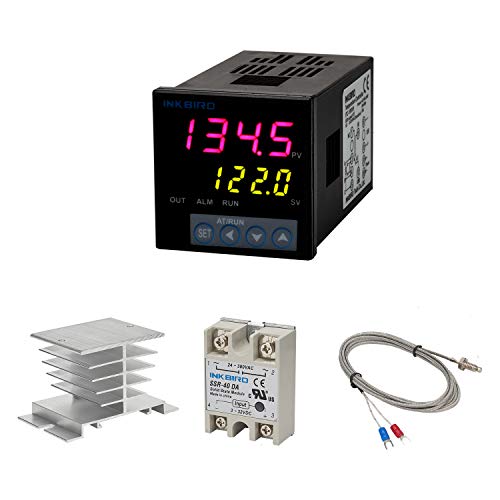
Inkbird
Inkbird PID Temperature Controller Kit, High Voltage…
- Alarm Output: With 1 alarm relay output, AC250 V, 3 A (Resistive load), ON or NC, you can wire a buzzer
- Supports 3-Wire Sensor: a 3-wire sensor or 2-wire sensor, like the K type thermocouple and Cu500, is supported by this PID tempera…
- SSR Output: With 1 relay output for external SSR, an SSR or relay is a must for this temperature controller; A 40DA SSR is include…
You’ll also see why a reliable PID controller matters on the floor. A unit like the Inkbird PID Temperature Controller Kit gives you dual displays for live temperature and setpoint, plus an alarm relay you can wire to a buzzer. That alarm alone can turn a silent three-hour failure into a two-minute response. It’s not a compliance system by itself, but it’s a solid first line of defense.

Why Temperature Compliance is a Business Imperative, Not Just a Legal Box
Think of compliance as insurance you pay with time instead of money. The FDA doesn’t fine you for having a bad day. It fines you for having a bad day and no proof you tried to prevent it. That distinction matters.
Consider the 2026 infant formula recall. Cronobacter contamination traced back to facility conditions led to a months-long shutdown and billions in losses. Temperature wasn’t the sole culprit, but inadequate environmental monitoring played a role. The point: regulators don’t need to prove harm. They need to prove you lacked controls.
Compliance also shapes contracts. Large retailers and hospital systems audit their suppliers. Fail a temperature audit and you lose the account, not just the shipment. So this isn’t about checking boxes. It’s about keeping your business alive.
Regulations vs. Standards vs. Guidelines: What You Must Follow vs. What You Should Follow
People use these words interchangeably, but they mean different things. A regulation is law. You must follow it or face penalties. An example is FDA 21 CFR Part 11, which governs electronic records. A standard is voluntary but often becomes mandatory through contracts or accreditation. ISO 9001 fits here. A guideline is best practice. The WHO guidelines on temperature mapping fall here.
Here’s the practical difference. If you ship pharmaceuticals in the US, Part 11 is non-negotiable. If you want ISO 17025 accreditation for your lab, you must meet that standard to get certified. If you follow WHO guidelines on cold chain storage, you’re ahead of the curve, but nobody will fine you for skipping them.
The trap is assuming voluntary means optional. Many buyers require ISO 9001 certification just to bid on contracts. So voluntary standards become de facto regulations through market pressure. Know which ones apply to your customers, not just your regulator.
Food Industry Regulations: HACCP and FSMA
Food safety rules center on prevention, not reaction. HACCP (Hazard Analysis and Critical Control Points) is the backbone. FSMA (Food Safety Modernization Act) builds on it, shifting the FDA’s focus from responding to contamination to preventing it.
The 12 Steps to HACCP Compliance
HACCP isn’t a single rule. It’s a system with 12 steps, and temperature control touches several of them directly. Here’s the short version:
- Assemble a team with authority to make changes.
- Describe the product and its intended use.
- Identify the consumer population.
- Draw a flow diagram of your process.
- Verify the flow diagram on site.
- Conduct a hazard analysis for each step.
- Determine Critical Control Points (CCPs).
- Set critical limits for each CCP. For example, cooked chicken must reach 165°F internally.
- Establish monitoring procedures. This is where your temperature sensors and logbooks come in.
- Define corrective actions. What happens when a limit is exceeded?
- Verify the system works. Calibrate sensors, review logs.
- Document everything. Records are the proof.
Most temperature-related failures happen at steps 8 and 9. People set limits but don’t monitor them properly. A sensor that reads 5°F high can let product sit in the danger zone without triggering an alarm.
FSMA’s Sanitary Transportation Rule Explained
FSMA’s Sanitary Transportation of Human and Animal Food rule took full effect in 2026. It applies to shippers, carriers, and receivers. If you move food by road or rail, you must prevent temperature abuse during transit.
The rule requires you to establish written procedures for loading, unloading, and transporting food. You must document that vehicles were clean and temperature-controlled where needed. You must also train personnel on proper handling. The FDA can request these records during an inspection.
A common misconception: the rule only applies to refrigerated trucks. Wrong. It applies to any food that requires temperature control for safety, even if you use insulated containers with gel packs. If you don’t have a written procedure, you’re out of compliance.
Pharmaceutical and Laboratory Regulations: FDA 21 CFR Part 11 and Part 211
Pharma is stricter than food, and for good reason. A compromised vaccine doesn’t just taste bad. It can kill. Two regulations dominate: Part 211 covers current Good Manufacturing Practice (cGMP) for finished pharmaceuticals, and Part 11 covers electronic records and signatures.
Data Integrity and Electronic Records Under Part 11
Part 211 requires that you maintain records showing each batch was produced under controlled conditions. Temperature data is part of that. If your stability chamber drifts outside its specified range, you need a deviation report and an investigation.
Part 11 is where most companies stumble. It requires that electronic records be trustworthy. That means:
- Audit trails that capture who changed what and when
- Secure, computer-generated timestamps
- Limited system access through unique user IDs
- Electronic signatures that are legally equivalent to handwritten ones
- Copies of records that are readable and accurate
Here’s the practical problem. Many facilities use manual logbooks for temperature monitoring because they think paper is safer. But paper logs are easy to falsify and hard to audit. Part 11 doesn’t forbid paper, but it does require that any electronic system you use—including a simple data logger—meets these integrity standards. If you use a spreadsheet to track temperatures, it must have password protection and an audit trail.
One more thing: Part 11 applies to records you create, not just records you submit to the FDA. If you keep temperature data in a system that allows silent edits, you’re violating the rule even if you never send that data anywhere.
Global and Industry-Specific Standards: WHO, GxP, ISO 17025, and USP
If you operate internationally, you’re dealing with more than the FDA. The World Health Organization (WHO) publishes guidelines for Good Distribution Practices (GDP) that many countries adopt. The EU has its own GxP regulations. And USP (United States Pharmacopeia) sets standards for drug storage and testing.
GxP is an umbrella term. The ‘x’ stands for whatever the discipline is—Good Manufacturing Practice (GMP), Good Laboratory Practice (GLP), Good Clinical Practice (GCP). Each has its own temperature requirements. GMP, for example, requires that storage areas be monitored and that deviations be investigated. GLP requires that lab equipment be calibrated and that raw data be preserved.
ISO 17025 is the big one for testing and calibration labs. It requires that you demonstrate measurement traceability. That means your temperature sensors must be calibrated against a reference standard that’s traceable to national standards like NIST. You also need to estimate measurement uncertainty. A sensor that reads 37.0°C might actually be measuring 36.8°C with an uncertainty of ±0.2°C. ISO 17025 demands you know that number.
USP Chapter covers Good Storage and Distribution Practices for drug products. It recommends specific temperature ranges for different products and emphasizes risk-based monitoring. It’s not law, but FDA investigators often reference it during inspections.
The key takeaway: if you ship products across borders, map out which regulations apply in each destination country. A product compliant in the US might not meet EU GDP requirements.
The True Cost of Non-Compliance: Fines, Recalls, and Reputation Damage
Let’s talk money. The FDA can seek civil penalties for food safety violations. In 2026, a major produce company paid $18 million after a listeria outbreak. That’s just the fine. The recall itself cost millions more in destroyed product and lost sales.
For pharma, the stakes are higher. The FDA can issue a consent decree, which forces a facility to shut down until it fixes its problems. In 2026, a generic drug manufacturer spent two years and an estimated $50 million upgrading its facilities after a consent decree related to data integrity failures.
Then there’s the indirect cost. A recall announcement tanks your stock price. Customers lose trust. Competitors swoop in. Insurance premiums rise. Legal fees pile up. One temperature failure can wipe out a decade of profit.
Here’s a number that surprises people: the average cost of a food recall in the US is $10 million, according to industry data. That includes the recall itself, the investigation, the disposal, and the lost sales. For pharma, it’s often higher because the product is more valuable and the regulatory scrutiny is deeper.
So when someone asks why they should spend $500 on a better sensor, the answer is simple: because the alternative costs $10 million.
Building a Compliant Temperature Monitoring System: Sensors, Calibration, and Software
You don’t need a $50,000 system to be compliant. You need a system that meets three criteria: accurate, traceable, and auditable. Here’s how to build one from scratch.
Sensor Selection
Start with the sensor type. Thermocouples are cheap and versatile but less accurate. RTDs (resistance temperature detectors) are more accurate and stable. Thermistors are good for narrow ranges. For most industrial applications, an RTD with ±0.1°C accuracy is the sweet spot.
Placement matters more than you think. A sensor in the middle of a room reads differently than one near the door. You need to map your space to find hot and cold spots. The WHO recommends placing sensors where product is stored, not where air flows. That means avoiding spots near cooling fans or loading docks.
For a simple setup, a PID controller like the Inkbird PID controller with a K-type thermocouple gives you accurate readings and an alarm output. It’s not a data logger, so you’ll still need a separate logging solution for compliance.
Calibration Frequency
Calibration is where most systems fail. A sensor that’s never calibrated is a guess. The rule of thumb: calibrate at least annually, but more often if your process is critical or your sensors drift. Some facilities calibrate quarterly for stability chambers.
Calibration means comparing your sensor against a reference standard with a known accuracy. You need to document the date, the result, and the person who did it. ISO 17025 requires that your reference standard be traceable to a national metrology institute.
Here’s a common mistake: people calibrate the sensor but not the whole measurement chain. Your sensor might be accurate, but if the wire is damaged or the controller’s input is off, your reading is still wrong. Calibrate the entire loop, not just the probe.
Software and Data Management
You need a way to record data continuously and store it securely. Options range from paper logbooks to cloud-based monitoring platforms. Paper is cheap but hard to audit. Spreadsheets are better but vulnerable to silent edits. Dedicated temperature monitoring software with audit trails is the safest bet.
If you’re in pharma, your software must meet Part 11 requirements. That means user authentication, audit trails, and electronic signatures. If you’re in food, your software needs to be able to generate reports for HACCP reviews. Either way, you need to keep records for a defined period. The FDA requires records to be kept for at least two years for food, and longer for pharma.
One piece of advice: don’t rely on a single sensor. Redundancy is cheap compared to a lost batch. Use two sensors in critical areas and cross-check them.
Audit-Readiness Checklist: 10 Steps to Pass Any Inspection
Audits are a fact of life. Here’s a checklist you can run through the week before any inspection.
- Verify all sensors are within their calibration date. Replace any that are overdue.
- Check that your calibration certificates are on file and traceable to NIST or equivalent.
- Review your temperature logs for the past 90 days. Look for gaps or anomalies.
- Ensure all alarms were tested and documented. A silent alarm is worse than no alarm.
- Confirm that your software’s audit trail is enabled and that no one has admin-level access without a business need.
- Walk your facility and identify any areas where product is exposed to temperature extremes.
- Verify that your written procedures match what you actually do. If they don’t, update one or the other.
- Train staff on what to do in a temperature excursion. Drill it, don’t just talk about it.
- Prepare a deviation report template so you can document any excursion properly.
- Have your recall plan ready. Know who you’d contact and how you’d trace affected product.
Run this checklist quarterly, not just before an audit. It’s easier to fix problems when you’re not under pressure.
How IoT and Automation Are Transforming Temperature Compliance
Manual logbooks are dying, and for good reason. They rely on human memory and honesty. IoT sensors don’t. They read temperatures continuously, upload data to the cloud, and send alerts when thresholds are crossed.
The shift is real. A 2026 industry survey found that over half of cold chain operators use some form of automated temperature monitoring. The drivers are cost and reliability. Automated systems pay for themselves by catching excursions early and reducing labor.
But IoT isn’t a magic bullet. You still need to validate that the system works. A cloud dashboard that shows 37.2°C is only useful if the sensor is calibrated and the network is reliable. And you still need a backup plan for power outages and internet failures.
One practical tip: use IoT for real-time alerts, but keep a local data logger as a backup. That way, if your network goes down, you still have a record. This hybrid approach gives you the best of both worlds.
For more on how connected systems change the game, check out this guide on IoT temperature control.
Frequently Asked Questions About Temperature Regulations
What is the difference between 21 CFR Part 11 and 21 CFR Part 211?
Part 211 covers the actual manufacturing practices for pharmaceuticals—how you make the product, including storage conditions. Part 11 covers the electronic records and signatures you use to document those practices. You can think of Part 211 as the ‘what’ and Part 11 as the ‘how you prove it.’
How often do I need to calibrate my temperature sensors?
There’s no universal answer. The FDA doesn’t specify a frequency, but most quality systems require at least annual calibration. If your sensors drift or you use them in harsh conditions, calibrate more often. The key is to have a written procedure and follow it.
Does FSMA apply to my small business?
Yes, with some exceptions. The Sanitary Transportation rule has exemptions for small businesses and certain types of transport, like food that’s fully enclosed in a container. But if you ship any food that requires temperature control, you need written procedures. Check the FDA’s guidance to see if you qualify for an exemption.
Can I use a regular data logger instead of a Part 11-compliant system?
Only if your data logger meets the requirements of Part 11. That means it must have an audit trail, secure timestamps, and access controls. Many cheap data loggers don’t. If you’re in pharma, don’t risk it. The FDA has issued warning letters for exactly this issue.
What should I do if I find a temperature excursion?
Don’t delete the data. Document the excursion, assess the impact on product quality, and decide whether to quarantine or release the product. Write a deviation report with your investigation and corrective actions. If in doubt, quarantine and consult your quality team.
Take Control of Your Temperature Compliance Today
- Know which regulations apply to you. Food, pharma, and labs have different rules.
- Understand the difference between mandatory regulations and voluntary standards that become mandatory through contracts.
- Calibrate your sensors at least annually, and document every calibration.
- Use an alarm system so you know about excursions in real time, not at the next shift change.
- Keep audit-ready records. If you can’t prove compliance, you’re not compliant.
- Run a quarterly self-audit using the checklist above.
- Embrace automation, but keep a manual backup for critical processes.
The cost of compliance is real, but the cost of non-compliance is far higher. A few hundred dollars in sensors and alarms can save you millions in recalls and fines. Start with the basics: accurate sensors, a reliable alarm, and a culture that treats temperature data as a serious record. Your auditor—and your customers—will thank you.

I am a mechanical engineer and love doing research on different home and outdoor heating options. When I am not working, I love spending time with my family and friends. I also enjoy blogging about my findings and helping others to find the best heating options for their needs.
Related guides
Industrial Temperature Control: Best Practices for Peak Efficiency
Best practices for industrial temperature management include regular calibration of sensors, maintaining optimal ranges, and implementing robust monitoring…
How Temperature Impacts Industrial Efficiency & Quality
Temperature isn't just a number on a gauge. It's the invisible hand shaping every industrial outcome. From the…

How Industrial Temperature Control Impacts Our Environment
Industrial temperature variations can lead to increased energy consumption, greenhouse gas emissions, and altered ecosystems, negatively impacting air…