Most Realistic Electric Fireplace: Top Picks for 2026
On this page 8 sections
- Compare Realistic Electric Fireplaces
- Top Realistic Electric Fireplaces
- Flame Technologies That Produce the Most Realistic Fireplace
- How To Choose the Right Size and Heat Output for Your Room
- Installation Styles and What to Expect
- Essential Safety Features and Certifications for Electric Fireplaces
- Sound Effects and Using Electric Fireplaces Year-Round
- More Questions, Answered
Compare Realistic Electric Fireplaces
| Rank | Model | Best for | Heat Output (W) | Room Size (sq ft) | Flame Technology | Price |
|---|---|---|---|---|---|---|
| 1 | Touchstone Forte 40-Inch Recessed FireplaceBest Recessed Pick | Recessed wall installations where flame options matter most | 1,500 W | — | 30 ember color and flame options; faux logs and crystals | Check price |
| 2 | R.W.FLAME 23-Inch Electric Fireplace InsertMost Flame Settings | Smaller rooms that need a compact insert with varied flame effects | 750 W / 1,500 W | — | 4 flame colors, 12 log colors, 5 flame speeds, adjustable brightness | Check price |
| 3 | R.W.FLAME 17-Inch Freestanding StoveBest Small Stove | A compact freestanding stove with adjustable flame and log colors | 500 W / 1,500 W | — | 4 flame colors, 4 wood log colors, 5 flame speeds | Check price |
| 4 | RealSmart 25-Inch Freestanding StovePortable Pick | A freestanding stove you can move between indoor rooms | 750 W / 1,500 W | — | 3D flame effect | Check price |
| 5 | PRAISUN Fireplace TV Stand With 42-Inch FireplaceFurniture Pairing | Living rooms where you want a fireplace built into a TV stand | 4,777 BTU per hour | — | 7 flame colors and dynamic mode | Check price |
Electric fireplaces have moved beyond simple glowing bulbs to offer remarkably realistic flames, effective supplemental heating, and flexible installation options. The Touchstone Sideline stands out with its deep flame visuals and strong heating power, making it a top choice for most rooms up to 1,000 square feet.
Choosing the right model means balancing flame realism, heat output, installation style, and features like remote control and sound effects. This guide ranks the best realistic electric fireplaces to help you find the one that fits your space and style.
Top Realistic Electric Fireplaces

Touchstone Forte 40-Inch Recessed Fireplace

R.W.FLAME 23-Inch Electric Fireplace Insert

R.W.FLAME 17-Inch Freestanding Stove

RealSmart 25-Inch Freestanding Stove
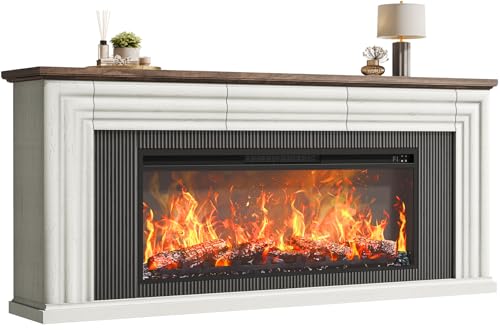
PRAISUN Fireplace TV Stand With 42-Inch Fireplace
Flame Technologies That Produce the Most Realistic Fireplace

The most realistic electric fireplaces use advanced flame technology combining visual depth, adjustable colors, and multi-layer effects to mimic real fire closely. LED flames, holographic flames, and water vapor flames each create distinct looks and heat outputs, but not all are equally convincing or practical.
LED flame technology uses light-emitting diodes to simulate flickering flames over 3D logs or ember beds. These flames can adjust brightness and color—usually red, orange, and yellow—to suit room lighting and enhance realism. Flame speed is controllable, letting you slow the flicker for a gentle blaze or speed it up for a lively fire.
Holographic flames, like MagikFlame’s patented HoloFlame® technology, project video images of real flames onto physical logs. This creates the richest depth and movement, with dozens of flame styles and natural sounds including crackling wood. These flames often appear more natural in darker rooms but require precise installation to avoid distortion.
Water vapor flame systems use fine mist illuminated by LEDs to produce semi-transparent, flickering flames that change shape dynamically. They excel at creating the illusion of heat waves and smoke but are more delicate and usually need regular maintenance to prevent mineral buildup in the water system.
Adjustable flame color and brightness are standard on most realistic electric fireplaces. Warmer colors like deep reds and oranges generally look more authentic than blue or unnatural hues. Brightness control helps when the fireplace is used as ambient lighting without heat, or to combat glare from room lighting.
Flame speed and multi-layer effects add to realism by creating depth and motion. Some models, such as Dimplex Revillusion, use layers behind and in front of logs to simulate flames licking both near and far. This layered flicker beats flat, single-plane flame projections.
Heat output varies by model and technology. Most electric fireplaces deliver up to 1,500 watts (about 5,100 BTU), enough for zone heating in small to medium rooms. Flames can run without heat for ambiance year-round. If your electric fireplace is not blowing heat, check the settings or fan; some models separate flame and heat controls, and remote control symbols indicate these functions.
Remote controls often feature icons for flame brightness, heat on/off, timer, and sometimes flame speed. Understanding these symbols helps you get the most from your fireplace. If flames operate but no heat comes out, the heater element or fan may need inspection, or the unit might be set to “flame only” mode.
Choosing the right flame technology depends on your priorities: LED flames balance cost, brightness, and durability; holographic flames offer the best visual depth; water vapor flames provide dramatic effects but need upkeep. The Touchstone Sideline In-Wall Electric Fireplace uses high-quality LED and multi-layer flame effects, combining adjustable flame color and speed with effective heating, making it a top choice for realistic ambiance.
For more on flame technology and models with realistic flames, see our guide to electric fireplace heaters with realistic flames.
How To Choose the Right Size and Heat Output for Your Room
Electric fireplaces vary in heat output and size, and choosing the right one depends on your room’s dimensions and heating needs. A typical unit runs around 1,500 watts, which is enough to heat about 400 square feet effectively. To calculate if a fireplace suits your space, multiply the room’s length and width to get square footage, then check the heater’s wattage against this area.
Clearance around an electric fireplace insert matters for safety and airflow. Most models require at least 3 inches of clearance on all sides and a minimum of 12 inches from the floor to the bottom of the unit. Mounting the fireplace too low risks heat damage to flooring or nearby items; too high, and the heat won’t distribute evenly at occupant level.
Fireplaces come in inserts, freestanding models, and built-in styles. Inserts fit into existing fireplace openings and offer a clean look but need precise sizing to match the cavity. Freestanding units are portable and usually larger, suited for open areas or rooms without a fireplace. Built-in fireplaces install flush with walls, requiring more planning and electrical access but delivering a sleek finish.
Heater settings vary by model. Most have adjustable thermostats, multiple heat settings, and timers. This lets you use the fireplace for supplemental zone heating, warming a single room rather than the whole house. Running a 1,500-watt unit for 8 hours at 17 cents per kWh costs about $2.04 a night, making them an efficient alternative to central heating when you only need a bit of extra warmth.
If you’re sizing for a larger room, consider multiple units or a model with higher wattage if available. Remember that electric fireplaces excel at zone heating but won’t replace a central heating system for whole-house comfort. The right size and output depend on your room’s insulation, ceiling height, and whether you want heat or just ambiance.
Installation Styles and What to Expect
Electric fireplaces come in several styles: recessed, freestanding, mantel, and insert models, each with distinct installation needs and appearance.
A built-in electric fireplace typically means a recessed or insert type designed to fit flush within a wall or existing fireplace cavity. These require framing or an opening sized to the unit’s specifications, often with drywall (sheetrock) finishing around the edges for a clean look. So yes, you usually need to sheetrock inside or around the fireplace opening to create a neat, fire-resistant surface.
Freestanding models are the simplest to install—just plug them into a standard 120 V outlet. Mantel fireplaces add decorative surrounds and can be freestanding or wall-mounted, combining ambiance with style but still mostly plug-and-play.
Insert fireplaces slide into an existing unused fireplace and may require less drywall work but need careful measurement to ensure a snug fit. They often feature a plug-in cord but can also be hardwired.
Electrical requirements vary by model. Most plug into a standard 15-amp household circuit at 120 V, capped at about 1,500 watts or 12.5 amps. Some larger or built-in units support direct wire installation, which means connecting directly to your home’s electrical panel, often required if no outlet is nearby or for a cleaner look without visible cords.
Installation typically involves measuring the space, framing the opening if recessed, running electrical wiring or plugging in, and securing the unit. Common challenges include ensuring correct clearances to combustibles, aligning the fireplace flush with the wall or mantel, and routing electrical connections safely.
Maintenance is straightforward but important. Check the fuse if your fireplace stops working; electric fireplace fuse replacement is usually done by opening a small compartment in the plug or inside the unit, using a matching fuse type. Keep vents free of dust and debris to prevent overheating.
Essential Safety Features and Certifications for Electric Fireplaces
Safety certifications like UL (Underwriters Laboratories), CSA (Canadian Standards Association), and FCC (Federal Communications Commission) ensure electric fireplaces meet minimum electrical, fire, and radio interference standards.
Tip-over protection is critical for freestanding models. It automatically shuts off the heater if the unit tips over, reducing fire risk. Overheat protection monitors internal temperatures and cuts power if the unit gets too hot.
The electric fireplace error code E3 is common and usually signals a fault with the heater element or a thermal sensor. When you see an E3 code, check for overheating, blocked airflow, or a faulty component, and consult the manual for reset steps or fuse replacement instructions.
Safe use also means keeping recommended clearances around the fireplace. Typically, maintain at least 3 feet of clearance from combustibles like curtains, furniture, and paper. Never block air vents, which help prevent overheating.
Sound Effects and Using Electric Fireplaces Year-Round
Flame-only mode is what makes an electric fireplace useful year-round: the LED flames and, on some models, crackling sound can run with the 1,500 W heater off. You get the fireplace effect in spring or fall without adding the heater’s warmth or fan noise.
Sound effects improve the mood only when you can control them. A built-in speaker may offer crackling logs, nature sounds, volume adjustment, or mute; test those controls before treating sound as a realism feature. A quiet room makes a looped crackle easier to notice than a convincing flame effect.
What Electric Fireplace Remote Symbols Mean
| Symbol or button | Usually controls |
|---|---|
| Power | Turns the fireplace on or off |
| Flame | Flame brightness, color, or speed |
| Heat | Enables the heater and fan |
| Temperature | Sets the target room temperature |
| Timer | Shuts the unit off after a selected period |
| Speaker or musical note | Turns sound effects on, off, or up |
If an electric fireplace is not blowing heat, press the heat button and check the temperature setting first. Then confirm the fireplace is receiving power, reset a tripped breaker, and clear anything blocking the air intake or outlet after the unit cools.
Electric fireplaces don’t add combustion moisture, so they don’t dry a room the way a vented fuel heater can; warming air can still make your home feel drier. Infrared heating generally preserves humidity better than heaters that rely heavily on moving hot air, but a fireplace remains supplemental heat rather than a whole-home heating system.
Treat repairs as electrical work once the simple checks fail. A fuse replacement, loose wiring repair, flame-module service, or repeated error code belongs with the manufacturer or a qualified appliance technician; unplugging the unit is not permission to open the cabinet.
Painting an electric fireplace is possible only when the manufacturer allows it and the surface accepts the specified heat-resistant paint. Keep paint away from vents, controls, wiring openings, and the glass flame-viewing panel, because a prettier surround is not worth restricting airflow.