

Here’s something most people don’t realize:
A tankless water heater can cost you less in the long run — even though it’s often twice as expensive upfront.
Strange, right? But after working with plumbing contractors and homeowners for over a decade, I’ve seen the math check out again and again. One family in Austin spent $2,900 on their tankless setup, which sounded crazy at first — until they realized their gas bill dropped 28% within six months.
So, yes — the real cost of a tankless water heater isn’t just the sticker price. It’s the full equation of installation, operation, and lifespan. Let’s unpack it.
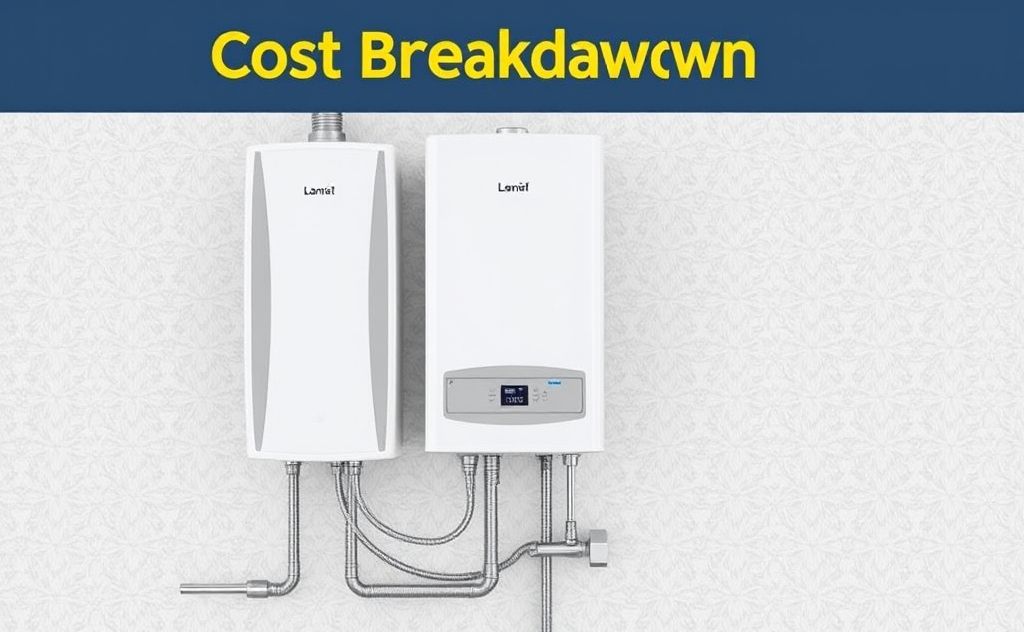
💰 Average Cost of a Tankless Water Heater in 2025
| Type | Unit Cost | Installation | Total Installed Cost |
|---|---|---|---|
| Gas Tankless (Whole Home) | $1,100 – $2,300 | $1,000 – $2,500 | $2,100 – $4,800 |
| Electric Tankless (Whole Home) | $500 – $1,500 | $800 – $1,800 | $1,300 – $3,300 |
| Point-of-Use (Single Faucet) | $150 – $400 | $250 – $500 | $400 – $900 |
(Based on 2025 data from U.S. plumbing contractors and retail suppliers.)
Here’s what I’ve learned:
Homeowners who go for gas units usually pay more upfront but save on monthly bills — especially in colder states. Electric units, on the other hand, cost less to install but may need electrical upgrades (which can quietly add $600–$1,200).
⚙️ Why the Installation Cost Can Double the Price
Think of installation like building a highway before your car can drive on it. You’re not just buying the heater — you’re paying for the infrastructure it needs to run safely and efficiently.
That includes:
- Venting and gas line adjustments (for gas models)
- Upgrading circuit breakers or wiring (for electric)
- Descaling systems in areas with hard water
- Permits and labor hours
Here’s what caught one of my clients off guard: their $1,500 Rinnai tankless unit jumped to a $3,600 total bill after adding venting, permits, and a condensate drain. And yes, they called me later asking if they were overcharged (they weren’t).
🧠 The Counterintuitive Truth: Higher Cost, Lower Waste
Tankless systems only heat water when you need it.
That’s the magic — and the math.
A traditional 50-gallon water heater keeps 50 gallons hot 24/7, whether you’re showering or sleeping. A tankless heater? It flashes water through a heat exchanger only when the tap runs.
That means 30–40% less energy waste.
If your gas bill is $80/month, that’s around $24 saved monthly, or about $288 per year. Over 12 years (the average lifespan), you’ve offset nearly $3,500 — enough to pay for the unit itself.
The result? What looked “expensive” on day one often turns into a break-even story by year six.
🧩 Real-World Example: The 2,700 sq. ft. Family Home Test
Let’s talk numbers.
A homeowner in Denver replaced their aging 50-gallon tank with a Navien 7.0 GPM gas tankless in early 2023.
Before:
- $1,100 annual gas cost
- Frequent lukewarm water issues during back-to-back showers
After (12 months later):
- Gas cost dropped to $780/year
- Endless hot showers (even when laundry and dishwasher ran)
- Total installed cost: $4,100
- ROI period: ~3.9 years
It’s not magic — it’s just thermodynamics paired with smart flow control.
🧩 Unexpected Analogy: Tankless Heaters Are Like Netflix
Hear me out.
Traditional water heaters are like old cable TV — always “on,” heating water whether you watch it or not. Tankless systems? They’re on-demand streaming for hot water.
You pay for what you use, not for what sits in the tank buffering all day.
🔍 The Myth: “Tankless Heaters Are Always Cheaper to Operate”
Not quite.
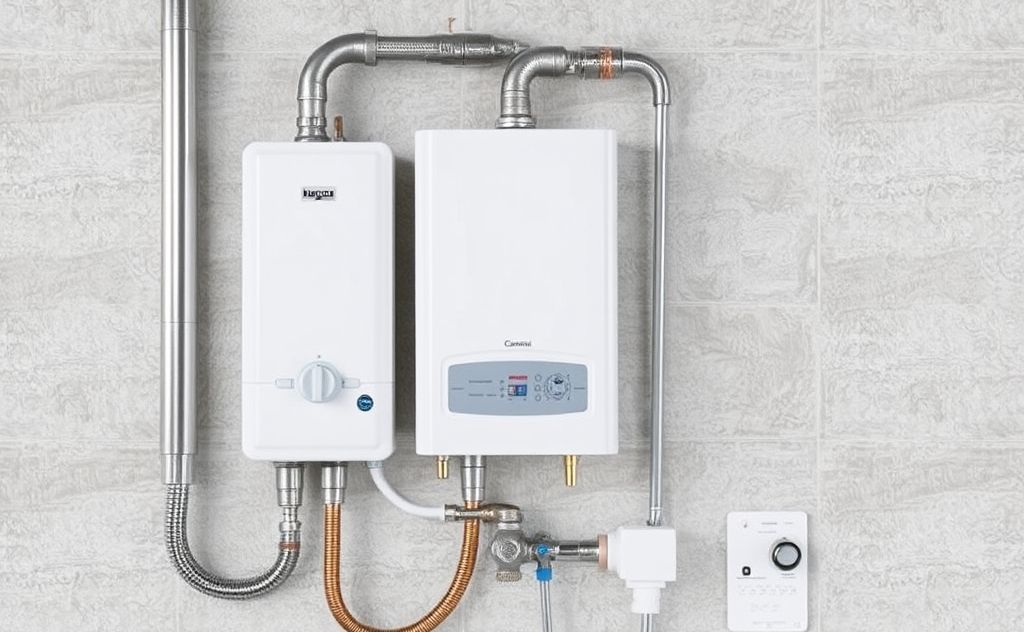
If you have hard water or skip regular descaling, you’ll lose efficiency fast. In the field, I’ve seen heat exchangers clog in under 3 years — turning a 96% efficiency unit into a 70% one.
Here’s what works:
- Flush the system once a year using a vinegar-based solution or a descaling pump kit (the My Plumbing Pro Tankless Kit, around $80, does it fast).
- Add a water softener if your area’s hardness exceeds 10 grains per gallon.
Skip that, and you’ll lose savings faster than your Wi-Fi drops during a Zoom call.
⚡ Monthly Operating Costs
| Type | Average Energy Use | Monthly Cost (Estimate) |
|---|---|---|
| Gas Tankless | 150–200 therms/year | $15–$25 |
| Electric Tankless | 1,200–2,500 kWh/year | $25–$45 |
Of course, local rates matter. If you’re in California or New York, electric rates could make gas the better deal.
🧰 Tools & Frameworks to Estimate Your True Cost
Here’s what I recommend if you’re planning a switch:
- Use the Rheem EcoNet® App – lets you track energy use and savings.
- Try Home Depot’s Tankless Cost Calculator (2025 update) – gives you a realistic local install quote.
- Ask for a “load test” from your plumber — they’ll measure your home’s peak flow rate (GPM) and size your unit correctly.
- Add a recirculation pump if your home has long pipe runs — it adds ~$300 but saves gallons of water per day.
🧠 Quick Story: When “Cheap” Turned Costly
One customer once insisted on a $700 off-brand electric tankless from an online sale.
It worked fine — for three months. Then the breaker kept tripping, the flow sensor failed, and the repair estimate was $450. They ended up buying a $1,300 Stiebel Eltron Tempra 24 Plus later.
Lesson learned? “Affordable” can get expensive quickly when performance drops.
🧩 Contrarian Take: Sometimes, Don’t Go Tankless
Yep, I said it.
If you live alone, use minimal hot water, or have unreliable power, a small hybrid electric or high-efficiency storage heater might actually save you more.
Tankless shines when your home needs consistent, high-volume hot water — families of 3+, or multi-bath homes.
🔚 The Real Takeaway
When someone asks me, “How much does a tankless water heater cost?”
I answer: Between $1,500 and $4,800 installed — but that’s only half the story.
The smarter question is:
How long will it take to pay for itself?
For most households? Around 4–6 years. After that, it’s pure savings — with hot water that never runs out.
✅ Next Steps
Save your receipts — many states still offer up to $600 in federal energy credits for high-efficiency tankless systems.
Get 2–3 local quotes from licensed plumbers (installation costs vary wildly by region).
Check your water hardness before buying.
Use a descaling kit annually — think of it as a spa day for your heater.
Choose a unit with Wi-Fi monitoring (Rheem, Rinnai, and Navien now include this in 2025 models).
Related pick: Check today's price on Amazon

I am a mechanical engineer and love doing research on different home and outdoor heating options. When I am not working, I love spending time with my family and friends. I also enjoy blogging about my findings and helping others to find the best heating options for their needs.
Related guides

6699 Tankless Water Heater Flush Kit Review
Ready for a hassle-free tankless water heater? Check out our 6699 Tankless Water Heater Flush Kit review and…
EHERDM 110V Tankless Water Heater Review & Rating
Read our hands-on review of the EHERDM 110V electric water heater. See if its instant hot water and…
Can You Install a Tankless Water Heater in a Closet?
Yes, a tankless water heater can be installed in a closet, provided there is adequate ventilation and clearance…
