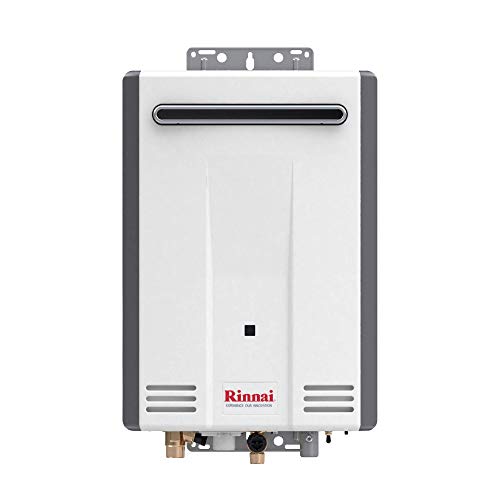
For most households, the Rinnai RX199iN is the best Rinnai tankless water heater because its 11.1 GPM capacity, .98 UEF efficiency and natural-gas or propane compatibility cover heavy demand. Smaller homes should save money and installation complexity with a 5.3 GPM model instead.
What to remember
Choose an 11.1 GPM model for several showers, appliances or large households running together.
Pick a 5.3 GPM unit when demand is modest and your gas supply and vent plan suit it.
The V53DeP installs outdoors and uses propane; the RE140iN and RE140iP install indoors.
Register the heater within 90 days if the warranty requires it, or the labor coverage may default to one year.
Flush and descale on the schedule in the manual, especially where hard water leaves scale.
Rinnai tankless water heaters heat water only when a tap calls for it, so the right pick depends on simultaneous flow, incoming water temperature, fuel and venting. A bigger BTU number alone doesn’t settle the choice.
The five picks below separate compact 5.3 GPM units from high-capacity 11.1 GPM models, indoor from outdoor installation, and residential from commercial equipment. Professional installation is the sensible line to draw.
The Best Rinnai Tankless Water Heaters
#1Best Overall
Rinnai RX199iN Tankless Water Heater
Best for Large households with heavy hot-water demand
The RX199iN delivers up to 11.1 GPM and can run on natural gas or propane, so it fits homes with several fixtures operating at once. Its .98 UEF efficiency, indoor or outdoor installation options and Quick Flush feature make it the most flexible pick here.
Flow rate 11.1 GPMHeat output Up to 11.1 GPMEfficiency .98 UEFFuel Natural gas or propaneInstallation Indoor or outdoor
Why it made the cut
11.1 GPM flow rate
Natural gas or propane compatibility
Indoor or outdoor installation
.98 UEF efficiency
Good to know
Requires the RX-OVC vent cap for outdoor installation
Controlr WiFi module isn’t included
Skip it if Skip it if your household needs only about 5.3 GPM and doesn’t need the extra capacity.
Best for Smaller homes needing a compact outdoor propane unit
The V53DeP supplies up to 5.3 GPM from a compact outdoor design, making it a practical fit when you already use propane and want to save indoor space. Its scale detection features are useful in areas where mineral buildup can shorten a tankless heater’s service life.
Best for Smaller homes with an indoor natural-gas installation
The RE140iN heats water on demand at up to 5.3 GPM and uses natural gas, which suits a smaller household with moderate hot-water demand. Its LED screen shows service reminders and error codes, giving a technician useful information during maintenance.
Flow rate 5.3 GPMHeat output Up to 5.3 GPMFuel Natural gasInstallation IndoorType Non-condensing
Why it made the cut
5.3 GPM flow rate
Up to 5.3 GPM flow rate
Indoor installation
LED service reminders and error codes
Good to know
Natural gas only
Non-condensing design
Skip it if Skip it if your home uses propane or several high-flow fixtures run at the same time.
Best for Smaller homes that need an indoor propane heater
The RE140iP pairs a 5.3 GPM flow rate with indoor propane installation, filling the gap for homes without natural gas service. Its compact layout fits a wide range of spaces, while the LED screen provides service reminders and error codes.
Flow rate 5.3 GPMHeat output Up to 5.3 GPMFuel PropaneInstallation IndoorType Non-condensing
Why it made the cut
5.3 GPM flow rate
Indoor propane installation
Up to 5.3 GPM flow rate
Compact design
Good to know
Propane only
Non-condensing design
Professional installation is recommended
Skip it if Skip it if you need outdoor installation or demand regularly exceeds 5.3 GPM.
Best for Commercial spaces with high demand and commercial warranty terms
The CX199iN provides up to 11.1 GPM and 199,000 BTU, with Smart Sense controls that support natural gas or propane. Its indoor or outdoor installation options and Quick Flush feature suit commercial service needs, while the commercial warranty terms distinguish it from the residential models.
Flow rate 11.1 GPMHeat output 199,000 BTUFuel Natural gas or propaneInstallation Indoor or outdoorType Condensing
Why it made the cut
11.1 GPM flow rate
199,000 BTU heat output
Natural gas or propane compatibility
Commercial-grade design
Good to know
Commercial warranty terms differ from residential models
RX-OVC vent cap is required for outdoor installation
Controlr WiFi module isn’t included
Skip it if Skip it for an ordinary household unless a qualified professional confirms the commercial model fits your installation.
Top Picks for Rinnai Tankless Water Heater You Didn’t Know You Needed
For a Rinnai tankless water heater, choose the 11.1 GPM RX199iN or commercial CX199iN for heavier demand; the 5.3 GPM V53DeP, RE140iN and RE140iP suit smaller demand. The RX199iN is the residential best overall pick. The CX199iN is commercial equipment, so check its different warranty before treating it as a household substitute.
11.1 GPM
RX199iN and CX199iN maximum rated flow
That rating is a model capacity figure, not a promise of that flow at every temperature rise.
Model
Best fit from the listed specs
Fuel and placement indicated by model name
RX199iN
Residential demand up to its 11.1 GPM rating
Natural gas; indoor model
CX199iN
Commercial applications needing higher capacity
Natural gas; commercial model
V53DeP
Smaller demand up to its 5.3 GPM rating
Propane; outdoor model
RE140iN
Smaller demand up to its 5.3 GPM rating
Natural gas; indoor model
RE140iP
Smaller demand up to its 5.3 GPM rating
Propane; indoor model
The suffixes indicate the listed fuel and placement; confirm the exact installation requirements on the model’s nameplate and instructions.
For a rinnai tankless water heaters comparison with Navien, Noritz (sometimes misspelled “Nortiz”) or Takagi, don’t pick by badge alone. Compare the flow you need, fuel available, venting requirements, controls, local service and warranty; the right choice can change with your home and installer. The same rule applies to “Navien tankless water heater vs Rinnai” and hard-water comparisons: check each model’s maintenance guidance and warranty rather than assuming one brand handles hard water better.
Myth
A tankless heater provides endless hot water at full flow.
Fact
It can keep heating while water flows, but available hot-water flow depends on the unit’s capacity, incoming water temperature and fuel supply. “Endless” doesn’t mean unlimited.
The Rinnai product names distinguish indoor natural-gas models, indoor propane models and the outdoor propane V53DeP. Don’t assume an indoor unit can be placed outdoors, or that an outdoor unit can be installed inside. Likewise, don’t count on an optional fuel-conversion kit or a particular energy-bill saving unless the exact product documentation supports it; no universal savings figure applies. Where the listing says WiFi control isn’t included, you’ll need the Controlr module for that function. For more Rinnai model options, see Rinnai tankless water heater picks.
From HeaterGuides · our own guideTankless? Page 8 is the descaling routine, page 15 checks the size.Water Heater Owner's ToolkitFix the common faults yourself, keep it running for years, and know when a repair is money wasted.No-hot-water flowcharts, gas and electricFlush, anode, relief valve and descaling stepsRepair-or-replace calculator (Excel)$14.99$9.99Get it for $9.99See what's inside and watch the 2-minute video →18-page printable PDF + Excel calculator · instant download · 30-day refund
Rinnai Tankless Water Heater Capacity
For a Rinnai tankless water heater, size capacity around the fixtures you may use at the same time, not the number of people in the house alone. A rinnai tankless for family use might be a 5.3 or 11.1 GPM model depending on simultaneous demand, winter groundwater temperature and the flow each fixture draws.
1
List simultaneous uses
Count showers, sinks, tubs, dishwashers and washing machines that could run together. Add their flow requirements using the fixture specifications, then compare the total with the model’s rated capacity.
2
Allow for cold incoming water
A heater must raise colder groundwater farther to reach the same hot-water temperature. In a cold-winter location, that temperature rise can reduce delivered flow compared with the same unit in a warmer climate.
3
Choose with a margin
Product data says 11.1 GPM supports up to seven fixtures and 5.3 GPM up to five. Those are broad limits, not guarantees: fixture flow and inlet temperature determine whether several uses feel comfortable together.
A Hypothetical Family Demand Check
Say two showers and a dishwasher may run at once. Find each fixture’s flow in its specifications, add the numbers, then compare the total with 5.3 or 11.1 GPM. If the combined demand approaches the rating, especially with cold groundwater, ask an installer to size the unit for your local winter inlet temperature.
Possible overlapTwo showers plus a dishwasher
Compare against5.3 or 11.1 GPM
Key local factorWinter groundwater temperature
A rinnai tankless water heater pressure issue is often a plumbing-flow problem first, not proof the heater has failed. Check whether pressure drops at other fixtures too; a clogged fixture screen, restricted pipe or supply problem can limit flow before water reaches the heater. If the pressure change is isolated to hot water or the unit shows an error, have a qualified technician check the system.
Electricity and Running Cost
These listed models use natural gas or propane to heat water; electricity for controls or ignition doesn’t make them electric tankless heaters. On-demand heating avoids a storage tank’s standby losses, but fuel use still rises with the gallons heated and the temperature rise. Don’t assume a bill reduction without comparing your actual use, fuel rates and old system.
For the largest Rinnai tankless water heater in this lineup, the RX199iN and CX199iN share the 11.1 GPM rating; the CX is commercial equipment, while the RX is the residential choice. If you need an electric tankless unit instead, compare products designed for electric heating, such as these electric tankless instant hot water heaters.
Rinnai Indoor, Outdoor and Commercial Installation
A Rinnai gas tankless water heater can’t simply be boxed into a closet or connected to an old exhaust pipe; its fuel, location, venting, clearances, combustion air and drainage must match the model’s instructions and local code.
Model
Installation and fuel check
V53DeP
Outdoor propane model
RE140iN
Indoor natural-gas model
RE140iP
Indoor propane model
RX199iN
Indoor or outdoor with the listed Versa Vent arrangement; outdoor installation requires the RX-OVC
CX199iN
Indoor or outdoor with the listed Versa Vent arrangement; outdoor installation requires the RX-OVC
Confirm the exact suffix and required accessories before ordering.
A closet installation is possible only when the manual’s clearances, combustion-air path, drain arrangement and vent layout allow it. A door and four walls don’t make a gas appliance safe; restricted air or trapped exhaust can turn a tidy installation into a dangerous one.
Don’t reuse an old exhaust vent by assumption. Tankless units may require different vent material, diameter, termination and routing, so the new unit’s instructions and local code decide what stays.
Propane-to-natural-gas conversion is model-specific work for a qualified technician. Never improvise an orifice or gas-control change; use the manufacturer’s conversion instructions, approved parts and required commissioning procedure.
Verify Before Purchase
Natural gas or propane matches the model suffix
Indoor or outdoor listing matches the planned location
Required vent parts, including the RX-OVC where applicable, are available
Local permits and inspection requirements are understood
Applicable certification and the current installation manual are available
Professional Installation
Gas connections, venting and commissioning belong with a qualified professional. An electric tankless heater is a separate product category, so it isn’t a drop-in Rinnai replacement; compare electric models separately if your home has no suitable gas service.
Flushing a Rinnai Tankless Water Heater
Flushing a Rinnai tankless water heater removes mineral scale from the heat exchanger before it restricts flow, increases error risk or makes the burner work harder to transfer heat.
Hard-water homes need closer attention, and the exact interval and solution come from your model’s manual. That includes older units such as the Rinnai RU98; don’t borrow a procedure or chemical recommendation from a different model without checking first.
1
Shut the unit down
Turn off the heater and its energy source as the manual directs, then let hot components cool. Never casually open a pressurized service connection.
2
Isolate the heater
Close the service valves so the descaling solution circulates through the heater rather than the home’s water lines.
3
Connect the equipment
Attach compatible hoses, a circulation pump and a container according to the manual and the service-valve instructions. Check every connection before starting the pump.
4
Circulate and rinse
Run only the manufacturer-approved descaling solution for the specified procedure, then drain and rinse with clean water as directed.
5
Restore service
Reopen the valves in the stated order, return the energy source, run water through the unit and check every connection for leaks.
Choosing a Flush Kit
A useful kit should include compatible service hoses, a circulation pump and connections that fit the heater’s isolation valves, with enough capacity for the job. Compare the parts list before buying a Rinnai tankless water heater flush kit.
The RX199iN and CX199iN include a Quick Flush feature, but that feature doesn’t remove the need to follow the maintenance instructions or deal with scale already present in the heat exchanger.
Call a Technician
Stop if a service valve is seized, a connection leaks, a fault code returns after flushing or you’re unsure which valve or solution is approved. Forcing a valve can turn routine maintenance into a plumbing repair.
Recirculation, Pressure and Hot-Water Delay
The correct recirculating pump for a Rinnai tankless water heater is the pump and control setup approved for your exact Rinnai model, plumbing layout and installation diagram—not a generic pump chosen by pipe size. A pump moves cooled water back toward the heater so hot water reaches the fixture sooner; it does not increase the heater’s maximum GPM.
For the RSC033160 Rinnai tankless water heater recirculation diagram, use the diagram supplied for that specific setup and match every connection and control to the manual. A dedicated return line gives the cooled water its own path back to the heater. A crossover arrangement uses the existing cold-water piping as the return path through a crossover valve, so the fixtures, controls and pipe layout must support it.
Myth
A recirculation pump makes a 5.3 GPM heater deliver more hot water.
Fact
The pump reduces waiting time; the heat exchanger still has the same flow and temperature-rise limits. Running two showers can still exceed the unit’s practical capacity.
Before You Buy A Pump
Confirm the exact Rinnai model and fuel type.
Check whether the installation calls for a dedicated return or crossover arrangement.
Match the pump, sensor, timer and controller to Rinnai’s diagram.
Plan an accessible shutoff and service point.
Rinnai tankless water heater controllers can help control scheduled or demand-based recirculation. Scheduling matters because warm water loses heat through the pipes, so constant circulation can add energy use and erase some of the efficiency you expected.
Pressure Is A Plumbing Problem
If household pressure is excessive or unstable, check it with a water-pressure gauge and have the pressure-reducing regulator inspected or adjusted by a qualified plumber. Changing the Rinnai temperature or flow setting won’t repair unsafe supply pressure, a failing regulator or water hammer.
A dedicated return line isn’t automatically required, but the correct answer depends on the Rinnai model, controls and piping. Don’t connect a pump until the manufacturer’s diagram confirms the arrangement; hot-water shortcuts can become expensive plumbing lessons.
Questions People Ask
What is the correct recirculating pump for a Rinnai tankless water heater?
Use the pump and control method listed for your exact Rinnai model and plumbing layout. An undersized pump may leave hot-water delays; an incorrectly controlled pump can cause unnecessary cycling and energy use. Follow the installation manual or have a qualified plumber size the loop.
Can I enclose my Rinnai gas tankless water heater in a closet?
An indoor-rated model may go in a closet only when the installation manual allows it and the closet provides the required clearances, combustion air, venting and condensate drainage. Don’t seal the heater into a small cabinet or use a storage closet without checking those requirements. Gas and vent changes belong with a licensed professional.
Can you use an old exhaust vent for a Rinnai tankless water heater?
Usually, no. Tankless units use a listed vent system sized and approved for that model, and an old tank-heater flue may be unsuitable for the exhaust temperature, materials or sealed combustion setup. Have the venting inspected before connecting the heater.
Can you convert a Rinnai propane tankless water heater to natural gas?
Some models support a manufacturer-approved fuel conversion, while others do not. The conversion requires the correct kit, gas-pressure checks and combustion testing by a qualified technician; never change jets or regulators by guesswork. Confirm the exact model’s manual and local code first.
What is the highest setting on a Rinnai tankless water heater?
Many residential Rinnai models allow a maximum setting of 140°F, though the available range can vary by model and controller. Higher temperatures increase scald risk, so use a mixing valve or professional setup where the application requires hotter water.
What is the minimum temperature of a Rinnai tankless water heater?
Many residential models start at 98°F. The usable minimum can vary with the controller, model and water flow, and the heater may not fire if the flow is below its activation threshold. Check the display and model manual rather than forcing a lower setting.
What electric tankless water heater compares to the Rinnai 2520?
There isn’t a direct electric equivalent based on the model name alone. Compare the electric unit’s flow at your winter inlet temperature, then confirm the home’s 240-volt circuit capacity; electric heaters often need substantial electrical service for similar whole-house demand. A guide to electric tankless instant hot water heaters explains that comparison.
Before you go · a welcome giftGet the Water Heater Owner's Toolkit for $4.99Fix the common faults yourself, keep it running for years, and know when a repair is money wasted. Normally $14.99; your welcome price saves $10.00. We'll email your link right now.or buy it now for $9.99 without the gift →One email with your link now. We never share your address.



 Water Heater Owner's ToolkitFix the common faults yourself, keep it running for years, and know when a repair is money wasted.No-hot-water flowcharts, gas and electricFlush, anode, relief valve and descaling stepsRepair-or-replace calculator (Excel)