The Hard Truth: Is Any Heater Truly ‘Set and Forget’?
You’re lying in bed, the room is cold, and you’re tempted to plug in that old radiant coil heater from the garage. Before you do, let’s be clear about what ‘safe to leave on overnight’ actually means.

No heating device is 100% risk-free. Even the best models can fail if misused. But some heater types are engineered with multiple redundant safety systems that make overnight use reasonably safe, while others are a genuine fire hazard. This article walks through the heater types you can trust, the ones you should never run while sleeping, and the exact checklist to follow before you plug anything in.

DREO
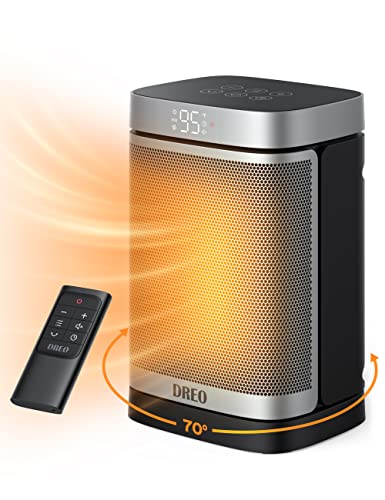
DREO Space Heater, Portable Electric Heaters for…
- Powerful heat that fits everywhere: DREO space heaters for indoor combines Hyperamics 1500W advanced PTC system with a new heat fu…
- Unbreakable safety:DREO goes beyond the unexpected to deliver peace of mind with every room heater. The innovative tilt-detection…
- Ultimate temperature control: The enhanced NTC chipset brings more precision to turn your space heater with thermostat into a smar…
You’ll also get a real-world cost calculation (most guides skip this), tips for small bedrooms where the 3-foot clearance rule feels impossible, and how to protect kids and pets from burns. By the end, you’ll know exactly what to buy or what to avoid.
If you’re in the market, the DREO Space Heater is a solid example of a modern ceramic heater with thermostat control and multiple safety features—more on that later.
The 3 Types of Heaters You Can Trust Overnight (And 1 You Can’t)
Heater technology falls into three main categories that are acceptable for overnight use, plus one that absolutely isn’t. Here’s the breakdown.
Oil-Filled Radiators: The Gold Standard
Oil-filled radiators are the closest thing to a ‘set and forget’ heater. They work by heating mineral oil inside sealed metal fins. The oil retains heat long after the element cycles off, so the surface stays warm but never glowing hot.
Why they’re safe: The outer surface typically stays below 140°F, which reduces burn risk. They have no exposed heating elements and no fan that can blow dust onto hot coils. Most models include tip-over switches and overheat sensors.
The trade-off: They heat slowly. You’ll wait 20-30 minutes to feel the room warm up. But once it’s warm, the thermostat maintains temperature efficiently. For a bedroom, set it to 68°F and let it cycle on and off through the night.
Ceramic Fan Heaters: The Safe Middle Ground
Ceramic heaters use a ceramic heating element with a fan to push warm air into the room. They’re more compact and heat faster than oil-filled radiators. The ceramic element doesn’t get as hot as metal coils, and modern units have multiple thermal cutoffs.
The DREO model mentioned earlier falls into this category. It uses a 1500W PTC ceramic system, which self-regulates—the resistance increases as temperature rises, so it never overheats. It also has a tip-over sensor that’s more accurate than the old mechanical switches, plus a V0 flame-retardant housing. That’s the kind of engineering you want for overnight use.
One caveat: ceramic heaters can be noisy if the fan is loud. Look for models with brushless DC motors—the DREO runs at 34 dB, which is quieter than a whisper. If you’re a light sleeper, that matters.
Infrared Panels: The New Tech Option
Infrared heaters warm objects and people directly, not the air. They’re silent, have no fan, and the surface temperature is lower than coil heaters. Many wall-mounted panels are designed to be left on all night.
Safety-wise, they’re excellent: no exposed elements, no fan to circulate dust, and most have automatic shutoff if they tip over (if floor-standing). The downside is they only warm what’s in their line of sight—so you might feel warm while the rest of the room stays cold.
For more on how infrared heaters work and their safety profile, check out this infrared heater safety guide.
The ‘Never’ List: Propane and Radiant Coil Heaters
Two types should never be left on overnight:
- Unvented propane heaters: These burn fuel and release carbon monoxide and moisture into the room. Even with a CO detector, the risk of oxygen depletion is too high. They’re for outdoor or well-ventilated spaces only.
- Radiant coil heaters: The classic metal-coil space heater with a glowing orange element. They get hot enough to ignite nearby combustibles (curtains, bedding, paper) and have no way to regulate surface temperature. If you have one of these, use it only when you’re awake and in the room.
There’s also the DIY/improvised heater category—anything with exposed wiring or a jerry-rigged setup. Avoid at all costs.
The Non-Negotiable Safety Checklist (Before You Plug It In)
Even with a safe heater type, you need to verify these six things before you sleep. Skip one and you’re gambling.
- Check the certification label. Look for UL, ETL, or CSA certification. These are independent labs that test for fire and electrical hazards. If it doesn’t have one, don’t buy it.
- Inspect the cord and plug. Any fraying, cracks, or loose connections means the heater goes in the trash, not the outlet. Also, the plug should feel cool to the touch after 30 minutes of operation—if it’s warm, the outlet or wiring is overloaded.
- Maintain 3 feet of clearance. This is the standard from the National Fire Protection Association. Keep the heater away from curtains, bedding, clothing, and furniture. In a small bedroom, that might mean placing it near the door or on a nightstand (if the surface is non-combustible).
- Plug directly into a wall outlet. Never use an extension cord or power strip. The high current draw (1500W) can melt cheap cords. If you must use an extension cord, it has to be a heavy-duty 14-gauge cord rated for the wattage—but even then, direct is better.
- Verify the tip-over and overheat sensors work. Most modern heaters have these, but test them: tip the heater over while running and see if it shuts off. Then block the air intake with a towel and confirm it turns off within a minute. That’s your last line of defense.
- Place it on a hard, level surface. Carpet is okay if the heater has a wide base and the manufacturer allows it (check the manual). But never put it on a bed, sofa, or stack of papers—that’s a fire waiting to happen.
One more thing: if you have an older heater without a tip-over switch, replace it. The cost of a new one is far less than the cost of a house fire.
How to Calculate the Real Cost of Overnight Heating
Everyone talks about safety, but nobody talks about the electric bill. Here’s the math.
A 1500W heater running at full power uses 1.5 kilowatt-hours (kWh) per hour. The average US electricity rate is about $0.17 per kWh (varies by state). So:
1.5 kWh × 8 hours = 12 kWh per night.
12 kWh × $0.17 = $2.04 per night.
That’s roughly $60 per month if you run it every night. But here’s the trick: heaters with thermostats don’t run continuously. Once the room reaches the set temperature, the heater cycles off. In a well-insulated bedroom, the heater might only run 50% of the time, cutting your cost to $1 per night.
To save more, set the thermostat to 68°F instead of 72°F. Every degree lower cuts energy use by about 3-5%. Also, use the ECO mode if your heater has one—the DREO’s ECO mode adjusts power based on the difference between set and room temperature, which reduces cycling.
If you’re using a smart plug to monitor energy usage, you’ll see the exact wattage draw in real time. That’s a handy way to verify your heater is cycling properly.
Smart Features That Add a Layer of Safety (and Peace of Mind)
Modern heaters come with features that go beyond basic safety. Here’s what’s worth paying for.
- Wi-Fi connectivity and app control: You can turn the heater off remotely from your phone if you forgot, or set a schedule so it warms up 30 minutes before you wake. Some apps send alerts if the heater tips over or overheats.
- Thermostat with precise increments: The DREO allows setting temperatures from 41°F to 95°F in 1°F steps. That level of control means you can dial in exactly the temperature you want without overheating the room.
- 12-hour timer: Instead of leaving it on all night, set it to turn off after 4-6 hours. You’ll still get the benefit of a warm room during the deepest sleep, but you’ll save energy and reduce risk.
- Child lock: If you have kids who like buttons, a child lock prevents them from changing settings or turning the heater on accidentally.
- Memory function: Some heaters remember your last settings when powered on, so you don’t have to reconfigure every night.
These features aren’t gimmicks—they add real safety margins. A timer alone reduces the chance of human error.
The ‘Small Bedroom’ Problem: How to Maintain Clearance When Space is Tight
The 3-foot rule sounds great until you’re in a 10×10 bedroom with a bed, dresser, and closet. Here’s how to make it work.
- Use a wall-mounted panel heater. These mount high on the wall, out of reach of bedding and pets. They’re common in Europe and are becoming available in the US. They radiate heat downward and have no floor footprint.
- Place the heater on a nightstand or shelf. If the surface is non-combustible (wood is okay if the heater’s base stays cool), you can elevate it. Just make sure it’s stable and at least 3 feet from the bed’s edge.
- Angle it toward an open doorway. This helps circulate warm air into the rest of the room without needing to place it near furniture.
- Use a lower wattage heater. A 1000W heater produces less heat, but it also has a lower surface temperature and is safer for tight spaces. You’ll lose some warmth, but you’ll gain peace of mind.
Another option: use a heated mattress pad or electric blanket for the bed, and save the space heater for the rest of the room. That way you’re not relying on the heater to keep you warm while you sleep—you’re just keeping the chill off.
Safety for Kids and Pets: Beyond the ‘Cool-Touch’ Marketing
Kids and pets are the most vulnerable to burns and accidents. Here’s what to look for.
- Cool-touch exterior: This isn’t just marketing—it’s a real safety feature. Oil-filled radiators and some ceramic models have surfaces that stay below 140°F, which won’t cause immediate burns. But test it yourself: touch the heater after it’s been running for an hour. If it’s too hot to hold your hand on, it’s too hot for a child or pet.
- Tip-over protection that actually works: A curious dog can knock over a heater. The DREO’s tilt-detection sensor is more accurate than older mechanical switches, so it shuts off even if the heater is tilted at a slight angle—not just fully knocked over.
- No exposed elements: Radiant coil heaters are the worst for pets—a nose or paw can touch the glowing coil and get a severe burn. Stick to ceramic or oil-filled types.
- Placement: Put the heater in a spot where pets can’t reach it, like on a shelf or behind a baby gate. For pets that sleep on the floor, a wall-mounted heater is ideal.
If you have birds, you need to be extra careful—they’re extremely sensitive to fumes and heat. Check out this guide to safe heaters for birds for specifics.
The Final Verdict: What Should You Buy Tonight?
If you want a heater to leave on overnight, buy an oil-filled radiator or a high-quality ceramic fan heater with all the safety features. Both are safe when used correctly.
For most people, a ceramic heater like the DREO is the best balance of fast heat, safety, and convenience. It’s portable, has a thermostat, and the safety certifications are solid. Check the current price on Amazon if you’re interested.
If you have a larger room or want silent operation, an oil-filled radiator is the better choice. It takes longer to warm up but runs quieter and holds heat longer.
Whatever you choose, remember: the safest heater is one that’s certified, placed correctly, and monitored. No heater is a substitute for a working smoke detector—install one in every bedroom and hallway.
FAQ: Quick Answers to Common Overnight Heating Questions
Can I leave a space heater on while I sleep?
Yes, if it’s a modern heater with tip-over and overheat protection, and you follow the safety checklist. Oil-filled radiators and ceramic heaters are the safest types. Avoid radiant coil and propane heaters.
Is it safe to run a space heater all night in a bedroom?
It’s safe if the heater is certified, placed at least 3 feet from combustibles, and plugged directly into a wall outlet. Also, set a timer for 4-6 hours to reduce risk and save energy.
What’s the safest type of space heater for a bedroom?
Oil-filled radiators are the safest because they have no exposed elements and low surface temperatures. Ceramic fan heaters are also safe if they have a thermostat and tip-over switch.
How much does it cost to run a space heater overnight?
At the average US electricity rate of $0.17/kWh, a 1500W heater running 8 hours costs about $2.04. With a thermostat cycling, it’s often half that.
Can I use a smart plug with my space heater?
Yes, but make sure the smart plug is rated for 15 amps (most are). Also, a smart plug alone doesn’t add safety—it just lets you control the heater remotely. The heater’s own safety features are what matter.
What to Do Next (Instead of Just Reading)
- Inspect your current heater for a UL/ETL label and tip-over switch. If it lacks either, replace it.
- Measure your bedroom and plan a heater placement that maintains 3 feet of clearance.
- Calculate your nightly cost using the formula above, and set your thermostat to 68°F.
- If you have pets or kids, choose a heater with a cool-touch exterior and test the surface temperature after an hour.
- Consider a heater with a timer or Wi-Fi control—set it to turn off after 6 hours.
- Install a smoke detector in your bedroom if you don’t already have one.
- Bookmark this article for when you’re shopping—you’ll know exactly what to look for.

HeaterGuides covers home heating, water heating and HVAC: how the equipment works, what it costs to run, and how to use it safely.