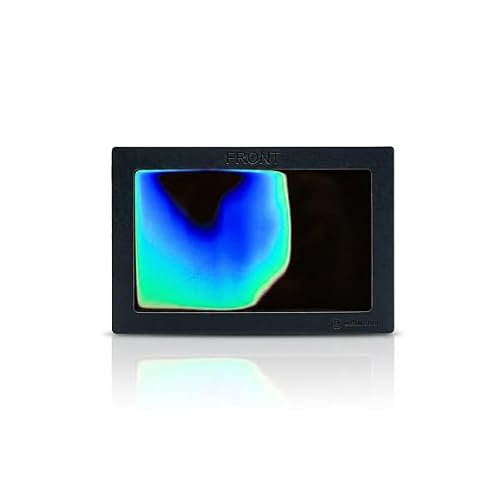
You’ve seen it happen. You pull a polyester shirt from the dryer and the collar has shrunk into a wavy mess. Or you use a heat gun near a nylon strap and the edge curls up like bacon. Fibers respond to heat in predictable ways, and once you understand those rules, you can stop ruining gear and start working with the physics instead of against it.
This article covers what happens at the molecular level when fibers heat up, why some materials survive while others fail, and how to protect sensitive fabrics when heat is unavoidable. You’ll get specific temperature thresholds, real-world examples, and practical steps you can apply today.
SUCOHANS
59" x 2 Yards Silver Thermal Heat-Resistant…
- Dimensions: The fabric measures 59 inches in width and 2 yards in length. Hand-cut items may have slight variations. Color: Silver…
- High-Quality Heat Resistant Fabric Composition: Ironing board fabric crafted from a cotton blend with a vinyl-aluminum lacquer coa…
- Durable Heat Resistance: The scorch resistant fabric withstands temperatures up to 210°C (410°F), effectively preventing scorch ma…
For everyday tasks like ironing, a silver thermal heat-resistant fabric rated to 210°C (410°F) gives you a working buffer between the iron’s soleplate and delicate materials. It’s a cotton blend with a vinyl-aluminum lacquer coating, so it reflects heat rather than absorbing it. That matters when you’re pressing silk or wool and don’t want scorch marks.

What Actually Happens to Fibers When Temperature Rises
All fibers have a glass transition temperature (Tg) and a melting point (Tm). Below Tg, the polymer chains are locked in place. The material feels stiff. As temperature climbs past Tg, those chains start sliding past each other. The fiber becomes flexible, then soft, then eventually flows or degrades.
For natural fibers like cotton, there’s no melting point. Instead, cellulose starts decomposing around 150°C (302°F). It browns, then chars, then ignites near 400°C (752°F). Wool behaves similarly but degrades faster because keratin protein breaks down at lower temperatures. That’s why a hot iron leaves a permanent shiny mark on wool — the surface fibers have already denatured.
Synthetic fibers are more predictable. Nylon melts around 220°C (428°F). Polyester melts around 250°C (482°F). Polypropylene is worse — it softens at 90°C (194°F) and melts by 160°C (320°F). Leave a polypropylene rope near a heater vent and you’ll come back to a deformed, useless mess.
Thermal expansion also plays a role. Most fibers expand when heated, but they don’t expand evenly. Aramid fibers like Kevlar have negative axial expansion — they shrink along their length when heated. This creates internal stress in composite materials. If you’re working with fiber-reinforced plastics, temperature effects on composites can cause micro-cracking long before visible failure.
Thermal Degradation vs. Mechanical Failure: Know the Difference
Heat damage isn’t always visible immediately. A fiber can lose 50% of its tensile strength from prolonged exposure to temperatures well below its melting point. This is thermal aging, and it’s the reason heater blankets and ironing covers fail after months of use even though they never reached their rated maximum.
Oxidation accelerates the process. When heat combines with oxygen, polymer chains break into shorter segments. The material becomes brittle. You’ll notice this on old electrical cords near baseboard heaters — the insulation cracks and flakes off. That’s not melting; that’s oxidative degradation.
Mechanical failure from heat is different. It happens fast. A sudden spike in temperature causes rapid expansion, and if the fiber is constrained, it snaps. Think of a wire inside a heater element. The nichrome wire expands as it heats, and if the mounting clips are too tight, the wire fatigues and breaks at the stress point.
For practical purposes, you need to know the continuous service temperature of a material, not just its peak rating. Silicone-coated fiberglass handles 260°C (500°F) continuously. PTFE-coated fiberglass pushes that to 290°C (554°F). But a cotton blend with aluminum coating? It reflects radiant heat but won’t survive direct contact with a heating element above its rated limit.
If you’re designing or repairing something that cycles between hot and cold, check how daily temperature shifts affect efficiency of the system. Thermal cycling is what kills most fiber-based insulation — each cycle creates micro-cracks that grow over time.
How to Protect Fibers from Heat Damage: A Step-by-Step Approach
- Identify the fiber type. Burn test a small sample. Natural fibers smell like burning paper or hair. Synthetics melt and smell like plastic. This takes two minutes and tells you the safe temperature range.
- Find the temperature rating. Check the manufacturer’s spec sheet. Look for continuous service temperature, not just peak. If you can’t find it, assume the worst and keep the heat source below 100°C (212°F).
- Add a barrier. A heat-resistant fabric between the heat source and the fiber is the simplest fix. The SUCOHANS silver fabric rated to 210°C works well for ironing because it reflects radiant heat while staying flexible. Cut it to size, sew edges to prevent fraying, and replace it when the coating starts wearing thin.
- Reduce contact time. Heat damage is cumulative. Ten seconds at 200°C does less damage than ten minutes at 150°C. If you’re ironing, move the iron continuously. If you’re drying, use a lower setting for longer.
- Monitor for discoloration. Yellowing or browning is the first sign of degradation. Once you see it, the fiber has already lost structural integrity. Replace the material before it fails completely.
Pro tip: don’t trust the ‘cool touch’ exterior of a heater or iron. The internal element is always hotter than the surface. A fabric that feels fine on the outside can be scorching on the inside.
Comparing Common Heat-Resistant Fiber Materials
| Material | Continuous Service Temp | Melting/Degradation Point | Best Use Case | Key Weakness |
|---|---|---|---|---|
| Cotton blend with aluminum coating | ~150°C (302°F) | 210°C (410°F) coating limit | Ironing boards, pressing cloths | Coating wears off with friction |
| Fiberglass (plain weave) | 260°C (500°F) | 315°C (599°F) decomposition | Heater insulation, gaskets | Itchy, brittle when flexed |
| Aramid (Kevlar, Nomex) | 200°C (392°F) | 500°C (932°F) char point | Protective clothing, high-heat belts | UV degradation, expensive |
| PTFE-coated fiberglass | 290°C (554°F) | 327°C (621°F) PTFE melts | Release sheets, conveyor belts | PTFE fumes at extreme temps |
| Polyester | 120°C (248°F) | 250°C (482°F) melts | Air filters, low-heat applications | Melts and drips, sticks to skin |
This table shows the practical gap between ratings. The cotton-aluminum blend isn’t the highest temperature option, but it’s the most practical for ironing because it’s soft, flexible, and won’t scratch delicate fabrics. Fiberglass would protect better against heat but would ruin silk with its abrasive surface.
Real-World Scenarios and What They Teach Us
Consider a home ironing board. The cover is typically cotton or a cotton-poly blend. After months of use, the center starts looking shiny. That’s the aluminum coating wearing away and the cotton underneath beginning to scorch. The fix isn’t to iron at a lower temperature — it’s to replace the cover with a dedicated heat-resistant layer like the SUCOHANS fabric.
Another common case: heat shrink tubing over wire splices. The tubing shrinks at 120°C (248°F), but the wire insulation underneath might only handle 105°C (221°F). If you apply too much heat, you shrink the tubing and melt the insulation simultaneously. The result is a short circuit weeks later. The solution is to use a heat gun with adjustable temperature and keep it moving.
For those working with structural materials, how temperature changes affect structural materials goes deeper into the expansion and contraction cycles that cause fatigue in load-bearing components. The same principles apply to fibers — they’re just smaller and more flexible.
Common Questions About Fiber Heat Behavior
Why does my ironing board cover scorch even on low heat?
Because the cover is thin and the padding underneath compresses, bringing the fabric closer to the heat source. The rated temperature on the iron dial is the soleplate temperature, but the cover sits right on the soleplate. If your cover is cotton without a reflective coating, it will scorch at 150°C because the cotton fibers degrade at that temperature.
Can I use a heat-resistant fabric as a direct barrier between a space heater and a wall?
Yes, but with a caveat. The fabric must be rated for the heater’s surface temperature, and you need an air gap of at least 1 inch between the fabric and the wall. The fabric reflects radiant heat, but it also traps heat on its own surface. Without airflow, the trapped heat can exceed the fabric’s rating. Test with a thermometer after installation.
What’s the difference between heat-resistant and fireproof?
Heat-resistant means the material doesn’t degrade at elevated temperatures. Fireproof means it doesn’t support combustion. Cotton is flammable but can be coated to be heat-resistant. Fiberglass is both heat-resistant and non-combustible. Aluminum-coated cotton is heat-resistant up to 210°C but will burn if exposed to open flame above that temperature.
Does washing a heat-resistant fabric reduce its effectiveness?
Yes. The aluminum coating is a surface treatment. Washing it with detergent and water slowly strips the coating away. The SUCOHANS fabric specifically says not to machine wash. Wipe it with a damp cloth instead. Every wash cycle removes a layer of the reflective coating, reducing its ability to reflect heat.
Why does my nylon jacket melt when I dry it on high heat?
Nylon has a melting point around 220°C (428°F), but your dryer’s high setting can reach 135°C (275°F) on the drum surface. That’s below the melting point, but the metal parts of the dryer — the lint filter, the drum seam — get much hotter. When the jacket touches those hot spots, the nylon melts locally. This is why you should always dry delicate synthetics on low heat or air dry.
What to Do With This Information
- Check the continuous service temperature of any fiber before exposing it to heat. Peak ratings are marketing; continuous ratings are engineering.
- Use a reflective barrier like the silver thermal fabric for ironing. It works because it reflects heat rather than absorbing it, keeping the cotton substrate cooler.
- Replace heat-exposed fabrics at the first sign of discoloration. Once a fiber changes color from heat, its structural integrity is already compromised.
- Never exceed the rated temperature of a protective fabric. A 210°C rating means the coating fails above that point, not that it becomes instantly dangerous.
- Air gaps matter more than material thickness. A thin fabric with an air gap protects better than a thick fabric pressed directly against a heat source.
- Thermal cycling is the silent killer. Even moderate temperatures repeated daily will fatigue fibers faster than a single high-temperature event.
- Test your setup with a thermometer. Don’t guess. Place a probe between the heat source and the fabric, check the temperature, and adjust accordingly.
Related guides
How Temperature Changes Impact Structural Materials
Temperature changes can cause structural materials to expand or contract, leading to stress, deformation, and potential failure if…
How High Temperatures Transform Metals: Expansion, Softening & More
At high temperatures, metals typically undergo changes in their physical and mechanical properties, including increased ductility, reduced strength,…
How Temperature Changes Impact Composite Materials
Temperature changes can significantly affect composites by altering their mechanical properties, thermal expansion, and overall durability, impacting performance…