Beyond the Warm Glow: What Nobody Tells You About Portable Infrared Heaters
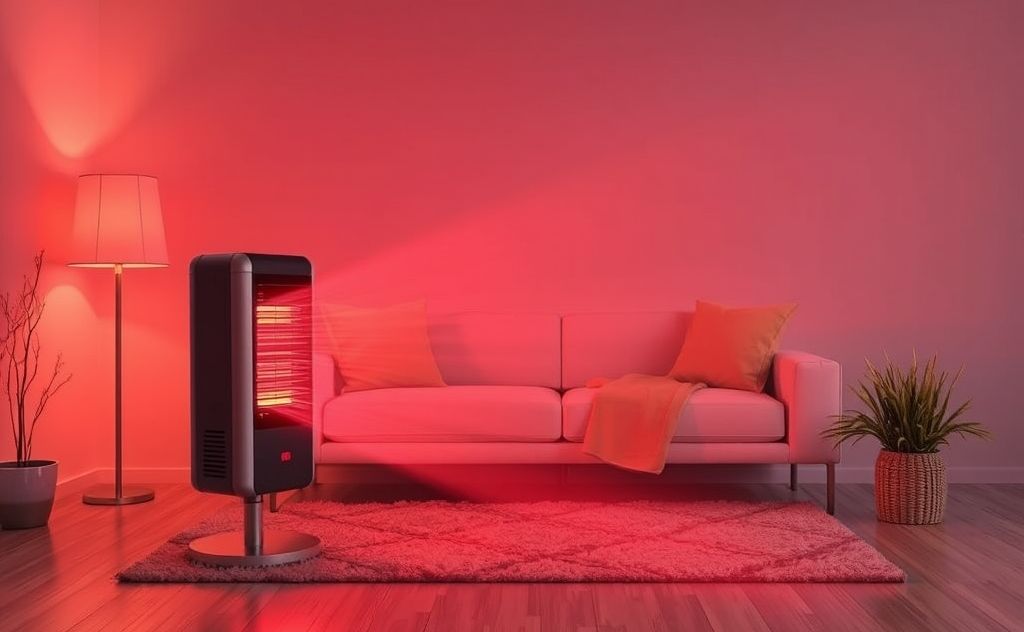
You just sat down on the couch, and the room is cold. The central heating kicks on, but it takes twenty minutes to feel anything. So you plug in that portable infrared heater you bought last week. Within seconds, you feel a pleasant warmth on your shins and hands. It feels like standing in front of a fireplace.
That initial comfort is real. Infrared radiation heats objects and people directly, not the air around them. That’s why it feels so immediate. But after a few weeks of daily use, you start noticing things. The room never gets fully warm. Your electric bill looks different. The unit makes odd clicking sounds as it cycles. This article covers the 7 hidden downsides of portable infrared heaters you should know before relying on one as your primary heat source.
BLACK+DECKER
BLACK+DECKER Infrared Radiant Quartz Tower Heater, BHTI06,…
- Infrared Heat: Infrared radiant tower heater is compact but powerful and heats up quickly. Uses dual quartz tubes with integrated…
- Heat Settings: Enjoy 2 settings on your new electric heater including Low (750 Watts), & High (1500 Watts). Also included is an ad…
- Safety Features: Our portable heaters for indoor use come with cool touch housing, power indicator light, overheat shutoff protect…
You’ll walk away with a clear picture of where these heaters excel, where they fall short, and whether one actually fits your space. If you’re still shopping, a unit like the BLACK+DECKER Infrared Radiant Quartz Tower Heater shows the typical trade-offs: dual quartz tubes for fast heat, 750 and 1500 watt settings, and safety cutoffs. It’s a decent example of the category, but the physics of how it heats your room remain the same as any other portable infrared unit.
1. Specific Safety Hazards of Portable Units
Wall-mounted infrared panels have a big advantage: they sit out of the way. Portable units sit on the floor, which puts them right in the path of feet, pets, and curious children. That creates a set of risks you don’t think about until they happen.
Tripping and Cord Management Risks
The power cord on most portable infrared heaters is only about six feet long. That means the heater has to sit close to an outlet. If the outlet is behind furniture, you’ll run the cord across a walkway. A dark cord on a dark floor is nearly invisible. People trip on it, and when they do, they often yank the heater over.
Even without a trip, the cord gets stepped on repeatedly. Over months, that compresses the insulation and can expose wires. A damaged cord on a 1500-watt device is a real fire hazard. My own unit sits in a corner, but I’ve caught myself stretching the cord taut to reach an outlet. That tension pulls on the connection points inside the heater, which can loosen them over time.
Tip-Over and Fire Safety Concerns
Most portable units have a tip-over switch that kills power if the unit falls. That’s a good feature, but it’s not a guarantee. The switch works only if the heater lands in a position that triggers it. A heater falling onto a soft rug might not tilt enough to trip the switch, but it can still block the intake vents.
Blocked vents cause the internal temperature to spike. The overheat protection should kick in, but that sensor can fail or get coated with dust. You should also know that the quartz tubes themselves get extremely hot. The grille on most units is metal mesh, and it radiates serious heat. Touching it results in an immediate burn. The BLACK+DECKER model has a cool-touch housing, but the front grille is not cool to the touch. Keep that in mind if you have toddlers who like to grab things.
Electrical Circuit Overload Potential
A 1500-watt heater draws about 12.5 amps. A typical household circuit is rated for 15 amps. That leaves almost no headroom. If anything else on the same circuit is running—a lamp, a TV, a computer—you’re dangerously close to tripping the breaker.
People do this all the time without realizing it. They plug the heater into a power strip that already has a monitor and a phone charger plugged in. That’s how you pop a breaker or, worse, overheat the wiring in the wall. Never plug a portable heater into an extension cord or power strip. Plug it directly into a wall outlet, and ideally one that’s on a dedicated circuit.
2. Limited and Uneven Heat Distribution
Infrared heat is directional. It travels in a straight line from the quartz tube until it hits a solid object. That object absorbs the energy and warms up. The air itself stays cold. This is the fundamental difference from convection heaters, which heat the air and let it circulate.
Ineffectiveness in Large or Open Spaces
If your living room is 400 square feet with an open floor plan, a portable infrared heater will not warm the whole space. It will warm whatever is directly in front of it. Sit three feet away and you’ll feel toasty. Sit ten feet away, and you’ll feel a slight warmth on one side of your body while your back stays cold.
Marketing photos show a heater in a large room with a happy person reading a book nearby. They never show the person ten feet away shivering. For a unit like the BLACK+DECKER BHTI06, the effective range is roughly a 5 to 8 foot radius. Beyond that, the heat dissipates quickly. You end up moving the heater around the room with you, which defeats the purpose of having a fixed heat source.
Cold Spots and Directional Heating Limitations
Even in a small room, you’ll get cold spots. The side of your body facing the heater is warm. The other side is not. You’ll find yourself turning around like a rotisserie chicken to get even coverage. Some units have an oscillating feature, but that just sweeps the beam across the room. It doesn’t create uniform heat.
Furniture blocks the beam completely. A couch or a chair between you and the heater means you get nothing. You have to position the heater in the center of the room to get any kind of even distribution, which puts it right in your walking path. That’s the trade-off you accept with a portable unit.
3. Impact on Indoor Air Quality and Perceived Dryness
Infrared heaters don’t burn fuel, so they don’t produce carbon monoxide or other combustion byproducts. That’s a clear win. But they do affect the air in ways that surprise people.
The quartz tubes heat up to around 1000 degrees Fahrenheit. That intense surface heat causes dust particles in the air to burn when they come into contact with the tube. You’ll smell it—a faint, acrid smell like a hairdryer left on too long. It’s more noticeable the first time you use the heater after it’s been sitting for months. The smell comes from dust burning off, and it dissipates after a few minutes. But if you have dust allergies, that burnt dust can irritate your sinuses.
As for dryness, infrared heaters don’t dry out the air the way forced-air systems do. They don’t blow air across hot coils. But they do heat your skin directly, which increases moisture evaporation from your skin. You might feel drier even though the humidity in the room hasn’t changed. If you already suffer from dry eyes or skin, you’ll notice this. A small humidifier in the same room helps, but that’s another appliance to manage.
4. High Energy Consumption and Operating Costs
Here’s the uncomfortable truth about electric resistance heating: it’s 100% efficient at converting electricity to heat, but electricity is the most expensive way to heat a space. A 1500-watt heater running for 8 hours a day uses 12 kilowatt-hours. At the US average of $0.16 per kWh, that’s about $1.92 per day, or $57 per month just for one room.
Misleading Efficiency Claims
You’ll see claims that infrared heaters are “200% efficient” or “use 50% less energy.” Those numbers are misleading. No electric heater is more than 100% efficient at converting electricity to heat. What those claims actually mean is that you feel warmer at a lower thermostat setting because the heat hits you directly. That’s a real benefit, but it only works if you’re sitting in the beam.
The moment you move out of the beam, you’re cold, and you’ll want to crank the heater up or use another source. In practice, many people end up running their infrared heater at max power for longer than they planned, which wipes out any efficiency gain. How often you use an infrared heater matters more than the marketing claims.
Power Draw on Electrical Systems
We touched on circuit overload earlier, but the cost side deserves attention. Running a 1500-watt heater is like running a microwave oven continuously for hours. It’s a massive power draw. If you have an older home with 60-amp service, you simply cannot run a portable infrared heater and anything else at the same time.
Even in a modern home, you’ll notice the lights dim momentarily when the heater cycles on. That’s the compressor-like draw of the heating element. It’s not a malfunction, but it’s a sign of how much power the unit demands. Your electric bill will reflect that demand clearly.
5. Noise and Operational Distractions
Infrared heaters are quieter than space heaters with fans. But they’re not silent. Most portable units, including the BLACK+DECKER model, use a small fan to move air across the quartz tubes. That fan produces a constant whirring sound, typically in the 40-50 decibel range. That’s about the level of a quiet conversation or a refrigerator hum.
Some people find that sound soothing. Others find it annoying, especially in a bedroom. The fan also cycles on and off with the thermostat. You’ll hear a click when the relay switches, then the fan starts, then it stops. In a quiet room, that clicking can be distracting.
There’s also a subtle popping sound as the quartz tubes heat up and cool down. The thermal expansion of the metal housing causes it. It’s not loud, but it’s noticeable if you’re trying to sleep. If you’re a light sleeper, this might not be the right heater for your bedroom.
6. Durability and Shorter Lifespan of Portable Models
Portable infrared heaters have a shorter expected lifespan than fixed systems. The quartz tubes themselves are fragile. They’re made of glass and can crack if the unit is bumped or dropped. Replacing a quartz tube costs between $15 and $30, and not all models have readily available replacement parts.
The internal fan is another weak point. It runs every time the heater is on, and it’s a small, cheap component. Bearings wear out, and the fan gets noisy or stops working entirely. When the fan fails, the heater overheats quickly because there’s no airflow to carry heat away from the tubes.
Most portable infrared heaters have a lifespan of 3 to 5 years with regular use. A wall-mounted infrared panel system can last 20 years or more. That’s a significant difference. You’re buying a disposable appliance, not a long-term heating solution. Regular maintenance, like cleaning dust off the intake vents, can extend the life, but you’re still working with a short-lived device. Check our guide on portable heater maintenance frequency for specifics.
7. Environmental Concerns and Disposal Challenges
The quartz tubes contain trace amounts of heavy metals, and the internal wiring has copper and plastic insulation. These units are not easily recyclable. Most municipal recycling programs won’t take them. You’ll have to find an electronics recycler or dispose of them as e-waste.
Manufacturing a portable infrared heater uses a fair amount of energy and materials. The metal housing, the glass tubes, the plastic components—none of it is biodegradable. When the unit fails after four years, it goes to a landfill. Compare that to a well-installed heat pump or a hydronic baseboard system that lasts decades.
There’s also the energy source question. If you’re heating with electricity from a coal or natural gas plant, you’re still contributing to carbon emissions. The ecological benefits of infrared heaters are real only if you’re using renewable electricity. Otherwise, you’re using a relatively inefficient way to heat a small space.
Are Portable Infrared Heaters Right for You?
Let’s be fair. Portable infrared heaters have a clear niche. They’re excellent for spot heating—warming a desk area, a reading chair, or a bathroom. They’re quiet enough for an office. They’re lightweight and easy to move. And they provide immediate warmth that feels better than forced air. If you need to heat one specific spot for a few hours a day, they’re a reasonable choice.
They’re a poor choice for whole-room heating, especially in large or drafty spaces. They’re expensive to run continuously. They require careful placement to avoid safety hazards. And they won’t last as long as a fixed system. If you’re using one as a supplement to your main heating, that’s fine. If you’re using it as your primary heat source, you’ll be disappointed.
Here’s a quick comparison to help you decide:
| Factor | Portable Infrared Heater | Fixed Infrared Panel | Convection Space Heater |
|---|---|---|---|
| Warm-up time | Seconds | Minutes | Minutes |
| Heat coverage | 5-8 ft radius | 10-15 ft radius | Whole room |
| Energy cost per hour | $0.19 (1500W) | $0.13 (1000W) | $0.19 (1500W) |
| Noise level | Low hum | Silent | Fan noise |
| Safety risk | High (tip-over, cord) | Low | Medium |
| Lifespan | 3-5 years | 15-20 years | 5-10 years |
| Air quality impact | Burns dust | Minimal | Can dry air |
| Best use case | Spot heating | Whole room | Whole room |
One honest caveat: I own one of these units, and I use it in my home office. For three hours in the morning, it keeps my feet warm while I work. I’d never try to heat my 500-square-foot living room with it. That’s not what it’s for.
Frequently Asked Questions
Can portable infrared heaters heat a whole room?
Not effectively. They heat objects in a direct line of sight. Air circulation is minimal. For a room larger than 150 square feet, you’ll need a convection heater or a fixed infrared panel system. The beam from a portable unit simply doesn’t reach far enough.
Are portable infrared heaters safe to leave on overnight?
Most units have tip-over and overheat protection, but leaving any space heater unattended is risky. The heating element gets hot enough to ignite nearby combustibles if the unit is knocked over. I’d avoid running one while you sleep unless the unit is certified for that use and placed well away from bedding and furniture.
Do infrared heaters use more electricity than other space heaters?
At the same wattage, they use the same electricity. A 1500-watt infrared heater draws the same power as a 1500-watt convection heater. The difference is perceived warmth. Infrared heat feels warmer at a lower setting, so you might run it less. But if you run it at max power, the bill is identical.
Why does my infrared heater smell like burning dust?
That’s dust burning off the quartz tubes. It’s normal, especially the first few times you use the unit after it’s been idle. The smell usually fades within 10 minutes. If it persists or gets stronger, check for a foreign object near the heating element. If the smell is plastic-like, turn the unit off and inspect it for damage.
How long do portable infrared heaters last?
Expect 3 to 5 years with regular use. The quartz tubes are fragile and the internal fan wears out. You can extend the life by cleaning dust from the intake vents monthly and avoiding rough handling. Replacement tubes are available for some models, but they cost a third of the price of a new unit.
What to Do Before You Buy
- Measure your room. If it’s over 200 square feet, a portable infrared heater won’t cut it. Look at a fixed panel or a convection heater instead.
- Check your electrical setup. Make sure you have a dedicated circuit available. Never use an extension cord or power strip with a 1500-watt heater.
- Consider placement. The heater needs to be at least 3 feet from furniture and out of walkways. If you don’t have a clear spot, this is the wrong product.
- Budget for the operating cost. At 8 hours per day, expect to add $50-60 to your monthly electric bill. That’s not a one-time cost.
- Think about the fan noise. If you need silence for sleep or meditation, a fan-equipped portable unit will bother you. Look for a panel-style heater instead.
- Plan for replacement. This is a disposable appliance. Budget for a new one in 3-5 years, and find out where you can recycle the old one.
- Read the safety manual. Know where the tip-over switch is and how the overheat protection works. Test them before relying on them.
Portable infrared heaters are a tool, not a solution. They solve the problem of a cold desk or a cold bathroom. They don’t solve the problem of a cold house. Buy one for what it does well, and use your main heating system for everything else. That way, you get the benefit without the disappointment.
For more on keeping your unit running longer, see our guide on infrared heater maintenance.
Related guides
Top Picks for Cozy Comfort: Best Rated Outdoor Infrared Heaters
Looking for the best rated outdoor infrared heaters? Experience warmth and comfort with top models designed for any…
How Infrared Portable Heaters Work: The Complete Guide
Infrared technology in portable heaters uses infrared radiation to directly warm objects and people in a space, providing…
The Hidden Gems of Garage Warmth – Best Infrared Heater Revealed
Chilly evenings ruining your outdoor gatherings? The best infrared heater for garage keeps you warm and cozy in…