

You bought an infrared heater because a friend swore by it. The first evening felt amazing — that warm, sun-like glow on your face while the rest of the room stayed cool. But then the electric bill arrived, and you noticed your feet were still cold because the coffee table blocked the beam. Sound familiar?
Infrared portable heaters are brilliant at one thing: delivering instant, focused warmth to a person, not a room. That same trait creates a stack of practical problems that most marketing glosses over. This article walks through the seven major disadvantages of infrared portable heaters so you can decide if the trade-offs make sense for your space, your comfort, and your wallet.
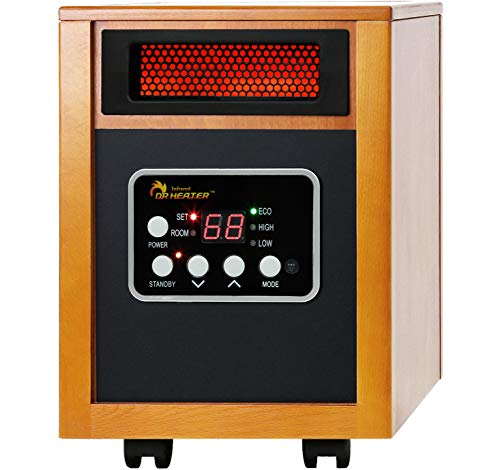
DR. INFRARED HEATER
Dr Infrared Heater DR-968 Portable Space Heater,…
- Can heat up a large room with Auto Energy Saving Model With High and Low Feature. Tip-over protection and Overheat protection.Heat…
- Dual Heating Systems featuring infrared quartz tube + PTC with 12-Hour automatic shut-off timer. Amperage: 12.5 Amps
- IR Remote Control, High Pressure Low Noise Blower with Noise level 39 dB super quiet. Heating can cover for a large room.
You’ll leave with a clear picture of running costs, the line-of-sight limitation, heat retention issues, safety concerns, and how this technology compares to convection heaters over a decade of use. No fluff — just the numbers and the physics.
If you still decide infrared fits your needs, a quality unit like the Dr Infrared Heater DR-968 combines infrared quartz tubes with a PTC ceramic blower to mitigate some of the downsides below — it moves air, so it behaves more like a convection heater than a pure radiant panel.

What Is an Infrared Heater and How Does It Work?
Infrared heaters emit electromagnetic radiation that heats objects and people directly, not the air in between. Think of standing in sunlight on a cold day. The air around you is chilly, but your skin feels warm because the sun’s rays transfer energy straight to you. That’s radiant heat.
Convection heaters, by contrast, warm the air first. A fan or natural airflow circulates that warm air around the room. The air warms you, and the room eventually reaches a uniform temperature.
This difference matters for everything discussed below. Radiant heat is fast and efficient for a single person in a small zone. It’s poor at warming a whole room evenly, especially one with furniture, walls, or partitions breaking the line of sight.
The 7 Major Disadvantages of Infrared Portable Heaters
1. High Running Costs Compared to Gas
Electricity costs more per unit of heat than natural gas in most regions. A 1,500-watt infrared heater running for 8 hours a day uses 12 kWh. At $0.17 per kWh, that’s about $2.04 per day, or $61 per month for one room. A gas furnace heating the same space might cost $0.80–$1.20 per day, depending on your local rates and the home’s insulation.
Infrared heaters convert nearly 100% of electricity into heat, but that doesn’t make them cheap. The efficiency is in conversion, not in cost. Gas burns a cheaper fuel, and a central furnace distributes that heat through ducts to multiple rooms at once. You’re paying a convenience premium for zonal heating.
Over a full winter season (say, 5 months of regular use), that premium adds up to $150–$250 extra compared to gas. For a single room you use a few hours a night, that might be acceptable. For whole-house heating, it’s a budget breaker.
2. Slow to Heat Large or Open-Plan Spaces
Pure infrared heaters warm whatever is in front of them. A 10×12-foot bedroom with the heater aimed at the bed works fine. A 20×30-foot open-plan living area with a kitchen, dining table, and sofa? The heater only reaches the zone it faces.
The ceramic vs infrared comparison shows that hybrid units with a fan (like the DR-968) do better because they mix some convection into the output. But a pure radiant panel in a large room leaves cold spots everywhere. You’ll find yourself turning it up, which raises the running cost, or moving it around, which defeats the purpose of a fixed heater.
High ceilings make this worse. Warm air rises, but radiant heat doesn’t heat air — it heats the floor, the sofa, and you. That’s good for retaining warmth at ground level, but the room’s overall temperature still lags behind what a convection heater would achieve.
3. Directional Heat: The Line-of-Sight Problem
This is the biggest practical annoyance. Radiant heat only travels in straight lines. Anything in the path — a chair, a bookshelf, a wall, a person standing too close — blocks the energy. The shadow side of that object stays cold.
Imagine a reading chair placed next to a bookshelf. The heater sits on the opposite wall. Your body faces the heater, but the bookshelf casts a heat shadow over your left shoulder. You feel half-warm, half-cold. You shift the chair, but then the heater is angled wrong for the rest of the room.
Room layout becomes a design constraint. You arrange furniture around the heater’s beam, not around the room’s natural flow. For a portable unit, that’s tolerable. For a fixed wall-mounted panel, it’s a permanent compromise.
4. No Residual Warmth After Switch-Off
Turn off a convection heater and the warm air lingers for 20–40 minutes, slowly cooling. Turn off an infrared heater and the warmth vanishes in seconds. The objects you heated (your skin, the sofa, the floor) radiate back, but that’s a small fraction of what the heater emitted.
This makes infrared poor for maintaining a base temperature. You run it, you feel warm, you switch it off, and the room returns to ambient temperature almost immediately. If you want the room to stay at 68°F while you’re away, an infrared heater will cycle on and off constantly, racking up the kWh.
Thermostat control helps — the DR-968 has an electronic thermostat that turns the unit on and off to hold a set temperature. But the rapid cool-down means the unit cycles more frequently than a convection heater with a thermal mass (like an oil-filled radiator). More cycling means more wear on the relay and the heating elements.
5. Hot Surface Temperature: A Burn Risk
Quartz tubes and metal grilles on infrared heaters reach surface temperatures of 500°F to 700°F during operation. That’s hot enough to cause a serious burn on contact. Kids, pets, or anyone who brushes against the unit while moving through a room face real risk.
The DR-968 includes tip-over and overheat protection, which shuts the unit off if it falls. That’s a safety net, but it doesn’t change the fact that the front grille stays dangerously hot while running. You cannot safely place an infrared heater in a high-traffic hallway or near a toddler’s play area without constant supervision.
Compare that to a low-surface-temperature convection heater, which stays cool enough to touch. The trade-off is slower warm-up, but the safety margin is much larger.
6. Limited Effectiveness in Poorly Insulated Rooms
Infrared heats objects, not air. In a drafty room, cold air sneaks in through gaps and windows, pulling the ambient temperature down. A convection heater struggles to keep up because it’s constantly reheating the leaking air. An infrared heater does the opposite — it heats the furniture and floor, but the cold air still surrounds you below the waist.
You end up with a warm face and cold ankles. That’s the classic complaint from users in older homes with single-glazed windows or uninsulated walls. The radiant energy warms the surfaces it hits, but the air remains cold, so the room feels uncomfortable despite the heater running at full power.
Insulation upgrades (draft sealing, thicker curtains, floor rugs) help more than any heater type. But if you’re renting or can’t modify the building fabric, an infrared heater will disappoint in a poorly insulated space.
7. Upfront Price Premium for Quality Units
A basic 1,500-watt convection space heater costs $30–$60. A decent infrared portable heater with a thermostat, timer, and fan runs $80–$150. The DR-968 sits at the higher end of that range, and for good reason — it has a dual heating system and remote control. But you’re paying for features, not for more efficient heating.
The payback period for that premium is zero. Infrared doesn’t save you money on electricity; it costs the same per kWh as any other electric heater. The higher purchase price is purely a comfort and convenience cost. If you’re on a tight budget, a $40 oil-filled radiator will heat a room more evenly for less money.
Infrared Heaters vs. Convection Heaters: A Cost and Comfort Comparison
Here’s a side-by-side look at the real differences over a 10-year ownership period. Assumptions: 1,500-watt heaters, 4 hours of daily use, 5 winter months per year, $0.17/kWh electricity, and one replacement unit mid-decade for the cheaper convection model.
| Factor | Infrared Portable | Convection (Oil-Filled) |
|---|---|---|
| Purchase price (typical) | $100–$180 | $40–$80 |
| Annual running cost (4 hrs/day, 5 months) | ~$155 | ~$155 |
| 10-year total (purchase + electricity) | $1,750–$1,850 | $1,630–$1,710 |
| Warm-up time to feel heat | 10–30 seconds | 5–15 minutes |
| Heat retention after switch-off | None | 15–30 minutes |
| Room coverage | Direct line of sight only | Even, all directions |
| Surface temperature | 500°F+ on grille | 150–200°F on fins |
| Noise level | Silent (no fan) or 39 dB (fan) | Silent (no fan) |
| Maintenance concerns | Quartz tube burnout, reflector degradation | Thermostat failure, oil leaks (rare) |
The running costs are identical because both use 1,500 watts. The differences are in comfort, safety, and heat distribution. The infrared heater wins on instant warmth and silent operation. The convection heater wins on even heating, safety, and lower upfront cost.
How to Mitigate the Disadvantages (Smart Controls, Placement, Insulation)
You can reduce the pain points without abandoning infrared entirely. First, use a smart plug or the heater’s built-in timer to run it only when you’re in the room. The DR-968 has a 12-hour auto shut-off timer, which helps you avoid leaving it on overnight by accident. Pair that with a schedule: 30 minutes before you sit down, not all day.
Second, think about placement. Put the heater where it has a clear path to your body — not behind a sofa, not in a corner with a plant in front. Angle it slightly downward to hit your torso and legs, not the ceiling. A small fan on low setting in the same room helps mix the warm air that does rise, reducing the cold-ankle effect.
Third, address the room itself. Draft-proof the windows with film or heavy curtains. Lay a thick rug over a cold floor. These steps cut heat loss, which means the radiant energy from the heater stays in the room longer. You’ll run the heater less and feel more comfortable.
Finally, consider using infrared as a supplement, not a replacement. Run a convection heater to maintain the base temperature and use the infrared unit for spot heating where you sit. That hybrid approach gives you the best of both: even background warmth plus instant radiant comfort.
Is an Infrared Heater Right for Your Home? A Decision Checklist
Before you buy, run through this list honestly.
- Room size: Under 150 sq ft with a clear path to you? Infrared works. Open-plan or over 200 sq ft? Look elsewhere.
- Heating duration: Do you need heat for 20 minutes while you dress or 6 hours while you work? Short bursts favor infrared; long sessions favor convection.
- Insulation quality: Modern, well-sealed home? Infrared performs fine. Drafty old building? You’ll fight a losing battle.
- Safety needs: Kids or pets in the room? The hot surface is a real hazard. Choose a low-surface-temperature unit instead.
- Energy source: Do you have cheap off-peak electricity or solar panels? That changes the running cost math significantly.
- Budget: Can you absorb the higher purchase price without expecting energy savings? Infrared won’t pay you back.
If you checked ‘yes’ to most of the first three and ‘no’ to the safety concern, an infrared portable heater is a reasonable choice. If you hesitated on any, read through the alternatives to infrared before spending money.
Final Verdict: When to Buy and When to Avoid
Buy an infrared portable heater if you need instant, localized warmth in a small, well-insulated room — a home office, a bedroom, a reading nook. The immediate heat is genuinely pleasant, and the silent operation beats a noisy fan heater any day.
Avoid it if you’re trying to heat a large living area, a drafty space, or a room where children or pets roam freely. The running costs are the same as any electric heater, the heat doesn’t linger, and the surface temperature is a genuine burn risk.
The safety criteria for these units are worth reviewing before you commit. And if you do go ahead, the DR-968’s dual heating system is one of the better compromises on the market — it adds a fan and PTC element to push warm air around, which softens the line-of-sight problem considerably.
Here’s the short version for skimmers:
- Infrared costs the same per watt as any electric heater — no savings on electricity.
- It only warms what’s in front of it. Furniture and walls block the heat.
- No residual warmth after switch-off. The room cools instantly.
- Surface temperatures hit 500°F+ — keep kids and pets away.
- Poor insulation kills its effectiveness. Fix drafts first.
- Quality units cost more upfront but add timers, thermostats, and fans that help.
- Use it for spot heating, not whole-room comfort, and you’ll be happier.

I am a mechanical engineer and love doing research on different home and outdoor heating options. When I am not working, I love spending time with my family and friends. I also enjoy blogging about my findings and helping others to find the best heating options for their needs.
Related guides

Are Ceramic Heaters Convection Or Radiant?
Ceramic heaters warm the air and work best for whole-room comfort. Radiant heaters warm people and objects faster,…

Best Places to Use an Infrared Portable Heater
Infrared portable heaters are ideal for small rooms, garages, workshops, and outdoor patios, providing efficient, targeted warmth where…
7 Hidden Downsides of Portable Infrared Heaters You Should Know
Portable infrared heaters warm fast, but they also have limits in coverage, safety, running cost, and long-term comfort.