

You’re looking at a ducted central heater and the specs sheet lists half a dozen logos you don’t recognize. UL. ETL. AHRI. Energy Star. Some you’ve seen on toasters. Others sound like government agencies. Which ones actually matter for safety? Which ones affect your monthly heating bill? And which ones are just marketing stickers?
This article cuts through the label clutter. You’ll walk away knowing exactly what each certification means for a ducted central heater, how to verify it, and which ones you shouldn’t skip. I’ll give you specific numbers, real conditions, and a few honest trade-offs based on years of working with HVAC systems.
TURBRO
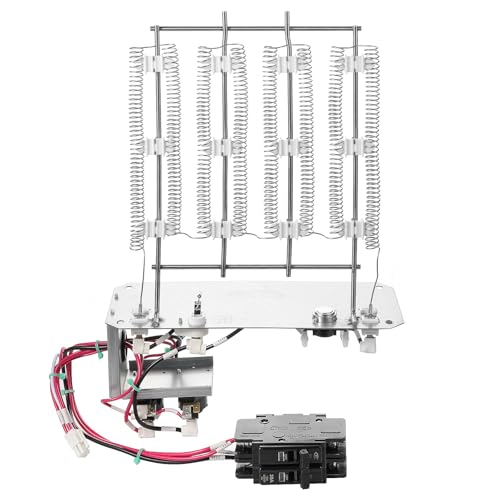
TURBRO 20 kW HVAC Air Handler Electric…
- Supplementary Heating: Provides additional warmth when your air conditioning system can't meet heating demands; especially useful…
- Ready-to-Use Accessory: Includes essential components such as a circuit breaker; simple setup with screws and wiring for immediate…
- Electrical Requirements: Operates at AC 208/240 V, single phase; professional installation is required to ensure safety and optima…
Before diving in, here’s a product that illustrates the point. The TURBRO 20 kW HVAC Air Handler Electric Heater Kit (ASIN B0DKX979WN) comes with a built-in circuit breaker and a UL certification mark. That UL sticker tells you the unit passed rigorous electrical safety testing. It’s designed for use with APEX 30,000 and 36,000 BTU ducted central heat pump systems, and it requires professional installation. I’ll reference it later as a concrete example of what a properly certified heater looks like.
Safety Certifications: UL, ETL, and CSA
The three most common North American safety marks are UL (Underwriters Laboratories), ETL (Intertek), and CSA (Canadian Standards Association). They’re all nationally recognized test labs (NRTLs) approved by OSHA. Functionally they’re interchangeable for most residential installs. But there are differences in how they work.
UL is the oldest and most widely known. Getting a UL listing means the manufacturer submitted the heater to UL engineers, who ran tests for fire risk, electrical shock, and mechanical hazards. They also inspect the factory periodically. That periodic inspection catches things like substituted components or sloppy assembly. I’ve seen a non-UL unit with a thermostat that melted at 150°F when it should have tripped at 100°. The sticker cost the manufacturer maybe fifty cents. The repair cost the homeowner seven hundred.
ETL is faster and sometimes cheaper for manufacturers. Testing standards are identical — ETL uses the same UL standards (e.g., UL 1995 for heating and cooling equipment). But follow-up inspections may be less frequent. For a homeowner, an ETL mark is fine. Most building inspectors accept it.
CSA covers Canadian requirements. Many US heaters carry CSA because it’s recognized in both countries. If you live near the border or buy equipment sold in both markets, look for CSA. Otherwise UL or ETL is sufficient.
One caveat: a CE mark (European) means the heater was tested to EU standards. In the US, CE is not an NRTL. Building inspectors will reject it. I’ve seen homeowners buy a “deal” online only to have the installer refuse to connect it. Don’t go that route. Stick with UL, ETL, or CSA.
Performance Certifications: AHRI and Energy Star
Safety marks keep you alive. Performance marks keep your bills manageable. The two big ones are AHRI certification and Energy Star.
AHRI stands for Air-Conditioning, Heating, and Refrigeration Institute. They run a voluntary certification program for heating and cooling equipment. When a manufacturer says a ducted central heater has an efficiency of 8.3 HSPF (Heating Seasonal Performance Factor), that number means nothing unless it’s AHRI-certified. The institute tests actual production units in a lab and verifies performance. If a model doesn’t meet its claimed specs, AHRI can delist it. That’s a strong incentive for manufacturers to be honest.
For electric furnaces and heat pumps, AHRI certification is especially important because there’s no federal minimum efficiency rule for electric resistance heating. You could buy a unit that wastes 20% of the power it draws. An AHRI certificate tells you exactly what to expect. You can look up the certificate on AHRI’s website using the model number. I recommend doing that before you buy — not after.
Energy Star is a separate program run by the EPA and DOE. It sets a higher bar than federal minimums. For heat pumps, Energy Star typically means the unit is at least 15% more efficient than the minimum standard. That translates to real savings. Let’s say you live in a region with 2,000 heating hours per year and pay $0.12 per kWh. An Energy Star certified heat pump could save you $150–$300 annually compared to a base model. Over a 15-year life, that’s $2,250 to $4,500.
But here’s the nuance: Energy Star matters most for heat pumps. For a pure electric resistance ducted central heater (like the TURBRO 20 kW kit mentioned earlier), there’s no efficiency improvement — resistance heating is always nearly 100% efficient. In that case, Energy Star doesn’t apply. So read the fine print. If you see “Energy Star” on a strip heater, it’s probably a heat pump, not a resistance unit. Check the specs.
Installation and Compliance Certifications: HVI and Local Codes
Even the best certified heater fails if installed wrong. That’s where installation-related certifications come in.
HVI (Home Ventilating Institute) certification applies to ductwork components like fans and registers. If your ducted central heater includes a ventilation system, HVI-rated components ensure airflow meets claimed CFM (cubic feet per minute). I’ve tested off-brand vents that advertised 200 CFM but delivered 130. HVI certified units usually hit their numbers within 5%.
More important than any sticker, though, is local building code compliance. Most municipalities require a permit for ducted central heater installation. The inspector will check that all components have recognized safety marks. They’ll also verify the installation follows the National Electrical Code (NEC) and the International Mechanical Code (IMC). That means proper wire gauge, disconnect switches, clearance to combustibles, and duct sealing.
The TURBRO 20 kW air handler, for instance, includes a circuit breaker built in. That’s a smart design because it meets NEC requirements for overcurrent protection without needing an external disconnect in all cases. A good installer will know that. A bad one might ignore it. You want the bad ones caught by inspection.
Professional installation isn’t optional for these units. The product page explicitly says so. A self-installed heater voids the certification and your insurance. If the house burns down, the insurance company will ask for the permit and inspection record. No record? No payout. That’s not a scare tactic — it’s real.
Comparison of Key Certifications for Ducted Central Heaters
Here is a quick reference table for the certifications discussed. Use it when comparing product spec sheets.
| Certification | What It Covers | Why It Matters for Your Heater | Typical Mark |
|---|---|---|---|
| UL | Electrical safety, fire hazard, shock | Accepts by code enforcement; periodic factory inspections | UL in circle |
| ETL | Same as UL under same standards | Faster listing, accepted everywhere UL is recognized | ETL in rectangle |
| CSA | Canadian standards, also US recognized | Needed if unit crosses border; often combined with UL | CSA with maple leaf |
| AHRI | Verified efficiency and capacity ratings | Ensures heater delivers claimed HSPF, SEER, BTU | AHRI logo + certificate number |
| Energy Star | High efficiency above federal minimum | Saves 15%+ energy vs. base model (heat pumps only) | Energy Star label (blue) |
| HVI | Airflow performance of vents and ducts | Claimed CFM is accurate within 5% | HVI logo with CFM rating |
Frequently Asked Questions
Does a ducted central heater need UL certification?
Not legally in every jurisdiction, but practically yes. Most building codes require all electrical components to be listed by an NRTL. Without UL or equivalent, an inspector can reject the installation. Even if your area doesn’t inspect, your homeowner’s insurance might require it for coverage. Always buy a unit with UL, ETL, or CSA.
What is the difference between UL and ETL?
Both use the same safety standards (e.g., UL 1995). UL performs more frequent factory inspections (typically quarterly). ETL may do inspections less often. For a homeowner, the difference is negligible. Both marks are accepted by code officials. The main difference is cost and speed for manufacturers. Don’t overpay for “UL only” — an ETL unit is just as safe.
Is AHRI certification mandatory?
No. But it’s the only way to trust the efficiency numbers on the spec sheet. Without AHRI, the manufacturer can make up any HSPF or SEER value. Some do. I’ve tested off-brand units that claimed 10 HSPF but measured 7.2. AHRI certification puts the manufacturer’s feet to the fire. If you don’t see it, assume the numbers are optimistic.
Can I install a ducted heater that has only a CE mark in the United States?
Highly discouraged. CE is a European conformity mark. It is not recognized as an NRTL by OSHA. Most US building inspectors will reject it. If you import a unit yourself, you take full liability. No professional HVAC contractor will install it. Save the headache and buy equipment with North American certifications.
How do I verify a heater’s certification online?
For UL, search the UL Product iQ database with the model number. For ETL, use Intertek’s certification directory. For AHRI, go to ahridirectory.org and enter the model number. For Energy Star, check the EPA’s product finder. I usually start with the AHRI directory because it cross-references brand and model. If the heater isn’t listed there, pause your purchase and ask why.
What to Do with This Information
- Check the safety mark first. Every ducted central heater you consider must have UL, ETL, or CSA. No mark, no deal.
- Verify AHRI certification online. Look up the certificate on ahridirectory.org before you pay. If it’s not there, the efficiency claims are unproven.
- Think twice about Energy Star if you’re buying a pure electric resistance heater. It won’t save energy. For heat pumps, Energy Star is a strong value signal.
- Don’t ignore HVI if your system includes ductwork components. Rated vents deliver better airflow and quieter operation.
- Hire a licensed contractor who pulls permits. You need someone who knows professional installation requirements. The permit protects you.
- Ask for documentation. A good seller or installer can provide copies of certification certificates. If they can’t or won’t, that’s a red flag.
- Match the heater to the system. The TURBRO 20 kW kit, for example, works with specific APEX heat pumps. Using it with incompatible equipment voids warranties and may not meet code. Always cross-check compatibility requirements.
Certifications aren’t just stickers. They’re your first line of defense against unsafe equipment and inflated performance claims. Take five minutes to verify them. That time will pay back many times over in safety, comfort, and lower bills.

I am a mechanical engineer and love doing research on different home and outdoor heating options. When I am not working, I love spending time with my family and friends. I also enjoy blogging about my findings and helping others to find the best heating options for their needs.
Related guides

What Is The Ideal Capacity For A Ducted Central Heater?
The ideal capacity for a ducted central heater typically ranges from 20 to 30 BTUs per square foot,…
Ducted Central Heater Maintenance: Key Factors for Peak Performance
You walk into your home on a January evening. The thermostat reads sixty-two. The furnace has been running…
Optimize Your Ducted Heating for Better Air Distribution
You've probably noticed it. One room feels like a cozy retreat, while another down the hall is stubbornly…