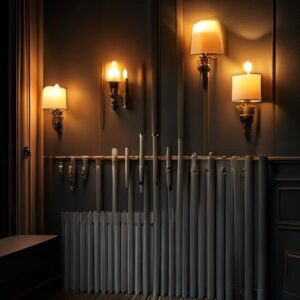
Aesthetic Considerations For Hydronic Radiators: Design & Integration
On this page 6 sections
You spent months picking out the perfect sofa, agonized over paint swatches, and found a rug that ties the whole room together. Then the heating contractor shows up with a bulky white radiator that looks like it belongs in a school hallway. That disconnect happens all the time. Hydronic radiators are incredibly efficient — they deliver steady, quiet heat using circulating hot water — but their appearance can wreck a carefully planned interior if you don’t think about aesthetics from the start.
This article walks you through the real choices that matter. You’ll learn how radiator placement, size, finish, and trim interact with room design. I will point out specific numbers and conditions that separate an okay installation from a seamless one. By the end, you will know exactly what to ask your architect, contractor, or supplier so your radiators contribute to the look of the space instead of fighting it.
Before we dive into the practical decisions, let me mention a resource that complements this topic well. If you work with custom or architectural fixtures, the book Aesthetic Consideration in Implants (LAP Lambert Academic Publishing, ASIN 6203463663) covers how material choice and surface treatment affect visual harmony in built environments — principles that translate directly to radiator selection. It is not a heating manual, but it will sharpen your eye for detail. You can check current price and availability on Amazon.
Placement Is the Single Biggest Design Decision

Where you put the radiator determines half of its visual impact. Typical convention puts radiators under windows. This works thermodynamically — cold air from the window gets warmed as it rises — but it also means every window in the room gets a metal box beneath it. That repetition can feel either rhythmic or monotonous.
Consider breaking the pattern. In a dining room, place a tall, narrow vertical radiator on an interior wall near the door. It draws the eye up and frees the window wall for a sideboard or curtains. I have seen this trick make a 12-by-14-foot room feel bigger because the ceiling reads higher. The trade-off: you may need slightly larger surface area on that vertical model to compensate for less convective airflow. Expect to oversize by about 15% compared to a window-wall unit.
For open-concept layouts, think about zones. A long horizontal panel under a bank of windows works well in a living area. In the adjacent kitchen, a towel-rail style radiator mounted on a short wall can define the breakfast nook without blocking cabinetry. The key is to treat each radiator as a deliberate piece of furniture, not a utility left over from the build.
Another option is in-floor or baseboard integration. If you are doing a renovation with access to the subfloor, you can recess a low-profile radiator into a shallow trench under a window, covered with a decorative grille. This hides the radiator almost completely. It costs more — figure at least 30% higher for the trench assembly and labor — but it is the cleanest look possible. Just remember that the grille must allow free airflow; solid metal or tight mesh cuts heat output by 20–40%.
Finish and Color: Beyond Plain White
Most people default to white because it is cheap and standard. But white on a radiator is rarely the pure white of your trim — it is often an off-white with a slight blue or yellow cast that clashes with warm paint colors. You can order radiators in almost any RAL color from many manufacturers. That means you can match the wall color, pick a contrasting accent, or even go matte black for a modern industrial look.
Here is a specific rule I use with clients: if the radiator is on a prominent wall, color-match it to the wall. If it is tucked into a corner or behind furniture, choose a neutral like anthracite or brushed stainless steel that blends with shadows. Anthracite (dark grey) has become popular because it hides dust and scuffs better than white and looks deliberate even when the heater is cold.
The finish texture matters too. Smooth gloss finishes highlight every fingerprint and dust speck. Satin or matte finishes are more forgiving in everyday rooms. Powder-coated finishes are durable and come in a wide range of textures. For high-humidity spaces like bathrooms, look for a radiator with a baked-on epoxy coating — it resists corrosion and cleans with a damp cloth. I have seen cheap painted radiators start flaking after two winters; a quality powder coat lasts ten years with zero maintenance.
If you want something truly special, consider brass, copper, or nickel finishes. These are available from custom shops and work as statement pieces. But they cost three to five times as much as a painted radiator. And they require gentle cleaning — no abrasive pads, no harsh chemicals.
Sizing and Proportion: Getting the Visual Weight Right
A radiator that is physically massive for the room looks clumsy, but one that is undersized looks like an afterthought. The balance depends on both heat output (measured in BTUs) and the radiator’s dimensions. For a typical 10-by-12-foot bedroom with standard 8-foot ceilings and good insulation, you need roughly 3,000 BTUs. That might be a single panel radiator 24 inches tall by 48 inches wide. That same heat requirement could also be met by a double-panel, double-convector model that is only 20 inches tall and 30 inches wide — but the shorter, deeper version feels more solid and substantial.
I advocate for proportion over pure thermal efficiency. A tall, thin radiator (e.g., 72 inches high by 12 inches wide) can act as a vertical accent in a room with high ceilings. It takes up almost no floorspace. But those tall units have less surface area per BTU than a low, wide one, so they run hotter. The surface temperature on a tall panel can reach 170°F, which is fine for adults but a burn risk for toddlers. If children are in the home, stick to low-surface-temperature (LST) models that stay under 110°F even at full output. These are often wider or have protective grilles.
| Radiator Type | Typical BTU Output (per foot length) | Surface Temperature | Best Room Context | Visual Weight |
|---|---|---|---|---|
| Single panel (type 11) | 1,200–1,600 | 150–170°F | Narrow wall, under window | Light, low-profile |
| Double panel (type 22) | 2,200–2,800 | 160–180°F | Large living room, open plan | Medium, solid |
| Vertical column (4–6 col) | 1,500–2,000 per 70-inch height | 170–190°F | High ceilings, hallways | Tall, slender accent |
| Low-surface-temp (LST) | 800–1,200 | Under 110°F | Bedrooms, playrooms, seniors | Wider, often with grille |
| Recessed trench | 1,000–1,500 per 3-foot section | 140–160°F at grille | Floor-to-ceiling windows, modern | Nearly invisible |
Notice the BTU ranges are per foot of length. For a real room, multiply by the number of feet of radiator you plan to install. Always have a heat-loss calculation done by a professional before you pick models. Guessing leads to either a freezing room or a radiator that dominates the space for no reason.
 Heating System Upgrade PlannerChoose between a heat pump, a furnace, a boiler or a hybrid with your own numbers, and hire the right installer.Every system compared side by side25 questions for contractors, red flagsRunning-cost, payback and quote calculator (Excel)
Integration with Trim, Furniture, and Windows
Radiators should not feel like foreign objects glued onto your walls. You can integrate them with baseboards, chair rails, window casings, and even shelving. One approach: run a continuous shelf over the top of a low radiator. The shelf breaks the vertical line and gives you a place for a plant or a picture frame. Make sure the shelf sits at least 2 inches above the radiator top and has a 1-inch gap at the back for airflow. Solid wood shelves absorb and radiate heat without discoloring — just use a heat-resistant finish.
Another trick involves pipework. Exposed pipes often look worse than the radiator itself. With a bit of planning, you can hide supply and return pipes inside the wall or behind a false panel. Those who have no choice but to run pipes externally can buy pipe covers that match the radiator finish. Chrome or brushed steel covers for vertical pipes cost about $20 per foot and transform a messy line into a design element.
Valves are another detail many overlook. Standard chrome or white thermostatic valves are functional but ugly. Upgrade to designer valves in oil-rubbed bronze, satin nickel, or a finish that matches your door hardware. A pair of good valves costs $50 to $120 — not much against the total project budget, but the visual payoff is huge.
For more ideas on how to handle the relationship between radiators and surrounding architecture, check out various design options for hydronic radiators. That page covers shapes, materials, and mounting styles you may not have considered.
Frequently Asked Questions
Can I paint my hydronic radiator any color I want?
Yes, but do it right. Remove the radiator, sand lightly, apply a metal primer, then use high-heat paint rated to 200°F (most standard paints yellow and peel). Spray cans give a more even finish than a brush. If the radiator is in use, paint when it is cold. Painting a hot radiator causes bubbles and uneven coverage. Better yet, order the radiator pre-finished in your color from the factory — that powder coat lasts longer than anything you can apply yourself.
Do radiators waste wall space that could hold furniture?
They can. But you can work around it. Place a radiator behind a sofa? Fine, as long as the sofa does not touch the radiator — leave at least 4 inches of air gap. Heat rises behind the furniture and circulates. That said, a sofa completely covering a radiator cuts heat output by half. If you need that wall for furniture, choose a low-profile model you can raise off the floor on brackets, then slide a low console table beneath it.
How do I hide radiator pipes without major construction?
Use decorative pipe covers that snap around the pipes. You can get them in plastic, painted metal, or chrome. For vertical runs, fabric pipe wrap is another option, though it does not look as clean. If you are already repainting the room, you can also run a small box built from MDF that houses the pipes and matches the baseboard profile. This takes a few hours of carpentry but costs under $50 in materials.
Are cast-iron radiators better for looks or for heat?
Cast iron holds heat longer than steel, so it keeps radiating after the boiler shuts off. For looks, cast iron has a classic appeal — it works in Victorian, farmhouse, and industrial spaces. But it is heavy (50+ pounds per section) and slow to heat up. Modern steel radiators respond faster and take up less space. I recommend cast iron only if you have the floor strength and the right period style. Thermal efficiency is about the same per BTU.
Should I match my radiator color to the wall or the trim?
Match to the wall if the radiator is on a flat, prominent wall. This makes the radiator visually recede. Match to the trim if the radiator sits below a window with thick casings — then it reads as an extension of the window frame. A third option is to choose a contrasting color for a deliberate accent, like a dark blue radiator against a light grey wall. This works best when the rest of the room has at least one other dark accent (picture frames, lamp base).
What to Do With This Information
- Don’t let the HVAC contractor decide placement alone. Visit the room with the radiator dimensions taped on the floor and see how the block feels.
- Always order a RAL color sample chip alongside your paint chips. Compare them under natural and artificial light before ordering.
- Budget for designer valves and pipe covers — they cost little but change the whole impression.
- Measure your furniture layout before finalizing radiator size. A radiator that fits only behind a door is a mistake.
- If you have young children or elderly residents, insist on low-surface-temperature models. The safety gain is worth the price premium.
- Read reinventing heater design for a modern aesthetic for examples of how architects integrated radiators into minimalist interiors.
- Finally, treat the radiator like a piece of furniture you will live with for decades. That mindset changes every decision, from finish to placement to valve style.