Energy Efficient Oil Filled Radiators That Really Save
On this page 7 sections
Getting radiator efficiency wrong costs you twice: you overpay for energy every month and still have rooms that never quite warm up. Swapping to a flashy new heater without fixing the system behind it can lock you into high bills for years.
Here you’ll see how central heating radiators, oil filled radiators and other electric heaters really use power, what they cost to run, and when a boiler or heat pump change saves more than another 1,500 watt plug-in.
Energy Efficient Central Heating Radiators
Energy efficient central heating radiators are larger, high‑output emitters that let your boiler or heat pump run with lower water temperatures while keeping rooms at the same comfort level. For central energy efficient heating radiators, real energy efficient heating and truly energy efficient home heating come from the whole chain working together: heat source, pipes, radiators and controls.
In a hydronic system the boiler or heat pump makes hot water, the pipes move that water, and the radiator is just the part that passes heat into the room. Water gives up heat to the metal by conduction, the hot metal warms air that rises off it by convection, and some heat leaves as radiation to nearby walls, furniture and your skin.
For a given room heat load, an efficient radiator is one with lots of surface area so it can do the job at a lower water temperature. A single flat panel has limited surface, a double panel with convector fins in between has much more, and a chunky column radiator presents a lot of metal to the room air even if its footprint is similar.
Lower flow temperatures are the big win. Many older systems were sized for 170–180°F water, but a generous high‑output or low‑temperature radiator might deliver the same room heat at 130–140°F. At those cooler temperatures, a condensing gas boiler can keep its return water cool enough to condense more often and squeeze extra heat from the flue gases, and a heat pump can run at a higher coefficient of performance instead of straining to push out very hot water.
Correct sizing makes that possible. If a radiator is too small for the room, the only way to keep it warm on a cold night is to crank up the water temperature, which drives short, hard boiler cycles and higher fuel use. A right‑sized emitter in each room lets the system run longer, gentler cycles at lower flow temperatures, which is exactly what high‑efficiency boilers and heat pumps are designed for.
Different radiator types trade looks against surface area and output. Single panel radiators are slim but need hotter water. Double panel radiators with convector fins push more heat for the same size and work better with moderate temperatures. Column radiators suit tall rooms and can give decent output at middling temperatures. Purpose‑designed low‑temperature radiators add even more fins or built‑in air paths so they can run comfortably with the cooler water that modern boilers and heat pumps prefer.
Room‑by‑room control finishes the picture. Thermostatic radiator valves and smart thermostats let you zone the house so spare bedrooms and hallways are cooler, while living areas hit their setpoints, instead of one thermostat in the hallway driving every radiator the same way; central heating radiator temperature control options explained goes into those control choices in more detail.
| Emitter type | Typical flow temperature on a very cold day | Effect on system efficiency |
|---|---|---|
| Standard panel radiator | 160–180°F | Higher water temperature limits condensing boiler operation and lowers heat pump COP |
| High‑output panel radiator | 140–150°F | Moderate temperatures give better condensing and easier heat pump operation |
| Underfloor heating | 90–110°F | Very low temperatures let condensing boilers and heat pumps run at their highest practical efficiency |
Energy Efficient Oil Filled Radiators

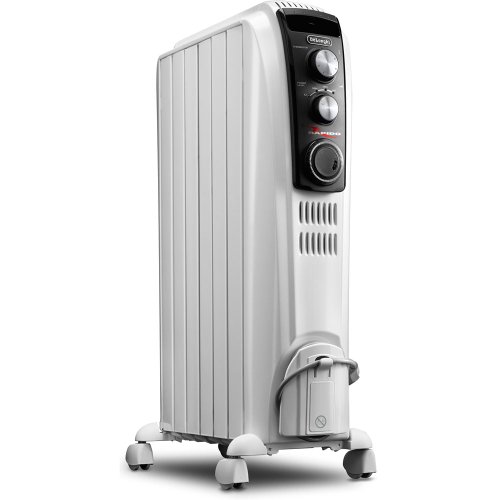
Energy efficient oil filled radiators turn nearly all the electricity they draw into room heat, so as far as electric radiators go they are as efficient at the plug as any other 1,500 watt space heater. The difference is in how they deliver that heat, which is why people keep asking how energy efficient are oil filled radiators, are oil heaters energy efficient, and whether energy efficient oil radiators really cut bills.
An oil filled radiator has an electric element inside a sealed body of thermal oil; the element heats the oil, the oil spreads warmth through the metal, and the fins warm the room by convection and gentle radiation. There is no fan, so warm air rises naturally off the hot surfaces while nearby objects and people pick up radiant heat from the panels.
As electric resistance heaters, oil filled radiators are effectively 100 percent efficient at the plug: every watt drawn from the outlet becomes heat in the room. A 1,500 W unit is 1.5 kW; over 8 hours that is 1.5 × 8 = 12 kWh per day, and the cost block below runs that at a sample electricity rate of 0.17 dollars per kWh so you can compare with your own bill.
| Heater | Watts | Per hour | Per day (8 h) | Per month (30 days) |
|---|---|---|---|---|
| 1,500 W oil filled radiator | 1,500 W | 26¢ | $2.04 | $61.20 |
Against a central gas system, that same heat is usually more expensive per unit from a plug‑in oil heater than from a high‑efficiency boiler, because in many US areas natural gas is still cheaper per unit of heat than grid electricity. The oil filled radiator can still win on total monthly cost if you only heat one bedroom or office and turn the main thermostat down for the rest of the house.
Where oil filled heaters feel more energy efficient in practice is their comfort. The thermal mass of the oil smooths thermostat cycling so you do not get that pattern of scorching air followed by chills, and the metal body stays warm and keeps giving off heat for a while after the power cuts. They are silent, move no dust or pollen, and tend to dry the air less than a small fan heater blasting in one spot.
Those traits make them well suited to keeping a bedroom, nursery, home office or occasionally used guest room comfortable without cranking up the whole‑house system. If you want a quiet, oil filled heater with a lot of panel area plus ECO and timer modes so you are not micromanaging the dial every night, a larger finned model is helpful.
Ceramic And Radiant Electric Heaters
Electric room heaters are all very energy efficient at the outlet; the real difference between ceramic, fan and radiant models is how they deliver that heat to you and how much power they draw while doing it. So yes, ceramic heaters are energy efficient, and so are radiant/infrared heaters, because every plug-in resistance heater turns almost 100% of the electricity it draws into heat somewhere in the room. A 1,500 W ceramic, oil-filled or basic wire-element heater all convert 1,500 W of electrical power into about 1,500 W of heat; what changes is speed, comfort and how much of the room you try to warm.
Ceramic heaters still rely on simple resistance heating; the ceramic plate is just a tough, high-temperature element that spreads the heat out. You don’t get “extra” heat for the same watts compared with other electric radiators, so claims of the most energy efficient electric heaters are really about control features and where the heat goes, not magic efficiency. As long as it plugs into a standard 120 V outlet, figure on roughly 100% conversion of electricity to heat for any electric room heater.
Fan-forced ceramic heaters trade stored heat for speed. The fan pushes air across the hot ceramic, so a chilly 120 sq ft bedroom can feel warmer within minutes, but as soon as you switch it off the room cools quickly because there’s almost no thermal mass. Oil-filled radiators do the opposite: they’re slower to warm up, but the hot oil and metal body store energy, so they keep releasing heat for 30–60 minutes after the thermostat clicks off with the same 1,500 W rating.
Radiant and infrared heaters work differently again: they send out infrared waves that warm the surfaces and people they “see” directly, instead of mainly heating the air. Sit in front of a radiant panel in a drafty home office and you’ll feel toasty on the side facing the heater even if the room thermostat still reads 62°F. That targeted effect is why radiant heaters can feel more efficient for one person in a cold corner, even though the electricity-to-heat efficiency is the same as any other plug-in.
So which electric room heater is really most efficient for you? The best energy efficient electric heater is the one that keeps you comfortable with the lowest wattage and fewest hours: often a small radiant panel under a desk, sometimes an oil-filled radiator ticking along on a low setting, sometimes a ceramic fan heater that runs briefly then shuts off on its thermostat. For picking specific models that do this well, most energy-efficient electric heaters is where to go next.
Eco or energy-saver modes on ceramic and radiant heaters usually work by lowering the wattage (for example from 1,500 W down to 900 W) or by using a thermostat to cycle off sooner once the room or nearby air hits a set point. The benefit is reduced power draw or runtime, not some higher physical efficiency; 900 W on “eco” is simply less heat and less electricity than 1,500 W on “high.”
Solar space heaters get a lot of attention, but for most homes the bigger savings come from rooftop solar panels offsetting the electricity your existing heat pump or electric heaters use rather than trying to heat a room with a small standalone solar air box. If you’re curious about solar and plug-in heaters together, start by looking at an efficient heater you’d use anyway, then consider how a solar energy efficient space heater or PV system might supplement it instead of replacing main heating.
 Winter Heating Bill CutterSee what every heater in your home really costs, heat the rooms you use, and cut the waste in 30 days.Cost-per-hour tables for every heaterThermostat schedule and draft-proofing planRunning-cost and bill calculator (Excel)
Most Energy Efficient Home Heating Systems
Modern heat pumps are usually the most energy efficient home heating systems, with geothermal units leading and good air‑source heat pumps close behind when they’re sized and installed properly. If you’re asking about the best energy efficient heating systems or an energy efficient HVAC system, that’s the front of the pack, with gas boilers, gas furnaces, electric resistance and wood or pellet stoves fitting in based on fuel prices and the house itself.
Heat pumps save energy because they move heat instead of creating it, which is why energy efficient HVAC and heat pumps get so much attention in modern builds. An air‑source heat pump typically delivers about 2–3 units of heat for each unit of electricity it uses (a seasonal COP around 2–3), so 1 kWh in becomes roughly 2–3 kWh of heat out. Electric baseboard or a portable heater turns 1 kWh of electricity into 1 kWh of heat (COP 1), so for the same comfort they usually cost about two to three times as much to run as a good heat pump on the same power rate.
Geothermal, or ground‑source, heat pumps go a step further by using buried loops or wells where temperatures stay steadier through winter. That lets them run with seasonal COPs around 3 or more, meaning each kWh of electricity can give you roughly 3+ kWh of heat, which is about as efficient as common residential systems get. The trade‑off is upfront cost and disruption: you need space for ground loops or drilling and a bigger installation budget, so they make the most sense if you’re in a forever home or doing major work anyway.
Gas boilers with radiators and gas furnaces with ducts don’t match heat pumps on paper efficiency, but they can still deliver affordable, reliable heat where gas is cheap. Modern condensing models are rated in the 90%+ AFUE range, while older non‑condensing units hover around 80% AFUE, so 90% AFUE means about 0.9 units of heat out for 1 unit of gas energy in. Real‑world performance depends heavily on details: a condensing boiler only hits its best numbers when the return water is cool enough to condense flue gases, which usually means lower‑temperature radiators or underfloor heating, and any furnace loses efficiency if ducts leak into attics or crawlspaces.
Electric resistance systems—baseboards, ceiling cable and portable heaters—are technically 100% efficient at the point of use, because every watt in becomes heat. They still end up as one of the most expensive ways to do whole‑house, energy‑efficient home heating in areas where electricity is pricey compared with gas, because their effective COP is only 1. In many houses they make the most sense as backup or for a room you only heat occasionally, not as the main energy efficient HVAC system.
Pairing a heat pump with low‑temperature radiators or underfloor heating is one of the best ways to push system efficiency higher. Oversized, well‑placed hydronic radiators or floor loops can keep rooms comfortable with water closer to 100–120°F instead of the 160–180°F temperatures old boilers used, which lets an air‑source or geothermal heat pump run at a higher COP and cuts your bills. If you’re choosing from scratch, our most energy efficient central heating system article walks through how to match that kind of setup to your house and climate.
| System type | Typical efficiency metric | Heat from 1 unit of input | Best use cases |
|---|---|---|---|
| Air‑source heat pump | Seasonal COP ~2–3 | About 2–3 kWh of heat per 1 kWh of electricity | Most existing homes with decent insulation and ductwork or radiators; also provides efficient cooling |
| Geothermal heat pump | Seasonal COP ~3+ | Roughly 3+ kWh of heat per 1 kWh of electricity | New builds or major retrofits where you can install ground loops or wells and plan to stay long term |
| Gas boiler + radiators | AFUE ~80–95% | About 0.8–0.95 units of heat per 1 unit of gas energy | Homes with hydronic radiators or underfloor heating, especially in colder climates with cheap natural gas |
| Gas furnace + ducts | AFUE ~80–96% | About 0.8–0.96 units of heat per 1 unit of gas energy | Ducted homes needing whole‑house heat quickly; very common in tract housing and retrofits |
| Electric resistance baseboards/portable heaters | COP 1.0 (100% at point of use) | 1 kWh of heat per 1 kWh of electricity | Backup or spot heating of single rooms; full‑time whole‑house only where electricity is cheap and gas isn’t available |
| Wood or pellet stove | Combustion efficiency often ~60–80% | About 0.6–0.8 units of heat per 1 unit of wood energy | Homes with access to affordable fuel and a suitable chimney or vent, often as a main room or backup heater |
Making Existing Radiators And HVAC More Efficient
Small tweaks to your existing radiators and HVAC can give you some of the best energy efficient home heating gains before you spend money on new equipment.
If your goal is energy efficient old homes, start with bleeding and balancing radiators, sealing drafts and fixing controls so the heat you already pay for stays in the rooms you use. Those fixes are usually cheaper and faster than replacing the boiler. For HVAC energy efficiency, most savings come from moving heat and air sensibly, through better zoning, improved ductwork or pump control, rather than buying a bigger furnace or boiler. On multiple-choice HVAC questions the usual correct answer is installing variable frequency drives (VFDs) on large fans or pumps, because slowing a motor with a VFD cuts electrical use far more than increasing fan speeds.
Hydronic radiators that are hot at the bottom but cold at the top usually have air trapped in them, which you fix by bleeding. Turn the system off, put a towel under the bleed valve, open it with a key until hissing air turns to a steady trickle of water, then close it. Work radiator by radiator, and top up boiler pressure afterward if the gauge has dropped out of its normal band. While you are there, check each handwheel or thermostatic radiator valve is fully open in rooms you actually want heated.
Radiators that stay cool at the bottom while the top is hot point to sludge limiting flow. If several units behave like this, or the water you bleed out is very dark, a heating technician can flush the system so the boiler is not pushing water through a clogged loop all winter.
Balancing means slightly throttling the lockshield valves on radiators near the boiler so distant radiators get their fair share of hot water. Start with all radiators bled and hot, then close the lockshield on the warmest, nearest unit by a quarter-turn, wait ten minutes and feel again; repeat until temperatures around the house feel similar. Once rooms heat evenly, you can usually nudge the main thermostat down a degree or so and keep the same comfort, because you no longer overheat the hallway just to get the far bedroom warm. A guide on proven ways to optimize hydronic radiator efficiency walks through balancing and flow in more depth.
Control upgrades are often the cheapest fuel saver. Thermostatic radiator valves let each room settle at its own temperature instead of forcing one setting for the whole loop, so bedrooms can cruise at roughly 63–66°F while the living room sits warmer. A properly programmed thermostat or smart stat trims heat during work and overnight hours without you thinking about it; dropping from 70°F to 66°F for eight hours a day can shave a noticeable slice off your bill across a month. Zoning larger homes with separate thermostats for upstairs and downstairs keeps you from reheating unused space.
Lowering boiler flow temperature on a condensing boiler improves efficiency because cooler return water lets the heat exchanger condense more of the flue gases into usable heat. If your radiators are generously sized, you can often turn the flow temperature down from a high setting toward the 130–150°F range and still stay comfortable, accepting that rooms will take longer to warm from cold. Undersized radiators may need upgrading before you can run truly low temperatures on the coldest days.
Building-shell fixes make every radiator or register feel bigger. Seal obvious drafts around windows and doors with weatherstripping and caulk, close unused chimneys with proper dampers, and add attic or basement insulation where access is easy. On external walls, reflective foil behind a radiator can bounce more heat back into the room instead of straight into brick or concrete; leave an air gap so the foil can do its job.
Ducted systems gain efficiency from tight, insulated ductwork and clean filters. Have joints in accessible ducts sealed with mastic (not ordinary fabric tape) and add insulation to runs in an unheated loft or crawlspace so you are not dumping warm air into voids. Regular filter changes keep airflow where the blower expects it, which avoids wasting electricity and protects the heat exchanger. On larger systems with big blower motors or circulation pumps, installing variable frequency drives so fans can slow under light load is usually far more effective for hvac energy efficiency than trying to run the same fan harder all the time.
Supplemental heaters make sense when one space legitimately needs to be warmer than the rest, like a home office that has you sitting still for hours. Running a 1,500 W electric heater for eight hours uses 1.5 kW × 8 = 12 kWh, so if you only do that in one room while keeping the central system a few degrees lower, you can often come out ahead. If you find you need several plug-in heaters running most of the day just to stay comfortable, that usually signals an undersized or badly balanced central system that deserves a technician’s attention.
Radiator And Heater Efficiency Checklist
Before you assume your heating system is not energy efficient, run this quick checklist and fix the cheap problems first.
The list helps you decide whether tuning what you have, adding a targeted energy efficient electric heater, or planning a new setup gives you the best route toward genuinely energy efficient home heating systems.