


Oylus Infrared Space Heater 1500W Wood Cabinet
Most space heaters either make noise or risk fire hazards overnight, but the Oylus Infrared Space Heater balances quiet operation with robust safety. It uses infrared heat to warm rooms up to 150 sq ft efficiently, with smart ECO mode for energy savings.
Leaving a heater on all night can cost you money or peace of mind if you skip safety checks. This model’s precise controls and protections help avoid those risks.
What the Spec Sheet Says
| Power levels | 1500W high, 750W low, ECO smart mode |
|---|---|
| Temperature range | 59°F–86°F adjustable |
| Noise level | 35 dB |
| Timer | 12-hour auto shut-off |
| Safety features | Overheat protection, tip-over shut-off, fan cool down |
| Control | Remote and panel with °C/°F switch |
Noise Levels That Are Quiet Enough for Sleep
Heaters that run quietly enough not to wake you are essential for overnight use. Silent operation usually means noise below 40 decibels (dBA), which is about the sound level of a quiet library or a soft whisper.
The quietest heaters are fanless models, like oil-filled radiators or infrared heaters, because they don’t have moving parts that generate noise. Fan heaters typically start around 45 dBA and can go up to 56 dBA, which may disrupt sleep for light sleepers.
Typical space heaters range from 20 dBA to 56 dBA in noise output, with an average of about 47 dBA. Sounds above 45 dBA are generally noticeable and can interfere with deep sleep cycles, especially in bedrooms with otherwise low background noise.
The Oylus Infrared Space Heater operates at approximately 35 dBA, which puts it well below most fan heaters and close to the whisper-quiet zone. That level is low enough to avoid disturbing sleep, even for noise-sensitive individuals.
Heaters that are 100% silent have no fans or motors and rely solely on radiant or convective heat transfer. Infrared heaters fit this bill, making them ideal for bedrooms where silence is paramount.
In practice, 35 dBA means you might hear a faint hum or the softest airflow, but it won’t compete with normal bedroom sounds like breathing or a ticking clock. This makes the Oylus an excellent choice for all-night heating without noise distractions.
If you want a truly silent heater, look for fanless infrared or oil-filled radiator models with verified noise ratings under 40 dBA. Avoid fan heaters for overnight use if noise is a concern. These quieter models also tend to run more efficiently and safely overnight.
Some heaters add smart temperature control and automatic shutoffs to keep the noise low by cycling power only when needed, which further reduces disturbances during sleep.
To compare, a typical conversation is about 60 dBA, a refrigerator hum is around 40 dBA, and a quiet bedroom baseline is about 30 dBA. So 35 dBA from a fanless heater blends easily into a normal sleeping environment.
Choosing a heater with a noise level near 35 dBA means you get warmth without waking up to a noisy fan. That’s why the Oylus Infrared Space Heater’s silent operation is a practical and comforting feature for overnight use.
For a quiet bedroom heater, prioritize fanless infrared models and check their published noise ratings. The goal is to keep noise below the 40 dBA threshold to support uninterrupted sleep.
If you already have a fan heater and want silence, consider moving to a fanless model or using supplemental heat sources like heated blankets, which use far less power and produce no sound.
For more on quiet heaters designed for restful sleep, see our guide to Sleep Soundly with a Quiet Pet-Safe Electric Heater.
Safety Features That Keep You Protected Overnight
Leaving a space heater on all night is safe only when your heater has built-in safety mechanisms and you follow proper use guidelines.
Look first for tip-over shutoff and overheat protection, which are now standard on modern space heaters. The tip-over sensor cuts power instantly if the unit falls, preventing fires. Overheat protection monitors the heater’s temperature and shuts it down if it gets too hot, stopping damage before it starts.
Many heaters include a post-shutdown cooling fan that runs after the unit powers off. This feature spreads residual heat evenly and cools internal parts, lowering the risk of overheating or fire after use.
Electric heaters like infrared or oil-filled radiators pose no carbon monoxide risk because they don’t burn fuel. Carbon monoxide poisoning is a danger only with fuel-burning heaters—propane, kerosene, or gas models—that require ventilation and carbon monoxide alarms.
Place your heater with at least three feet of clearance around it, away from curtains, bedding, furniture, or anything flammable. This 3-foot clearance rule is crucial. Even the best safety features can’t stop a fire if the heater is too close to combustible materials.
Never plug a space heater into an extension cord or power strip. These can overheat and cause electrical fires because heaters draw high current—up to about 12.5 amps for a 1,500-watt model on a 120-volt circuit. A dedicated wall outlet with a 15- or 20-amp breaker is safest.
Electric heaters do not consume oxygen, so they don’t cause oxygen deprivation indoors. That risk belongs only to fuel-burning heaters, which also produce carbon monoxide. This makes electric infrared or oil-filled heaters better choices for bedrooms where you’ll sleep all night.
The best safety features for overnight heaters combine automatic shutoffs, tip-over protection, overheat sensors, and thermal cutoff switches. UL or ETL certification confirms these safety features have been tested to national standards.
Proper use is equally important. Position your heater on a stable, flat surface, don’t block air intake or exhaust vents, and avoid covering the heater. Use programmable thermostats or built-in timers to avoid running the heater unnecessarily.
Overnight Efficiency and What It Means for Your Bill
Running an infrared space heater overnight uses a measurable amount of electricity, but efficiency depends heavily on the power setting you choose. Most models offer settings like 750 watts, 1500 watts, and an ECO mode designed to reduce energy waste by cycling the heater on and off to maintain temperature.
Say you run the heater at 1500 W for 8 hours straight. The total energy consumed is 1,500 watts × 8 hours = 12,000 watt-hours or 12 kWh. At a typical US electricity rate of 17 cents per kWh, that’s about $2.04 for the night. Dropping to 750 W halves the consumption to 6 kWh and roughly $1.02 per night.
ECO mode cuts costs further by running the heater only when needed to maintain a set temperature. Instead of constant full power, the heater cycles, which can reduce consumption by 20–30%. For example, if ECO mode cuts your 12 kWh load by 25%, your night’s use falls to 9 kWh, costing about $1.53.
Electric blankets and heated mattress pads typically use between 50 and 200 watts. Running a 100 W blanket for 8 hours consumes 0.8 kWh, costing about 14 cents per night—significantly less than a space heater. However, electric blankets warm only the bed area, not the whole room, which can affect comfort if the ambient air is cold.
For bedrooms up to about 150 square feet, a 1500 W infrared heater is usually sufficient. Infrared models heat objects and people directly, so you often feel warm at a lower air temperature, allowing you to set the thermostat lower and save energy. Oversized heaters waste electricity by producing excess heat and cycling off frequently, while undersized units may run constantly, driving up your bill.
Electric heaters, including infrared models, don’t consume oxygen or produce carbon monoxide, so they don’t pose risks associated with fuel-burning heaters. Electric blankets share that safety advantage but require careful use to avoid overheating—follow manufacturer instructions and never use damaged or folded blankets.
Why Infrared Heat Is Better for Bedroom Comfort
Infrared heaters are among the few types of space heaters that run completely silent because they use quartz heating elements without fans or moving parts. This makes them ideal for overnight use where any noise can disrupt sleep.
You won’t find many heaters that combine silence, safety, and efficiency better than a well-designed infrared model. Unlike fan heaters or ceramic heaters that rely on blowing air, infrared heat warms objects and people directly, not just the air around them.
Because it targets solid surfaces instead of heating air, infrared heat doesn’t dry out your bedroom’s air or create that stuffy feeling common with forced air systems. This can improve overnight comfort significantly, especially if you’re sensitive to dry skin or nasal irritation.
The heater’s wood cabinet common in infrared models helps spread heat evenly. Wood soaks up some warmth and releases it gradually, reducing temperature swings and making the room feel warm without hot spots or cold drafts.
Infrared heaters typically max out at 1,500 watts, which fits most bedroom sizes up to about 150 square feet. Beyond that, the heater may struggle to maintain comfortable temperatures without running constantly at full power, which defeats efficiency and quietness.
Quartz heating elements used in infrared heaters heat up quickly and maintain steady warmth with minimal energy waste. Without a fan, they avoid the background hum or buzzing that ceramic or fan heaters often produce, making a noticeable difference for light sleepers.
How To Place and Control Your Heater Safely and Conveniently
Place your infrared heater on a hard, level floor at least 3 feet away from anything flammable to minimize fire risk. Avoid carpets or uneven surfaces that could tip the unit.
Noise levels around 35 dBA or lower are ideal for sleeping environments; infrared heaters meet this with near-silent operation, so you won’t be disturbed.
Currently, infrared heaters like the Oylus model don’t support Wi-Fi or smart home thermostat integration. Use the built-in controls instead for precise temperature management.
Avoid plugging your heater into extension cords or power strips. These can overheat or fail under the heater’s 12.5-amp draw, posing a serious fire hazard.
Use the heater’s timer or remote control to prevent continuous all-night operation. Set it to run only when needed, reducing energy consumption and safety risk.
Engage the child lock and temperature lock features to keep settings steady and prevent accidental changes, especially in households with kids or pets.
Start using ECO mode from the beginning. It adjusts power to maintain comfort while lowering electricity use, which cuts operating costs on long winter nights.
Sleep Soundly with a Silent, Safe Infrared Heater

Dreo Tower Fan & Space Heater Combo
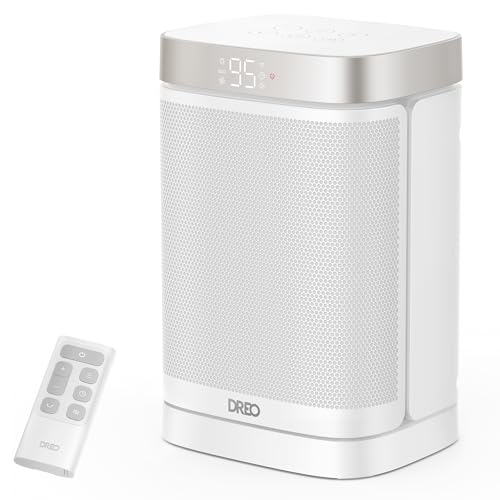
Dreo Atom One 1500W Ceramic Heater with Remote
More Questions, Answered
Is it safe to leave an electric space heater on all night in a bedroom?
What noise level should a heater have to avoid disturbing sleep?
Do electric space heaters pose a risk of carbon monoxide poisoning?
Can I use an extension cord with my space heater safely?
How do electric blankets compare to space heaters for overnight warmth?

I am a mechanical engineer and love doing research on different home and outdoor heating options. When I am not working, I love spending time with my family and friends. I also enjoy blogging about my findings and helping others to find the best heating options for their needs.
Related guides
Comdomus Space Heater Review: Budget Performance Check
Ever feel a chill your central heat ignores? The right Comdomus space heater banishes cold spots for good.
Mastering Efficient Electric Heaters for Large Outdoor Spaces
Struggling with efficient electric heater for large open patio or backyard events? See how AKIRES 37IN Outdoor Electric…
Why Quiet Mini Tank Water Heaters Are the Bathroom Vanity Upgrade You Didn’t Know You Needed
Say goodbye to cold water waits! The Electrolux 2026 Mini Tank Water Heater delivers instant hot water for…
