Patton Space Heater Review: 1,300W and 1,500W Use
On this page 9 sections

TEMPWARE Milkhouse Space Heater 1300W/1500W
Patton usually means a tough, metal utility heater in the milkhouse style, and that’s the right frame for this review. The TEMPWARE model under review is built for fast, directed heat, with fan-only, 1,300W, and 1,500W settings plus an anti-freeze mode.
The useful question is simple: does that feature set match your room and your risk tolerance? For a garage or workshop, yes. For a bedroom, nursery, or large open basement, you’ll want something quieter, gentler, or larger.
What the Spec Sheet Says
| Power levels | Fan-only, 1300W, 1500W |
|---|---|
| Material | Metal |
| Certification | ETL |
| Heating speed | 3 seconds |
| Safety | Overheat protection |
| Portability | Carry handle |
What The TEMPWARE Does Well
The TEMPWARE is a milkhouse-style utility heater designed for quick, local heat rather than decorative or whole-room warmth. It offers 1,300W and 1,500W heat settings plus a fan-only mode, providing simple but effective control over output. Its metal body and carry handle make it tough and portable enough for garages, workshops, and utility rooms where durability matters more than looks.
This heater is ETL listed and includes built-in overheat protection, meeting basic safety standards that you want in any plug-in heater. Those features are essential for a heater you might move around or use in potentially dusty, less-finished spaces.
Because it’s compact with a metal case and carry handle, the TEMPWARE fits the bill if you want a portable space heater under $50 or a compact under desk space heater that’s safe and practical. It’s also among the best small space heaters for garages and utility rooms, especially if safety features like ETL listing and overheat protection are a priority.
Where The Limits Show Up

The TEMPWARE’s fan noise, hard metal case, and straightforward controls are typical trade-offs for a utility heater built to work hard rather than blend in. Expect some hum and clicks from the mechanical thermostat, which can be noticeable if you use it in a quiet bedroom or office.
It’s not a good choice for sleeping, unattended use unless the manual says so, or any space where quiet is a must. The bright indicator light and thermostat clicks can be minor annoyances in very quiet rooms, so it’s best kept in garages or workshops.
The anti-freeze mode is designed to prevent freezing pipes or equipment, not to create comfortable warmth. It keeps the temperature just above freezing, so don’t expect it to heat a room for living purposes.
If you’re wondering why space heaters are dangerous or how long they can stay on, the answer depends on the model’s safety features and your vigilance. The TEMPWARE’s built-in protections mean you can run it for hours safely, but never leave any heater unattended overnight or when you leave the house unless the manual explicitly says it’s allowed.
 Winter Heating Bill CutterSee what every heater in your home really costs, heat the rooms you use, and cut the waste in 30 days.Cost-per-hour tables for every heaterThermostat schedule and draft-proofing planRunning-cost and bill calculator (Excel)
What It Costs To Run
A space heater like the TEMPWARE uses between 1,300 and 1,500 watts depending on the setting. That’s typical for plug-in electric space heaters, which usually top out around 1,500 watts—roughly 12.5 amps on a standard 120 V circuit. So yes, they use a fair chunk of electricity, but not more than you expect for the heat they deliver.
Calculating the cost is straightforward: take the wattage, divide by 1,000 to get kilowatts, then multiply by how many hours you run it and the electricity rate per kilowatt-hour. For example, at 1,500 watts running 8 hours a day with electricity costing 17 cents per kWh, that’s 1.5 × 8 × 0.17. The cost block below does the math for both 1,300 W and 1,500 W settings over a 30-day month.
| Heater | Watts | Per hour | Per day (8 h) | Per month (30 days) |
|---|---|---|---|---|
| 1,300 W setting | 1,300 W | 22¢ | $1.77 | $53.04 |
| 1,500 W setting | 1,500 W | 26¢ | $2.04 | $61.20 |
If you only use the heater occasionally, say a couple of hours on chilly mornings in a garage, your monthly cost will be proportionally lower. But if it runs daily to keep a drafty space from freezing, the electricity use adds up. The built-in thermostat helps by cycling the heater on and off to maintain temperature. However, if your garage or workshop leaks heat badly, the heater runs more often, so your costs rise accordingly.
A thermostat that shuts the heater off when the set temperature is reached can lower your electricity bill. Without that, the heater runs continuously at full power, which can be costly. Also consider that the TEMPWARE includes an automatic shutoff if tipped over or overheated, a feature important for safety but not directly affecting running cost.
The Safety Features That Matter
Overheat protection is critical in a heater like the TEMPWARE. If airflow is blocked or the internal temperature climbs beyond safe limits, this feature shuts the heater off automatically to prevent damage or fire risk. It’s the fail-safe that keeps the heater from getting dangerously hot if something goes wrong.
The fan-only mode is handy for circulating air without heat, especially when you just want some airflow in a stuffy garage. Don’t expect it to substitute for a dedicated summer fan, though—the airflow is limited and the design prioritizes heating.
Safe setup means plugging the heater straight into a wall outlet. Never use extension cords or power strips; they can overheat under the heater’s load. Keep at least 3 feet of clearance on all sides to avoid anything combustible touching the hot metal case.
How It Compares With The Alternatives
The TEMPWARE stands out as one of the best electric space heaters specifically for quick heat in garages or workshops, but it’s not the only option in the milkhouse-style category. The BEYOND HEAT 1500W Milkhouse Space Heater offers a very similar setup with 1,500 watts and an adjustable thermostat. It adds tip-over protection, which the TEMPWARE doesn’t list explicitly, making BEYOND HEAT a safer pick if you’re worried about accidental knocks around active work areas.
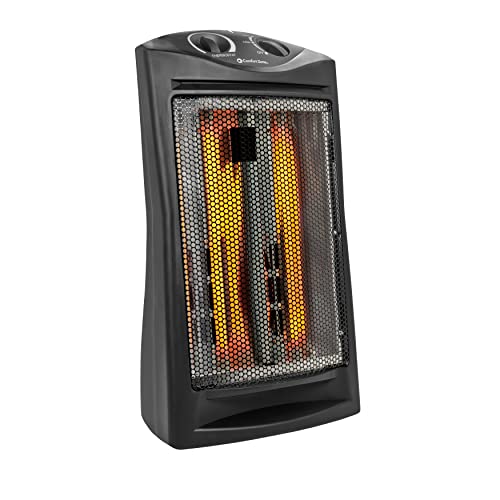
For smaller, personal zones like a desk nook or bedside area, a Comfort Zone space heater with radiant heat is usually a better budget portable space heater. It delivers warmth directly to skin and objects without moving much air, which cuts down noise and drafts. The TEMPWARE’s fan will run continuously on heat settings, which some find intrusive in quiet rooms.
Oil-filled space heaters offer a different experience. Their large metal fins hold heat and radiate it slowly and quietly, making them ideal for bedrooms or living rooms where steady, gentle warmth is preferred. They use similar wattage but don’t blast air or cycle the fan. The TEMPWARE excels at quick bursts of warmth in uninsulated or drafty areas, like a garage, but it won’t keep a bedroom cozy overnight as well as an oil-filled radiator.
Battery-powered, solar-powered, or other non-electric indoor space heaters don’t realistically replace utility plug-in heaters like the TEMPWARE. Their output tends to be far lower, and they can’t sustain heat for the size or duration needed in garages or workshops.
Choose a milkhouse-style heater like the TEMPWARE or BEYOND HEAT if your priority is fast, targeted heat in a rough space where you won’t mind some fan noise and a hard metal case. Pick an oil-filled radiator instead if you want slow, quiet, whole-room warmth in bedrooms or living spaces where noise and air movement matter more.
Where The Patton Search Usually Ends Up
A space heater’s job is to warm the air in a room or a specific zone; it won’t fix insulation gaps, condensation, or structural issues that cause cold spots or dampness. If you’re considering a roof integrity space heater or crawl space heater, make sure the area meets clearance and electrical supply requirements. These spaces often need specialized equipment beyond a simple plug-in unit.
This electric model doesn’t connect to a gas line, so questions about gas lines for space heaters don’t apply here. No venting or fuel piping is involved, which simplifies installation but limits fuel options.
Patton-style Milkhouse Heaters Reviewed

BEYOND HEAT Milkhouse Space Heater 1500W