The most common cause is a draft or burner problem, and the first thing to check is whether smoke, soot, or oil smell is coming from the flue, burner area, or chimney while the furnace is off. Shut the system down if you see active smoke, then look for a blocked flue, a dirty burner, or a delayed ignition that is still cooking residue after the burner stops.
Smoke from an oil furnace is a warning sign, not a normal quirk. Even a light haze can mean incomplete combustion, poor draft, or a flue path that is spilling soot instead of carrying it outside.
A useful number here is the 3-foot clearance rule around the unit and vent path for anything stored nearby. Boxes, paint cans, rags, and dust can all make a bad draft worse, and a blocked vent can turn a nuisance into a carbon monoxide problem.
The essentials
If you see active smoke, shut the furnace down and ventilate the area before you inspect anything.
Check the flue pipe, chimney cap, and burner area first; those are the usual places smoke starts.
A dirty nozzle, clogged filter, or weak draft can make an oil burner smoke after shutdown or during startup.
If you smell oil, see soot on the cabinet, or the flame is lazy and yellow, stop using the furnace until it’s serviced.
Replacement makes more sense when the burner is old, the heat exchanger is damaged, or repairs keep coming back.
Oil Furnace Smoking When Not Running Water
If your oil furnace is smoking when it isn’t running water, the usual cause is poor draft, burner residue, or delayed ignition—not normal furnace operation. Before touching controls, check for smoke, soot, or an oil smell at the flue, chimney, and burner area; shut the system down if you see active smoke.
An oil-fired furnace sprays fuel into a combustion chamber, where it burns and heats air that a blower sends through your ducts. If the system also heats water, that’s a separate part of the setup; water use shouldn’t make the furnace smoke. Smoke after the burner stops can come from residue still giving off fumes, a backdraft pulling exhaust back through the vent, or a burner that never burned cleanly.
Stop If Smoke Is Active
Turn the furnace off using its normal switch if smoke is coming into the room, then leave the area if smoke continues or you feel unwell. Don’t relight it or open the burner compartment while smoke is present. Call for service; if you suspect a fire or a carbon monoxide alarm sounds, get outside and call emergency services.
Look Before You Touch
From a safe distance, note whether smoke is coming from the flue outlet, chimney, or burner area.
Look for black soot around the burner door, vent joints, and nearby walls. Don’t brush or vacuum soot from a hot unit.
Check whether the chimney or flue opening appears blocked from a safe vantage point; don’t climb onto the roof.
Notice whether the smell is raw fuel, exhaust, or burning dust. That distinction can help a technician find the source.
Myth
A furnace can smoke briefly after shutting off because that’s how oil heat works.
Fact
A little residual warmth is normal; visible smoke or persistent oil odor isn’t. Poor draft can push exhaust back indoors, while unburned fuel or soot can keep smelling after the flame goes out.
If soot returns after cleaning, don’t treat it as a housekeeping problem. The burner may need adjustment, or the flue may not be drawing properly; the cause needs to be corrected before the next heating cycle.
In short
Check the vent path and visible soot first, without opening panels. Active smoke, recurring soot, or a strong exhaust smell means stop the furnace and arrange service.
Sixty-Second Checks
To help eliminate furnace oil smell, first check whether it’s coming from the flue, burner area, or a visible fuel leak; don’t mask it with air freshener or keep running a smoky furnace. Heating oil can remain usable for years when stored clean and dry, but water, sludge, or other contamination can make fuel cause trouble; there’s no reliable age-only test.
Check These From Outside The Panels
Look for active smoke or soot streaks around the flue outlet and chimney. If smoke is entering the room, shut the system down and call for service.
From the ground, check for an obviously blocked chimney cap. Look near the vent for leaves, bird debris, or white plaster dust that could signal falling masonry.
Look at visible vent-pipe joints for a loose connection, sagging section, or soot marks. Don’t push a pipe back into place while the furnace is hot or running.
Check the furnace filter for heavy dust or blockage and replace it with the correct size if it’s dirty. A restricted filter can reduce airflow, though it isn’t a fix for smoke at the flue.
Confirm the oil tank has fuel using its gauge, if fitted. A burner starved of fuel can struggle on startup; don’t open or bleed the fuel line yourself.
What you notice
What to do
Oil odor without visible smoke
Stop if the odor is strong or worsening; check for an obvious leak without touching fuel lines and call for service if the source isn’t clear.
Soot around a vent joint
Stop the furnace and arrange an inspection; soot can indicate exhaust leakage or poor draft.
Hard cycling or a puffing sound
Turn the furnace off and call for service. Don’t keep restarting it; delayed ignition can send unburned fuel into the chamber.
Debris near the chimney or vent
Don’t reach into the vent or climb onto the roof. Have a qualified technician clear and inspect an obstructed flue.
These are visual checks only; don’t remove burner covers or adjust combustion controls.
A fuel gauge reading low or an old-looking tank isn’t proof the oil has gone bad. If the furnace smokes after a refill, struggles to start, or the tank’s fuel may contain water or sludge, ask your oil supplier or technician to assess it rather than trying to burn through it.
Burner And Draft Problems
A burner that leaves oil partly unburned, or a chimney that can’t pull exhaust upward, is the usual mechanical explanation for smoke after shutdown. How does an oil furnace work? A pump sends heating oil through a nozzle, electrodes ignite the spray, and the flame heats a metal heat exchanger; a blower then pushes warm air through the home’s ducts. That setup is a forced air oil furnace. An oil furnace for radiator heat is usually an oil boiler: it heats water that circulates through radiators instead of warming air directly.
Area
Likely fault
What confirms it
Burner
Dirty nozzle, worn electrodes, incorrect adjustment, or a clogged oil filter
Soot on the burner or heat exchanger, rough ignition, smoke at shutdown, or a technician’s combustion test showing poor burn
Venting
Weak chimney draft, blocked flue, damaged liner, or a closed damper
Smoke or odor spilling near the furnace, staining around the flue collar, or draft testing that finds inadequate upward pull
Fuel supply
Restricted filter, sludge, air in the line, or a small leak
A burner that sputters, locks out, smells strongly of oil, or shows wet oil around the pump or fittings
A visual check can point to the area; combustion and draft testing confirm the fault.
A dirty nozzle can distort the spray pattern, while worn electrodes may fail to ignite every drop promptly. A clogged filter can starve the pump or introduce air, leaving unburned oil in the combustion chamber. That residue may smoke for a short time after the burner motor stops, but repeated smoke means the cause needs service.
1
Watch one shutdown
From a safe position, note whether smoke comes from the flue connection, burner housing, or chimney opening. Don’t remove the burner cover or reach near hot parts.
2
Check the flue path
Look for a blocked chimney cap, fallen masonry, bird nest, or a visibly loose flue pipe. A blockage can force combustion gases back into the basement or utility room.
3
Check the warning signs
Soot, oily staining, delayed ignition, rumbling, or repeated burner lockouts point toward a burner or fuel problem. A strong exhaust smell or smoke indoors points toward draft or venting.
4
Stop before adjustment
Turn off the furnace’s service switch if smoke continues, and call a qualified oil-heating technician. Nozzle size, pump pressure, electrode position, and draft aren’t safe trial-and-error adjustments.
Myth
Smoke is normal after an oil furnace runs for a while.
Fact
A brief odor during a first seasonal start can come from dust or residue, but visible smoke after normal operation signals incomplete combustion, poor draft, or a venting fault. Continuing to run it can add soot and send combustion gases indoors.
From HeaterGuides · our own guideReplacing a furnace? Page 11 lists 25 questions for installers; page 13 compares the quotes.Heating System Upgrade PlannerChoose between a heat pump, a furnace, a boiler or a hybrid with your own numbers, and hire the right installer.Every system compared side by side25 questions for contractors, red flagsRunning-cost, payback and quote calculator (Excel)$14.99$9.99Get it for $9.99See what's inside and watch the 2-minute video →16-page printable PDF + Excel calculator · instant download · 30-day refund
Heat Exchanger And Soot Damage
A cracked heat exchanger, heavy soot, or a leaking flue can keep producing smoke or an oily odor after the burner stops. An oil-fired boiler heats water in the heat exchanger, then a circulator sends that hot water to radiators or baseboard; an oil furnace uses the same fuel-burning idea to heat air. People often call either system an oil furnace, which explains some of the naming confusion.
Smoke after shutdown isn’t normal leftover heat. A crack can let combustion products reach the air path, while a leaking flue or loose collar can let smoky exhaust spill into the room as the chimney draft changes. Soot on the cabinet, around the flue collar, or at the barometric damper points to combustion or draft trouble.
Worked example
Say smoke appears after every shutdown and the basement smells oily for 10 minutes. That pattern isn’t a one-time puff; residue, a flue leak, poor draft, or a damaged heat exchanger needs inspection before the burner runs again.
PatternSmoke after every shutdown
OdorOily basement smell for 10 minutes
MeaningRecurring combustion or venting fault
Stop Running It
Visible smoke, a sharp exhaust odor, soot inside the living space, or a carbon monoxide alarm means shut off the burner, leave the area if anyone feels ill, and call for emergency help as needed. Don’t keep pressing a lockout reset; each attempt can add more unburned oil to the chamber.
1
Check the soot pattern
Look from the outside only for black marks around the flue termination, collar, damper, or cabinet seams. Don’t remove the burner cover or disturb the draft controls.
2
Check the alarm response
An oil burner that runs out of fuel may lock out on its safety control; some installations also sound a low-fuel or burner alarm. Treat repeated lockouts as a fault, not a reset routine.
3
Arrange the right inspection
A technician needs to test combustion, draft, flue integrity, and the heat exchanger. Cleaning alone won’t cure a cracked exchanger or a vent that leaks every time the burner shuts down.
A homeowner can read the warning signs, but heat-exchanger testing and flue work belong to a qualified oil-burner technician. For a careful cleaning overview, see how to clean an oil furnace heat exchanger safely.
When To Call A Licensed Technician
Call a licensed oil-burner technician as soon as you see smoke, hear the burner puff, smell smoke at the flue, or find that safety controls keep tripping. Venting, combustion setup, nozzle and pump checks, and heat-exchanger inspection require instruments and judgment—not trial-and-error adjustments.
1
Shut down safely
Use the burner emergency switch if smoke or a strong exhaust odor is present, and don’t restart the system to see if the problem has cleared. Keep clear of the burner and flue until the technician checks them.
2
Give the technician useful details
Record whether the smoke comes from the flue, cabinet, or chimney, how long the odor lasts, whether the unit ran out of oil, and how many times the safety control locked out. A photo of soot or a fault code can save a return visit.
3
Ask for a repair decision
Have the technician identify the failed part, the condition of the heat exchanger and vent, and whether the burner can be set to stable combustion. Repeated soot, obsolete burner parts, a cracked exchanger, or major vent or tank work can make replacement the sounder choice.
Can you convert an oil furnace to natural gas? Sometimes, but only where gas service, approved equipment, compatible venting, and local permits line up; a licensed contractor must design and commission the conversion. Oil-to-electric furnace conversion usually means replacing the heating equipment and checking panel capacity, wiring, and controls, not swapping one burner.
Fuel-Switching Plans
A heat pump can work with an oil furnace in a properly designed hybrid system when the ductwork, controls, and backup changeover are compatible. That decision deserves a separate design and cost comparison; see can a heat pump work with an oil furnace rather than patching a smoky burner for one more season.
Replacement is especially worth pricing when the heat exchanger is cracked, soot returns after a proper tune-up, the burner needs several major parts, or the vent and oil tank both need substantial work. Never bypass a safety control to stretch the old unit through winter.
More Questions, Answered
Why does my oil furnace smoke when it shuts off?
Smoke after shutdown usually points to delayed ignition, leftover oil on the burner, or a chimney draft problem. A downdraft can also push flue gases back toward the burner area after the flame goes out. Shut the furnace off and have the burner and draft tested before using it again.
What does black soot around an oil furnace mean?
Black soot means the burner is producing incomplete combustion or the flue is not carrying exhaust away properly. Don’t brush it off and keep running the furnace; soot can signal a dangerous combustion problem and may contaminate the heat exchanger or nearby air.
Can a clogged oil filter cause smoke?
Yes, a clogged filter can restrict fuel flow and make the burner spray poorly, lose flame stability, or lock out. Smoke can also come from the burner trying to light with the wrong fuel pressure or nozzle condition, so replacing the filter alone may not fix it.
When should I call a technician for an oil furnace smell?
Call promptly for a persistent oil or exhaust smell, visible smoke, black soot, burner puffing, or a carbon monoxide alarm. Turn the furnace off first if the smell is strong or smoke is entering the room, and don’t restart it until a licensed oil-burner technician checks the flue, burner, and safety controls.
Should I repair or replace an oil furnace that keeps smoking?
Repair is sensible when the fault is a serviceable part such as a filter, nozzle, pump setting, or draft issue and the heat exchanger is sound. Replacement becomes the safer choice when the heat exchanger is cracked, the cabinet or flue is badly deteriorated, or repeated burner repairs still leave smoke after proper setup.
Before you go · a welcome giftGet the Heating System Upgrade Planner for $4.99Choose between a heat pump, a furnace, a boiler or a hybrid with your own numbers, and hire the right installer. Normally $14.99; your welcome price saves $10.00. We'll email your link right now.or buy it now for $9.99 without the gift →One email with your link now. We never share your address.

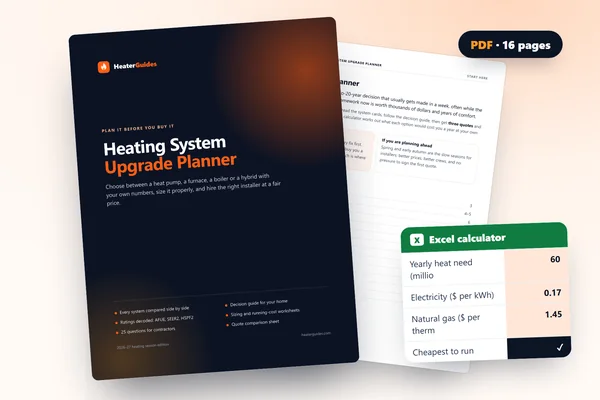 Heating System Upgrade PlannerChoose between a heat pump, a furnace, a boiler or a hybrid with your own numbers, and hire the right installer.Every system compared side by side25 questions for contractors, red flagsRunning-cost, payback and quote calculator (Excel)