Indoor-Only Space Heaters: 4 Safe Picks for Everyday Use
On this page 8 sections
- Compare the Picks
- Best Indoor-Only Space Heaters
- Space Heaters Indoor Walmart Shoppers Can Compare
- Non-Electric Heaters for Indoor Use and Solar Options
- How to Size an Indoor Space Heater and Estimate Cost
- Safety Features to Check Before Buying
- Why a Heater Can Raise Your Bill Instead of Lowering It
- More Questions, Answered
Compare the Picks
| Rank | Model | Best for | Heat output | Noise level | Thermostat | Price |
|---|---|---|---|---|---|---|
| 1 | DREO 1500W Ceramic HeaterBest All-Around | Bedrooms and offices where quiet, adjustable heat matters | 1500W PTC ceramic | 34 dB | 41°F to 95°F, 1°F increments | Check price |
| 2 | DREO 1500W Oscillating HeaterBest for Wide Airflow | Rooms where you want heat to move across a wider area | Up to 1500W | 37.5 dB | 41°F to 95°F, 1°F increments | Check price |
| 3 | DREO 1500W Oscillating HeaterBest for Larger Rooms | Larger rooms where oscillation and a 12-hour timer are useful | 1500W PTC ceramic; ECO mode uses 1000W or 1500W | 34 dB | Precise temperature sensor; range not stated | Check price |
| 4 | R.W.FLAME 1500W Ceramic HeaterBest for Extra Controls | Small rooms where a remote, ECO mode and child lock are handy | 1500W | 35 dB | ±1°F precision | Check price |
| 5 | BLACK+DECKER Personal Ceramic HeaterBest for Desk Heat | Personal warmth at a desk or in a small space | 750W low; 1500W high | — | Adjustable; range not stated | Check price |
The most common mistake is buying by a claimed coverage area without checking the heater’s wattage or the room’s insulation. A 1,500 W plug-in heater is still a 1,500 W heater; marketing cannot make it heat a drafty large room like a central system.
These picks are electric models intended for indoor use. Solar and non-electric heaters need a closer look: most solar setups cannot provide dependable direct room heat, and fuel-burning models bring carbon monoxide and ventilation requirements.
Best Indoor-Only Space Heaters

DREO 1500W Ceramic Heater
DREO 1500W Oscillating Heater

DREO 1500W Oscillating Heater

R.W.FLAME 1500W Ceramic Heater

BLACK+DECKER Personal Ceramic Heater
Space Heaters Indoor Walmart Shoppers Can Compare

For space heaters indoor Walmart shoppers can compare, start with the heater type and the exact model—not the retailer name. Walmart is a store, not a heater type or safety rating; check the product listing and return terms wherever you shop. The best indoor electric space heaters are supplemental heat for an occupied area, not a guaranteed way to heat every room or replace your home’s main system.
| Heater type | Best fit | How it heats |
|---|---|---|
| PTC ceramic fan heater | Quick supplemental warmth and moving heat around a room | A fan pushes air across a ceramic heating element. |
| Oil-filled radiator | Quieter heat for a bedroom or office | An electric element warms sealed oil, which releases heat by convection. |
| Infrared heater | Direct warmth aimed at people or objects | Radiant heat warms nearby surfaces and people rather than relying mainly on circulated air. |
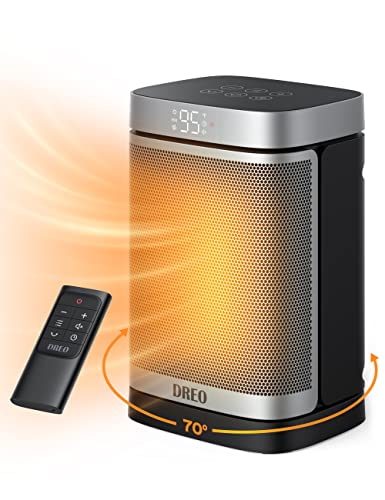
The five picks above suit different jobs: the 1500W DREO with a 34 dB noise rating is the best overall; the DREO Atom One is the large-room airflow pick, with 70° oscillation; the quieter DREO at 34 dB fits a bedroom or office; the BLACK+DECKER BHDC201 is the budget personal-warmth pick; and the DREO 1500W model with thermostat controls suits shoppers who want settings from 41°F to 95°F. Those labels describe the listed features, not room coverage or test results.
Walmart space heaters indoor listings can include many designs, so compare the model number, wattage, controls and stated safety features rather than assuming products are interchangeable. Product cards and comparison tables should stick to supplied specifications; without a stated room size and test method, coverage, durability and user-feedback claims aren’t useful evidence.
Plug-in electric heaters need a direct wall outlet, 3 feet of clearance, and tip-over and overheat protection; look for a UL, ETL or CSA listing. Don’t use an extension cord or power strip. For a closer look at indoor-safe electric heaters, compare the listed protections with the maker’s instructions before buying.
 Winter Heating Bill CutterSee what every heater in your home really costs, heat the rooms you use, and cut the waste in 30 days.Cost-per-hour tables for every heaterThermostat schedule and draft-proofing planRunning-cost and bill calculator (Excel)
Non-Electric Heaters for Indoor Use and Solar Options
Indoor non-electric heaters do exist, but only a model explicitly rated for indoor use belongs inside your home. Portable heaters for indoor use that don’t use electricity are usually fuel-burning; follow the manual’s ventilation and operating instructions, and use a working carbon monoxide alarm. A heater that works outdoors isn’t automatically safe indoors.
Propane and kerosene heaters burn fuel, so they can produce carbon monoxide. Indoor propane models that require an oxygen depletion sensor must have one, and the manual’s ventilation requirements still apply. Never use a patio heater, construction heater or other outdoor-only model in a home, tent or vehicle cabin. Kerosene heaters use 1-K kerosene only—never gasoline.
| Option | What it means indoors | Main limitation |
|---|---|---|
| Fuel-burning heater | Propane or kerosene supplies heat without household electricity. | CO risk, ventilation needs and indoor-use restrictions apply. |
| Solar-powered heater | Usually an electric heater powered by solar panels and a battery system. | The system must supply enough power for sustained heating. |
| Battery-operated heater | A heater draws electricity from a portable battery. | Resistance heat uses substantial power, so runtime can be short. |
| Vent-free gas heater | Fuel burns indoors without a flue. | Local rules may restrict or ban these heaters. |
A solar-powered indoor space heater is generally an ordinary electric heater supplied by a solar-and-battery system, not a small device that makes useful room heat from sunlight coming through a window. Solar-powered space heaters for indoor use need a battery and inverter sized for the heater’s electrical draw; a solar panel by itself won’t provide steady heat after sunset or when sunlight is weak.
Battery-operated space heaters for indoor use are usually a poor choice for heating a room for hours. Resistance heat draws substantial power, and portable batteries store far less energy than a household electrical supply. A battery unit may suit brief personal warmth if its maker specifies that use, but don’t assume it can heat a room through a cold night.
If you’re searching for a space heater that doesn’t require electricity for indoor use, choose only an indoor-rated fuel-burning model and check local code first. Vent-free gas heaters are restricted or banned in some states and cities; the manual and local rules decide whether one is allowed in your home. If you can’t meet the ventilation or alarm requirements, skip it and use an electric heater instead.
How to Size an Indoor Space Heater and Estimate Cost
Match an indoor space heater to your room’s square footage, then check whether its wattage can meet the rough heat demand. For most homes, about 10 watts per square foot is a starting estimate; a standard 120 V plug-in heater tops out at about 1,500 watts, so larger or draftier rooms may need help from the central heating system.
The most powerful common plug-in indoor heater is about 1,500 W. Low-wattage indoor space heaters suit personal warmth or small areas, but they produce less heat. For economical operation, the key is heating only an occupied area and turning down central heat enough to offset the heater’s electricity use; oil-filled and infrared models still use electricity, so neither makes heat free.
To estimate electricity use, multiply watts ÷ 1,000 × hours × your price per kWh. A 1,500 W heater running for 8 hours uses 1.5 × 8 = 12 kWh; at an assumed $0.17 per kWh, that run costs $2.04.
| Heater | Watts | Per hour | Per day (8 h) | Per month (30 days) |
|---|---|---|---|---|
| 1,500 W space heater | 1,500 W | 26¢ | $2.04 | $61.20 |
ECO mode can reduce electricity use when it cycles the heater or selects lower output to maintain the set temperature. The room still needs heat, so ECO mode can’t make the same indoor temperature free. A space heater lowers your total heating costs only if it warms an occupied zone and you turn down the central thermostat enough to offset the added electricity use.
Safety Features to Check Before Buying
The safest indoor space heaters are listed models with tip-over protection, overheat protection and automatic shutoff where provided, used with careful placement—not heaters with the longest feature list. For safe space heaters indoors, look for a recognized UL, ETL or CSA listing, then read the manual before plugging in.
A listing shows that the product was evaluated to a safety standard, but it can’t rescue a heater buried under a blanket. The safest indoor electric space heaters still need open air around them, a stable surface and the correct outlet.
| Check | What to do |
|---|---|
| Outlet | Plug the heater directly into a wall outlet—never an extension cord or power strip. |
| Clearance | Keep at least 3 feet from bedding, curtains, furniture and other combustibles. |
| Surface | Set it on a stable, level surface where it can’t be knocked over. |
| Controls | Confirm tip-over protection, overheat protection and any automatic shutoff listed for that model. |
No. Don’t sleep with a space heater running or leave home with it on unless the manufacturer specifically says that model is designed for it. Turn it off before bed, unplug it if the manual calls for that step, and keep the cord and plug away from heat, water and foot traffic.
An ordinary space heater isn’t bathroom-safe by default. Use a heater in a bathroom only when the manufacturer explicitly permits that setting and the manual’s clearances and required electrical protections are met; otherwise, keep it out of the room, especially near a sink, tub or shower.
Why a Heater Can Raise Your Bill Instead of Lowering It
A space heater lowers your heating costs only when its cost is offset by turning down your central heat; running both unchanged usually adds to the bill. A resistance electric heater turns electricity into heat in the room, but a 1,500 W model uses up to 1.5 kWh for every hour it runs at full output.
Check your electricity rate and how many hours you’ll realistically use the heater before choosing a type. Quick fan heat suits short bursts, radiant heat suits one person or a small spot, and an oil-filled radiator gives quieter convection for longer stretches. Which heater type fits your room depends on where you sit, how long you need heat, and whether you can lower the central thermostat.
A thermostat works the same basic way: once the room reaches its set temperature, the heater cycles off, then starts again as the room cools. Oil-filled radiators also keep giving off warmth after cycling because the heated oil and metal cool gradually; they don’t produce more heat per unit of electricity.
| How you use the heater | Likely bill effect |
|---|---|
| Heat one occupied room and lower the central thermostat | Can lower costs if the portable heater’s electricity use is less than the central heat you avoid. |
| Run the portable heater while keeping whole-home heat unchanged | Adds electricity use without offsetting the central heating cost. |
Use the heater in a regularly occupied room only when you’ll also reduce whole-home heating; don’t count on savings from simply adding portable heat. For example, a 1,500 W heater running at full output for 4 hours uses 6 kWh. At an assumed rate of 17 cents per kWh, that’s $1.02 for the day—before comparing it with the central heat you avoided.
