Heaters without electricity usually means indoor-rated propane, wood, pellet, or other fuel-burning heat, plus a few passive tricks to hold warmth longer. Most of the job is a DIY check of fuel, venting, and clearances, and it takes about 15 to 30 minutes to plan before you light anything.
The most common mistake is buying an outdoor heater and dragging it indoors, which can turn a short outage into a carbon monoxide callout and a ruined room. That mistake costs more than the heater: it can damage walls, trip alarms, and send you looking for fresh air instead of warm air.
Start with the space, the fuel, and the vent. A heater that works in a garage or patio may be the wrong tool for a bedroom, and the wrong fuel is worse than no fuel at all.
The essentials
Use only indoor-rated fuel heaters indoors, and keep a working carbon monoxide alarm in the same area.
A 20 lb propane tank holds about 4.7 gallons of propane; runtime depends on the heater’s burn rate, not the tank size alone.
Seal drafts, close off unused rooms, and heat the smallest safe space you can.
If a heater needs venting, electricity for ignition, or a gas line, plan on a licensed pro.
Never use an outdoor patio heater, construction heater, or vehicle heater inside a house, tent, or garage.
Heaters Without Electricity: What Actually Works Indoors
For heaters without electricity, the rule is simple: indoors, use only a heater rated for indoor use and follow its fuel and venting instructions, or rely on passive heat. An indoor heater without electricity may be an indoor-rated propane heater with an oxygen depletion sensor, a properly vented wood stove, or a pellet stove whose manufacturer allows gravity-feed operation; an outdoor flame heater is not a substitute.
That applies to indoor heaters without electricity and any heater that runs without electricity: the appliance, fuel, and vent have to be suitable for the room. To heat without electricity, first check what safe heat source you already have; for heating a room without electricity, use only a model approved for that use. Passive measures can help you hold warmth, but they won’t turn an outdoor heater into an indoor one. For more on choosing a model, see stay cozy anywhere.
Before You Light Anything
Keep the clearances to combustible walls, furniture, bedding, and curtains specified in the appliance manual. Never use an outdoors-only patio, torpedo, or construction heater indoors, and never block a flue or exhaust. Fuel-burning heaters can produce carbon monoxide; use a working CO alarm and follow the manual’s ventilation requirements.
1,500 W
Typical plug-in heater output
At 120 V, 1,500 W draws about 12.5 A. That load helps explain why people look for a non-electric backup during an outage, but it doesn’t make an unapproved fuel heater safe indoors.
A propane heater is an option only if its label and manual approve indoor use; for propane models, look for an oxygen depletion sensor and follow the stated ventilation rules. A wood stove needs its listed clearances and chimney, while a pellet stove works without electricity only if that specific model permits gravity feed. Many pellet stoves need power for feeding pellets or running controls, so don’t assume yours will keep going in an outage.
Passive heat means reducing heat loss and making use of warmth already available: window film and draft stoppers can limit drafts, sunlight can warm a room through suitable windows, and thermal mass such as masonry can store some heat and release it later. These methods don’t create heat on demand. If you’re asking how to heat a house without electricity, start by checking for a safe existing appliance; use passive measures to help the occupied room stay warmer.
Gather Before You Start
Working carbon monoxide alarm
Flashlight
Fuel container approved for the fuel you’re using
Matches or a long lighter, if the appliance uses them
Manufacturer manual
Fire extinguisher
Draft stopper
Window film
Thermometer
1
Identify the heat source
Check for an existing indoor-rated propane heater, wood stove, or pellet stove. Read its label and manual rather than relying on its appearance or a seller’s general description.
2
Confirm rating and venting
Verify the appliance is approved for indoor use and check exactly how it must be vented, if at all. For a pellet stove, confirm whether the manufacturer allows gravity-feed operation without electricity.
3
Set up alarms and clearances
Put a working CO alarm in the area as directed by its instructions. Clear combustibles to the distances in the manual, and keep the extinguisher accessible.
4
Check airflow and shutoff
Follow the manual’s ventilation instructions. Before heating, locate and understand the appliance’s shutoff; don’t improvise a test by blocking a vent, flue, or exhaust.
5
Start with one room
Use the heater as its manual directs in one room first. Keep the appliance attended as required, watch the thermometer, and stop if an alarm sounds or you notice a fault, unusual fumes, or a blocked vent.
Myth
Any heater with a flame is safe indoors if you crack a window.
Fact
A cracked window doesn’t make an outdoor-only heater safe, and it may not provide the ventilation a particular indoor-rated appliance requires. Follow the manual’s ventilation instructions and use a working CO alarm: carbon monoxide is odorless, and a flame alone can’t tell you whether the exhaust is safe.
A Useful First Check
Before buying fuel or lighting a heater, find its model number and manual. If you can’t confirm indoor approval and the venting instructions, don’t use it inside.
Tools And Parts You May Need
Pick the tools that match the heater you already own or plan to install.
For powered backup
R.W.FLAME Ceramic Desk Heater
Product 1 is an electric fallback, not a blackout heater: plug-in power is required. Its 1,500 W ceramic heater, thermostat, tip-over shutoff, and overheat protection suit a small room after power returns.
To heat a house without electricity or gas, stop heat loss first, add heat to the smallest safe room, then let thermal mass hold some of it. That sequence also answers how to heat your home without power, a furnace, or a plug-in heater: make less space warm instead of chasing warmth through the whole house.
1
Close off unused rooms
Choose the smallest safe room where people will spend the next few hours, then close interior doors to empty bedrooms, halls, and storage areas. Less air means less heat needed, so a modest heat source can make one room feel much stronger than it would in an open floor plan.
2
Block drafts at the doors
Roll a towel against each door bottom, or use a draft stopper, and close doors firmly. Check for moving air around the frame with your hand; a cold strip at the floor can undo much of the heat you add.
3
Cover the windows
Hang heavy curtains after sunset and add removable window film if you have it. Film reduces air movement at the glass, while curtains slow the room’s heat from reaching the cold window.
4
Keep the warm zone contained
Keep the chosen room’s interior door closed, even if the rest of the house feels cold. Open it briefly only when someone needs to pass through; an open doorway gives warm air an easy escape route.
Use the sun for free heat
Open south-facing curtains during the day if sunlight reaches the glass, then shut them before dusk. Sunlight can warm floors, walls, and furniture, but that gain disappears quickly after the outdoor temperature drops.
Thermal mass gives warmth somewhere to go after the flame drops: stone, brick, and water containers absorb heat slowly and release it gradually. Place stable, sealed water containers where they can warm safely, away from open flame, hot surfaces, and places where they can tip; they should be warm, never dangerously hot.
Worked example
Say a small bedroom is 10 by 12 feet and the rest of the house is open to it. Closing the bedroom door, covering its window, and blocking the door gap reduces the space your heat source must warm. A modest heater may then maintain a usable room temperature more easily than it could across a living room, hallway, kitchen, and bedrooms together. Keep the room ventilated as required by any fuel-burning heater; closing a door doesn’t make carbon monoxide safe.
GoalHeat one small room
First moveClose the door and seal drafts
ReasonLess air and fewer cold surfaces need wa
Safe personal warming stretches the heat you already have: wear several loose layers, use blankets or a sleeping bag, and fill a hot water bottle according to its instructions. Keep blankets, clothing, sleeping bags, and bottles away from open flames, heaters, stovetops, and other hot surfaces; a sleeping bag is for your body, not a shield around a fire.
Skip indoor heat gimmicks
Don’t build candle heaters, stack makeshift burners, or burn materials that create soot indoors. Candles and improvised burners add fire risk and combustion gases while producing little useful room heat. Use only equipment rated for the space and fuel, and keep a working carbon monoxide alarm in any home using combustion.
A practical order
For how to heat a home without electricity or gas, think envelope, zone, then mass: seal the room, warm the smallest safe area, and use safe materials that hold heat. These methods can reduce heat loss, but they don’t replace required ventilation or the safety instructions for a fuel-burning appliance.
Will A Gas Water Heater Run Without Electricity
A gas water heater may run without electricity, but many modern units won’t. A standing-pilot, naturally vented tank can often keep making hot water during a blackout; a power-vented or electronically controlled model usually needs household power for its ignition, controls, or exhaust fan.
A standing pilot supplies the small flame that starts the burner, while the pilot’s heat holds the gas safety valve open. When the tank thermostat calls for heat, gas reaches the burner and the hot exhaust rises through the flue by natural draft. That is how a gas hot water heater works without electricity—the gas supply and the safety controls still have to function.
Water-heater type
Blackout behavior
What needs power
Standing pilot, atmospheric draft
May keep heating
No household electricity for normal operation
Electronic ignition
Often stops
Ignition and electronic controls
Power-vented tank
Usually stops
Exhaust fan and controls
Tankless gas unit
Usually stops
Electronic ignition, controls, and often a fan
Check the rating plate and manual; designs vary.
The quick check
Look through the viewing window for a small pilot flame, then look for an access panel around the burner. Follow the vent upward: an atmospheric model normally has a flue that rises naturally, while a power-vented model has a fan housing and usually a power cord. Don’t remove sealed covers or assume a missing flame means the heater is defective.
That answers the common question, “does a gas water heater need electricity?” The gas burner itself doesn’t need wall power on a standing-pilot atmospheric tank, but an electronic ignition system, powered gas valve, control board, or vent fan can stop the heater during an outage. Gas service can also be interrupted independently, so check the manual and utility status. gas water heater electricity use explains the electrical parts in more detail.
Leave the safety hardware alone
Never cap or plug the temperature-and-pressure relief valve, called the T&P valve, and never block the vent path. The valve protects the tank from dangerous pressure or temperature; the vent carries combustion gases away from the home.
1
Check before winter
Run hot water normally, confirm the pilot stays lit if your model has one, and read the manual’s outage instructions.
2
Identify the vent type
Look for a natural-draft flue or a powered fan and cord. Don’t change the flue, gas connection, or vent termination yourself.
3
Call for the right work
Gas connections, venting, and flue changes are licensed-pro jobs in most places. A blackout is a poor time to improvise with combustion equipment.
In short
A standing-pilot atmospheric tank may make hot water without electricity. Power-vented and electronically controlled heaters commonly won’t, so confirm the model’s outage behavior before winter.
From HeaterGuides · our own guidePage 4 shows what every heater costs per hour; the Excel sheet works out your own bill.Winter Heating Bill CutterSee what every heater in your home really costs, heat the rooms you use, and cut the waste in 30 days.Cost-per-hour tables for every heaterThermostat schedule and draft-proofing planRunning-cost and bill calculator (Excel)$14.99$9.99Get it for $9.99See what's inside and watch the 2-minute video →14-page printable PDF + Excel calculator · instant download · 30-day refund
Mistakes That Cause Damage Or Leaks
Safe indoor heating without electricity means using an indoor-rated fuel appliance exactly as its manual allows; an outdoor patio, torpedo, or construction heater has no place in a room, tent, or vehicle cabin. Heating without electricity still creates fire and carbon monoxide risks, so use the required ventilation and a working carbon monoxide alarm.
The Costly Shortcuts
Never block a vent, cover a flue opening, or run a fuel heater in a sealed room when the manual requires ventilation. Propane heaters need the specified oxygen depletion sensor for indoor use, and cylinders must stand where they can’t tip. Keep the 20 lb tank and other cylinders away from heat and ignition sources.
Myth
If the heater smells normal, carbon monoxide isn’t a concern.
Fact
Carbon monoxide has no smell. A working alarm is the check; your nose cannot replace it.
Kerosene equipment has its own hard rules: burn only 1-K kerosene, keep the unit upright, and shut it off and let it cool before filling. Gasoline is never a substitute. Fuel spilled into a hot burner can ignite.
Wood and pellet appliances fail expensively when furniture, curtains, or stored fuel crowd the listed clearances. A dirty chimney can restrict draft and send smoke, soot, and condensation onto walls; burning trash or treated wood adds chemicals and deposits the appliance wasn’t designed to handle. Clean and inspect the chimney annually.
Treat Leaks As Installation Clues
Water around a fitting, soot on the wall, or dampness near a flue usually points to poor draft, a bad connection, or an appliance installed incorrectly. Shut the unit down and have the connector, vent path, and appliance checked instead of tightening random fittings.
A missing guard, damaged fuel line, blocked air opening, or heater that has tipped over is a stop sign, not a small repair. Smell alone is not a carbon monoxide check; the alarm is the check.
When You Need A Permit Or A Licensed Pro
Heating a home without electricity or gas can involve a portable indoor-rated heater, but gas-line work, venting changes, 240-volt electrical work, and water-heater replacement are licensed jobs in most places. Get the permit question answered before cutting, connecting, or permanently mounting anything.
Call Before Starting
Cutting a new vent or changing an existing flue
Running a new gas line or changing gas fittings
Adding a permanent heater to a finished room
Connecting a 240-volt heater or other hardwired equipment
Replacing a gas or electric water heater
Wood and pellet stove installations need more than a safe-looking gap around the firebox. The listed clearances, hearth, chimney height, chimney type, and local code must all agree; a chimney that works for one stove may be wrong for another. Annual chimney inspection and sweeping remain part of safe operation.
Check Local Rules First
Vent-free gas heaters are restricted or banned in some states and cities. Confirm local code before buying one, even if the product is sold for indoor use.
The Simple Boundary
If the appliance needs a flue collar, a dedicated exhaust path, or any hardwired connection, ask the building department or a licensed installer about permits before work begins. Gas connections and venting errors can send combustion gases indoors or create a leak.
A homeowner may be able to place and operate a listed portable heater without a permit, but permanent fuel, vent, electrical, and water-heater work belongs under the applicable code. If the manual and your local code disagree, the code wins, and the installer has to match it.
More Questions, Answered
What is the safest indoor heater without electricity?
The safest option is an appliance specifically listed for indoor use and installed or operated exactly as directed. A properly installed, vented wood stove is a strong permanent choice; an indoor-rated propane heater with an oxygen-depletion sensor is more practical for temporary heat. Keep a working carbon monoxide alarm nearby and never sleep with a portable fuel heater running.
How do you heat a room without electricity?
Start by closing doors, covering drafty gaps, opening curtains to useful sunlight, and moving everyone into the smallest safe room. Add blankets and warm clothing, then use an indoor-rated fuel heater only if its manual allows that room and ventilation setup. Never use an oven, grill, charcoal burner, or outdoor heater for room heat.
Will a gas water heater run without electricity?
A conventional tank with a standing pilot may keep heating during an outage because its burner and safety control don’t need household power. Electronic-ignition, power-vented, and tankless models usually need electricity for ignition, fans, pumps, or controls. Don’t bypass a failed safety device or relight a unit against its instructions.
Can I use a propane heater indoors without electricity?
Yes, but only if the heater is explicitly rated for indoor use and its manual permits the location. Use the required ventilation, keep a working carbon monoxide alarm nearby, follow the cylinder limits, and keep clearances around the heater. Patio, grill, torpedo, and construction heaters remain outdoor equipment, even during a blackout.
What heater works without electricity in a house?
A listed wood stove with a compliant chimney can heat a house without household electricity, provided local code and the manufacturer’s clearances are met. For temporary heat, an indoor-rated propane heater can warm one occupied room, while an indoor-rated kerosene heater is another fuel option where permitted; use only 1-K kerosene. Whole-house coverage depends on room layout, insulation, ventilation, and the heater’s rated output.
Before you go · a welcome giftGet the Winter Heating Bill Cutter for $4.99See what every heater in your home really costs, heat the rooms you use, and cut the waste in 30 days. Normally $14.99; your welcome price saves $10.00. We'll email your link right now.or skip the email and buy it now for $4.99 →One email with your link now. We never share your address.


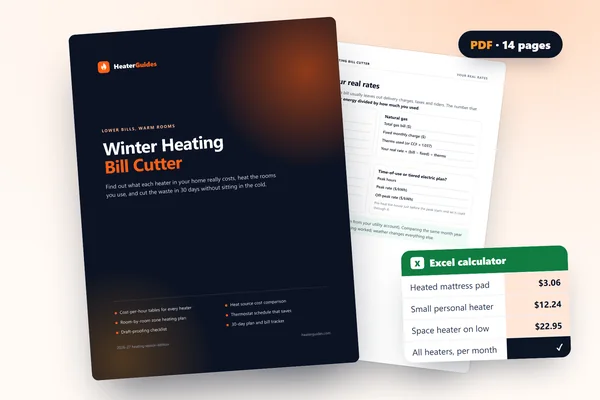 Winter Heating Bill CutterSee what every heater in your home really costs, heat the rooms you use, and cut the waste in 30 days.Cost-per-hour tables for every heaterThermostat schedule and draft-proofing planRunning-cost and bill calculator (Excel)