How Often Should You Clean Your HVAC System?
On this page 6 sections
HVAC systems should be cleaned at least once a year to ensure optimal performance and indoor air quality, with more frequent cleaning for heavy usage or pets.
Keeping your HVAC system clean is crucial for maintaining indoor air quality, energy efficiency, and system longevity. Most experts recommend professional cleaning every 1-2 years, but several factors can influence this timeline.

Recommended HVAC Cleaning Frequency

The National Air Duct Cleaners Association (NADCA) suggests cleaning HVAC systems every 3-5 years for residential properties and annually for commercial buildings. However, consider these factors:
- Residential homes: Every 2-3 years
- Commercial buildings: Annually
- Homes with pets: Every 1-2 years
- Allergy sufferers: Annually
- New construction/renovation: Immediately after completion

Signs Your HVAC System Needs Cleaning
1. Rising Energy Bills
Dirty systems work harder to maintain temperature. According to Energy.gov, a clean HVAC system can reduce energy costs by up to 40%.
2. Visible Dust and Debris
If you notice dust buildup around vents or visible particles blowing from registers, your system needs attention. This is especially important for systems like built-in gas heaters that share ductwork.
3. Mold Growth
Musty odors or visible mold near vents indicate serious contamination. The EPA recommends immediate professional cleaning when mold is present.
4. Recent Construction
Renovation projects introduce significant dust into ductwork. The EPA advises cleaning after any major construction.
HVAC Cleaning Process
A professional cleaning typically includes:
- Inspection with specialized cameras
- Containment of work area
- Mechanical agitation of ducts
- High-powered vacuuming
- Cleaning of all system components
- Final inspection and testing
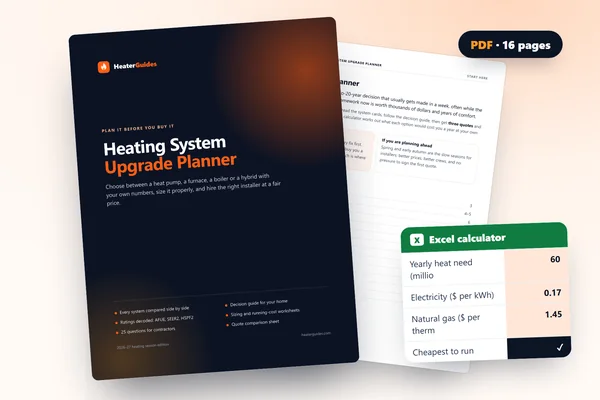 Heating System Upgrade PlannerChoose between a heat pump, a furnace, a boiler or a hybrid with your own numbers, and hire the right installer.Every system compared side by side25 questions for contractors, red flagsRunning-cost, payback and quote calculator (Excel)
Maintenance Between Cleanings
Extend time between professional cleanings with these steps:
| Task | Frequency |
|---|---|
| Replace air filters | Every 1-3 months |
| Clean registers/vents | Monthly |
| Professional inspection | Annually |
For specialized systems like water heaters with thermostat controls, follow manufacturer recommendations for maintenance.
Health Benefits of Clean HVAC Systems
Regular cleaning provides significant health advantages:
- Reduces allergens by 50-90%
- Decreases respiratory irritation
- Minimizes spread of airborne illnesses
- Eliminates musty odors
- Creates healthier indoor environment
Choosing a Cleaning Service
Select a qualified provider with:
- NADCA certification
- Proper insurance
- Transparent pricing
- Positive customer reviews
- No chemical treatments unless absolutely necessary
Related pick: Check price on Amazon