40 Gallon Rheem Water Heater Cost & Buying Guide 2026
On this page 6 sections
Say your house needs one good shower, a load of dishes, and a sink full of hand-wash water each night. A 40-gallon tank can cover that load, but the bill changes fast if you raise the thermostat, stretch showers, or choose a model with more standby loss.
The useful number is the one you can check against your own usage. A tank that costs a little less to buy can cost more to run for years, and water heaters are annoyingly good at collecting that difference one cycle at a time.
40 Gallon Rheem Water Heater Cost & Buying Guide
A 40 gallon Rheem water heater typically costs about $400–$900 for an electric tank, $600–$1,200 for gas, or $1,500–$2,500 for a hybrid, before installation; a straightforward replacement often brings the total to roughly $1,200–$3,500, depending on fuel type and site work. Electric models usually cost less to buy and install, while gas models need suitable venting and gas connections, and hybrid models cost more upfront but use less electricity.
Those are broad US planning ranges, not a quote: model, location, permits and what the installer finds can shift the bill. The cost of a Rheem 40 gallon water heater also depends on the energy source and hot-water use. Rheem gas water heaters 40 gallon models, including a Rheem 40 gal gas water heater, generally cost more to install than a Rheem 40 gallon electric water heater when gas venting or piping needs work.
| Heater | Watts | Per hour | Per day (0.5 h) | Per month (30 days) |
|---|---|---|---|---|
| Representative electric tank element | 4,500 W | 77¢ | 38¢ | $11.48 |
For the water heater 40 gallon cost, ask for the model number, tank price, labor, permit and haul-away as separate quote lines. If you’re choosing between electric options, compare models in this 40 gallon electric water heater buying guide.
Installed Cost For A 40 Gallon Rheem

A 40 gallon water heater installed costs more when the job needs vent, gas-line or electrical changes, permits, haul-away or repairs to failed valves and corroded lines. Replacing an electric tank with another electric tank is usually the simplest swap; replacing a gas unit or changing fuel types can involve more work and inspections.
A gas replacement quote can climb if the existing vent is unsuitable or the gas connection needs work. Gas connections and venting are jobs for a licensed plumber or other qualified professional in most places. A Rheem 40 gallon gas water heater price therefore doesn’t tell you what the finished installation will cost.
| Type | Typical installation complexity | What can add work |
|---|---|---|
| Electric tank | Usually lower for a like-for-like swap | Circuit or wiring changes, permits, drain or valve repairs |
| Gas tank | Often higher than a basic electric swap | Venting, gas-line work, permits and vent corrections |
| Hybrid tank | Can be higher when the room needs changes | Electrical requirements, condensate drainage and space for airflow |
If you’re comparing a Rheem 40 gallon price with other gas tanks, check the model and venting type on the quote. These best 40 gal gas water heaters are useful for comparing gas-model options, but installation requirements still depend on your home.
How A 40 Gallon Rheem Compares With Bigger Tanks
A 50 gallon electric water heater gives you more stored hot water than a 40 gallon tank, while an 80 gallon water heater can suit a larger household if its heat-pump system has room to operate. The best water heater 50 gallon size depends on how often people use hot water back to back—not just the number of people in the house.
For a one-bath home with staggered showers, a 40-gallon electric resistance tank may be enough. A family that runs out after back-to-back showers or laundry plus dishes should consider a 50-gallon electric tank; an 80-gallon heat-pump model is a stronger fit for higher demand and space for the equipment. That’s the practical difference between a 50 gallon hot water heater electric and a larger-capacity option.
| Option | Standby loss | Recovery and running cost |
|---|---|---|
| 40-gallon electric resistance | Heat leaks from the stored water between heating cycles. | Less stored water to replenish, but a long draw can leave you waiting. Usually higher running cost than a heat-pump model. |
| 50-gallon electric resistance | Similar type of tank loss; the larger tank has more hot water stored. | More reserve, but reheating a larger volume takes energy. Running cost depends on use and the unit’s efficiency. |
| 80-gallon heat pump | Still loses some heat from stored water; the heat pump moves heat rather than making it all with resistance elements. | Can take longer to recover than resistance heating, but typically costs less to run. Needs suitable space and airflow. |
A heat-pump water heater is usually the lower-running-cost choice when the installation space and ducting let it breathe. If you’re comparing the best 50 gallon electric water heater or best 50 gallon water heater, check the model’s efficiency label and recovery details; the gallon number alone won’t tell you how quickly it refills the reserve.
If your goal is lower operating cost without storing a full tank—and your electrical service can support the load—a tankless alternative may fit, but its flow rate limits how many fixtures it can serve at once.
 Water Heater Owner's ToolkitFix the common faults yourself, keep it running for years, and know when a repair is money wasted.No-hot-water flowcharts, gas and electricFlush, anode, relief valve and descaling stepsRepair-or-replace calculator (Excel)
How To Cut The Number Without Replacing The Tank
For a 40 gallon water heater cost that keeps adding up, start by reducing the heat and hot water you use; those changes can save more than cleaning a tank that’s already working normally. The same steps apply to a 40 gallon water heater gas, though its fuel rate and burner efficiency affect the bill.
- Set the thermostat to 120°F if it’s higher. Lowering the setpoint means the heater adds less heat to each gallon; use a thermometer at the tap to check the delivered temperature. Scald risk rises above 120°F at the tap.
- Shorten showers. Every minute less means less hot water drawn and less cold replacement water the tank must heat.
- Fix hot-water waste at fixtures. Repair dripping hot taps and consider a lower-flow showerhead; less water going down the drain means less reheating.
- Insulate accessible hot-water pipes. Insulation slows heat loss between heating cycles, so water arrives warmer and the tank has less standby heat to replace.
- Flush sediment when the manufacturer’s instructions call for it. Mineral buildup can reduce heating efficiency, but flushing won’t fix a failed element, burner or thermostat.
A 40 gallon water heater price is only part of the cost comparison: reducing hot-water use can lower the operating bill without buying another tank. If you’re unsure whether buildup or a failing part is the problem, have a plumber diagnose it before paying for a replacement.
What To Do Next
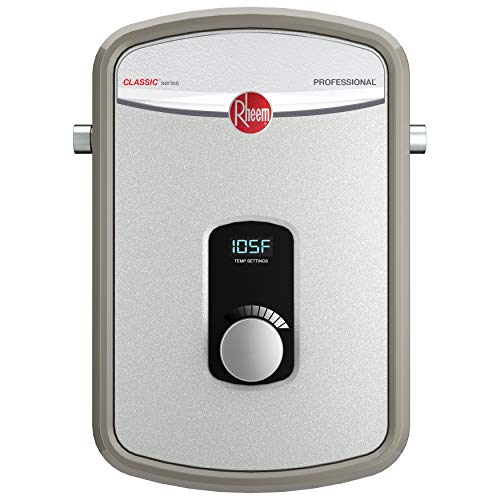
The cost to replace a 40 gallon water heater depends on the unit and what the installation needs; Lowe’s installation estimate and a Rheem Professional water heater price also depend on the specific model, location, and job. Treat online listings and preliminary estimates as starting points, then get an installed quote for your home. A Rheem 40 gallon Home Depot listing may be a useful model comparison, but check fuel type and connections before choosing.