

You might think of carbon sequestration as a slow, steady process — something that happens quietly in the soil or deep underground, immune to the weather above. That assumption gets expensive fast. Whether you manage farmland, run a carbon offset project, or just study the numbers, temperature is the variable that flips a carbon sink into a carbon source. A warm spell doesn’t just speed things up. It changes the chemistry, wakes up dormant microbes, and can crack the very formations we rely on for permanent storage.
This article walks through the thermal limits of both biological and geological carbon storage. You’ll see specific degree thresholds, the difference between a hot week and a hot decade, and how the carbon cycle responds to heat in ways most summaries skip. You’ll also get a practical monitoring playbook so you can catch problems before they turn into reversals.
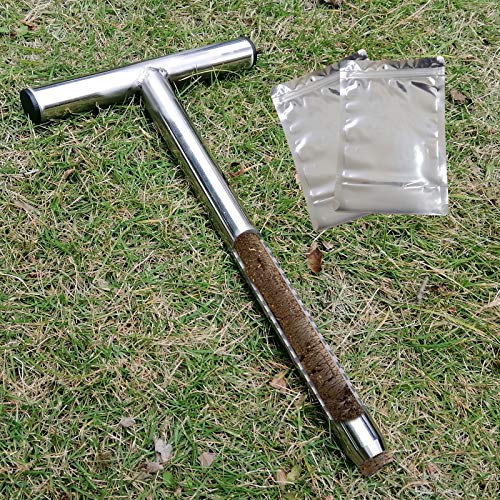
HiHydro
HiHydro 12 Inch Stainless Steel Soil Probe…
- STAINLESS STEEL MATERIAL: Made with the exceptional workmanship and stainless steel materials, our soil probes are finely machined…
- TWO PIECES REUSABLE SAMPLE BAG: Come with two pieces reusable sample bags, allow for easy soil removal, visual soil profile inspec…
- T-STYLE SOIL SAMPLER: Robust probe drill allows you to provide a quick soil profile or description, to determine soil moisture con…
If you’re taking soil samples to track carbon levels, a decent probe makes the job far less miserable. The HiHydro 12 Inch Stainless Steel Soil Probe comes with two reusable sample bags and a T-handle that won’t twist your wrist on rocky ground. It’s marked at 7.87-inch intervals, which helps you keep sampling depth consistent — something that matters more than most people realize when you’re comparing carbon measurements across seasons.

The Thermal Tipping Point: Why Temperature is the Master Variable
Every carbon pool on Earth has a temperature range where it stores carbon efficiently. Outside that range, storage efficiency drops. Sometimes it collapses entirely. The relationship isn’t linear — it’s a curve with a peak, and that peak sits at different temperatures for soil, oceans, and deep rock formations.
For soil, the peak sits around 25°C (77°F) for most temperate systems. Below that, microbial activity slows and decomposition rates drop. Above it, respiration accelerates and the soil starts releasing more carbon dioxide than it takes in. This isn’t a gentle decline either. The reaction rate roughly doubles for every 10°C rise in temperature — the Q10 rule — which means a shift from 25°C to 35°C can quadruple the rate of organic matter breakdown.
Geological sequestration has its own thermal limits, but they’re measured in hundreds of degrees, not tens. The problem there is different: heat changes the viscosity and density of injected CO2, alters fracture dynamics in the rock, and can compromise the seal that keeps carbon trapped for millennia.
Biological Sequestration: The Soil’s Fever Response
Soil organic carbon is the largest terrestrial carbon pool, holding roughly 1,500 gigatons — about twice the carbon in the atmosphere. But that pool is only stable if the soil stays cool enough to keep decomposers in check. When soil temperature climbs, the microbial engine shifts from idle to redline.
The 25°C Threshold: When Microbes Turn Against You
Below 25°C, fungi and bacteria break down plant material at a manageable pace. Some of that carbon gets incorporated into stable forms like humus. Above 25°C, the balance tips. Microbial respiration accelerates faster than plant productivity, so the soil starts losing carbon even while plants are still growing.
Field studies in grassland systems show that a sustained 2°C warming can reduce soil organic carbon by 10-15% over a decade. That might sound modest until you calculate it across a large area. A 1,000-hectare farm losing 15% of its soil carbon is looking at thousands of tons of CO2 released back into the air — and a carbon credit portfolio that suddenly owes the market.
The threshold isn’t universal. Tropical soils already run hot, so they have adapted microbial communities that operate efficiently at 30°C or more. Temperate soils don’t have that resilience. A heat wave that pushes a Wisconsin cornfield to 35°C for two weeks will trigger a pulse of respiration that takes months to recover from.
Deep Soil vs. Topsoil: Thermal Lag and Carbon Vulnerability
Most people assume deep soil is safe from temperature swings because heat penetrates slowly. That’s true in the short term. A single hot day only warms the top few centimeters. But over years, sustained warming propagates downward. At 1 meter depth, soil temperature lags surface temperature by roughly 2-3 months. A hot summer in 2026 shows up at depth in late fall or early winter.
This matters because deep soil holds the oldest, most stable carbon — some of it thousands of years old. When that carbon gets metabolized, it’s gone for good. Topsoil carbon can be replenished with good management. Deep carbon cannot.
Sampling depth matters for another reason. If you only test the top 10 centimeters, you’ll miss the slow carbon loss happening below. You’ll also miss the opposite effect: in some systems, warming increases root growth and sends more carbon downward, partially offsetting surface losses. Without depth-resolved sampling, you’re flying blind.
This is where the HiHydro probe earns its keep. Twelve inches isn’t deep enough to capture the full profile, but it’s far better than a hand trowel. For a more complete picture, pair it with a hydraulic corer for annual deep sampling, and use the probe for monthly spot checks.
Geological Sequestration: When Heat Breaks the Seal
Geological carbon storage injects CO2 into deep saline aquifers or depleted oil fields, typically at depths below 800 meters. At those depths, temperature ranges from 40°C to over 100°C depending on the geothermal gradient. The rock formations are chosen for their porosity and caprock integrity, but temperature plays a larger role than most project assessments admit.
Research on the effect of temperature on geological sequestration shows that warmer reservoirs reduce CO2 density. At 40°C and 100 bar, CO2 is a supercritical fluid with liquid-like density. Push the temperature to 70°C and the density drops by roughly 20%. Less dense CO2 takes up more space, which means the same injection volume stores less mass. It also changes the buoyancy — the CO2 plume rises faster and presses harder against the caprock.
Fracture Dynamics and CO2 Viscosity at Depth
Heat doesn’t just change the CO2. It changes the rock. Thermal expansion in the reservoir can open microfractures, increasing permeability in places you don’t want it. The caprock — usually shale or salt — is chosen for its low permeability, but thermal stress can compromise that integrity over decades.
There’s also the viscosity problem. Warmer CO2 is less viscous, which sounds like a good thing for injectivity. It is, initially. But less viscous CO2 migrates more easily through small pore spaces, increasing the risk of leakage along faults or through the caprock. Several pilot projects in high-temperature reservoirs have seen higher-than-expected pressure buildup precisely because the warmer CO2 behaves differently than the models predicted.
The practical takeaway: a geological storage site that works at 50°C may fail at 65°C. Site selection needs to include not just current reservoir temperature, but projected temperature changes over the storage timeline — which can be centuries.
The Priming Effect: How Warming Awakens Ancient Carbon
Here’s the nasty surprise hiding in the soil carbon math. When fresh plant material enters warm soil, it doesn’t just decompose itself. It stimulates microbes to break down older, more stable carbon that was previously protected. This is called the priming effect, and it’s the reason warming can turn a carbon sink into a source faster than any model predicted.
In one long-term experiment in a temperate forest, researchers added labile carbon to warmed plots and watched the decomposition of native soil organic matter increase by 30-50% compared to unwarmed controls. The ancient carbon — some of it hundreds of years old — was being metabolized because the fresh inputs gave microbes the energy they needed to produce the enzymes that attack recalcitrant compounds.
The priming effect scales with temperature. At 20°C, it’s modest. At 30°C, it’s aggressive. And it’s most pronounced in soils that have been frozen or waterlogged for long periods, because those conditions preserve carbon that microbes haven’t touched in centuries. When those soils warm up and dry out, the carbon is suddenly available — and the release can be dramatic.
Permafrost is the extreme case. Roughly 1,400 gigatons of carbon sit frozen in permafrost soils. As temperatures rise, that carbon becomes vulnerable to both microbial decomposition and physical release as methane. A 2°C increase in permafrost temperature can unlock carbon that’s been locked away since the last ice age.
Weather vs. Climate: Why a Hot Week Matters Less Than a Hot Decade
A heat wave is not climate change. This distinction matters more than you’d think, because it changes how you interpret carbon flux data. A soil probe reading taken during a July heat spike will show elevated respiration. That’s a weather event. The soil will recover when temperatures drop. But a decade of gradually warming average temperatures shifts the baseline — the soil doesn’t fully recover, and each successive year starts from a higher thermal state.
Think of it like a bank account. A weather spike is a one-time withdrawal. Climate warming is a persistent fee that compounds. The distinction matters for carbon accounting because offset projects typically measure carbon stocks at discrete intervals. If you sample after a cool year, you might see stable or increasing carbon. Sample after a warm year and you’ll see losses. Without long-term temperature data, you can’t tell which signal is real.
This is why the temperature regulation conversation matters for land managers. You can’t control the weather, but you can track the trend. If your site’s average soil temperature has risen 1.5°C over the past decade, your carbon management plan needs to account for that shift — not just the occasional hot summer.
Practical Playbook: Monitoring and Mitigating Thermal Risks
You can’t manage what you don’t measure. Here’s a straightforward approach to tracking temperature-driven carbon loss on your land.
- Install soil temperature sensors at multiple depths. Place them at 5, 15, and 30 centimeters at minimum. If you can go deeper, do it. Log data continuously, not just during sampling days.
- Sample soil carbon at the same time each year. Pick a consistent window — ideally in spring before the heat builds — and stick to it. This removes seasonal variability from your comparisons.
- Track both total carbon and labile carbon. Total organic carbon tells you the big picture. Labile carbon (the easily decomposed fraction) tells you what’s at risk in the next heat event. A soil test lab can run both for a modest fee.
- Watch for the 25°C threshold in your sensor data. When soil temperatures cross that line for more than a few consecutive days, expect elevated respiration. Plan irrigation or cover cropping to shade the soil and moderate temperature swings.
- Use the probe for rapid spot checks. A quick 12-inch core sample lets you eyeball root depth, moisture, and obvious changes in organic matter color. It’s not a replacement for lab analysis, but it catches problems early.
Comparing Biological and Geological Sequestration Under Thermal Stress
| Factor | Biological (Soil) | Geological (Deep Rock) |
|---|---|---|
| Optimal temperature range | 15-25°C | 40-60°C (reservoir) |
| Failure mode | Microbial respiration spike | Caprock fracture, CO2 density loss |
| Response speed to warming | Days to weeks | Years to decades |
| Carbon permanence if stable | Decades to centuries | Millennia |
| Monitoring cost | Low (sensors + soil tests) | High (well logging, pressure sensors) |
| Reversal risk from heat | High above 25°C | Moderate, but catastrophic if it occurs |
| Best for | Managed lands, agricultural soils | Industrial point sources, long-term storage |
There’s no universal winner. Soil is cheap and quick to deploy but thermally fragile. Rock is expensive and slow but vastly more stable. The choice comes down to your timeline and your local climate trajectory. If your region is projected to warm 3°C by 2050, soil carbon projects need aggressive mitigation — or they’ll fail the permanence test.
The Bottom Line: Temperature is the Silent Partner in Every Carbon Credit
Every carbon offset project has a permanence requirement. Most assume the carbon stays put for 100 years. Temperature is the variable that breaks that assumption. A soil carbon project in a warming region is not a 100-year bet — it’s a bet that you can keep the soil cool enough, long enough, to hold the carbon.
Geological projects have the opposite problem. They’re designed for permanence, but a poorly characterized thermal regime can compromise the seal in ways that are expensive to detect and impossible to reverse.
Here’s what you can do starting today:
- Install soil temperature sensors at 5, 15, and 30 cm depths — log data year-round, not just during growing season.
- Sample soil carbon at the same time every year, and always note the temperature at sampling depth.
- Treat sustained soil temperatures above 25°C as a warning flag. Plan shade, irrigation, or organic mulch to moderate extremes.
- For geological projects, demand reservoir temperature modeling that extends 50+ years beyond injection, not just the initial conditions.
- Account for the priming effect in your carbon budget. Fresh inputs in warm soil accelerate old carbon loss — net gain may be lower than expected.
- Don’t confuse a hot week with a hot decade. Track averages, not spikes, when assessing long-term risk.
- If you manage land, a good soil probe like the HiHydro is worth the modest investment — consistent depth sampling beats expensive lab work on inconsistent samples.
Temperature isn’t one variable among many. It’s the one that decides whether carbon stays put or comes back. Plan for it, or pay for it.
Frequently Asked Questions
What is the ideal soil temperature for carbon sequestration?
Most temperate soils sequester carbon best between 15°C and 25°C. Below 15°C, decomposition slows but so does plant growth, limiting new carbon inputs. Above 25°C, microbial respiration outpaces carbon stabilization. Tropical soils have adapted to higher temperatures, so their optimal range shifts to roughly 25-30°C, but the principle holds: there’s a peak, and it’s not as high as you’d think.
How quickly does soil carbon respond to a heat wave?
Fast. Soil respiration responds within hours to a temperature increase. A single hot afternoon can produce a measurable pulse of CO2 from the top few centimeters of soil. However, that pulse is often balanced by cooler nights and recovery within days. The real damage comes from sustained heat — weeks above the threshold — which depletes labile carbon pools and triggers the priming effect on older carbon.
Can geological carbon sequestration be reversed by temperature?
Yes, though the timescale is long. If reservoir temperature rises enough to reduce CO2 density and increase buoyancy, the stored plume can migrate upward and find a path through the caprock. This isn’t a sudden event — it develops over decades. But once a fracture network opens, the stored CO2 can leak over centuries, undoing the entire sequestration effort.
Does the priming effect happen in all soils?
No. It’s strongest in soils with a large pool of old, stable carbon — typically cold-climate soils, waterlogged soils, and deep soil layers. Sandy, well-drained soils with low organic matter show a much weaker priming effect because there’s less old carbon to unlock. The effect also fades as the labile carbon pool gets exhausted, so it’s most pronounced in the first few years after warming begins.
How often should I measure soil carbon to track temperature effects?
Annually at minimum, and always at the same time of year. For real insight, add a mid-summer measurement after the hottest period. That gives you a before-and-after picture of heat-driven losses. If you’re running a carbon offset project, quarterly sampling with lab analysis is the defensible standard — and continuous soil temperature logging is non-negotiable.

I am a mechanical engineer and love doing research on different home and outdoor heating options. When I am not working, I love spending time with my family and friends. I also enjoy blogging about my findings and helping others to find the best heating options for their needs.
Related guides

How Temperature Changes Reshape Seasonal Patterns
The influence of temperature on seasonal patterns affects plant growth, animal behavior, and ecosystem dynamics, altering migration, blooming,…

How Rising Temperatures Fuel More Powerful Natural Disasters
You watch the evening news and see another town flattened by a tornado that wasn't supposed to happen…
How Temperature Changes Impact Our Environment
Think about the last time you stepped outside on a sweltering day. That immediate, tangible feeling of heat…