

Temperature influences plastic deformation by altering material properties; higher temperatures generally increase ductility, allowing plastics to deform more easily under stress.
Temperature plays a critical role in plastic deformation – the permanent shape change that occurs when materials are stressed beyond their elastic limits. From industrial manufacturing to everyday plastic products, understanding this relationship is essential for material selection and performance.

Acouto
Acouto 10L Oil Drain Pan Oil Drip…
- [DURABLE & CHEMICAL CONSTRUCTION] Crafted from high strength black PP plastic this oil drain pan is engineered to endure extreme t…
- [HIGH CAPACITY & UNIVERSAL VEHICLE FIT] With a generous 10 liter (approx 15 quart) storage capacity this drip tray can handle the…
- [ANTI SPLASH DESIGN FOR A CLEANER WORKSPACE] The integrated splash guard and unique inner channel design are key features that min…
The Science Behind Plastic Deformation
Plastic deformation occurs when atomic bonds break and reform under stress, creating permanent structural changes. Unlike elastic deformation (where materials return to original shape), plastic changes are irreversible. Two key mechanisms drive this process:
- Dislocation movement: Defects in crystal structures that allow atomic planes to slide
- Twinning: Mirror-like shifts in crystal lattice orientation
Temperature’s Dual Role in Deformation
High Temperature Effects
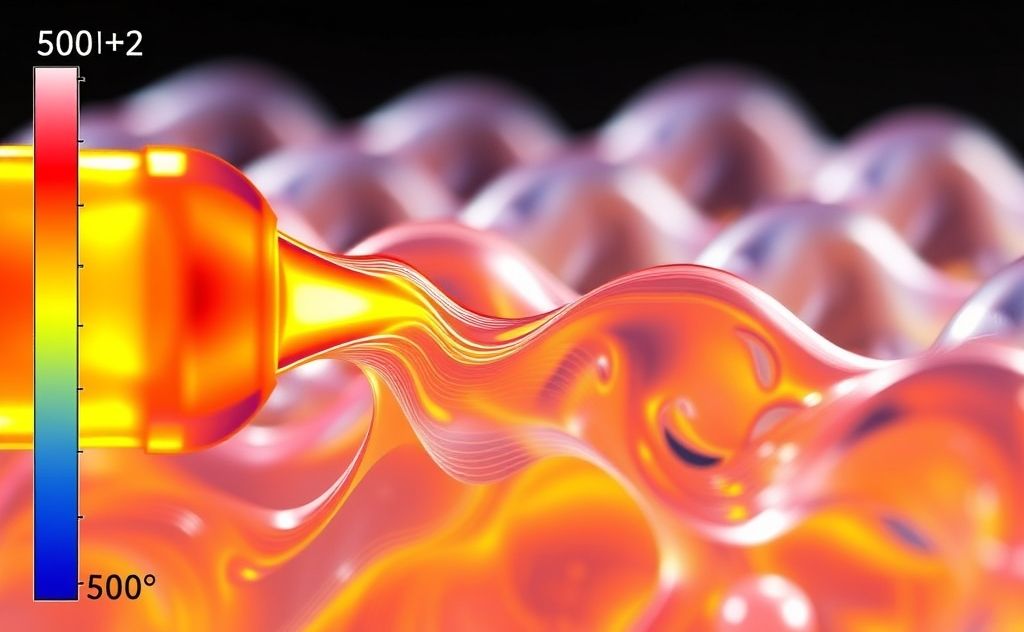
Elevated temperatures dramatically increase plastic deformation through:
- Enhanced atomic mobility (easier bond breaking)
- Reduced yield strength (softer material state)
- Increased dislocation movement speed
For example, TWIP steels can experience temperature spikes up to 300°C during deformation, fundamentally changing their microstructure.
Low Temperature Effects
Colder conditions create opposite effects:
| Effect | Result |
|---|---|
| Reduced atomic mobility | Higher yield strength |
| Slowed dislocations | Increased brittleness |
| Limited slip systems | Decreased ductility |
Practical Applications and Examples
Industrial Manufacturing
Temperature control is crucial in processes like:
- Hot rolling (400-1300°C for steel)
- Plastic injection molding (160-300°C)
- Forging operations
Our guide on modern heater materials explores temperature-resistant options for industrial applications.
Everyday Plastic Products
Common temperature-related failures include:
- Warped dashboard components in hot cars
- Cracked plastic outdoor furniture in winter
- Deformed food containers in microwaves
Advanced Material Considerations
Specialized materials like TWIP steels demonstrate complex temperature-deformation relationships:
- Deformation heat can reach 80-95% of mechanical energy input
- High strain rates (1000 s⁻¹) can trigger mechanism shifts
- Stacking fault energy determines twin vs. dislocation dominance
For temperature-sensitive applications, consider our precise thermostat controls to maintain optimal conditions.
Measurement Challenges
Accurate temperature monitoring during deformation requires:
- High-speed thermocouples (1000+ Hz sampling)
- Infrared thermography
- Advanced thermal modeling
As research shows, even small temperature variations can significantly alter material behavior during plastic deformation processes.
Related pick: Check today's price on Amazon

I am a mechanical engineer and love doing research on different home and outdoor heating options. When I am not working, I love spending time with my family and friends. I also enjoy blogging about my findings and helping others to find the best heating options for their needs.
Related guides
How Temperature Impacts Adhesive Strength & Performance
Temperature significantly influences adhesive performance by affecting the viscosity, curing time, and bonding strength; higher temperatures can accelerate…

How Temperature Affects Semiconductor Materials
Semiconductors are the brains of modern electronics. Their performance is incredibly sensitive to temperature. From your smartphone slowing…
How Temperature Changes Impact Composite Material Strength
Temperature affects composite strength by altering material properties; higher temperatures can reduce strength and stiffness, while lower temperatures…