

Your winter heating bill just hit a new high. Again. You stare at the furnace and wonder if there’s a way to let the sun pick up some of the slack. Solar heating sounds like a great idea – free energy from the sky – but how does it actually work? Is it just rooftop panels hooked to a water tank? Or is there more to it?
This guide covers the real mechanics of solar thermal systems: the collectors that trap heat, the fluid that carries it, the storage that holds it, and the backup systems that keep you warm when clouds roll in. You’ll walk away knowing the difference between active and passive systems, how to size a setup for your home, and whether solar heating makes financial sense where you live.

New Society Publishers
Solar Water Heating--Revised & Expanded Edition: A…
- New
- Mint Condition
- Dispatch same day for order received before 12 noon
If you want a deeper technical reference, the book Solar Water Heating–Revised & Expanded Edition (from New Society Publishers) walks through every component, connection, and maintenance step in plain language. It’s a solid resource to have on the shelf while you plan or install a system.
How solar collectors actually capture heat
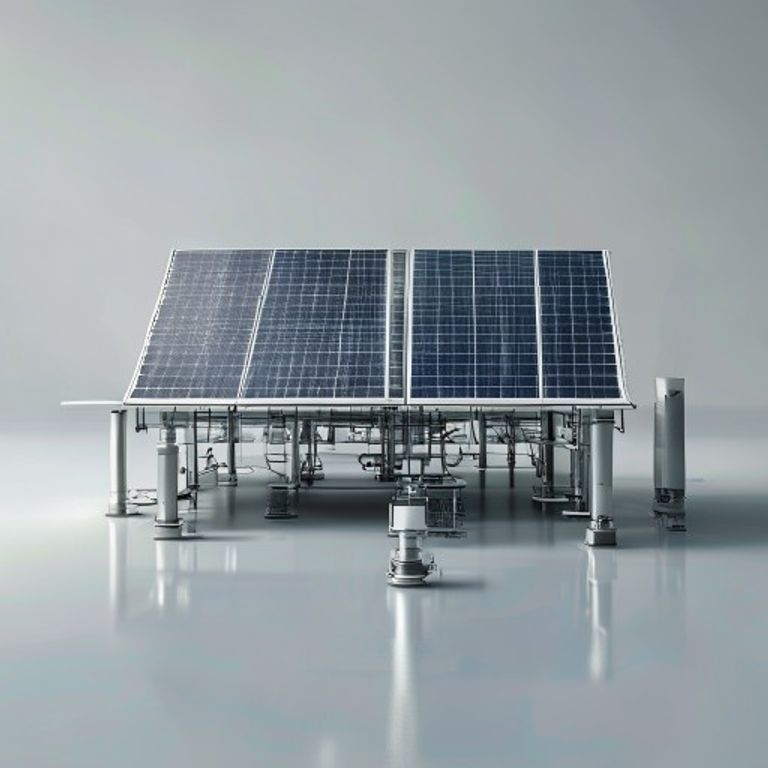
The heart of any solar heating system is the collector. It’s not a photovoltaic panel that makes electricity. It’s a black absorber plate inside an insulated box, covered by glass or plastic. Sunlight hits the plate, it heats up, and that heat gets transferred to a fluid – usually water or a glycol antifreeze mix – running through tubes bonded to the plate.
Two main types dominate the market. Flat-plate collectors are the workhorses. They cost less, last decades, and deliver water temperatures around 140-160°F when sun is strong. Evacuated tube collectors use glass tubes with a vacuum inside. The vacuum cuts heat loss to nearly zero, so they perform better in cold weather and can push temperatures above 200°F. But they cost more per square foot, and the glass tubes can break if hail hits them.
Efficiency numbers matter. A good flat-plate collector converts about 50-65% of the sun’s energy into heat. Evacuated tubes hit 60-75% on a clear day. The real difference shows up on a cloudy 30°F morning – flat plates lose a lot of heat to the cold air, while evacuated tubes barely notice.
You’ll need about 1 square foot of collector per 1.5-2 gallons of daily hot water demand. A family of four typically uses 60-80 gallons per day, so you’re looking at 30-40 square feet of collector area. That’s roughly two standard 4×8 panel assemblies.
Active versus passive: which fluid loop fits your home?
Once the collector gets hot, the heat has to move somewhere. How that happens splits systems into two categories. Active systems use a pump to circulate fluid. Passive systems rely on natural convection – warm fluid rises, cool fluid sinks – with no moving parts.
Inside active systems, you have direct (open-loop) and indirect (closed-loop) setups. Direct systems pump your household water through the collector. They’re simple and efficient, but only work if your water is soft and the climate never freezes. One winter freeze can burst the pipes. Indirect systems circulate a glycol mixture through the collector, then pass that heat through a heat exchanger to your water tank. They cost more upfront, but they’re freeze-proof and handle hard water without scale buildup.
Passive systems, often called thermosyphon systems, place the tank above the collector. Water heats in the panel, rises into the tank, and denser cold water flows back down. They need the tank to be at least 18 inches above the collector, which usually means putting the tank in an attic or on the roof. No pump, no controller, no electricity – just physics. They’re simple and reliable, but the tank location can be awkward, and they lose more heat at night because the pipe loop is always open.
Here’s a quick comparison of the common approaches:
| System Type | Freeze Protection | Efficiency | Upfront Cost | Best For |
|---|---|---|---|---|
| Direct active (open loop) | None – must drain | Highest | Low | Warm climates, soft water |
| Indirect active (closed loop) | Glycol antifreeze | High (some loss in heat exchanger) | Medium-high | Cold climates, hard water |
| Passive thermosyphon | Poor – must be above freeze line | Medium (heat loss at night) | Lowest | Hot climates, off-grid cabins |
Most homeowners in northern climates go with an indirect active system. The extra cost pays for itself the first time a cold snap hits and you don’t have burst pipes.
Where the heat goes when the sun stops shining
Solar makes heat during daylight, but you need it at night and on cloudy days. That’s where storage and backup come in. A typical residential system uses a 80-120 gallon storage tank. The tank is heavily insulated – R-20 or better – to keep heat loss under 1°F per hour. Some systems use a separate preheat tank that feeds into your existing water heater, so the conventional unit only fires when solar hasn’t brought the water up to temperature.
Solar energy storage can include phase-change materials (like paraffin wax) that absorb a lot of heat while melting, then release it when solidifying. These are more common in space heating than water heating. If you’re using solar for both domestic hot water and space heating (hydronic radiant floors or baseboard radiators), you’ll need a larger tank – 200-500 gallons – plus a heat exchanger for the heating loop.
Every solar heating system needs a backup. Common options: electric resistance elements in the storage tank, gas or propane tankless water heaters, or a heat pump. Integration with other energy sources is straightforward – most controllers have an auxiliary output that fires the backup when the tank drops below a set temperature.
Sizing matters. An undersized system lets the backup do too much work and kills your savings. An oversized system wastes money on collectors and storage you don’t need. Good rule of thumb: size the collector area to cover 60-70% of your annual heating load. That gives you 80-100% coverage in summer and 30-50% in winter, which is usually the sweet spot for payback.
For a full sizing calculator, see system sizing guide that walks through demand, latitude, and collector orientation.
Is solar heating actually worth the money?
Let’s talk dollars. A complete solar water heating system installed runs $4,000 to $8,000 after the federal tax credit (currently 30% in the US). For space heating plus water, expect $8,000-$15,000. Payback period depends heavily on your current fuel. If you heat with electricity at $0.12/kWh, payback is 6-10 years. With natural gas at $1.00/therm, it stretches to 12-18 years. Propane and oil users see the fastest return – those fuels are expensive per BTU.
Regional effectiveness is a big factor. Solar works well in the Southwest, but it also works in New England – just with lower winter output. The key is whether you have good southern exposure with minimal shading. A roof that faces south and gets full sun from 9 AM to 3 PM is ideal. Even a southeast or southwest orientation works, but you lose 10-15% of the potential energy.
Honest caveat: solar heating isn’t plug-and-play. It takes roof space (40-100 sq ft), requires professional installation for most systems, and the glycol in indirect systems needs replacement every 3-5 years. The pumps and controllers are reliable but not immortal – plan for a new pump after 10-15 years. Still, for the right house and climate, solar heating cuts water heating bills by 50-80% and space heating by 20-40%. The environmental benefit is real: each system offsets 1-3 tons of CO2 per year.
If you’re handy and want to install yourself, the evacuated tube kits are easier to mount than flat plates. But any DIY system needs careful pressure testing – a leak behind a finished wall is a nightmare.
Five real questions people ask about solar heating
Can solar heating work in cold climates?
Yes, but only with the right equipment. Evacuated tube collectors and indirect glycol systems handle temperatures as low as -30°F. Flat-plate collectors in cold climates need a drainback system – when the pump stops, the water drains out of the collectors into a tank inside the house. That prevents freezing. Many solar heating systems operate successfully in Canada, Scandinavia, and the northern US. The key is good insulation on pipes and tanks, plus a reliable backup.
How much roof space do I need?
For domestic hot water only, about 40-60 square feet of unobstructed south-facing roof. That’s roughly two standard 4×6 or 4×8 panels. For combined water and space heating, figure 80-120 square feet. If your roof is shaded or faces east/west, you’ll need 20-30% more area to compensate.
Do I need a special water heater?
Not necessarily, but a solar-ready tank helps. Many standard electric water heaters have two elements – the bottom element can be replaced with a heat exchanger coil, or you can add an external heat exchanger. The easiest route is buying a tank with two ports: one for the solar loop, one for the backup. Some manufacturers make dedicated solar storage tanks with dual coils. If you have a tankless water heater, you can install a preheat tank ahead of it – the solar-heated water flows into the tankless, which only fires if needed.
How long do solar heating systems last?
Collectors themselves last 20-30 years. Flat-plate panels with tempered glass endure hail and snow well. Evacuated tubes can last 15-25 years, though individual tubes may break and need replacement (about $20-40 each). Pumps last 10-15 years, controllers 15-20, and the glycol fluid should be replaced every 3-5 years. Storage tanks with glass liners typically last 10-15 years. Overall, a well-installed system will save you money over its life, but it’s not maintenance-free.
Can I use solar for both water and space heating?
Absolutely. That’s called a combi system. You need a larger storage tank (200+ gallons) and a heat exchanger to feed radiant floor or baseboard circuits. The collectors can be sized to handle about 60% of your total heat load. Combi systems cost more upfront but eliminate the need for a separate water heater. They work best with low-temperature heating systems like radiant floors (110-130°F water) rather than forced air.
What you can do right now
- Check your roof’s solar potential using an online tool like Google’s Project Sunroof or a simple compass to see true south alignment and note any shade from trees or chimneys.
- Look up your local incentives: the federal tax credit (30% through 2032) plus state rebates can cut net cost by half in some places.
- Compare your current heating fuel cost to solar projections. Switch to a solar-quote calculator that accounts for your exact location and usage.
- If you hire a contractor, get at least three quotes and ask for references from systems at least three years old. Ask specifically about freeze protection strategy in your climate.
- Start with solar water heating only – it’s simpler, cheaper, and pays back faster than full space heating. Add space heating later if your system is designed for expansion.
- Don’t undersize storage. A bigger tank gives you more usable heat on cloudy days and reduces backup run time.
- Read the Solar Water Heating book mentioned earlier if you want to understand every part before you commit. It’s a cheap insurance policy against bad decisions.

I am a mechanical engineer and love doing research on different home and outdoor heating options. When I am not working, I love spending time with my family and friends. I also enjoy blogging about my findings and helping others to find the best heating options for their needs.
Related guides

15 Proven Ways to Maximize Solar Heating System Efficiency
You spent good money on a solar heating system. Maybe it heats your home's water or your pool.…

Solar Heating System Lifespan: How Long Do They Last?
The lifespan of a solar heating system typically ranges from 20 to 30 years, depending on maintenance and…
How Solar Heating Works With Other Energy Sources
The Real Problem With Solar-Only HeatingYou spent good money on solar thermal panels. On a bright January afternoon,…
