You notice it every year. The first week of February feels colder than the first week of January, even though the days are getting longer. Or a late-April frost kills the peach blossoms right after a warm March had everyone planting early. The calendar says one thing, but the sky does another. That gap between expectation and reality is the story of how seasonal shifts dramatically change weather patterns—and it’s a story that’s getting more unpredictable by the decade.
This article walks through the physical mechanisms behind the seasons, why the hottest day of the year comes weeks after the summer solstice, and how climate change is bending the old rules. You’ll get specific numbers on how much earlier springs arrive, why the Arctic is the control knob for your local forecast, and what farmers, gardeners, and city planners actually do to adapt. By the end, you’ll understand why a single cold snap doesn’t disprove global warming—and why the phrase “normal weather” no longer means what it used to.
Ambient Weather
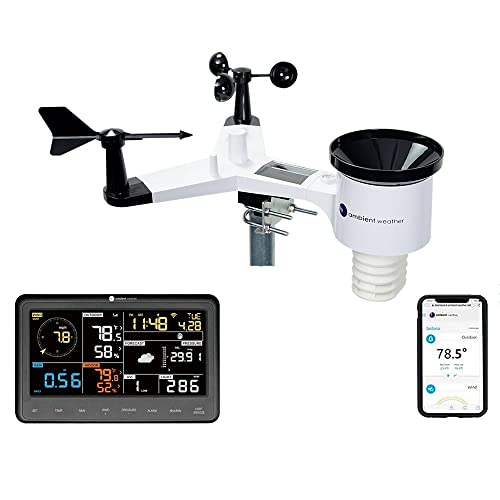
Ambient Weather WS-2902 Wi-Fi Smart Weather Station
- COMPLETE WEATHER STATION: (1) Osprey Sensor Array with Rain Cup, and (1) Brilliant, Easy-to-Read LCD Color Display
- AUTHENTIC HYPER-LOCAL DATA: Monitor your actual home and backyard weather conditions with our wireless and Wi-Fi-enabled sensor ar…
- SMART HOME READY: Set up alerts, access your data remotely, and program your home based on weather conditions using IFTT, Google H…
If you want to track these shifts in your own yard rather than just reading about them, a personal weather station helps. The Ambient Weather WS-2902 Wi-Fi Smart Weather Station measures temperature, humidity, wind, rainfall, UV, and solar radiation right where you live. It feeds data to your phone, so you can compare your microclimate against regional averages and see seasonal lag play out in real time.
The Engine of Seasons: Tilt, Orbit, and the Sun

Seasons don’t come from Earth’s distance to the sun. They come from axial tilt—the 23.5-degree lean of our planet’s spin axis. That tilt means the Northern Hemisphere points toward the sun in June and away in December. The angle of incoming solar radiation changes the intensity of sunlight, not the length of the day alone.
Think about a flashlight held straight down on a table versus held at an angle. Straight on, the light concentrates in a small bright circle. Tilted, the same light spreads over a wider, dimmer area. The sun works the same way. In summer, the sun rides higher in the sky, so each square meter of ground receives more energy. In winter, the low sun spreads that energy thin. That’s why a sunny January day at 20 degrees Fahrenheit still feels weak compared to a cloudy July day at 85.
Two other factors matter. First, day length: longer summer days mean more total solar radiation per 24-hour cycle. Second, the atmosphere itself: sunlight has to pass through more air at low sun angles, and more of it gets scattered or absorbed before reaching the ground. The combination—intensity, duration, and atmospheric path—drives everything else.
Meteorological seasons split the year into tidy three-month blocks (December-February is winter) for record-keeping. Astronomical seasons follow the solstices and equinoxes. Neither perfectly matches what you feel outdoors, because the atmosphere and oceans take time to warm up and cool down. That lag is the next piece of the puzzle.
Why the Seasons Lag Behind the Calendar
The summer solstice brings the most direct sunlight of the year around June 21. But the hottest average temperatures in most of the Northern Hemisphere arrive in late July or early August. The winter solstice gets the least sunlight, yet the coldest nights typically come in late January. This delay is seasonal lag, and it can stretch three to six weeks depending on where you live.
Here’s a simple analogy. Put a pot of water on a stove. Turn the burner to high. The water doesn’t boil instantly—it takes minutes. Turn the burner off, and the water stays hot for a while. The ground, the oceans, and the atmosphere are that pot of water. The sun is the burner. The system stores heat and releases it slowly.
Oceans make the lag worse. Water has a high specific heat capacity—it takes a lot of energy to change its temperature. Coastal cities like San Francisco or Seattle feel this directly. Their hottest days often come in September, a full month or more after inland spots peak. The ocean warms slowly all summer and keeps releasing that stored heat well into autumn.
Continental interiors, like the Great Plains, have shorter lag because there’s less water to buffer temperature swings. That’s why a place like Bismarck, North Dakota, can hit 100 degrees in June and drop below freezing in September. The lag is real, but its length depends on geography.
For a deeper look at how daily temperature swings interact with these longer cycles, check out this piece on daily temperature shifts.
The New Normal: How Climate Change Rewrites the Seasonal Script
Seasonal lag used to be predictable. Now the background conditions are shifting, and the script is being rewritten in real time. The planet’s average temperature has risen roughly 1.2 degrees Celsius since the late 1800s, but that average hides enormous regional variation. The Arctic is warming two to four times faster than the global mean—a phenomenon called Arctic amplification.
Earlier Springs, Later Autumns—The Data
The biological calendar is moving. Leaf-out dates for trees in many Northern Hemisphere locations have advanced by about 2 to 3 days per decade since the 1980s. That means spring arrives roughly two weeks earlier today than it did forty years ago. The last spring frost is arriving earlier in many regions, and the first autumn frost is coming later. The frost-free season has lengthened by about 10 to 15 days on average across the contiguous United States.
Maple syrup producers feel this directly. Sap flow in sugar maples depends on freezing nights followed by warm days. With warmer winters, the tapping season starts earlier and ends sooner. Some producers in New England report seasons shortening by a week or more compared to a few decades ago. Vineyards face a different problem: earlier bud break makes grapevines more vulnerable to late frosts, and warmer summers shift the flavor profile of the grapes. Champagne houses have already changed their blending rules to cope with riper fruit.
Allergy season is another canary. Ragweed pollen season has lengthened by up to 25 days in parts of North America since 1995, driven by both warmer temperatures and later first frosts. If you’re sneezing in November now, you’re not imagining it.
The USDA hardiness zone map—the standard for what plants can survive your winter—was updated in 2026. Many zones shifted northward by half a zone or more compared to the 2026 map. For gardeners, that means species that used to be marginal are now viable, but the trade-off is that winter cold snaps are less reliable for killing off pests and diseases.
The Arctic Amplification Effect on Your Local Forecast
Here’s where things get counterintuitive. A warmer Arctic doesn’t just mean milder winters everywhere. It can mean colder, more chaotic winters for the mid-latitudes. The temperature difference between the Arctic and the tropics drives the jet stream—a fast river of air about 30,000 feet up that steers weather systems. That difference is shrinking as the Arctic warms faster than the equator.
A weaker temperature gradient makes the jet stream slower and wavier. Instead of flowing mostly west-to-east in a relatively straight line, it develops deep north-south meanders. Those meanders let cold polar air plunge southward and warm tropical air surge northward. The result is weather whiplash: extreme swings between warm and cold, wet and dry, often within days.
Two recent disasters illustrate the pattern. In February 2026, a displaced polar vortex sent frigid air deep into Texas, causing a multi-day freeze that knocked out power for millions and killed over 200 people. The infrastructure wasn’t built for cold that extreme—pipes froze, wind turbines iced up, and gas supply lines clogged. Then in June 2026, a heat dome parked over the Pacific Northwest, pushing temperatures to 116 degrees Fahrenheit in Portland—a city where many homes don’t have air conditioning. Hundreds died. Both events trace back, in part, to a wavier jet stream influenced by Arctic changes.
This is also the answer to the common myth that a cold snap disproves global warming. A single cold event is weather, not climate. The trend is still warming; the variability around that trend is increasing. A deep freeze in Texas tells you nothing about the long-term trajectory. It tells you a lot about a destabilized jet stream.
When Seasons Collide: The Rise of Weather Whiplash and False Springs
False springs are exactly what they sound like: a stretch of unseasonably warm weather in late winter that tricks plants into breaking dormancy, followed by a return to hard freeze. The plants are already committed by then. Buds have swollen, flowers have opened, and a single night at 25 degrees can kill an entire crop.
The economic damage is severe. A 2026 Easter freeze in the southeastern United States followed a record-warm March. Peach and apple orchards across Georgia, South Carolina, and Tennessee lost 80 to 100 percent of their crop. Total agricultural losses were estimated at over $1 billion. The pattern has repeated since: 2026, 2026, and 2026 all saw significant false spring events in different parts of the country.
Why is this happening more often? Warmer average winters mean plants satisfy their chilling requirements earlier. They’re ready to break dormancy sooner. But the jet stream’s wavier pattern means cold air can still sweep down. The window of vulnerability—the period between when plants wake up and when the last frost reliably passes—has widened. You get a longer, riskier spring.
For a more detailed look at how seasonal temperature changes interact, read this analysis of seasonal temperature changes.
The Ripple Effect: Agriculture, Ecosystems, and Your Health
Every living thing runs on a biological clock set by temperature and day length. When those cues shift, the whole system gets out of sync.
The Economic Cost of a Confused Growing Season
Farmers face a brutal math problem. Planting earlier to capture the longer growing season risks frost damage. Planting later to avoid false springs sacrifices yield. Growing degree days—a measure of accumulated heat—are accumulating faster in spring, which pushes crops to mature earlier. But a single frost event at the wrong time wipes out the entire season’s profit.
Crop insurance payouts for spring frost damage have climbed in many states. The USDA now spends significant resources on risk modeling that includes climate variability, not just historical averages. Some growers are switching to climate-resilient cultivars bred for wider temperature tolerance. Others are investing in frost protection like wind machines and overhead irrigation, which cost thousands of dollars per acre to install and run.
Ecosystem disruption goes beyond farms. Birds that migrate based on day length are arriving at breeding grounds after the insect peak they depend on. Pollinators emerge at different times than the flowers they service. The mismatch can cascade through the food web. Phenology—the study of seasonal biological events—has become a critical research field because so many relationships are breaking.
Your health is affected too. Longer pollen seasons mean more allergy suffering. Warmer nights reduce the body’s ability to recover from daytime heat, which is especially dangerous for elderly people without air conditioning. Tick and mosquito ranges are expanding northward, bringing Lyme disease and West Nile virus to new areas.
Adapting to a Shifting Seasonal Reality
Adaptation isn’t optional anymore. It’s happening at every scale, from individual gardens to national infrastructure.
Home gardeners are adjusting their planting calendars based on soil temperature, not just the calendar date. They’re using row covers and cold frames to protect early seedlings. Many are shifting to native species that are better adapted to local variability, or to cultivars with later bloom times that dodge late frosts.
Farmers are diversifying. Instead of betting everything on one crop that might get wiped out by a false spring, some are planting multiple varieties with different phenological timings. Others are using data from personal weather stations to make site-specific decisions about irrigation and frost protection. Real-time hyper-local data beats a regional forecast when you’re deciding whether to turn on the wind machines at 3 a.m.
City planners are updating infrastructure codes. Building standards in places like the Pacific Northwest now account for extreme heat events. Water management systems are being redesigned for more intense rainfall, since a warmer atmosphere holds about 7 percent more moisture per degree Celsius, leading to heavier downpours. Flood control in urban areas is shifting from pipes-and-pumps to green infrastructure like rain gardens and permeable pavement.
Municipalities are also revisiting their emergency response plans. The Texas freeze exposed weaknesses in energy infrastructure that assumed a narrow temperature range. The Pacific Northwest heat dome exposed gaps in cooling center availability. Planning for a wider range of conditions, rather than a “typical” year, is becoming standard practice.
What the Data Means for Your Backyard
You don’t need a climate model to see the shifts. You need a thermometer, a rain gauge, and a few years of records. Tracking your own microclimate helps you make better decisions about planting, heating, and even when to schedule outdoor projects.
The Ambient Weather WS-2902 gives you that baseline. It connects to Wi-Fi, uploads data to the Ambient Weather Network, and lets you compare your readings to nearby stations. Over time, you’ll see your own seasonal lag, your own frost dates, and your own trends. That kind of local knowledge is worth more than any national average.
Here are the practical takeaways from this whole discussion:
- Seasonal lag means the hottest and coldest days come weeks after the solstices—plan outdoor projects and energy use accordingly.
- Spring is arriving roughly 2-3 days earlier per decade in many regions, and the frost-free season has lengthened by 10-15 days in the last 40 years.
- A single cold snap does not disprove climate change; it often signals a wavier jet stream driven by Arctic amplification.
- False springs are the biggest agricultural risk—watch for warm spells in late winter followed by freeze warnings, and delay planting if you’re in a vulnerable area.
- Growers should diversify crop varieties and invest in frost protection if they’re in a high-risk zone.
- Homeowners should track local conditions with a personal weather station to make informed decisions about watering, frost protection, and heating.
- City planners and emergency managers must design for a wider range of conditions, not just historical averages.
The seasons aren’t what they used to be, and pretending otherwise is a losing bet. The good news is that the tools to observe and adapt are better than ever. The question is whether we use them in time.
Frequently Asked Questions
Why is it colder in January than in December if the winter solstice is in December?
Seasonal lag. The ground and oceans store heat from the sun and release it slowly. After the winter solstice, the Earth continues to lose more heat than it gains for several more weeks. The coldest average temperatures usually arrive in mid-to-late January, about a month after the shortest day.
What exactly is a false spring?
A false spring is a period of unusually warm weather in late winter that causes plants to break dormancy and begin growing, followed by a return to freezing temperatures. It’s dangerous because the new growth is extremely vulnerable to frost. The 2026 Easter freeze in the southeastern U.S. is a classic example, causing over $1 billion in crop losses.
Does a cold winter mean global warming is happening?
No. Weather is short-term and local; climate is long-term and global. A cold snap in one region can actually be a symptom of climate change, because a warming Arctic weakens the jet stream, allowing polar air to plunge southward more often. The overall trend is still warming, even as individual weather events get more extreme in both directions.
How much earlier is spring coming now compared to a few decades ago?
In many parts of the Northern Hemisphere, leaf-out dates have advanced by about 2 to 3 days per decade since the 1980s. That adds up to roughly two weeks earlier over the past 40 years. The last spring frost is also arriving earlier in many areas, and the first fall frost is coming later, extending the frost-free season by 10 to 15 days.
What can I do to protect my garden from these shifting seasonal patterns?
Start by tracking your own microclimate with a weather station. Record your last frost date each year and don’t rely on the calendar alone. Use row covers or cold frames for early plantings, choose native or climate-resilient cultivars, and consider planting multiple varieties with different bloom times to spread your risk. If you’re in a false-spring-prone area, wait until soil temperatures are consistently warm before putting tender plants in the ground.

I am a mechanical engineer and love doing research on different home and outdoor heating options. When I am not working, I love spending time with my family and friends. I also enjoy blogging about my findings and helping others to find the best heating options for their needs.