A blanket works by slowing heat loss through the tank jacket, so the burner or elements cycle less often. That matters most on tanks that sit in cold basements, garages or utility rooms, and least on newer tanks that already have thick factory insulation.
The practical question is simple: if the tank already holds heat well, adding more wrap saves a few dollars a month at best. If you can feel the tank warming the room, the blanket has something real to do.
Hot Water Tank Blanket Efficiency
Hot water tank blanket efficiency comes down to one thing: slowing the heat that escapes from the tank shell while nobody is using hot water, a loss called standby heat. The blanket wraps the outside of your storage tank and adds an extra layer of insulation, so the water inside stays hot longer and the burner or element doesn’t fire as often to make up the difference.
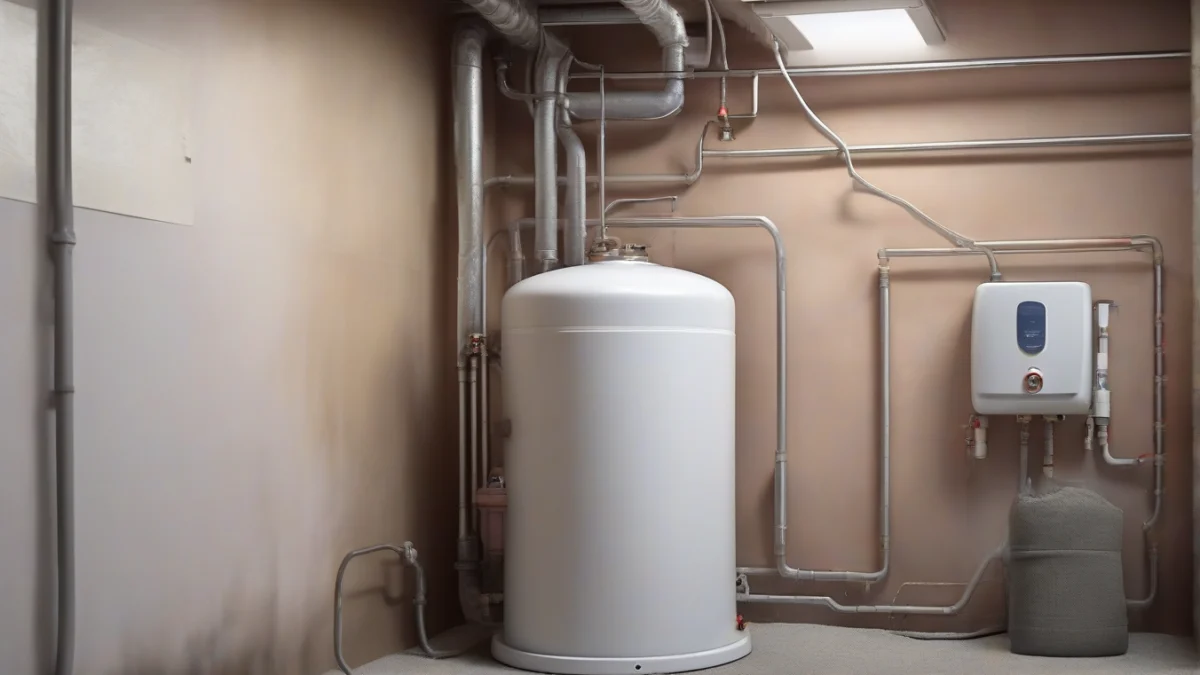
Standby loss is the heat your tank radiates into the room around it between draws. An older tank with a bare metal jacket or thin factory insulation sheds heat steadily. A water heating blanket slows that transfer by holding a layer of dead air or reflective material against the steel, much the way a jacket keeps you warm by trapping body heat.
Lower idle heat loss means fewer reheat cycles. Every time the tank temperature drops a few degrees, the burner or element kicks on to bring it back to setpoint. Cutting standby loss by 40% doesn’t cut your total water heating bill by 40%, because most of the energy goes into heating incoming cold water, not making up for what leaks through the shell. But it does reduce the share wasted between showers.
You’ll see the most benefit if your tank is older, sits in an unheated space, or has a thin jacket you can feel warm to the touch. Skip the blanket if your tank is new with thick foam insulation, if the controls or T&P valve would end up covered, or if you can’t leave clearance around the flue collar and draft hood on a gas unit.
| Tank type | Factory insulation | Blanket value |
|---|---|---|
| Pre-1990s bare or thin jacket | R-4 to R-7 | High: noticeable drop in cycle frequency |
| Standard 2000s tank | R-12 to R-13 | Modest: some reduction in cold rooms |
| High-efficiency rated tank | R-16 or better | Low: minimal measurable change |

Where The Heat Actually Goes
A storage water heater loses heat in three places: through the tank jacket, along the hot pipes connected at the top, and during burner or element cycling. A blanket only addresses the first one. The insulation wraps around the tank shell to slow radiant and convective losses from the jacket itself, but it won’t stop heat creeping up the outlet pipe or air leaking through a drafty utility room door.
General plumber consensus on hot water tank blankets is cautious: they help on older tanks with thin factory insulation, especially models from the 1990s or earlier, but show little benefit on anything manufactured in the last fifteen years. The difference comes down to R-value. An atmospheric tank from 1995 might carry R-6 to R-8 insulation; a current atmospheric model typically ships with R-12 to R-16, and a high-efficiency condensing tank can reach R-20 or better. Adding a blanket rated R-5 or R-7 to an already well-insulated jacket does little, since standby loss was already low.
On an older atmospheric tank, wrapping the jacket means the burner or element fires less often, saving a bit of gas or electricity. The tradeoff: your basement or utility room may feel slightly cooler in winter, because less waste heat leaks out to warm the space. That side effect isn’t the point of the blanket, but it’s real. If the water heater sits in conditioned space—say, a hallway closet—you’ll make up the lost heat with your furnace or heat pump, which can erase part of the savings depending on fuel costs.
High-efficiency tanks respond less to a blanket because they already waste less. An atmospheric tank vents hot exhaust straight up the flue and cycles more often; a condensing tank captures that heat, insulates better and loses less between draws. The table below shows typical standby loss for a 50-gallon tank.
| Tank type | Typical R-value | Standby loss per hour |
|---|---|---|
| Older atmospheric (pre-2000) | R-6 to R-8 | 1–2% of stored heat |
| Current atmospheric | R-12 to R-16 | 0.5–1% |
| High-efficiency condensing | R-18 to R-24 | 0.3–0.5% |
Is a hot water heater blanket worth it on new hot water heaters? Usually not. If the jacket feels cool to the touch and the tank carries an Energy Factor above 0.90, standby loss is already minimal. Focus instead on pipe insulation, lower thermostat settings and fixing leaks that waste heated water.
When A Blanket Is Worth It
A blanket is worth considering on older tanks in unheated spaces—garages, crawlspaces, uninsulated basements—or on any tank where the jacket feels noticeably warm an hour after the last hot-water draw. Thin factory insulation and cold surroundings combine to push standby loss high enough that a few dollars of foam and foil can pay back within a year or two. The purpose of a hot water blanket is straightforward: slow conductive and radiant heat loss from the tank shell so the burner or element cycles less often.
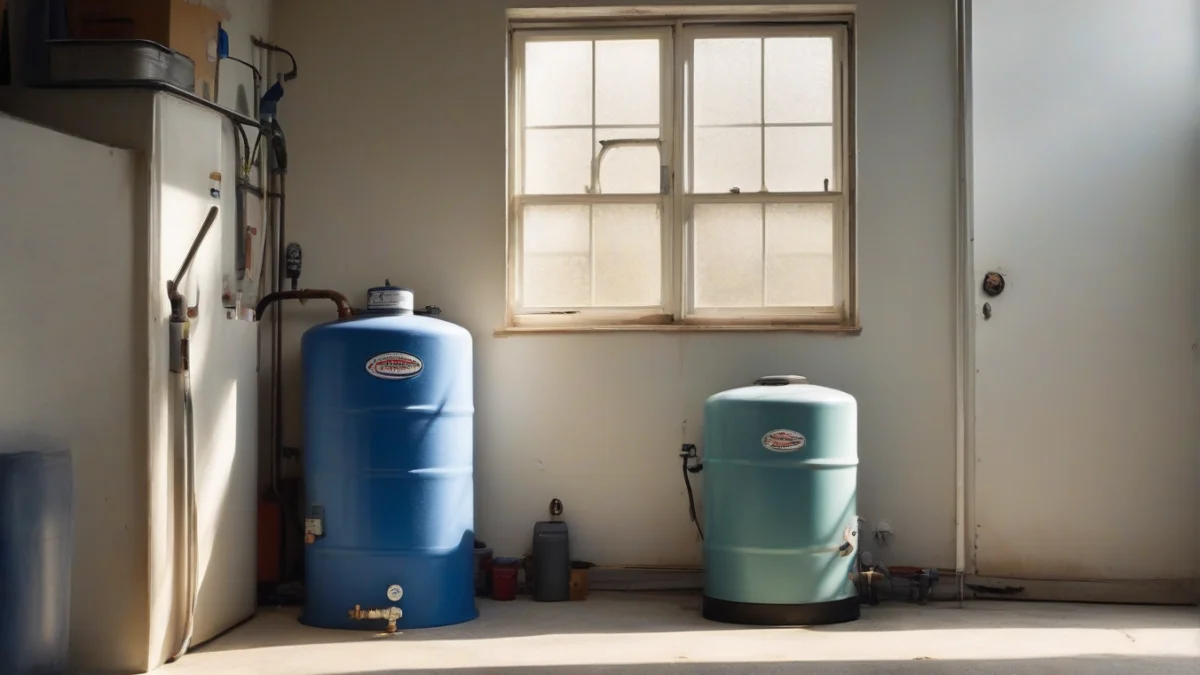
It’s usually not worth the effort on newer tanks with thick factory jackets. If your tank was installed after 2010 and the shell stays cool, standby loss is already low and a blanket won’t move the needle much. That said, a blanket can make sense as a low-cost stopgap before replacement—delaying a few months of higher bills—but it’s not a substitute for a properly sized or higher-efficiency water heater when the old one fails.
Hot water blanket efficiency depends on local energy rates, how much hot water you use, and basement temperature. A household drawing 50 gallons a day in a 55°F basement will see bigger savings than one using 30 gallons in a 68°F mechanical room. Electric resistance tanks show savings in kilowatt-hours; gas tanks save therms. At 17 cents per kWh, cutting standby loss by a third might save $3 to $6 a month on an older electric tank. At $1.50 per therm, a gas tank might save $2 to $4.
General plumber consensus: a blanket is a reasonable fix for an old tank in a cold space, but it won’t rescue a badly undersized heater or one nearing the end of its service life. If you’re comparing broader changes, improving your heating and hot water system’s efficiency with pipe insulation, a timer or a lower setpoint often delivers more savings for the same effort.
How To Install Without Blocking Service Access
Installation takes about fifteen minutes, but you’ll need to leave every control, valve and access panel clear—buried thermostats and blocked burner compartments turn a simple upgrade into a safety problem or a service headache down the road.
Gas-fired tanks need combustion air around the base and access to the burner compartment, gas control valve, thermostat and pilot. Electric tanks have upper and lower access covers for the thermostats and elements. Both types have a T&P valve and discharge pipe that you can’t cover or obstruct. Water heater blankets can be trimmed to fit around these features, but cut edges still need to leave every opening reachable.
Better Ways To Cut Water Heating Cost
Wrapping your tank is one lever, but bigger savings usually come from a better-insulated or right-sized water heater, shorter hot-water pipe runs, and a lower setpoint where scald risk allows. Heat-pump water heaters are often the most efficient choice for electric homes, pulling two to three times more heat from the air than they consume in electricity. Tankless units help when standby loss is the issue—no tank means no heat bleeding away between draws—but they demand higher flow rates and often a larger gas line or dedicated 240 V circuit.
Propane or natural gas storage tanks with high-efficiency burners and thick foam jackets sit in the middle: lower operating cost than standard resistance electric, higher than a heat pump. Boilers feeding domestic hot water through a coil or indirect tank are judged more by delivery rate and control strategy than raw BTU rating alone; a well-matched indirect with a modulating boiler can be very efficient, but an oversized boiler short-cycling to heat a small coil wastes fuel. Bradford White and Lochinvar both make capable units, yet model-by-model specs—recovery rate, standby loss, energy factor—matter more than the badge.
| Option | Strengths | Weaknesses |
|---|---|---|
| Storage tank + blanket | Low upfront cost, simple retrofit | Standby loss remains, modest savings |
| High-efficiency storage | Better insulation, lower standby loss | Still loses heat when idle |
| Tankless (gas or electric) | No standby loss, endless hot water | High peak demand, slower flow in winter |
| Heat-pump water heater | Lowest electric operating cost | Needs warm ambient air, higher upfront cost |
| Indirect tank + boiler | Efficient with good controls, long life | Depends on boiler sizing and cycling |
Pipe insulation and fixture aerators cost little and cut the heat you’re paying to deliver and then dump down the drain. Dropping the tank setpoint from 140°F to 120°F saves energy and reduces scald risk, though households with a dishwasher lacking a booster heater or anyone with a suppressed immune system should check the appliance manual and consult a doctor before turning it down. Readers comparing broader system upgrades can improve heating and hot water system efficiency with the same careful matching of equipment to load.
What To Check Before You Buy
Measure the tank diameter and height, check that every control and valve remains accessible, and confirm the jacket feels warm when the room is cool—that warmth is the standby heat a blanket can slow. Tanks already wrapped in thick foam, or sitting in a heated living space where leaked heat warms the house anyway, see little benefit. Readers wondering do hot water blankets really work will find a deeper proof-based treatment there.
Roll-form blankets like the one shown can be trimmed with scissors and wrapped to leave the top, bottom and service panels clear; one-piece rigid jackets are faster to install but harder to fit around pipes and controls. Leave the entire burner compartment and flue collar unwrapped on gas heaters, and stop the blanket an inch below the T&P valve so you can see any drips. Electric tanks are simpler: wrap the sides, leave the top open for the cold inlet and hot outlet, and tape the seam with foil tape or the tape supplied with the kit.
Frequently Asked Questions
Do hot water blankets really work?
Is a hot water heater blanket worth it on new hot water heaters?
What is the purpose of a hot water blanket?
What is the most efficient way to heat water?
Are solar water panels efficient?

HeaterGuides covers home heating, water heating and HVAC: how the equipment works, what it costs to run, and how to use it safely.