Horizontal Space Heaters Reviewed: Low-Profile Heat That Spreads Wide
On this page 9 sections
- Horizontal Space Heater Comparison
- Best Horizontal Space Heaters Reviewed
- DREO Space Heater Review: Why It’s Best for Whole Rooms
- How to Choose a Horizontal Space Heater That Fits Your Room
- Sizing and Running Costs: What to Expect from Horizontal Heaters
- Safety and Certification: What Makes a Horizontal Heater Safe Indoors
- What Competitors Leave Out: Quietness and Smart Controls Matter
- Pre-Buy Checks for Horizontal Space Heaters
- Questions People Ask
Horizontal space heaters combine efficient heat spread with a low profile, making them ideal for rooms where floor or wall space is limited. Many people think all space heaters are noisy or only provide spot heat, but the best horizontal models deliver quiet, consistent warmth across a whole room without wasting energy or space.
Choosing the right horizontal heater depends on room size, noise tolerance, safety features, and control options. Below, we rank the top five models, then explain how to size and run your heater safely and cost-effectively.
Horizontal Space Heater Comparison
| Model | Best for | Heat Output (W) | Oscillation | Safety Features | Room Size (sq ft) | Price |
|---|---|---|---|---|---|---|
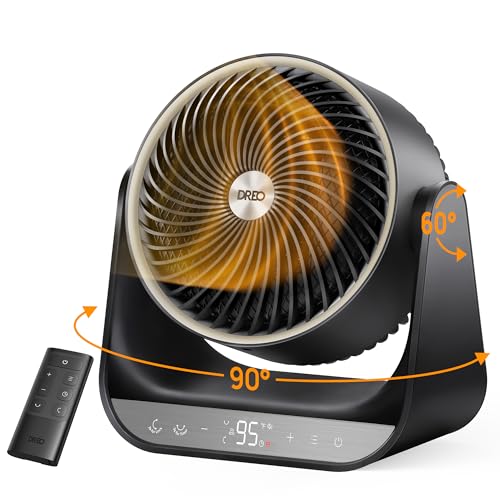
| DREO 3D Oscillating Heater | Best Overall | 1500W | 60° vertical, 90° horizontal | ETL listed; overheat shutoff; tip-over protection; flame-retardant housing | — | Why it is here |
| Gyrivav Horizontal/Vertical Heater | Best Fixed Direction | 1500W | Fixed directional heating | Automatic overheat protection at 167°F; 18-hour automatic shutoff | Up to 220 | Why it is here |
| shinic Compact Horizontal Heater | Best Small-Space Pick | 750W or 1500W | — | ETL listed; flame-retardant materials; 158°F overheat protection; 45° tip-over s | Up to 200 | Why it is here |
| COMFORT ZONE CZ650B Baseboard Heater | Best Digital Thermostat | 1500W | — | Overheat protection; tip-over switch; stay-cool body | Medium-sized rooms | Why it is here |
| COMFORT ZONE CZ600 Baseboard Heater | Best Simple Baseboard | 1500W | — | Overheat protection; tip-over switch; stay-cool body | Medium-sized rooms | Why it is here |
Best Horizontal Space Heaters Reviewed
DREO 3D Oscillating Heater

Gyrivav Horizontal/Vertical Heater

shinic Compact Horizontal Heater

COMFORT ZONE CZ650B Baseboard Heater

COMFORT ZONE CZ600 Baseboard Heater
DREO Space Heater Review: Why It’s Best for Whole Rooms

The DREO Whole Room Heater is the strongest pick here for heating a whole room evenly because its 3D oscillation spreads warmth across a wider area than a fixed horizontal outlet. Instead of pushing heated air toward one chair, the heater moves the airflow across the room and up and down, helping reduce the cold corners that make a small heater feel weaker than its rating suggests.
Its 1,500W PTC ceramic heating element is built for fast warmth. PTC means positive temperature coefficient: as the ceramic element heats, its electrical behavior changes to help control its temperature. You still get the full output needed for a chilly room, but the heater isn’t relying on a glowing wire exposed to the room. The result is quick forced-air heat rather than the slower, gradual warming of an oil-filled radiator.
Quiet operation makes the DREO easier to use in a bedroom, office or living room where fan noise quickly becomes irritating. The low-noise design matters most at night, when a heater that keeps clicking or running loudly can wake you before the room reaches the set temperature. Advanced safety features add protection against common problems such as overheating or a tip-over, but you should still place the unit on a solid, level surface with 3 feet of clearance and plug it directly into a wall outlet.
ECO mode is the useful control for people who want steadier warmth without running at maximum output every minute. The heater adjusts its operation around the thermostat setting instead of treating the room like an on-off race. A precise digital thermostat also gives you finer control than a basic low-to-high dial, although the temperature you feel will still vary with drafts, insulation and where the heater sits.
 Winter Heating Bill CutterSee what every heater in your home really costs, heat the rooms you use, and cut the waste in 30 days.Cost-per-hour tables for every heaterThermostat schedule and draft-proofing planRunning-cost and bill calculator (Excel)
How to Choose a Horizontal Space Heater That Fits Your Room
Choose a horizontal space heater that matches your room’s size and layout for even heat distribution. Consider the heater’s wattage, which determines its heat output, and match it to your room’s square footage. For example, a 1,500-watt heater typically warms about 150 square feet efficiently. Think about where you’ll place the heater to ensure unobstructed airflow, and check for features like adjustable thermostats and multiple heat settings to control comfort and energy use.
If you’re reading DeLonghi space heaters convection reviews, focus on the points that transfer across models: how evenly the heater warms the room, how accurately its thermostat holds a setting and how much fan or relay noise you hear. For an Orion convector panel room heater review, check the same basics, then ask whether its fixed convection pattern suits your room. A panel that warms air gently may feel comfortable near a wall, while a directional fan heater usually changes the temperature faster near its outlet.
Compare Airflow Before The Feature List
Oscillation is useful when one heater serves a sofa, desk and walking area because moving airflow covers more than one line across the room. Fixed directional heat is the better fit when you want warmth aimed at one desk, bed or workbench and don’t want the airflow sweeping away. Leave room around either design; furniture pressed against the outlet turns a heater into an expensive air obstruction.
A digital thermostat lets you choose a temperature and can pair with ECO operation, while a dial gives you simpler manual control but less precise adjustment. Digital controls suit bedrooms and offices where steady temperature matters; a dial can be fine for a workshop or occasional spot heating. Check the display and buttons before buying if you need to adjust settings in dim light.
Noise comes from the fan motor, airflow and control relays, so a published low-noise claim is more useful when the manufacturer identifies the operating mode behind it. For quiet rooms, favor a heater with a low setting and a motor designed for reduced noise. Readers comparing the best space heaters should treat quiet operation as a real specification, not a decorative phrase in the product title.
Sizing and Running Costs: What to Expect from Horizontal Heaters
Sizing a horizontal space heater depends on your room’s size and insulation. A standard rule is 10 watts per square foot. For a 200-square-foot room, you’d need around 2,000 watts. Running costs depend on wattage and electricity rates. A 1,500-watt heater running 8 hours daily uses 12 kWh; at 17 cents per kWh, that costs about $2.04 per day. Adjust your use and settings to balance comfort and expense.
Electric resistance heaters turn essentially all of their electrical input into heat at the point of use, so a 1,500 W horizontal model costs the same to run as another 1,500 W electric heater during the same runtime. At 17 cents per kWh, the arithmetic is 1,500 ÷ 1,000 × 8 hours × $0.17, or about $2.04 for one eight-hour night.
| Heater | Watts | Per hour | Per day (8 h) | Per month (30 days) |
|---|---|---|---|---|
| 1,500 W horizontal space heater | 1,500 W | 26¢ | $2.04 | $61.20 |
Oscillation usually improves comfort by moving warm air across more of the room, reducing the hot strip beside the heater and the cold corner across from it. It doesn’t make each watt produce more heat, although better distribution can help the thermostat reach the setpoint without running continuously. Timers and ECO modes matter for the bill because they limit hours or reduce output after the room warms; DREO’s energy-saving modes are useful for that kind of schedule.
Safety and Certification: What Makes a Horizontal Heater Safe Indoors
Safety in horizontal space heaters comes from built-in features and certifications. Look for tip-over switches that cut power if the heater falls, overheat protection to prevent damage, and safety listings from UL, ETL, or CSA. Always use heaters indoors only as specified, keep at least 3 feet of clearance, and plug directly into a wall outlet—not an extension cord or power strip. Follow the manufacturer’s instructions closely to avoid fire hazards and carbon monoxide risks if the heater uses fuel.
Look for a UL or ETL mark on the heater or its packaging, with the exact model covered by the listing. Those marks indicate that an independent testing organization evaluated the product against applicable electrical safety requirements; they don’t promise that the heater is quiet, cheap to run or suitable for a room larger than the manual allows. A certification mark is useful. A mystery sticker is decoration.
Horizontal electric heaters don’t consume oxygen or produce carbon monoxide, but fuel-burning heaters do. Use only an indoor-rated propane or kerosene model indoors, provide the ventilation the manual requires and keep a working carbon monoxide alarm nearby; outdoor, patio, torpedo and construction heaters don’t belong in a room, tent or vehicle cabin.
What Competitors Leave Out: Quietness and Smart Controls Matter
Quiet operation and useful controls can matter as much as wattage if your horizontal heater runs beside a bed, desk or television. Reviews of DREO portable electric heaters should therefore check the stated noise level in decibels, how the fan sounds on low, and whether the heater clicks or beeps during temperature changes.
A lower dB rating generally means less sound, but the kind of sound matters too: a steady fan is easier to ignore than rattling, cycling or a sharp control beep. Tower switches for portable heater reviews deserve the same scrutiny; simple top-mounted buttons are easy to reach, while a remote or display can save you from crossing the room at night.
Controls That Can Cut Run Time
ECO mode usually adjusts heat output or cycles the heater around the set temperature, so it can reduce run time without changing the heater’s maximum wattage. A programmable timer helps in a simpler way: set eight hours instead of letting the heater run all day, or schedule warmth before you get up if the model supports it.
Remote control is handy for changing heat, fan speed and oscillation from a chair. A compatible smart thermostat adds scheduling and remote access, but check exactly what the heater supports; a thermostat can’t safely bypass the unit’s own overheat protection.
Oscillation angle and fan-blade design decide where that warm air goes. A wider sweep can cover people sitting across a room, while a well-shaped grille and balanced fan can spread air with less harsh turbulence. The DREO Whole Room Heater suits buyers who want that broader distribution because its 3D oscillation moves warmth in more than one direction.
Pre-Buy Checks for Horizontal Space Heaters
A useful space heater safety features review starts with the match between the room and the heater: confirm the room size guidance, then check that the wattage is appropriate before comparing remotes or display panels. A Decker space heater review should be judged by the same test, since a familiar brand name doesn’t replace a proper output and safety check.
A standard 1,500-watt heater draws about 12.5 amps on a 120-volt circuit, so avoid running another high-wattage appliance on the same circuit. Before the first cold night, test the controls, timer and tip-over shutoff while you’re present; don’t leave a portable heater running unattended or while you sleep unless the manufacturer specifically says the model is designed for that use.