Highest Wattage Electric Fireplace for Ambiance and Heat
On this page 7 sections
The common mistake is buying for BTU-style thinking and ignoring the flame effect, insert size, and whether you actually want heat on. That usually leaves you with a glowing box that looks fine but either overheats the room or costs more than you expected to run.
For ambiance first, heat second, a 1,500 W electric fireplace is the ceiling for plug-in models, and that is enough for a small-to-midsize room if the fireplace is used as a supplement rather than the only heat source.
H highest wattage electric fireplace

A plug-in electric fireplace tops out at 1,500 watts, because that’s the most a standard 120 V household circuit is designed to carry through a single cord-and-plug appliance. Wattage tells you how much heat the unit makes. It tells you nothing about how good the fire looks.

That second part is the one buyers get wrong. A 750 W fireplace and a 1,500 W fireplace can share the same flame mechanism, the same glowing logs, the same orange wash on the wall behind them. The only difference is how fast the room warms up.
Plug the fireplace directly into a dedicated wall outlet for safe operation. Avoid using a power strip, extension cord, or connecting it to a circuit that also powers heavy appliances like window air conditioners, as this can overload the circuit and trip the breaker. Most US bedrooms and living rooms have 15-amp circuits; kitchens and garages often have 20 A, but the fireplace’s cord and plug are usually rated for 15 A.
| Style | Typical wattage | Best use | Room fit |
|---|---|---|---|
| Flame-only mode | 0 W (heat off) | Ambiance any time of year | Any room, no circuit concern |
| Flame plus heat, low | 750 W | Mood heat on mild evenings | Bedrooms, dens up to about 150 sq ft |
| Flame plus heat, high | 1,500 W | Supplemental heat on cold nights | Living rooms and bedrooms up to roughly 400 sq ft |
| Built-in insert | 1,500 W | Replacing a real firebox opening | Rooms where furniture is already placed |
| Mantel unit | 1,500 W | Fireplace plus a shelf and storage | Living rooms, bedrooms, entryways |
| TV stand unit | 1,500 W | One piece replacing two | Bedrooms and apartments where floor space is tight |
Why 1,500 W Is the Practical Ceiling
A circuit is a pipe, and the breaker is the valve. At 120 V, 1,500 W pulls about 12.5 A, and the National Electrical Code treats a continuous load as one running three hours or more at 80 percent of the circuit rating. Do the math on a 15 A circuit and you land at 12 A, which means a 1,500 W fireplace is already at the edge before the lamp, the phone charger, or the TV enters the picture.
Higher-wattage residential fireplaces exist, but they’re 240 V units wired into their own double-pole breaker. That’s an electrician’s job, not a plug-in.
How Much Room 1,500 W Actually Heats
Treat 1,500 W as a supplement, not a furnace. In a bedroom or den with a closed door, it can carry the room on a cold night. In an open-plan living space that spills into a kitchen and hallway, it takes the chill off the two chairs nearest the unit and little else.
If ambiance is the goal and the room is large, run the flame with the heat off and let your central system do the work. Many units let you do exactly that, which is also why the highest-rated electric space heaters and the best-looking fireplaces are rarely the same machine. A freestanding unit with a mantel, like the year-round ambiance style of fireplace TV stand, gives you the flame all year and the heat only when you want it.
How the Flame Effect Creates Ambiance
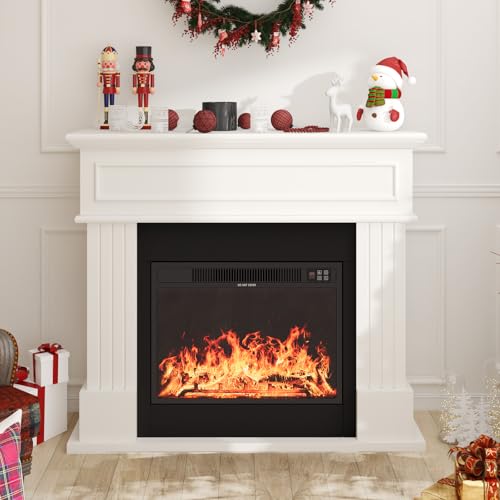
The flame in an electric fireplace is a light show, not combustion. LEDs bounce off a spinning reflector rod, layered log pieces and a mirror panel to fake depth, and the better units stack several of these layers so the glow shifts as you move across the room. Modern heater design transforms home ambiance by separating that visual from the heat, which means the mood can stay on when the element is off.
That split is the whole trick. A 3D-style display with a rear mirror and a front log set reads as a real fire from eight feet away; a single flat screen with one LED strip reads as a nightlight. Flame speed, brightness and color temperature adjustability matter more here than wattage, since a 1,500 W element behind a flat flame still looks like a space heater with a picture on it.
A mantel or TV stand adds visual mass, and that mass is what makes the unit read as furniture instead of an appliance. In a living room or finished basement, that weight anchors the wall and gives the flame something to sit inside. You also get the flame-only setting, which is the correct choice for evening ambience or the shoulder seasons when the room is already comfortable.
how modern heater design transforms home ambiance is mostly about this layering, not the element. Year-round ambiance is the other half of the appeal, since the display runs in July as happily as January.
What It Costs to Run for a Night
Running the heat on a 1,500 W electric fireplace for eight hours costs about $2.04 at 17 cents per kWh. The math is short: 1,500 W is 1.5 kW, times 8 hours is 12 kWh, times $0.17 is $2.04. Change the hours or your rate and the number moves with it.
| Heater | Watts | Per hour | Per day (8 h) | Per month (30 days) |
|---|---|---|---|---|
| Electric fireplace, heat on | 1,500 W | 26¢ | $2.04 | $61.20 |
| Flame effect only | 25 W | 0.4¢ | 3.4¢ | $1.02 |
| Electric fireplace, heat on, half the evening | 1,500 W | 26¢ | $2.04 | $61.20 |
Flame-only mode is a different animal. The display and fan typically draw a few dozen watts, so an evening of pure ambiance costs pennies rather than dollars. That’s the setting to use when the room is already warm and you just want the glow.
The trap is letting the fireplace become the main heat source. Twelve kWh a night, seven nights a week, is 84 kWh a week, and at 17 cents that’s about $14.28 — roughly $57 a month on top of whatever else heats the house. In a cold snap, the element runs continuously and the bill climbs faster than the flame suggests.
Which Rooms They Suit Best
For living room ambiance, a mantel-style electric fireplace like works best: it doubles as a TV stand or focal point and spreads a soft glow across a seating area. In a bedroom, a smaller wall-mounted or log insert that runs at lower heat and dims for sleep suits the space without dominating it.

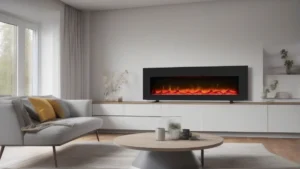
Den or finished basement? A recessed insert that sits flush with the wall keeps the room feeling open and built-in. Mantel and TV-stand models suit a wall that needs furniture-like presence; recessed inserts suit a clean, built-in look. Open-plan rooms lose heat quickly, so treat any electric fireplace as ambiance first and only light supplemental warmth.
| Room type | Best style | What to skip |
|---|---|---|
| Living room | Mantel or TV stand | Oversized insert that blocks traffic |
| Bedroom | Wall-mount or small insert | Tall mantel that eats floor space |
| Den or office | Recessed insert | Freestanding unit if floor is tight |
| Finished basement | Recessed or log insert | Mantel if ceiling is low |
Don’t expect a 1,500 W unit to heat a large open-plan space on its own. It delivers about 5,100 BTU, enough to take the chill off a small room but not to replace a furnace. For more heat, look at a dedicated space heater rated for the square footage.
Safety and Setup Mistakes to Avoid
Plug an electric fireplace straight into a wall outlet. Never use an extension cord or power strip: a 1,500 W unit draws about 12.5 A, and a strip or cord can overheat and start a fire. Keep at least 3 feet of clearance around the unit, and choose a model with tip-over and overheat protection.
Look for a UL, ETL, or CSA listing on the label. That mark means the unit passed independent safety tests. Don’t leave it running when no one is home unless the manufacturer says the model is designed for that use.
Mantel and insert units need stable assembly and enough floor space for the full footprint. A wobbly mantel can tip, and an insert that doesn’t sit flush can leave gaps that collect dust near the heater. Follow the manual’s assembly steps exactly.
What To Do Next
Buy for atmosphere first: a mantel or TV-stand style with adjustable flame settings gives you the glow you’re after, and the heat is a bonus. Choosing for a room comes down to three things — how much floor or wall space you have, where the outlet sits, and whether you want the unit to look like furniture or like part of the wall.
If ambiance is the whole point, compare flame-only running cost against your local rate before you commit to nightly use — a few watts of LED light show costs pennies, while the heater side is where the meter moves. For a wider look at what’s out there, see our guide to the best 60 inch recessed electric fireplace.