Best High Output Electric Fireplace Heater Bundles for 2026
On this page 9 sections
- High Output Electric Fireplace Heater Features Compared
- Top High Output Electric Fireplace Heater Bundles Ranked
- How to calculate the heat output from an electric fireplace
- What separates high output electric fireplace heater bundles
- Running Costs of High Output Electric Fireplace Heaters
- Installation and Maintenance of Electric Fireplace Heater Bundles
- Connecting Multiple Electric Fireplace Units
- Common Mistakes With High Output Electric Fireplaces
- Frequently Asked Questions
High Output Electric Fireplace Heater Features Compared
| Rank | Model | Best for | Heat Output (BTU) | Heating Modes (Wattage) | Flame Effect Options | Price |
|---|---|---|---|---|---|---|
| 1 | CTSC Electric Space Heater 1500W with RemoteBest for Most Rooms | Rooms up to 172 sq ft needing versatile heat and flame control | 5,118 | 1500W, 850W, ECO, Flame-only | 7 colors, 3D flame | See current price |
| 2 | RealSmart Infrared Fireplace Heater 22 inInfrared Comfort | Living rooms needing humidified heat with adjustable flame brightness | 5,118 | 1500W, 1000W | 4 brightness levels, 3-sided view | See current price |
| 3 | ZAFRO Electric Fireplace Stove 1500WVintage Stove Style | Compact spaces wanting fast heat with classic stove design | 5,100 | 1500W, 1000W, Flame-only | 3D flame with adjustable brightness | See current price |
| 4 | Techni Home Electric Fireplace Heater 1500WWide Flame View | Users wanting a broad flame display and steady heat | — | 1500W, Low | 3-sided viewing windows | See current price |
| 5 | Dovov 24″ Freestanding Electric Fireplace HeaterBest for Large Rooms | Large spaces up to 1000 sq ft needing quiet, colorful flames | — | 1500W, 1000W | 6 colors, 3-sided flame | See current price |
Say your living room is about 15 by 12 feet and poorly insulated. You want a heater that warms quickly, looks good, and lets you control heat without leaving the couch. A high output electric fireplace heater bundle with remote control and thermostat fits this need, offering up to 5,118 BTUs and realistic flames.
This guide ranks the best bundles that combine powerful heating, safety, and convenience. You’ll get clear specs, cost insights, and practical advice to pick the right one fast.
Top High Output Electric Fireplace Heater Bundles Ranked

CTSC Electric Space Heater 1500W with Remote

RealSmart Infrared Fireplace Heater 22 in
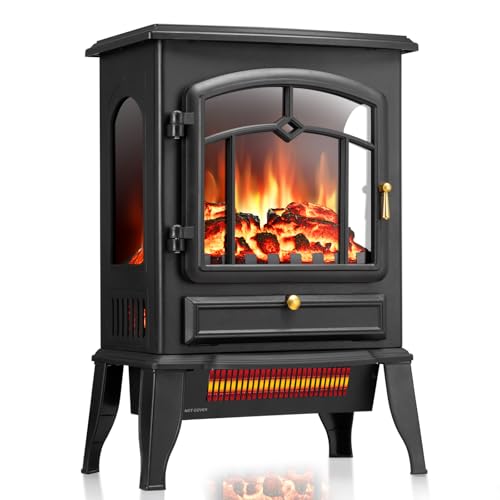
ZAFRO Electric Fireplace Stove 1500W

Techni Home Electric Fireplace Heater 1500W
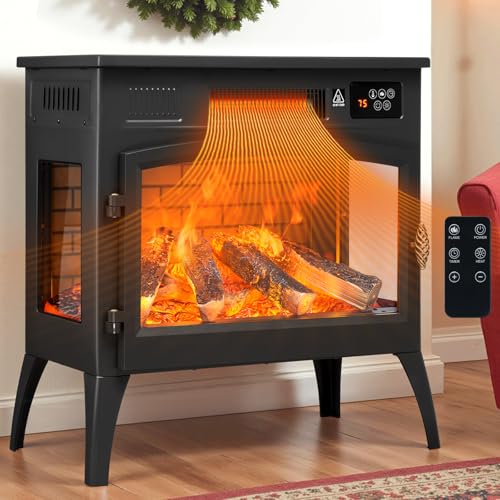
Dovov 24″ Freestanding Electric Fireplace Heater
How to calculate the heat output from an electric fireplace

Calculating heat output from an electric fireplace starts with understanding watts and BTUs. One watt equals about 3.412 BTU per hour, so a 1,500-watt unit delivers roughly 5,118 BTUs. Typical electric fireplaces use between 750 and 1,500 watts, translating to 2,559 to 5,118 BTUs.
You can estimate the size of the room an electric fireplace can heat by allotting around 10 watts per square foot. For example, a 1,500-watt fireplace suits roughly a 150 square foot room. This calculation assumes moderate insulation and average ceiling height.
Electric fireplaces often have multiple heating modes—commonly a low and a high setting. The low mode might draw 750 watts, giving about 2,559 BTUs, and the high mode uses 1,500 watts for the full 5,118 BTUs. Flame-only modes run on minimal power, usually 20 to 40 watts, providing ambiance without much heat.
Keep in mind that electric fireplaces convert nearly 100% of the electricity they draw into heat, so wattage directly reflects heat output. To size a unit, multiply the room’s square footage by 10 watts, then pick a fireplace that meets or slightly exceeds that wattage for effective heating.
What separates high output electric fireplace heater bundles
High output electric fireplace heater bundles stand out by combining powerful heating elements with realistic flame effects and remote control. They offer at least 1,500 watts of heat, enough for rooms up to 400 square feet, and often include thermostats to maintain consistent warmth. The best bundles balance heating capacity with energy efficiency and user-friendly features like adjustable flame brightness and safety shutoffs.
Flame effects have evolved beyond basic LED flickers. Quality bundles include 3D LED flames, resin logs, and multiple flame colors or brightness settings. Some even offer a flame-only mode to enjoy ambiance without heat, saving energy during milder days.
A high output electric fireplace heater bundle usually offers 1,500 watts of heating power, enough to warm rooms up to about 400 square feet effectively. These bundles often include a remote control and thermostat, letting you adjust heat and flame effects without leaving your seat.
Safety features separate reliable models from risky ones. Look for overheat protection, tip-over switches, and child lock options. These features prevent accidents and allow safe use in family homes or busy areas.
If you want a bundle that pairs a remote control with a precise thermostat, the Electric Space Heater 1500W with thermostat and remote offers both, delivering 5,118 BTUs and flame color options for rooms up to 172 square feet. It’s a strong contender for anyone needing serious heat and convenience in one package.
For more on heating technologies and remote control options, check guides on infrared heating and remote-control space heaters.
Running Costs of High Output Electric Fireplace Heaters
Running a 1,500-watt electric fireplace heater for 8 hours uses 12 kilowatt-hours (kWh). At 17 cents per kWh, that’s about $2.04 per night. If you lower the thermostat to reduce heat output, your costs drop proportionally. Electric fireplaces with thermostats avoid wasting power by cycling the heater off and on to keep the room at the set temperature.
To figure out energy use, start with watts. Running a 1,500-watt heater for one hour consumes 1.5 kilowatt-hours (kWh) of electricity, because 1,500 watts ÷ 1,000 equals 1.5 kWh. At a common electricity rate of 17 cents per kWh, that hour of heating costs about $0.26 (1.5 kWh × $0.17).
Electric fireplaces in full heat mode use about 750 to 1,500 watts, similar to small kitchen appliances. That’s comparable to many standard electric fireplaces, but high output models push the upper end for bigger rooms or faster heating.
Nearly all the electricity used by electric fireplaces converts directly into heat. This means their energy use is efficient compared to other heating options. Understanding this helps you see why their operating costs stay reasonable despite high heat output.
Infrared heating models feel warmer at lower wattage because they emit radiant heat that warms people and objects directly instead of just heating the air. This can reduce running costs while still feeling cozy.
So, running costs depend heavily on how long you run the heater and at what setting. Eight hours at full heat is 1,500 watts ÷ 1,000 × 8 hours × $0.17 = 2.04 dollars per day. Flame-only mode for the same time costs under 10 cents.
Installation and Maintenance of Electric Fireplace Heater Bundles
Electric fireplace heater bundles plug into standard 120-volt outlets, so no special wiring or venting is necessary. You simply set them where you want supplemental warmth.
Freestanding models require no mounting, while inserts slide into compatible existing fireplace openings without modifications. Both types avoid the hassles of gas lines or chimney vents.
Keep the heater’s air intake and exhaust vents clear from dust and debris to maintain airflow and prevent overheating. A quick vacuum or soft brush every few months usually does the trick.
The glass viewing window and flame effect components benefit from occasional cleaning with a soft, dry cloth. Avoid harsh cleaners that can damage LED lighting or screen finishes.
Remote controls use standard batteries that will need replacement. Also, check your thermostat’s calibration yearly to ensure accurate temperature control and efficient operation.
Connecting Multiple Electric Fireplace Units
You cannot daisy-chain electric fireplace heater units; each one needs its own direct power supply from a properly rated outlet. Plugging one unit into another or using extension cords exceeds safe limits and risks tripping breakers or worse.
Using multiple units makes sense in large open areas where one heater won’t evenly distribute warmth. For example, two or three units spaced around a 500 sq ft room can keep the temperature more consistent than a single 1,500 watt heater.
Before plugging in multiple units, check the total electrical load on the circuit. A standard 15 amp breaker supports about 1,800 watts continuous (120 volts × 15 amps = 1,800 watts). Running two 1,500 watt heaters from the same circuit risks overload, so spread them across different circuits when possible.
Remote controls for these heaters typically work independently. Each unit responds only to its paired remote, so you’ll need to operate them separately unless your units support group control through a smart home system.
Smart plugs and home automation can coordinate multiple electric fireplaces, allowing synchronized on/off times, temperature settings, and even flame effects. This adds convenience and energy savings, especially when managing heat zones.
Common Mistakes With High Output Electric Fireplaces
Most buying guides miss the flame technology that separates showroom models from cheap imports. High-end units layer infrared heating elements behind LED flames, water vapor misters and rotating mirrors to create depth and movement — flames that shift, flicker and cast light across logs the way a real fire does. Budget models freeze a static orange glow behind acrylic.
Flame-only mode turns an electric fireplace into a 20 to 40 watt night light. Full heat pulls 1,500 watts. The difference matters if you want year-round ambiance without paying $3.60 a day to heat a room in July. ECO modes cycle the heater to hold a set temperature rather than running continuously, cutting runtime by roughly half in a well-insulated room.
Durability starts with the heating element. Ceramic heating plates and metal-sheathed coils outlast bare nichrome wire, which oxidizes and fails after a few seasons of daily use. Metal housings dissipate heat better than plastic, and units with thermal fuses on both the element and the fan motor survive a blocked vent without catching fire. Warranty length signals manufacturer confidence: one year is standard, three years suggests the guts will last.
App control and scheduling show up on mid-tier models now, letting you preheat a room from the driveway or shut the unit down from bed. The feature suits anyone who forgets to turn things off or wants timed heating without a separate smart plug. It won’t fix an electric fireplace not blowing heat — that’s usually a tripped breaker, a clogged filter or a failed fan — but it does let you confirm the unit is off when you’re already two miles down the road.