Skip to content
HeaterGuides
Energy Saving

Heat Panels Run By Oil: 1,500 W And About 12.5 A

On this page 7 sections
  1. Can Heat Panels Run By Oil
  2. Where The Heat Actually Goes
  3. What It Costs To Run
  4. Which Rooms They Suit Best
  5. Safety And Maintenance You Should Check
  6. When You Mean An Oil Furnace Instead
  7. Frequently Asked Questions
Quick answer
Heat panels run by oil are usually oil-filled electric heaters, not burners. An oil-filled radiator is a sealed electric heater that warms oil inside metal fins, and those fins heat the room slowly and steadily. A 1,500 W unit draws about 12.5 A, so it needs a normal 120 V wall outlet and a circuit that isn’t already crowded with other loads.

The oil inside the fins never gets used up, which is where the confusion starts. The element heats the oil, the metal shell stores that heat, and the room gets a gentler output than you’d get from a fan heater.

That matters because the heater’s wattage, not the word oil on the box, tells you most of what you need to know about cost, placement, and how quickly the room will feel warm.

Key takeaways
Oil-filled heaters are electric resistance heaters with heat storage, not fuel-burning appliances.
A 1,500 W oil-filled heater costs about the same to run as any other 1,500 W electric heater: 1.5 kWh per hour.
Pick an oil-filled radiator for steady bedroom or office heat; pick a panel heater if you want faster air warm-up in a small room.
Keep portable electric heaters on a wall outlet with 3 feet of clearance and no extension cord.
If you mean a whole-house oil furnace, the question changes from portable heat to AFUE, venting, and fuel use.

Can Heat Panels Run By Oil

Most heat panels run by oil are oil-filled electric radiators: electricity heats sealed oil inside the unit, rather than burning oil for fuel. Solar panels can supply electricity for a heater, but they don’t directly make room heat; heating a house or one room with solar depends on the heating equipment, battery or grid connection, and available solar output.

The oil acts as a heat reservoir and stays sealed inside the metal fins for the life of the heater. It isn’t consumed, refilled or piped into the building. A portable oil-filled radiator is therefore an electric appliance, while an oil furnace burns liquid heating oil in a combustion chamber and sends heat through ducts or another whole-house system.

TypeWhat supplies the heatWhere it fits
Oil-filled radiatorAn electric element heats sealed oil, which warms metal finsPortable room heating with steady, quiet output
Electric panel heaterAn electric element warms air directly, often by convectionSmall rooms needing faster warm-up; some models are wall-mounted
Oil furnaceBurned heating oil warms air or water for distributionWhole-house heating with a fuel tank, burner, flue and installation work
The word oil describes two very different kinds of heating equipment.

A solar array can run an electric radiator through suitable electrical equipment, but a 1,500 W heater is a substantial load while operating. For direct solar heating in one room, a solar thermal design or a heat pump is a different system from an oil-filled radiator. See the practical space heater solar-power math and guidance on solar panel to heat one room before assuming rooftop panels will cover winter heating.

The useful distinction
Oil-filled and ordinary electric panel heaters both use resistance electricity at the point of use. The oil changes how heat is released and how long the fins stay warm; it doesn’t turn the heater into an oil furnace or give it free heat.
In short
Choose an oil-filled radiator for quiet, slower, steadier room heat. Choose an electric panel heater for quicker air warm-up and a slimmer format; choose an oil furnace only when you mean a permanently installed whole-house heating system.

Where The Heat Actually Goes

heat panels run by oil: Where The Heat Actually Goes

An oil-filled radiator warms a room through both convection and radiation, with the sealed oil and metal fins releasing heat gradually after the electric element cycles off. That softer release is why the room usually feels steadier than it does beside a fan heater.

Convection is moving air: air beside the warm fins rises, cooler air replaces it, and the room slowly mixes. Radiant heat travels from the warm surface to nearby objects and people, much like feeling warmth from a sunny window. Radiant ceiling heat panels also heat the air indirectly, because warmed floors, furniture and other surfaces give heat back to the room.

A standard electric panel heater heats air directly and can warm a small room faster, especially when its design moves air across the element. An oil-filled radiator takes longer to get going, then its fins remain warm during the thermostat’s off cycle. Fan noise is usually absent or very low, since most oil-filled units don’t need a blower.

Myth
Oil-filled electric heaters are automatically more energy-efficient than electric panel heaters.
Fact
At the same wattage, both resistance heaters turn nearly all of their consumed electricity into heat. Oil can improve comfort and control by smoothing temperature swings, but the thermostat and operating time determine most of the energy use.
Worked example
Say a 1,500 W oil-filled radiator reaches the set temperature and cycles off periodically. The fins continue releasing stored heat while the element rests, so the room doesn’t lose all warmth between cycles. A 1,500 W panel heater can deliver heat faster, but its air temperature may change more noticeably after the element switches off.
Oil-filled unitSlower response, warm fins after cycling
Electric panelFaster air warm-up, quicker surface resp
Both1,500 W means the same maximum electrica
12.5 A
A 1,500 W heater on 120 V
That electrical load is the same whether the heat comes from oil-filled fins or a flat electric panel; the difference is how the heat reaches you.

What It Costs To Run

An oil-filled radiator costs the same to run as a flat-panel electric heater at the same wattage, because both turn electricity into heat at essentially the same rate. Solar panels don’t make heat directly; they make electricity that can run a heater through a properly sized inverter and, for nighttime use, a battery. That is the answer to how to heat a house with solar panels, add heat to a shed with solar panels, or run a small electric heater from solar: size the electrical system for the heater’s load.

Worked Example
A 1,500 W heater running for 8 hours uses 1.5 kW × 8 hours = 12 kWh. At an assumed electricity rate of 17 cents per kWh, the cost block below calculates the nightly and monthly cost.
Heater1,500 W
Runtime8 hours
Energy used12 kWh
Assumed rate$0.17/kWh
HeaterWattsPer hourPer day (8 h)Per month (30 days)
1,500 W oil-filled or flat-panel heater1,500 W26¢$2.04$61.20
Calculated at 17¢ per kWh. Both heater types use the same electricity at the same wattage. Your utility rate and thermostat cycling will change the real bill.
Check The Circuit
A standard 120 V, 15 A circuit has a simple rule of thumb: a 1,500 W heater draws about 12.5 A, so plug it directly into a wall outlet and don’t share that circuit with several other heavy loads. A solar setup needs an inverter that can handle the heater’s running load, not merely enough panel wattage on paper. For the 1,500 W math behind a solar-powered space heater, see space heater.
From HeaterGuides · our own guidePage 4 shows what each heater costs per hour; the 30-day plan on page 11 cuts the bill.Winter Heating Bill Cutter: the printable guide and its Excel calculatorWinter Heating Bill CutterSee what every heater in your home really costs, heat the rooms you use, and cut the waste in 30 days.Cost-per-hour tables for every heaterThermostat schedule and draft-proofing planRunning-cost and bill calculator (Excel)$14.99 $9.99Get it for $9.99See what's inside and watch the 2-minute video →14-page printable PDF + Excel calculator · instant download · 30-day refund

Which Rooms They Suit Best

Oil-filled radiators suit bedrooms, offices, and other rooms where quiet, steady warmth matters; flat-panel heaters suit smaller spaces that need quicker warm-up and a shallow wall-mounted or portable profile. Solar panels can heat a house only by supplying electricity to a heat pump or electric heater, so a solar panel to heat one room still needs an inverter, wiring, and enough generation or battery storage. See the practical limits of solar heating for house before treating rooftop panels as a whole-home heater.

Room situationBetter fitReason
Bedroom or officeOil-filled radiatorNearly silent operation and gradual heat suit longer stays.
Small room needing quick warmthFlat-panel heaterDirect convection brings the air temperature up faster, with less floor space used.
Large, drafty, or poorly insulated areaNeither as a sole heaterHeat escapes faster than a portable electric unit can replace it.
Small, reasonably insulated roomEither, sized to the roomChoose steady comfort or faster warm-up, then check the circuit and placement.
Room size, insulation, drafts, and the heater’s wattage matter more than the word oil on the box.

Say an insulated office is small enough for one portable heater, with the door closed and no major draft under it: a 1,500 W unit can provide supplemental heat, but it won’t replace the home’s heating system if adjoining rooms and exterior walls are also cold. A fan-free oil-filled model favors quiet work or sleep; a flat panel favors quick bursts.

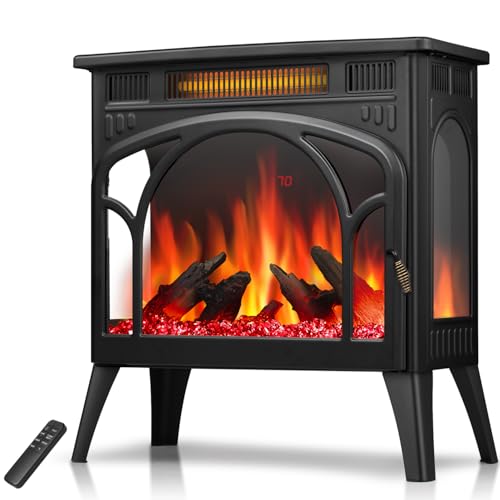
A small sitting room that needs quick supplemental heat may suit an electric fireplace more than an oil-filled radiator.
R.W.FLAME Electric Fireplace Heater 25" with Remote Control, Flame Up…
If you want quick heat with a flame effe
R.W.FLAME Electric Fireplace Heater 25″ with Remote Control, Flame Up…
Product 1 offers 500 W and 1,500 W heat settings, remote temperature control, and overheat protection. It adds visual ambiance, but it’s still a plug-in supplemental heater rather than a whole-house system.
Check price on Amazon
In short
Pick oil-filled heat for quiet, gradual comfort and flat-panel heat for faster warm-up in a compact room. Solar can supply either only when the panels, inverter, and battery or grid connection are sized for the electrical load.

Safety And Maintenance You Should Check

heat panels run by oil: Safety And Maintenance You Should Check

Oil-filled heaters are generally as safe as electric panel heaters around children and pets, provided you give either heater the same clearance and outlet discipline. Both need a direct connection to a 120 V wall outlet—never an extension cord or power strip—and at least 3 feet of space from curtains, bedding, furniture, and toys.

Neither heater burns fuel, so neither should significantly change indoor air quality; a dusty unit can still produce a temporary smell when it warms. Oil-filled models run quietly and usually feel gentler than fan heaters, but the metal casing and fins can still burn skin. Keep curious hands and pet bedding away.

Look for tip-over protection and overheat protection before buying. Installation is normally just assembling the feet, placing the heater on a level floor, and plugging it into the wall—there’s no oil line, flue, or permanent wiring. Lifespan is broadly comparable with a panel heater; the sealed oil circuit needs no refill, while either unit can eventually lose a thermostat, switch, or cord.

Before You Plug It In
Keep dust off the fins and air openings with the heater unplugged and cool.
Check the cord, plug, and outlet for cuts, looseness, browning, or heat.
Confirm the tip-over and overheat protection features are present and unobstructed.
Stop using the heater if it smells scorched, makes a new electrical noise, or trips the breaker.
A Breaker Trip Is A Warning
Don’t reset the breaker repeatedly or move the heater to a power strip. A 1,500 W heater draws about 12.5 A, so a crowded circuit can overload even a heater that works normally; have an electrician check recurring trips.
The Oil Stays Inside
The fluid is sealed at the factory. You don’t drain, top up, or replace it during routine maintenance, and a leak means the heater should be taken out of service rather than repaired at home.

When You Mean An Oil Furnace Instead

An oil furnace burns heating oil, vents combustion gases outdoors, and distributes heat through ductwork; a portable oil-filled heater uses electricity for one room and has no flue. Their efficiency and installation requirements are therefore different from the start.

SystemTypical jobEfficiency or upkeep
Portable oil-filled heaterSupplemental heat in one roomSimple cleaning; no fuel or vent
Oil furnaceWhole-house heat through ductsAFUE up to 87.5% on Bryant Preferred Series; filter, burner, and vent service
Oil boiler with hydronic floor heatHeats water for radiators or in-floor tubingSeparate boiler system; licensed fuel, plumbing, and control work
AFUE is the share of fuel energy delivered as useful heat. An 87.5% rating means about 87.5 units out of 100 reach the home as heat.

Modern oil furnaces aren’t automatically wasteful: the Bryant Preferred Series reaches up to 87.5% AFUE, while the Legacy Line reaches up to 82.4%. A furnace still loses the remainder through combustion and venting, and its delivered cost depends on heating-oil prices, runtime, and duct losses. A how oil heating systems work explanation can help separate the furnace, boiler, and distribution equipment.

Plan on more maintenance for a furnace than for a portable heater. The furnace needs a clean filter, burner-nozzle and combustion checks, a tune-up, and vent inspection; an oil-filled portable heater mainly needs dust removal and a cord, plug, and casing check. Fuel, combustion, and flue work belong to a licensed heating professional.

Floor Heat Is Usually A Boiler Job
Installing hydronic in-floor heat panels means routing water tubing or panels, sizing a boiler and circulator, and adding controls. An oil furnace with ducts doesn’t directly provide that heat, so don’t treat an electric oil-filled panel as a substitute for a hydronic system.

Rebates are location- and program-specific. Portable electric oil-filled heaters rarely qualify for major efficiency incentives, while an oil furnace or a conversion to a heat pump may qualify under a state, utility, or federal program; check the current rules before buying or signing installation work.


Frequently Asked Questions

How do running costs of oil-filled panel heaters compare with electric panel heaters?
At the same wattage, an oil-filled panel heater and an electric panel heater cost the same to run. A 1,500 W heater used for 8 hours consumes 12 kWh; at 17 cents per kWh, that’s about $2.04. Thermostat cycling can reduce actual use, but the oil inside doesn’t create free heat.
Can an oil-filled heater be used in a small room?
Yes, provided the heater’s output suits the room and you can keep the required clearance around it. A small room may warm slowly at first, but the radiator’s heat retention helps maintain an even temperature after the element cycles off. A smaller panel heater may be quicker if rapid warm-up matters more than quiet operation.
Are oil-filled heaters safe around children and pets?
Oil-filled heaters are generally suitable around children and pets when placed on a stable surface with clear space around the fins. Keep cords out of reach, use tip-over and overheat protection, and remember that the metal case still gets hot enough to burn. A barrier or different heater location is wiser for toddlers and curious pets.
What installation requirements do oil-filled panel heaters have?
A portable oil-filled heater usually needs no installation beyond placing it securely and plugging it directly into a properly rated wall outlet. Don’t use an extension cord or power strip, keep about 3 feet of clearance, and follow the manual if the model is designed for wall mounting. Check for a UL, ETL, or CSA listing before buying.
How long does an oil-filled heater usually last compared with a panel heater?
Neither type has a dependable fixed lifespan because thermostat wear, tip-over switches, cords, and heating elements can fail at different times. An oil-filled radiator has sealed oil and few moving parts, while a fan-equipped panel heater has another component that can wear or collect dust. Replace a heater with a damaged cord, leaking oil, cracked case, or unreliable safety switch rather than trying to stretch its service life.
How is an oil furnace different from a portable oil heater?
An oil furnace burns heating oil in a combustion chamber, vents exhaust outdoors, and sends heat through the home’s ductwork. A portable oil-filled heater burns no fuel: electricity heats sealed oil in its fins for one room. Furnace efficiency is described with AFUE, while a portable heater’s main efficiency figure is its electrical wattage.

Joye Editor

HeaterGuides covers home heating, water heating and HVAC: how the equipment works, what it costs to run, and how to use it safely.

More in Energy Saving